Table of Contents
Looking at the Logistics and Following the Money
Flight Patterns
When the UN panel of experts issued its report on the status of the conflict in Libya in March 2021, it described the arms embargo as “totally ineffective.” Noting that key UN member states continue to directly support parties to the conflict, the UN panel called the embargo violations “extensive” and “blatant.” But the UN panel also subtly signaled that since several members of the UN Security Council (Russia, France, and United States) and UN member states (Qatar, Turkey, UAE, and Egypt) are arming different factions, that interdiction and sanctions enforcement appears to be impossible. “Their control of the entire supply chain complicates detection, disruption, or interdiction. These two factors make any implementation of the arms embargo more difficult,” the panel report stated.1
Of significant note is the fact that the UAE, much like Russia, relies heavily on private commercial air transport and logistics providers who have come to specialize in servicing the seamy underside of proxy wars proliferating across mineral-rich parts of the Middle East and Africa. The transatlantic policy community has generally treated Russia as unique in the world for its deployment of so-called “gray zone” strategies that combine the use of guns for hire with information operations. Yet, since the start of the disruptions of the Arab Spring, the UAE has clearly demonstrated its own strategic prowess in this regard, using its vast oil wealth to buttress its leading position in the coalition of Sunni Arab states aligned against both Iran and Qatar and perceived internal political threats from Islamist organizations like the Muslim Brotherhood. Indeed, Emirati opposition to the pro-Muslim Brotherhood factions that fall loosely under Libya’s GNA umbrella is a prime motivating factor for its alliance of convenience with Russia and the Wagner Group by association.
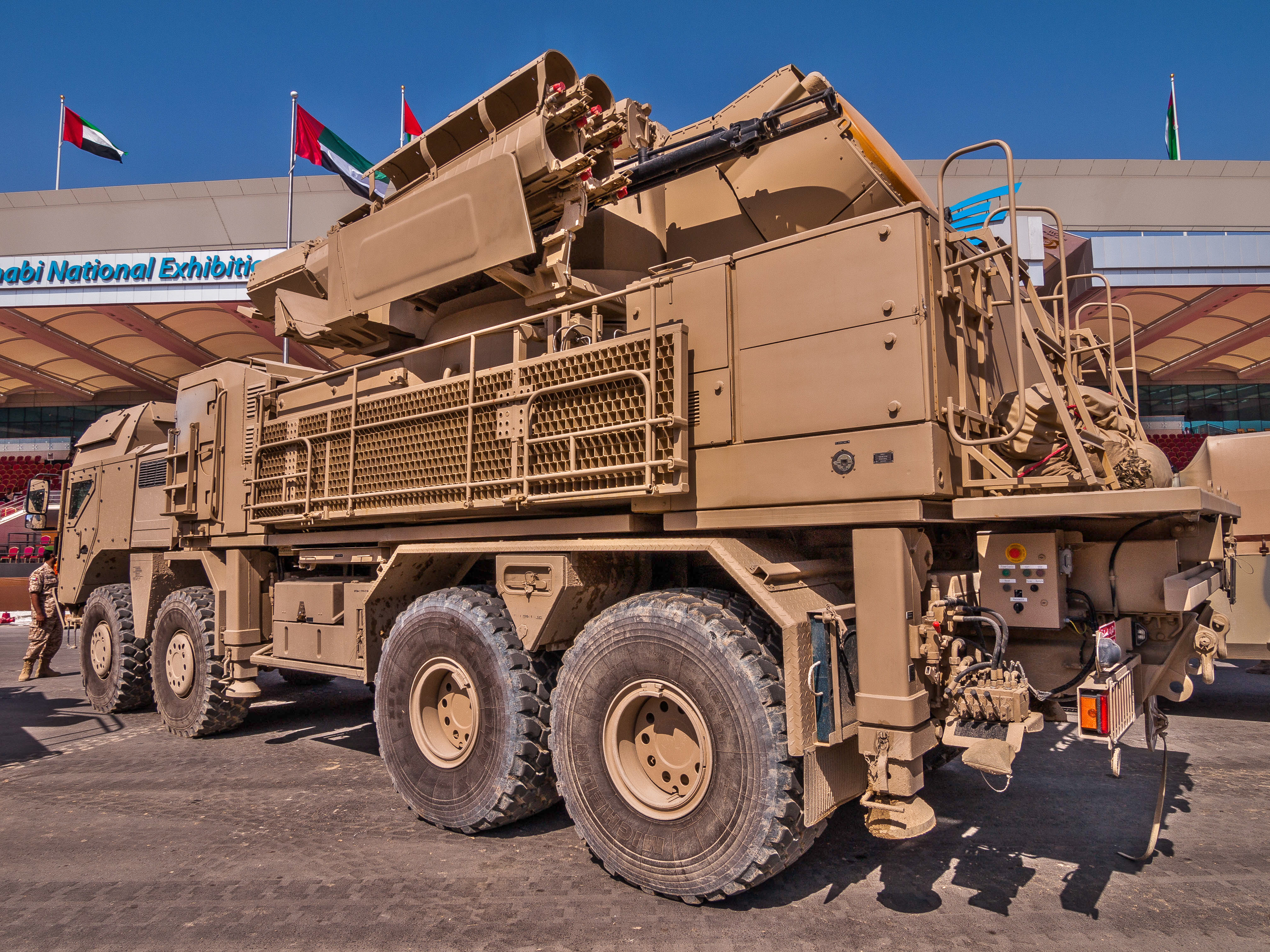
The UN report identified several key nodes in the supply chain network linking the UAE to Haftar’s LNA forces.2 One important node consists of the amalgam of Syrian, Sudanese, and Chadian mercenary fighters, many of whom operate alongside LNA forces and, in the case of the Syrians, are presumed to be under the Wagner Group’s control.3 Another important node in the UAE-LNA pipeline that supplies those forces is the covert air bridge that appears to span from Abu Dhabi, where Emirati armed forces are headquartered, and Russian-made Pantsirs are warehoused, to the eastern coast of Libya and bordering the western coast of Egypt, according to the UN report.4 According to media reports, the UAE air force dispatched an estimated 150 flights from January to April 2020 that UN experts believe carried ammunition and defense systems.5 Dozens of flights continued from the Emirates over the summer using an American-made C17 military transport plane.
Our review of ADS-B flight data in this area also corroborates reporting of Emirati air force flights in the vicinity of the Libyan and Egyptian coastlines and demonstrates the tempo of high-risk flights by both the UAE air force and ostensibly private operators in early 2020. A significant number of these flights overlapped with a brief temporary ceasefire in Libya, which parties to the conflict appeared to leverage for resupply. C4ADS conducted an analysis of flight data near eastern Libya and western Egypt spanning the period from January 2020 to July 2020 for airframes associated with airlines named in the March 2021 UN report as supporting the UAE-LNA air bridge.6 These included Jenis Air, Air Azee, Maximus, Zet Avia, Fly Sky, and UAE Air Force C17 military cargo planes.7
This analysis identified flights exhibiting risk of travel between the UAE and key locations in Egypt and Libya. This risk assessment was based on possible destinations as indicated by location and time, and similarity with flights identified by the UN panel of experts in routes, callsigns, and operators. In particular, we looked at UAE-origin or -destination flights that passed through a geographic bounding box derived from a UN panel of experts reporting and past C4ADS investigations. That box captures a region of Egypt that UAE-origin or -destination flights pass through while traveling to or from western Egypt bases like Sidi Barrani or Mersa Matruh.
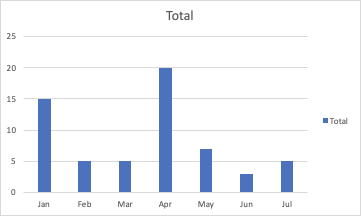
We took a closer look at the 122 flights we initially identified as potentially suspicious to confirm that they represented a risk of flights to Libya or western Egypt air bases of interest. C4ADS found that there were approximately 52 flights of concern from the UAE to western Egypt involving ostensibly private operators identified by the UN panel of experts as supporting the LNA on behalf of the UAE, and 12 additional UAE AF C17 flights of concern from the UAE to western Egypt.8 Most of the flights took place in January and April 2020.9
We selected flights by generally looking for a pattern like that represented below, which are consistent with flights to and from air bases in eastern Libya and western Egypt. The map image in Figure 8 represents about 20 flights, which all have consistent points of convergence in western Egypt and the UAE. Flights like this represent the highest risk that flights may have traveled to or from locations of concern from an arms embargo point of view.
Figure 8: Example of high-risk flight pattern between UAE and Egypt. Source: C4ADS/Icarus Aircraft & Flight Data Analytics Platform.10
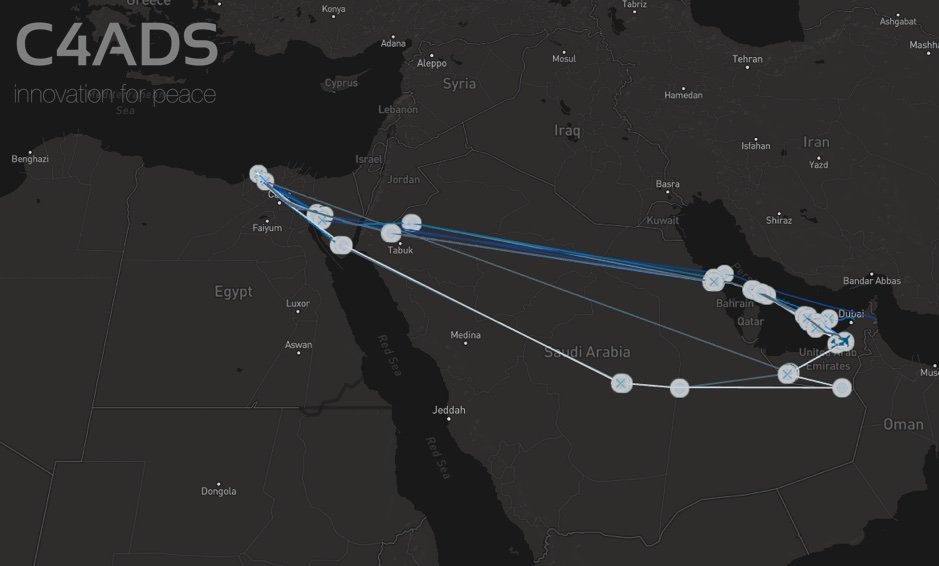
Figure 9: Flights of concern from Libya to western Egypt by month in 2020.
Aside from the UAE to Libya air bridge, Wagner Group operatives likely supported Russian military air operations in Libya from the Egyptian coastal towns of Marsa Matruh and Sidi Barrani, just over the Libyan border.11 Many of those flight operations likely served runs to and from the LNA/Wagner controlled al Jufra airbase. Social media and traditional news outlets reporting on successful GNA/Turkish airstrikes on Wagner positions at the al-Jufra airbase noted the destruction of a Russian-made Ilyushin 76 (IL-76) cargo plane.12
Detailed reporting by Russian and Ukrainian analysts traced the tail number of the IL-76 and its route from Fujairah Airport in the UAE and noted that the plane was registered to a British Virgin Islands company called Infinite Seal Inc.13 The plane was one of two located by the same analyst that was leased by Europe Air LLC, which operated their flights. Russia, at one point, claimed that the IL76 flights from the UAE to Libya were operated independently, but Ukrainian authorities suspended the operating certificate of Europe Air in July 2019.14
Europe Air is one of several aviation companies linked to a tangled web of covert shipping operations that Russia has tapped into in Libya, Syria, and elsewhere. Europe Air appears to be part of a cluster of aviation industry holding companies that originate in the UAE and that international authorities have scrutinized in recent years for providing chartered flights and flight crews that run shipments into warzones where sanctions are in place. One Ukrainian analyst, for instance, traced the suspicious December 2020 flight of a Russian-made IL-76 cargo plane owned by FlySky, a company that appears to be owned or controlled by beneficial stakeholders of Europe Air, from Kigali, Rwanda, to Bangui, the capital of the Central African Republic, or CAR.15
The CAR is well known as a critical node in the Wagner Group’s expanding web of influence and operations in Africa. Neighboring Rwanda is also an important hub for the Wagner Group’s covert transshipments of mercenaries and military materiel.16 Moreover, Rwanda’s government said it would begin delivering military aid to the beleaguered regime of Faustin-Archange Touadera, which Russia and the Wagner Group support, making Bangui a logical stopping point for an air bridge into CAR. However, it is important to note that there is no specific evidence that any of the companies or individuals affiliated with FlySky or Europe Air have a direct stake in Prigozhin’s activities or the Wagner Group’s operations. Nonetheless, it is an interesting coincidence that one of the key brokers of the FlySky/Europe Air air cargo pipeline is also based in the UAE.
A review of public records shows that the web of air cargo companies and fleets linked to Europe Air, FlySky, and Azee Air can be traced to Veteran Avia LLC and its chief stakeholder, Jaideep Mirchandani,17 a UAE-based aviation business magnet, who in 2014 briefly fell afoul of U.S. authorities on suspicion of facilitating air shipments of Russian-made currency to the Assad regime in Syria before sanctions were lifted against him in 2016.18 UN experts and open-source researchers have also identified flights of concern to Libya by other aviation companies in which Mirchandani reportedly has a stake.19 Soon after a well-regarded open-source researcher known as @Gerjon on Twitter traced the transfer of several planes linked to the same web of air cargo companies in July 2020, authorities in Kazakhstan suspended the operating license for Azee Air and two other aviation firms identified by the UN Security Council for violating the arms embargo to Libya.20
The Tula to Abu Dhabi Pipeline
While flight route analysis and reporting by the Pentagon, the UN, and the international press, appear to point to the existence of a UAE-based transport network and Russian-supplied pipeline for the shipment of military material to Libya, evidence of direct Emirati financing for Wagner’s logistics pipeline is not conclusive. There are, however, additional clues to be found in procurement and shipping data as well as publicly available information about the military technical agreements between the UAE and Russia for the production and deployment of Pantsir platforms and other Russian-made military material.
In the late 1990s, the KBP Instrument Design Bureau secured permission from the Russian government to begin exporting its weapons systems to foreign customers. In 1998, KBP won a tender to provide the Emirati military with a full-service anti-aircraft defense system. According to one analysis, the UAE deal called for the cancellation of $4 billion in Russian debt.21 At the time, the UAE was already looking to upgrade its military equipment and had purchased several armored personnel carriers from Russia that were also made by KBP. According to a description of the deal in “Ruskaya Sila” (“Russian Power”), a Russian-language military technical journal, the production agreement with Abu Dhabi-based Bin Jabr Enterprises, part of the multimillion-dollar Bin Jabr Group Ltd., got off to a rocky start after several issues with subcontractors.22 The contract was ultimately finalized after two years of negotiations.
Whether the terms of that deal carried over to include present-day staffing for Pantsir training and maintenance crews provided via an arrangement with Russia’s ministry of defense is not publicly known. However, it is well known that the vast majority of Russia’s defense logistics support is handled by JSC Garnizon, the successor organization of the reorganized state-run agency Oboronservis.23 On paper, reorganization merged nine subsidiary companies that specialize in aircraft and weapons maintenance, construction, trade, hotel services, agriculture, and publishing.24 In practice, it turned subsidiaries like Voentorg, the state-run logistics arm of Oboronservis, into cash cows for enterprising Kremlin insiders like Prigozhin and his associates, who have consistently won the bulk of contract bids over the last eight years since Putin fired the former minister of defense and one-time Oboronoservis head, Anatoly Serdyukov amid a corruption scandal. 25
In January 2000, Putin, who had recently been appointed acting president, signed an order that allowed for the export of Pantsirs through a deal between the KBP Instrument Bureau and the Abu Dhabi Bin Jabr Group, an Emirati defense manufacturer, for another five years.26 Founded by Saeed Bin Jabr al Suwaidi, a wealthy Emirati businessman, the Bin Jabr Group is one of the top producers of defense products in the company.27 With annual revenues estimated at $1.1 billion, the Emirati conglomerate is perhaps best known for manufacturing (with Russian technical assistance) the first Arab-made armored vehicle.28
The Bin Jabr Group’s deal with KBP represented a major expansion of the UAE’s defense ties with Russia and KBP and led to the signature of a contract valued at $734 million for the development and production of Russian-made air defense systems.29 According to Russkaya Sila, $367 million was paid by KBP, and another $367 million was offset against the repayment of Russia's state debt to the UAE. The large value of the contract suggests that the deal was likely inclusive of maintenance, repair, and training and covered related staffing costs.30
Under a wider effort by Putin and his longtime associate Sergey Chemezov of Rostec to reorganize large parts of Russia’s military-industrial complex, Pantsir development was placed under the oversight of JSC Schelglovsky Val, whose majority shareholder is KBP and whose parent company, like KBP, is linked to Rostec.31 About four years later, in 2012, KBP exhibited a prototype of the Pantsir S1 ADMSG training platform at the Indo-Pacific Arms expo in Jakarta.32 One year later, KBP announced that the Russian armed forces would formally integrate the platform and begin selling the platform to foreign customers.33 Soon after, Pantsirs were deployed to Syria despite a UN embargo imposed against the Assad regime, and in January 2014, Putin visited the plant site and was given an up-close view of the Pantsir development line.34
A press release on the KBP website memorializing Putin’s visit noted at the time that plans to beef up production of BMP-1’s and other KBP-made platforms such as the Hermes family of air, sea, and land platforms would require a substantial increase in staffing. “[T]he company will need [2,000] more young specialists. And this fact in its turn determines the necessity of solving social matters,” the press release stated. Tula’s governor at the time said plans were afoot to build housing near the KBP plant for the new team of technical specialists and their families. This might suggest one reason for the well-documented increase in recruitment of semi-private contracted technical specialists in Russia around the same time.35
At various points over the last 30 years, Libya, Syria, Egypt, Algeria, and the UAE have all been key clients of Rosoboronexport, a subsidiary of the state-run arms company Rostec, and Russia’s primary conduit for exports under its military technical agreements with foreign countries.36 The deployment of Pantsir anti-aircraft missile systems starting in 2013 in Syria, for instance, was a signature part of Russia’s approach to maintaining its influence over the regime of Syria’s president, Bashar al-Assad.37
In the case of Syria, there is sufficient evidence to suggest that Rostec, through an arms-length arrangement, would have already deployed technical teams and advisors in-country or on a field rotation deployment as part of any formal military-technical agreements executed either just before or just as the Arab Spring uprisings began in the Middle East region in 2011. From a practical point of view, this also suggests that Wagner Group operatives skilled in forward reconnaissance and anti-aircraft defense operations would likely rotate through several theaters if they signed on to deploy for more than one contract term. As noted earlier, casualty reports about Wagner Group fighters indicating prior service in Ukraine and Syria and patterns we observed in the self-reported data about prior military affiliation with special forces or Spetsnaz units seem to corroborate this theory, at least in part.
But in Libya, the Wagner Group lacked the kind of advantages it had in Syria in terms of being able to pre-position a support base for a logistics pipeline. At the outset of the Wagner Group’s entry into the fray in August 2019, Russian Pantisr maneuvers during the early part of the push toward Tripoli clearly gave an edge to Haftar’s LNA forces in terms of maintaining air superiority.38
Haftar’s offensive and the Turkish-backed counteroffensive of the GNA under the banner of its “Operation Volcano of Rage,” nonetheless, resulted in significant losses for the LNA and Wagner Group. It also marked one of the bloodiest periods in Libya’s conflict.39 But by late summer 2020, Libya’s two major warring parties—the LNA and GNA—reached a stalemate, and in October that same year, a ceasefire agreement was signed. Yet, the fresh UN allegations of the Wagner Group’s involvement in war crimes have raised anew concerns about Russian and Emirati support for their operations during the Tripoli offensive, and the diplomatic tug of war over the continued presence of Russian mercenaries is far from over.40
Citations
- UN Panel of Experts on Libya, “Letter dated 8 March 2021 from the Panel of Experts on Libya established pursuant to resolution 1973 (2011) addressed to the President of the Security Council,” March 8, 2021, p.2/548. source
- UN Panel of Experts on Libya, 2021, op.cit., pp.7/548-8/548
- Isabel Ivanescu and Eva Kahan, ”Syria’s Wretched Foreign Legion,” Newlines, June 1, 2021. source
- UN Panel of Experts on Libya, 2021, op.cit., pp.28/548-30/548
- Jared Malsin, “U.A.E. Boosted Arms Transfers to Libya to Salvage Warlord’s Campaign, UN Panel Finds,” The Wall Street Journal, September 29, 2020. source
- New America collaborated with C4ADS to conduct an analysis of publicly available flight data for the region for the period of the Tripoli offensive from April 2019 to September 2020.
- Fleets for these operators were derived from open sources, like The AeroTransport Databank, (source) a non-profit subscription-based data analysis center that provides up to date information about all worldwide transport aircraft, airlines, private and government operators – and leasing companies
- This assessment was made by identifying flights of highest risk based on operator, route, and times of travel. C4ADS initially identified approximately 122 flights of interest in the study period based on operator and routes in the study period. These flights of interest were reviewed manually to identify those that originated or terminated in UAE airspace, and either lost or regained ADS-B reception in Western Egypt, and to remove flights that appeared to have been bound for or originated from areas other than Western Egypt or Eastern Libya.
- While this data provides an indicator of risk, we cannot conclusively determine that all of these flights were bound for Libya or military bases in western Egypt, and it is not possible to verify that these aircraft carried arms and/or military materiel. This list may also be incomplete: some flights, particularly those by UAE AF, are likely to have not been broadcasted via ADS-B, or to have excluded location data from their transmissions.
- Available at source.
- Owen Mathews, “Putin's Secret Armies Waged War in Syria—Where Will They Fight Next?” Newsweek, January 17, 2018. source
- Twitter user @MoMo_elumami posted a video with satellite imagery about an attack that purportedly struck an IL76 in Libya on July 26, 2019. source
- Dmitry Zolotukhin, “Russia Has Accused Ukraine of Supplying Weapons on Its Own,” Ukrinform, April 10, 2021. source; George Voloshin,”The Battle for Libya: How to Beat the UN Arms Embargo,” LinkedIn, May 20, 2021. source
- Dmytro Zolutukhin, “Supplies of Russian Weapons: How to “Swap In” Ukraine,” (“Поставки російської зброї: як "підставляють" Україну”) Ukrainform, February 1, 2021. source
- Dmytro Zolutukhin, “Supplies of Russian Weapons: How to “Swap In” Ukraine,” (“Поставки російської зброї: як "підставляють" Україну”) Ukrainform, February 1, 2021. source
- For background on the Wagner Group’s CAR and Rwanda connections see: Declan Walsh, “Russian Mercenaries Are Driving War Crimes in Africa, UN Says,” New York Times, June 27, 2021. source; Zarko Perovic, ”What Laws Constrain This Russian Private Military Company?” Lawfare, Marc 23, 2021. source; and Sergey Suhankin, ”Russia’s Growing Military Presence in the Central African Republic,” Jamestown Foundation, Eurasia Daily Monitor Volume: 18 Issue: 10, January 20,2021. source
- Dmytro Zolutukhin, “Supplies of Russian Weapons: How to “Swap In” Ukraine,” (“Поставки російської зброї: як "підставляють" Україну”) Ukrainform, February 1, 2021. source
- On Sept.18, 2014, the United States Federal Register listed Jaideep Mirchandi and several relatives and related companies as one of several parties “acting contrary to the national security or foreign policy interests of the United States,” saying that Mirchandani and aviation companies he has ties to “involved in activities in support of the Syrian regime. In addition, Mirchandani and certain other entities were attempting to export a U.S. aircraft that would be used to further support the Syrian regime.” See the Federal Register entry for details here: source. About two years later, on February 23, 2016, the Federal Registry noted that Mirchandani and related aviation companies had been removed from the sanctions list; see the Federal Register entry for details here: source
- The UN Panel of Experts on Libya reported on violations by Deek Aviation FZE72 of the United Arab Emirates for two Ilyushin Il-76TD that Deek Aviation operated and that were destroyed by a GNA air strike against Jufrah airbase. OpewenFacto, a French-language open source investigations collective, published a case study linking Deek Aviation to a network of air cargo transporters believed to be involved in illicit arms transfers to Libya, Syria and other countries; the OpenFacto report notes that Jaideep Mirchandani at one point owned Deek Aviation. For more details see: Letter dated 29 November 2019 from the Panel of Experts on Libya established pursuant to resolution 1973 (2011) addressed to the President of the Security Council, p.323/376 source and OpenFacto, “Cabine or Hold: Transporting Arms by Air,” undated case study, source
- Twitter post by @Gerjon: source; Euarctiv, “Kazakhstan Suspends Three Airlines for Breaking UN Libya Embargo,” September 23, 2020. source
- Shana R. Marshall, “The New Politics of Patronage: Clientelism and Patronage in the Arab World,”dissertation submitted to the Faculty of the Graduate School of the University of Maryland, College Park in partial fulfillment of the requirements for the degree of Doctorate of Philosophy2012, p.104. source
- Russkaya Sila, “96K6 Pantsir-S Surface to Air Missile System,” (96К6 “Панцирь-С” ЗЕНИТНЫЙ РАКЕТНО-ПУШЕЧНЫЙ КОМПЛЕКС) undated, An archived version of the article can be found here: source
- Polina Beliakova and Sam Perlo-Freeman, “Corruption in the Russian Defense Sector,” World Peace Foundation, May 11, 2018, p.17.source
- Polina Beliakova and Sam Perlo-Freeman, “Corruption in the Russian Defense Sector,” World Peace Foundation, May 11, 2018, p.17.source
- Mikhail Maglov, Timur Olevsky, and Dmitry Treshchanin, “Investigation Charts Massive Haul For State Deals By Companies Linked To 'Putin's Chef',” Radio Free Europe, Radio Liberty (RFERL), February, 27, 2019. source
- Russkaya Sila, “96K6 Pantsir-S Surface to Air Missile System,” (96К6 “Панцирь-С” ЗЕНИТНЫЙ РАКЕТНО-ПУШЕЧНЫЙ КОМПЛЕКС) undated, An archived version of the article can be found here: source Instrument Design Bureau, “Manufacturing,” undated company webpage, source
- For details about the Bin Jabr Group’s history and background see the company website: source
- Arabian Business, “Welcome to the life of one of the UAE's real estate moguls,” March 19, 2017. source
- Russkaya Sila, “96K6 Pantsir-S Surface to Air Missile System,” (96К6 “Панцирь-С” ЗЕНИТНЫЙ РАКЕТНО-ПУШЕЧНЫЙ КОМПЛЕКС) undated, An archived version of the article can be found here: source
- Russkaya Sila, “96K6 Pantsir-S Surface to Air Missile System,” (96К6 “Панцирь-С” ЗЕНИТНЫЙ РАКЕТНО-ПУШЕЧНЫЙ КОМПЛЕКС) undated, An archived version of the article can be found here: source
- Open Joint Stock Company, “Schcheglovsky Val: Report on the Outcomes of Activities in 2008,” Tula, 2009. source
- KBP Instrument Design Bureau, “Indo-Defence-2012,” undated company webpage, archived version can be found here: source
- KBP Instrument Design Bureau, undated news release, “The Pantsir S1 Was Adopted for Service with the Russian Army,” source; archived version: source
- KBP Instrument Design Bureau, undated press release, “Visit of the President of Russia.” source
- Reporting on Russian mercenary activity has been voluminous in both the press and among think tanks. Nathaniel Reynolds provides one of the most salient explanations of how Prigozhin’s placement in Putin’s patronage system feeds into the make-up of the Wagner Group’s contracted units; see Nathaniel Reynolds, “Russia’s Not-So-Secret Mercenaries: Patronage, Geopolitics and the Wagner Group,” Carnegie Endowment for International Peace, 2019, pp.1-5. source
- Candace Rondeaux, “Decoding the Wagner Group: Analyzing the Role of Private Military Security Contractors in Russian Proxy Warfare,” New America, Nov.7, 2019, pp. 4-6. source; Alexey Khelbnikov, “Russia Looks to the Middle East to Boost Arms Exports,” Middle East Institute, April 8, 2019. source
- Center for Strategic and International Studies (CSIS)t, “Pantsir S1,” Missile Defense Project, last updated July 6, 2021. source
- Jason Pack and Wolfgang Pusztai, “Turning the Tide: How Turkey Won the War for Tripoli,” Middle East Institute, Policy Paper, November 2020, pp.11-12.
- Middle East Monitor, Libya Army Launches Operation 'Volcano of Rage' against Haftar,” April 8, 2019.source
- Stephanie Nebehay, Libya's Warring Sides, including Russian Mercenaries, May Be Guilty of Crimes – UN,” Reuters, October 4, 2021. source