Table of Contents
Analyzing Wagner Group Air Defense and Ground Maneuvers
Chasing Pantsirs and the Wagner Group Across the Desert
A deeper look at several of the pivotal drone strikes on Pantsir S1 crews shows that as Russian PMSC operatives maneuvered on the ground, they also left a trail of clues about who sponsored the Wagner Group’s participation in the LNA offensive. We used publicly available data, including dozens of posts on Twitter, Facebook, and Telegram, to document strikes on Pantsir units that spanned roughly from April 2019 to October 2020 when a ceasefire agreement was ultimately reached between the LNA and GNA government in Geneva. In all, we collected and analyzed more than 230 social media posts, as well as satellite images, and Arabic, Russian, and English news reports to form a highly detailed picture of the Wagner Group’s use of Pantsir S1 anti-aircraft missile batteries during the LNA’s Operation Flood of Dignity.1
It is important to acknowledge up front, however, that the data we collected from social media sources is far from comprehensive, and likely reflects a strong anti-Russia and pro-GNA bias. For example, the Pentagon’s AFRICOM has recently taken a much more aggressive approach to using Twitter to highlight Russia’s intervention in Libya, but mentions of Emirati air operations do not seem to appear often, if ever, in AFRICOM’s Twitter feed.
Likewise, video footage of Turkish drone strikes posted under the @clashreport Twitter handle typically includes Turkish language commentary and glory shots of the Turkish-made Bayraktar TB2, suggesting that the account is likely a cut out for the Turkish government. Where possible, we attempted to triangulate data on strikes collected from social media using additional sources such as media reports and accounts from eyewitnesses in Libya who also posted about incidents. The data we reviewed, nonetheless, sheds new light on how the Wagner Group lost its edge in Libya’s long-running conflict.
Before and after the beginning of the Tripoli offensive in April 2019, Emirati Wing Loong II drones appeared in satellite imagery at Al Khadim and Jufra air bases but disappeared in August 2019.2 Russian personnel reportedly seized control of both air bases by May 2020.3 The Wing Loong drone strikes initially proved quite successful in the first place as they accurately hit GNA targets and downed Turkish drones.4
For a brief time, the combined use of drones and Pantsirs operated by Russian Wagner Group air defense units created a protective bubble over western Libya where the Chinese-produced Wing Loongs operated by both the LNA and Emiratis conducted operations with impunity. But Turkey soon turned the tides with its intervention using Korkut anti-aircraft guns to shoot down hostile LNA drones. Turkey also deployed KORAL electronic warfare systems that were likely used to jam and deceive Pantsir radar equipment, leaving them vulnerable to airstrikes.5
We counted a total of 10 strikes on Pantsir S1 crews in Libya that took place from September 2019 to July 2020, and we were able to visually confirm that at least six Pantsir S1’s were destroyed during the offensive on Tripoli. Data we reviewed indicated that at least one Pantsir S1 was badly damaged during a Turkish supported GNA attack on the al-Watiya airbase on May 16, 2020.6 In some instances, the degree of damage to Pantsir mobile operating units was unclear from the social media posts that we reviewed. But we, nonetheless, found that another four Pantsirs were likely destroyed by triangulating the date and location of reported Wagner casualties with a combination of satellite imagery data and social media posts.
In all, we counted nearly 100 Wagner Group fighters who were reportedly wounded or killed during the September 2019 to July 2020 period when the Turkish air campaign was at its most intense.7 According to sources we consulted for this report, the vast majority of Wagner Group casualties were likely caused by Turkish drone strikes or shipborne surface-to-air missiles fired from Gabya destroyers that were made more effective by the use of signals-jamming equipment that made it difficult for the Pantsir radar and signals detection equipment to track incoming hostile missile fire.8
In some instances, it is unclear how Pantsirs were hit. A video compilation posted by @clashreport on Twitter on May 21, 2020, for example, shows various strikes on a number of systems.9 Three of the strikes depicted Pantsirs that were targeted with their weaponry covered over with canvas. In another one of the strikes shown, the Pantsir crew appears unable to defend itself despite the fact that it is in a defensive position and the drone is within range.
A fifth strike around July 16, 2020, shown in the compilation, shows a Pantsir that seems to be parked outside one of the aircraft shelters at Al Watiya in southern Libya. The text in the video claims GNA forces destroyed a total of 15 Pantsirs. However, @clashreport seems to generally favor GNA-ally Turkey. Its affiliation is opaque but having first access to Turkish combat footage makes links to Ankara likely.10
One possible explanation for the underwhelming performance of Pantsir units could be poor handling. Another more likely reason that Russian officials have in fact publicly, if indirectly, acknowledged,11 is that unlike those deployed to Syria, the Pantsirs deployed to Libya did not have radar systems that were optimized for intensive drone warfare.12 Turkey reportedly used KORAL jamming systems in both countries, but could have had better intelligence about the position of Pantsir units in Libya. While reports of Pantsir losses in Syria and Libya vary, those in Libya tend to be higher, with eight in Syria and, in Libya, between 10 by New America’s count or 15 as reported by Ukrainian outlet Defence Express, for example.13
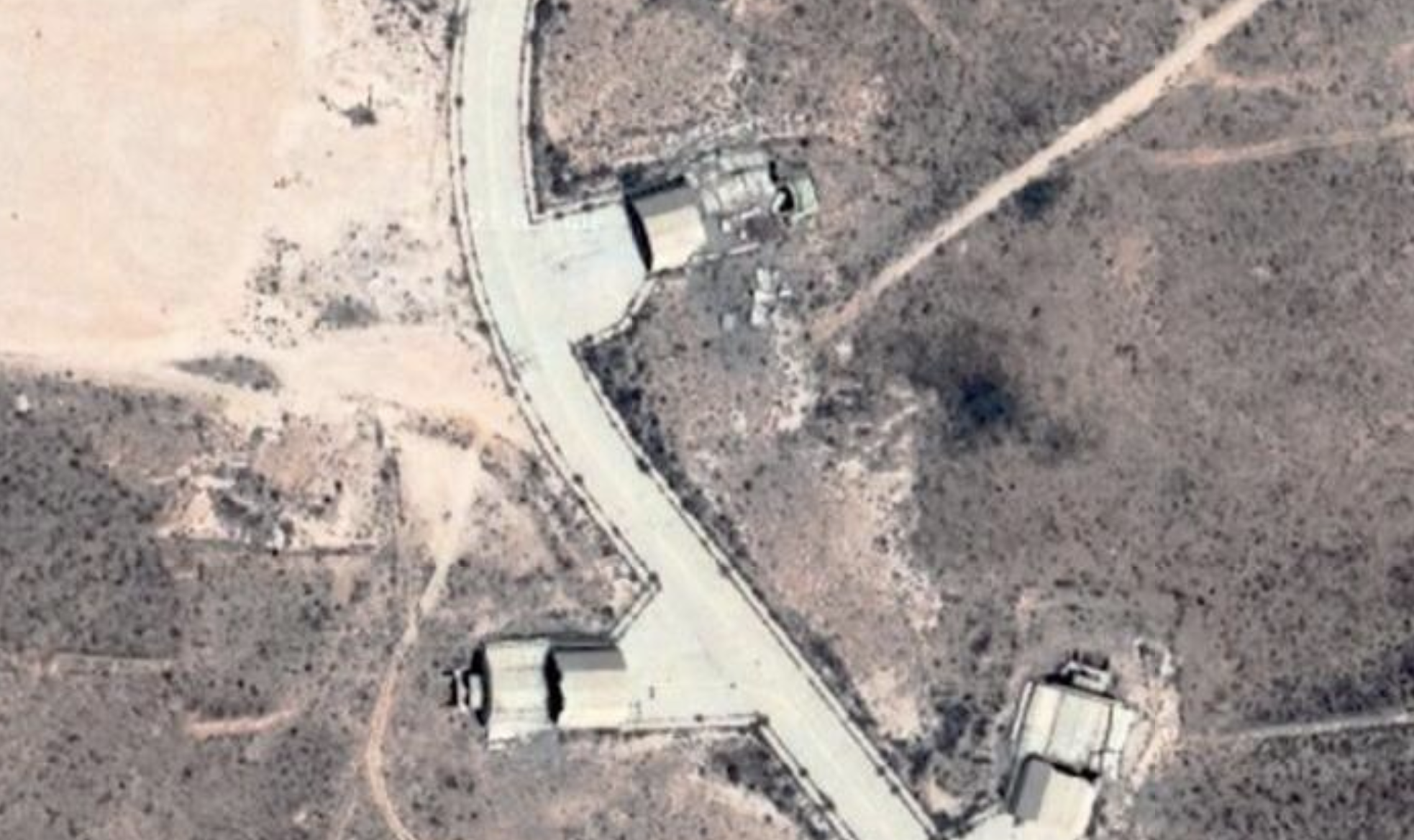
We examined satellite imagery for two successful strikes on Pantsir batteries.14 For the May 17, 2020 strike on Al Watiya airbase, a hardened aircraft shelter can be seen almost entirely destroyed. The entrance hangar had been targeted, likely by a drone, and then again hit by a larger, unknown munition15 as a Bayraktar TB2 would be incapable of causing such damage. Social media accounts extensively documented the delivery of a Pantsir16 as well as various strikes on May 1617 and 17, 2020.18
Figure 4: Destroyed hardened aircraft shelter al Al Watiya airbase (at longitude 32.478641, latitude 11.879423 via Google Maps, July 23, 2021).
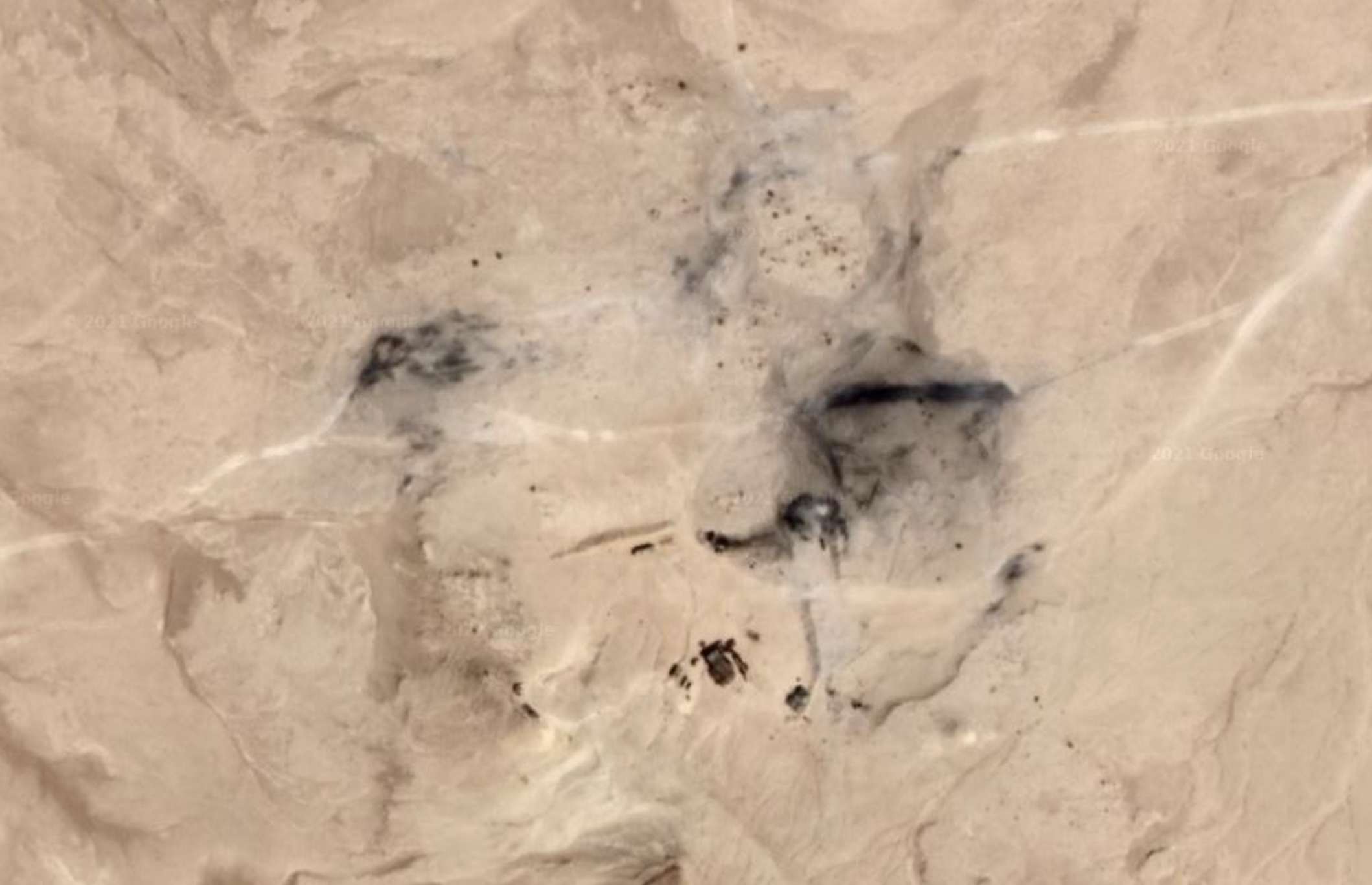
High resolution imagery of the strike near the southwest town of Sawknah on July 7, 2020 shows traces of one or several larger explosions and some sort of military structure in the desert, possibly an armored vehicle. The strike reportedly killed three Wagner operators in addition to destroying one Pantsir.19
Figure 5: Apparent traces of airstrike on a Wagner/LNA position near the town of Sawknah (longitude 29.167065, latitude 15.793217, via Google Maps, July 22, 2021).
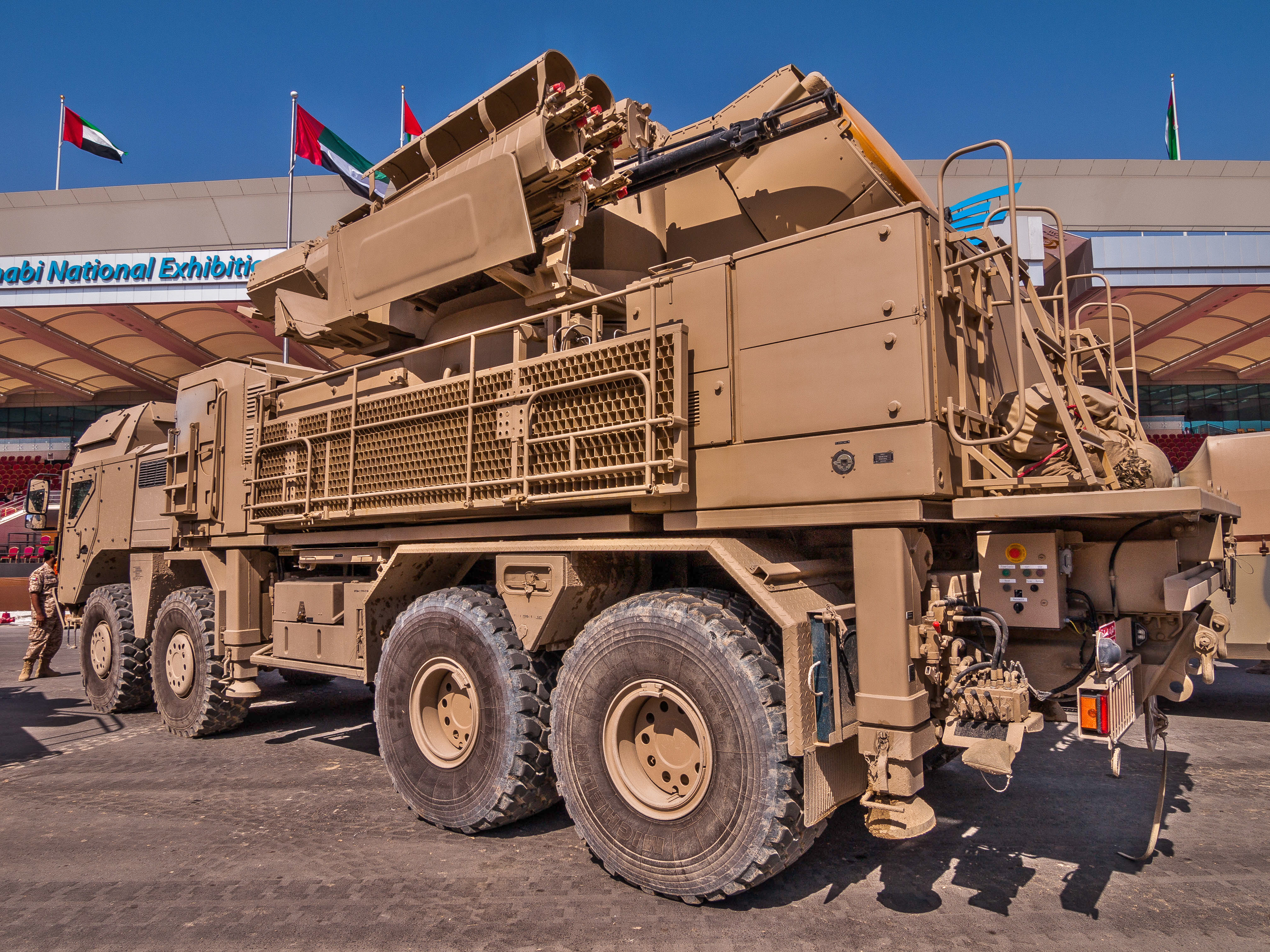
Russian moves to improve Pantsir performance following these and other losses in the Middle East would seem to bear out the supposition that the Russian mercenary expeditionary forces serve as an important component of the Kremlin’s strategy of using proxy fighters in contested theaters to experiment with different approaches to networked warfare. In May 2019, the Russian state news outlet Tass and other sources reported that the Pantsir S1’s manufacturer, the state-run KBP Instrument Design Bureau in Tula, gave its system an overhaul with a “75-kilometer range radar and an ‘advanced’ electro-optical target tracking system” to better cope with UAVs.20
One analyst has suggested that the upgrades to the Pantsir and the rollout of the Pantsir S1M were a direct result of heavy losses incurred in Syria and Libya.21 This view also seems to be corroborated by coverage of the changes to the Pantsir by Russia’s official state press organs.22 Still, as Michael Kofman, a leading expert on Russian military affairs has suggested, there are reasons to be skeptical of claims about the performance of weapons systems that appear in the official Russian state press.23
Counting Casualties
As noted earlier, the civilian casualty count during the Tripoli offensive was exceptionally high, and combatants on all sides both caused and sustained heavy losses. The Wagner Group appeared to take the biggest hits to its forces in the fall of 2019. While it is clear from the available public data that many of the Wagner Group’s casualties likely occurred as a result of Turkish drone strikes on Russian units operating and supporting Pantsir surface-to-air missile units, the exact numbers of those killed are still unknown.
The locations where major Wagner Group casualties were reported by the UN and Russian media, nonetheless, seem to be consistent with locations also mentioned in Libyan media coverage, such as in Sawknah,24 Espiaa,25 or Qasr Bin Gashir.26 For example, the first two named Wagner operators who allegedly died in Libya alongside five or six companions were Artyom “Hulk” Nevyantsev and Ignat “Benya” Borichev on September 9, 2019, in the Saturday market area south of Tripoli.
Meduza, an online journal that covers Russian and Eurasian affairs, reported that Nevyantsev was one of the 35 Russians killed in Libya that it had identified and said Nevyantsev had previously fought in the Donbas region. A GNA or Turkish drone strike on the village of Espiaa also allegedly killed Vadim Bekshenev on September 25, 2019, and he has since been reported missing in action by his family, according to the same report.27 A video28 of Bekshenev’s phone and its contents ended up on social media, as well as other belongings, including a credit card.29 GNA forces also found more footage of Wagner operators on the phone showing them interacting with locals in Qasr Bin Gashir.30
The Conflict Intelligence team unearthed more clues about Bekshenev’s background from the video post, social media posts on Bekshenev’s Vkontakte account, and other sources.31 A decorated Russian marine, Bekshenev’s Vkontakte posts indicate he served at one point with the Paratrooper Assault Battalion of the 165th Naval Infantry Regiment of the 55th Naval Division, which was based in Vladivostok in the Russian Far East until 2009.32 A specialist in electronic warfare who served in Syria with the Wagner Group was also at one point based in Russia’s highly protected military enclave in Kaliningrad, Bekshenev also appears to have served in the 841st Independent Electronic Warfare Center of the Baltic Fleet, which is based in Russia’s Western Military District.33 While the details of Bekshenev’s military background may seem at first glance not particularly unusual for a contract soldier, they point to larger trends we have observed in the recruitment patterns among military-aged Russian men who have claimed online to have an affiliation with the Wagner Group.
In 2020, New America conducted a review of hundreds of Vkontakte postings made by 384 users who are members of a popular Vkontakte microblog that tracks Russian mercenary activities and culture and who claimed to have ties to the Wagner Group. The users in this small network identified official Russian military units they had served in both their user-profiles and in a lengthy thread about the Wagner Group. Upon close inspection, we found that the Western Military district ranked as the top location for units self-reported by “Wagnerovtsy” or “Musicians” in the group of 384 users. While the sample size is admittedly too small to draw any firm conclusions and the fidelity of claims posted online requires further verification, information about prior service provides valuable insights into the Wagner Group’s recruitment patterns. One trend we noted is that many of those in our small dataset claimed to have served in military units that had been downsized or reorganized as part of Russia’s force deployment overhaul from 2008 to 2012.34 Most in this small subset claimed affiliation with military units based in Russia, but a substantial number also claimed to come from locations outside Russia. (See tables below for a breakdown of the data).
Table A – Reported Data by Military District
| Military District | Number of Reported Affiliations |
|---|---|
| Western Military District | 92 |
| Southern Military District | 73 |
| Central Military District | 48 |
| Eastern Military District | 17 |
| Northern Fleet Military District | 3 |
| Outside Russia* | 23 |
| Total | 256 |
*Outside Russia includes units in Belarus, South Ossetia, Ukraine, DPR and LPR
Table B – Locations* of Reported Military Units
| Location | Number of Reported Affiliations |
|---|---|
| Russian Federation | 229 |
| Belarus | 8 |
| Ukraine | 5 |
| Afghanistan | 2 |
| Donetsk People’s Republic | 2 |
| South Ossetia | 2 |
| Tajikistan | 2 |
| Armenia | 1 |
| Estonia | 1 |
| Kazakhstan | 1 |
| Lithuania | 1 |
| Luhansk People’s Republic | 1 |
| Moldova | 1 |
| Total | 256 |
In line with the analysis above, it is important to note that Russian and Libyan media outlets further identified several more Wagner Group operators who were killed and injured who served in Syria and often appear to have been drawn from units that fought in Donbas. In late 2019, for instance, Evgeny Ilyubaev reportedly died in Libya.35 The 55-year-old was from Novoorsk, Orenburg, and had reportedly fought in Ukraine and Syria as well. Another fighter from the Orenburg region named Gleb Mostov died in early 2020, according to the local Russian newspaper Orengrad.36 Mostov, who reportedly fought under an assumed name, was 27 years old and operated as a sniper.37 In all, our review of publicly available accounts suggests that the Wagner Group sustained an estimated 53 to 100 casualties in Libya from September 2019 to July 2020, of which 42 to 81 were killed and 11 to 19 injured (see Figure 4 below for breakdown).
Among the most notable Wagner Group casualty reports from the Libyan front was that of Alexander Kuznetzov. Kuznetzov, who famously posed for a photo along with Putin and the Wagner Group’s titular field commander Dmitry Utkin at a state banquet in St. Petersburg, is a veteran military officer who was trained at a military college in St. Petersburg and served for a time as commander of a special operations unit in Moscow.38 A Ukrainian organization has also suggested that Kuznetsov fought in Syria before deploying to Libya.39 According to the UN panel of experts on Libya, Kuznetsov was seriously injured and transferred to St. Petersburg for medical treatment in the fall of 2019.40
Operating under the call sign “Ratibor,” Kuznetzov is reportedly one of the founding members of the Wagner Group and he fought in Donbas with Rusich, a Russian paramilitary contingent believed to be part of the Wagner Group’s core network.41
Known for its neo-fascist ideology, Rusich featured prominently in a separate investigation New America conducted into the gruesome videotaped beheading of a Syrian national in 2017.42 Kuznetzov fought as a member of Rusich, a subunit under the command of Alexander Bednov’s Batman Battalion, which has also been accused of war crimes and was a well-known vector for specialized foreign fighter units in Donbas.43
Kuznetzov’s presence and that of several other Donbas veterans with possible ties to Rusich suggest that it is perhaps not coincidental that several Russian-operated Pantsir units appear to bear the distinctive markings of ancient pagan Norse runes painted on the door of the vehicle cab.44 Commonly used by Rusich on its social media accounts, the runes for the Norse god of war Odin were deployed by the Nazis in Germany and have also been appropriated by white supremacist groups.45
In addition, a BBC investigation found evidence for ties between the Russian military and Wagner Group operatives in Libya as well as signs that at least some Wagner operatives show a deep affinity for white supremacist symbols and ideology.46 The BBC investigation unearthed a list from January 19, 2020, ordering weapons that usually only the Russian army has access to, including a T-72B tank and a Sobolyatnik compact radar system.47 The BBC also gained access to a tablet previously used by a Wagner operator that contained information on an operative named Fedor “Metla” Metelkin, who had reportedly joined the Wagner Group five or six years ago—before the Russian PMSC joined the battle in Tripoli and when they were active in eastern Ukraine. An assessment of his social media contacts once again shows links to the neo-fascist Pagan scene.48
Figure 6: Reverse Side of the Medal Twitter post from July 2021 purportedly depicting Norse runes painted on the side of a Pantsir S1 mobile surface to air missile launcher in “North Africa.”

Videos and images from Libya’s frontline during and after the offensive on Tripoli show the Wagner forces scattered and scrambling into defensive positions across the Sirte-Jufra line. As the Wagner Group began pulling out of Tripoli in June 2020, they left traces such as landmines that likely came from Soviet era stashes and Russian-made booby-trapped munitions with Russian fuses. Incidents from landmines led to 30 to 40 civilian fatalities after citizens returned to their homes when the offensive ended.49 Suspected Russian-made landmines injured an estimated 78 to 110 people.50
In addition, around five civilians were reportedly killed by gunfire from Wagner operatives.51 A BBC investigation into those killings found that three of them were abducted and killed in Espiaa on September 23, 2019. Airwars identified one of the perpetrators as Vladimir Andanov, who had previously been implicated in extra-judicial killings in Ukraine.52
Toward the end of the Tripoli offensive, Wagner reportedly dug a large trench system near the frontline running from Sirte to Jufra.53 Pictures of Wagner mercenaries repeatedly showed up on social media during this period, often near bases such as Jufra, where they have been spotted in Emirati-produced armored vehicles.54 Besides their locations in Jufra,55 a review of social media posts suggests Wagner operatives have been sighted at the Al Khadim air base and possibly at smaller bases such as Brak.56
Figure 7: Wagner Group personnel and equipment losses in Libya between September 2019 and July 2020.
| Wagner Group Casualty & Damage Assessment from Suspected Strikes on Pantsir S1’s in Libya | Wagner Group Casualty & Damage Assessment from Suspected Strikes on Pantsir S1’s in Libya | Wagner Group Casualty & Damage Assessment from Suspected Strikes on Pantsir S1’s in Libya | Wagner Group Casualty & Damage Assessment from Suspected Strikes on Pantsir S1’s in Libya |
|---|---|---|---|
| Date | Location | Damage | Casualties |
| 09/09/2019 | Saturday market | Target damage unknown | 7 Wagner combatants killed or injured{{116}} |
| 09/23/2019 | Espiaa | Target damage U=unknown | 3-15 Wagner combatants killed{{117}} |
| 12/02/2019 | Qasr Bin Gashir | Target damage unknown | 9 Wagner combatants killed{{118}} |
| 04/02/2020 | Bani Walid | Target damage unknown | 1 Wagner combatant killed, 1 injured{{119}} |
| 04/03/2020 | Sirte | Target damage unknown | 20 Wagner combatant killed{{120}} |
| 04/09/2020 | Al Watiya | Target damage unknown | 4-6 Wagner combatant killed{{121}} |
| 05/16/2020 | Unknown | Target damage unknown | 15 Wagner combatant killed{{122}} |
| 05/16/2020 | Al Watiya | 1 Pantsir damaged{{123}} | 4 combatants killed, unclear whether Wagner or not{{124}} |
| 05/17/2020 | Al Watiya | 1 Pantsir destroyed{{125}} | Casualty count unknown |
| 05/20/2020 | Tarhuna | 3 Pantsirs destroyed{{126}} | Casualty count unknown |
| 05/20/2020 | Al Wushka | 2 Pantsirs destroyed{{127}} | Casualty count unknown |
| 05/20/2020 | Sirte | 1 Pantsir destroyed{{128}} | Casualty count unknown |
| 05/20/2020 | Souq Al Ahed | 1 Pantsir destroyed{{129}} | Unknown |
| 07/07/2020 | Sawknah | 1 Pantsir destroyed{{130}} | 3 Wagner combatants killed, 7 injured |
| 08/07/2021 | Jufra | None | 1 Wagner combatant killed{{131}} |
Citations
- Initial research on landmines and Turkish drone strikes by Airwars. Additional research from New America through local Libyan news media, social media, and government outlets. Telegram research on likely GRU-affiliated groups by Reverse Side of the Medal and Military Informant, two Russian social media verticals that track Russian mercenary activity,and additional investigations on Russian media outlets. For sources see: Reverse Side of the Medal’s Vkontakte page here: source; archived version: source
- Benjamin Strick, Twitter, August 28, 2020. source
- Jalel Harchaoui, Twitter, June 8th, 2021. source; AFRICOM, Twitter, May 27, 2020. source; AFRICOM, Twitter, July 24, 2020. source
- Oliver Imhof, Airwars, September 25, 2019. source
- United Nations Panel of Experts on Libya report, March 8, 2021, 17. source
- Joseph Trevithick, “The United States Smuggled A Russian-Made Pantsir Air Defense System Out Of Libya: Report,” The Drive, January 27, 2021. source; Oryx, “Al-Watiya – From A Libyan Super Base To Turkish Air Base”, February 12, 2021. source
- Libyan sources reporting on losses on the LNA end can often be highly partisan due to their affiliation with the GNA, Turkey, or other anti-Haftar groups. Strikes in remote desert locations can be even more challenging to verify because of the difficulty with distinguishing features when using commercially available open-source satellite map applications such as Google Earth.
- Phone interviews with former U.S. defense official and Libya Government of National Accord official, December 2020. See also: Joseph Trevithick, “Two Turkish Frigates Appear Off Libya Amid Reports Of Troops And Armor Landing Ashore,” The Drive, January 28, 2020. source
- Clash Report, Twitter, May 21st, 2020. source
- Seth J. Frantzman, “Turkey pro-government media: ‘Jews overrepresented in Biden Cabinet,” Jerusalem Post, January 24, 2021. source
- Tulsky 1, “Deputy Defense Minister of the Russian Federation visited the Tula ‘Scheglovsky Val,’” January 1, 2019. source
- Defense World, “Russian Pantsir Air Defense System- Sitting Duck or Top Dog?,” June 19, 2020. source
- Defence Express, “An Estimate of How Many (Pantsir) S1’s Were Lost,” (“Пораховано, скільки "Панцир С1" втрачено у Сирії та Лівії,) June 5, 2020. source
- Our analysis included imagery reviewed using Google Earth satellite imagery and analysis provided by C4ADS.
- Stijn Mitzer and Joost Oliemans, “Al-Watiya – From A Libyan Super Base To Turkish Air Base”, Oryx, February 12, 2021. source
- Unknown Soldier, Twitter, May 16, 2020. source
- Mahmoud Rufayda, Twitter, May 16, 2020, source
- Oded Berkowitz, Twitter, May 16, 2020. source
- Jalel Harchaoui, Twitter, July 7, 2020, source
- For more detailed background about the Pantsir S1 and on the upgrades to the Pantsir S1, see: Rosboronexport, “Pantsir S1, Anti-Aircraft System-Perfect Protection of Any Object,” undated, source, “New Pantsir-S1M upgraded after Syria to be able to hit any drones — designer,” May 16, 2019, source and Strategy Page, “Winning: Not Pantsir,” June 26, 2020. source
- Strategy Page, “Winning: Not Pantsir,” June 26, 2020. source
- Tass, “New Pantsir-S1M upgraded after Syria to be able to hit any drones — designer,” May 16, 2019. source
- Sebastien Roblin, “Does Russia's Anti-Drone Pantsir S1 System Even Work?” The National Interest, October 26, 2019. source
- Il Kanguru, Twitter, April 14, 2021, source
- Libya Observer, “Libya: Airstrikes by Libyan Army kill senior leaders from Haftar's forces, Russian mercenaries,” September 23, 2019, source
- Aldin, Twitter, December 2019, source
- Meduza, “A small price to pay for Tripoli,” October 2, 2019, source
- The Cutting Sword, Twitter, September 26, 2019, source
- Melad Sassi, Twitter, September 25, 2019, source
- Libyan Pen, Twitter, September 26, 2019, source
- Conflict Intelligence Team (CIT), “Russia’s ‘Africa Korps’: ‘Wagner’ mercenaries on the Frontline in Libya,” September 27, 2019. source
- Conflict Intelligence Team, op.cit., 2019.
- Conflict Intelligence Team, op.cit., 2019.
- For background on Russia’s military reforms and modernization efforts undertaken under Russia’s former minister of defense Anatoly Serdyukov see: Centre for Analysis of Strategies and Technologies, “Serdyukov’s Plan for Russian Military Reform,” Moscow Defense Brief, 4;14, 2008. source
- Znak, “«Активная гражданская позиция, патриот»,” October 21, 2019, source
- Orengrad, “В Оренбуржье похоронят бойца, погибшего в Ливии,” February 6, 2020, source
- BBC Russia, “Обстоятельства гибели – "не наше дело". Под Оренбургом похоронили офицера, который мог погибнуть в Ливии,” February 14, 2020, source
- Fontanka, “‘Tramp,’ “Gray,’ ‘Wagner and ‘Ratibor’ Flank the President,” (“Бродяга, Седой, Вагнер и Ратибор окружили президента”) August 17, 2017. source
- Myrotvorets, a Ukrainian non-profit organization that tracks the activities of Russian-separatist forces and their supporters in Donbas, reported that Alexander Kuznetsov was also convicted on corruption charges in 2010, but it is important to note that Myrotvorets does not make its research methods publicly available, and it is believed that former members of the Ukrainian security services run the site. For more background, see Kuznetsov summary profile information on the Myrtvorets website: source
- United Nations Panel of Experts on Libya report, March 8, 2021, 446, source
- Myrotvorets, op.cit.
- Candace Rondeaux, “Inquiry into the Murder of Hamdi Bouta and Wagner Group Operations at the Al-Shaer Gas Plant, Homs, Syria 2017,” New America, June 8, 2020. source
- Tony Wesolowsky and Yaroslav Kreshko, “Italy Moves To Crack Down On Its Fighters In Ukraine's Donbas,” Radio Free Europe, Radio Liberty, Aug. 16, 2018. source
- Reverse Side of the Metal, Twitter post, July 28, 2021. Original Twitter post: source; archived version: source
- Anti-Defamation League, “Runic writing (racist),” undated, source
- Ilya Barabanov & Nader Ibrahim, “Wagner: Scale of Russian Mercenary Operation in Libya Exposed,” BBC, August 11, 2021. source
- Nader Ibrahim and Ilya Barabanov, “The Lost Tablet and the Secret Documents”, BBC, August 11, 2021, source
- BBC, “Haftar's Mercenaries: Inside the Wagner Group,” August 10, 2021, source
- Libya Observer, “Child killed, three injured in mine blast in south Tripoli,” March 18, 2021, source
- Initial research by Airwars, additional open-source research by New America with focus on local medical sources
- Libya Observer, “Wagner mercenaries kill an innocent citizen and injure another,” July 21, 2020, source; The Cutting Sword, Twitter, September 25, 2019, source
- Nader Ibrahim and Ilya Barabanov, “The lost tablet and the secret documents”, BBC, August 11, 2021, source
- The Libyan Observer, “Wagner Mercenaries Are Still Digging Trenches between Sirte and Jufra,” March 21, 2021. source
- Sargon Courtenay, Twitter, June 6, 2021, source
- Oded Berkowitz, Twitter, April 14, 2021, source
- Oded Berkowitz, Twitter, March 6, 2021, source