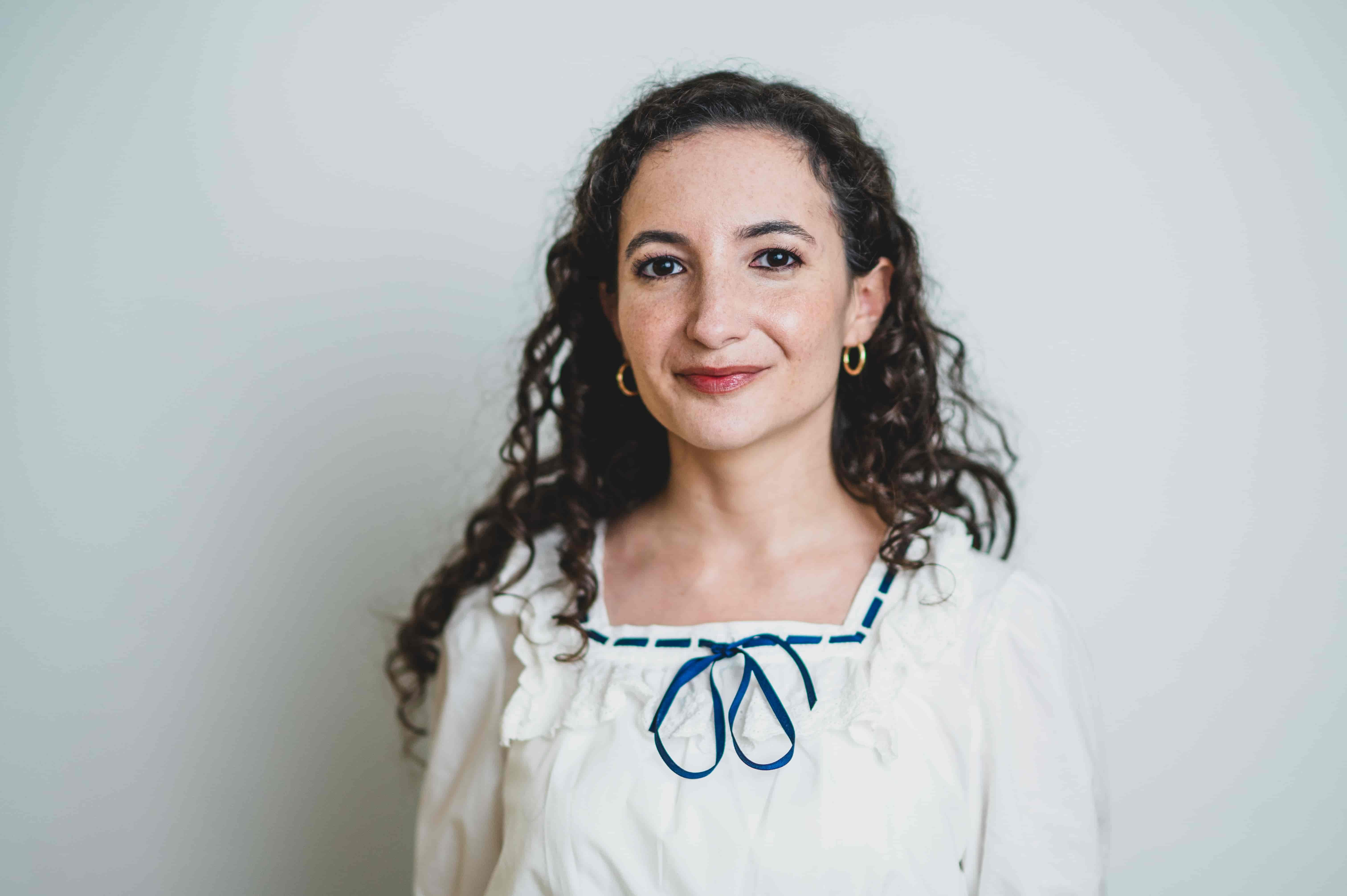
Emily Tavenner
Communications Director, Technology & Democracy, New America
“Tech for the People, by the People” is a series featuring conversations with individuals who want tech to benefit the public—not solely the powerful. Instead of innovation for innovation’s sake, our guests prioritize socially-responsible innovation that’s shaped by us for us. From environmental scientists to fiction writers, there isn’t one kind of profession or set of work that contributes to tech for the public interest; that’s what this series sets out to show.
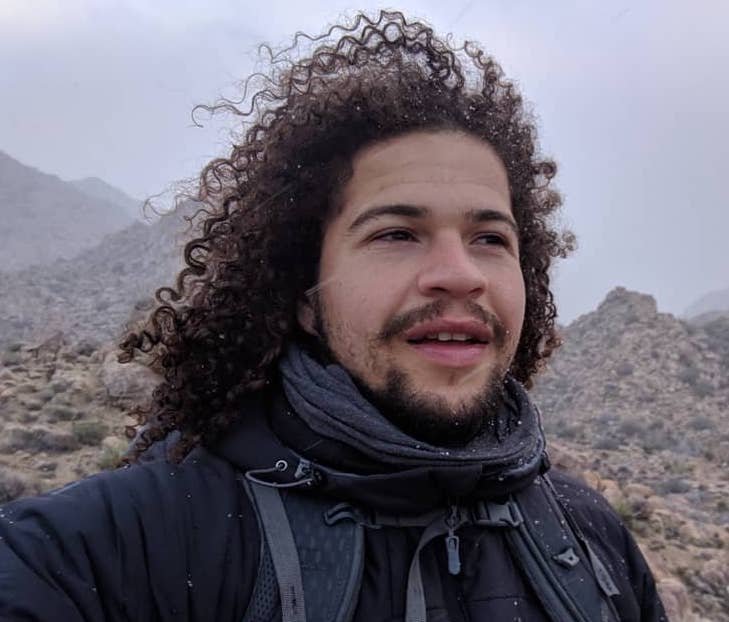
Gabe Watson, a Digital Service for the Planet (DSP) Fellow, joins us for a conversation about the importance of accessible data in environmental protection efforts. Gabe focuses on evaluating environmental data and technology and developing applications for that data. We spoke with him about why he wanted to tackle environmental issues through his work in data and what he hopes to accomplish through the DSP fellowship.
The following conversation has been edited for brevity and clarity.
Emily Tavenner: It’s clear you’ve been invested in environmental issues for a while—you focused on environmental policy at university and have worked to support a number of conservation groups in your career. What inspired you to tackle environmental issues with the specific lens of tech and data?
Gabriel Watson: I’ve cared about the natural world long before my career. As a kid, backpacking trips were the family vacation. Although I grew up in urban Baltimore, we went on road trips to West Virginia, Pennsylvania, and up to New York. Backpacking was the imprint on my childhood, and from there, I got involved in different activities in the natural space.
Though originally I was only studying economics in college, I pivoted halfway through to honing in on spatial science—learning geographic information systems (GIS) and minoring in urban environmental policy with the end goal of being employed in the environmental field. I took the analytical skillsets I was developing like econometrics and modeling, and easily transferred that statistical programming. Those skillsets lead to research positions—one of which was getting involved with California’s environmental justice screening efforts, CalEnviroScreen. From there, I dove headfirst into environmental and social data and the problems you can address with that data.
After college, I continued to do similar work at different orgs, from the University of Southern California’s Equity Research Institute to a nonprofit software development shop that builds web platforms for community science and restoration efforts. Moving to EPIC, I expanded my focus to understanding the “little p” and “big P” policy associated with data creation, management, and access. I was already confident at crunching numbers and understanding subject matter nuance, but started to form an understanding of how all the pieces fit together.
State and federal agencies produce a whole lot of data, and it’s taxpayer-funded. Working at the Environmental Policy Innovation Center (EPIC), I focused on this question: “What are the systemic reasons why we have generally poor environmental data and software delivery?” Generally speaking, that domain lags 10 years behind the rest of the world. It’s interesting when you compare it to immediate, consumer-relevant data—like the weather, for example. That data is accessible right away in your palm. There are hundreds of core information producers and tens of thousands of third-party and second-party websites or apps for weather. It’s proliferated. But for all the other environmental data, that’s not the case.
Data is an abstraction of reality in some way, shape, or form. It will never be what reality is—as much as we think it will be. And certain data represents certain perspectives on reality. Some are better than others. If we continue with the weather data analogy, you have everything from information in the Farmer’s Almanac to a real-time weather station. The Farmer’s Almanac is helpful for questions like “What season do I have my wedding?” Meanwhile, real-time weather data is good for questions like, “I have to go get groceries, is it going to be raining in 20 minutes?”
What data is useful at what point in time and for what decision? And what are the perspectives on reality that you’re willing to accept? What are things you’re not willing to accept? I think that, to a certain extent, we put data on a pedestal. But then also the inverse. The provider makes claims, but although the data can represent people, it’s neutral in terms of its deposition on what it’s trying to describe. Being critical about it and understanding “here’s where it’s good to use this data” and “here’s where it’s bad” is a big portion of making it useful.
Tavenner: You’ve been part of the EPIC team for four years. Why, in particular, were you interested in becoming a DSP fellow?
Watson: I think the DSP concept really represents this idea of a new future in terms of modernizing and making environmental data and software authentically useful and operable by anyone, from the general public to people writing federal policy. I think being able to deliver that information at the right time in the right format is invaluable.
We’re a group of people who are trying to grapple with a whole stack of problems in the domain of environmental data and service delivery. What’s great is we can cross-pollinate our work and ideas. Another fellow, JR Washebeck, is doing work on how digital twins can be used in forestry and adaptive management; it makes me wonder how we can use digital twins to represent the relationship between watersheds and water systems and municipal growth and land use change.
Tavenner: Why do you think the US needs a group like DSP fellows working together right now?
Watson: There’s a high hill to climb when it comes to environmental protection, and it requires a multi-pronged approach, collaboration, and coordination between people. I think the data piece is a really core part of the environmental movement. It helps us sum up anecdotal and smaller data-driven insights into a collective picture of where we should be putting resources, who we should be prioritizing, and where we are doing work. For us to operate as a successful movement—from someone picking up litter all the way to massive, multimillion-dollar coastal resiliency projects—we all need to be mindful of and working toward the same big picture.
If we have the data and software and nothing else, it can be an incredible, sometimes life-saving, intervention point, but it’s not the driving core. However, it’s how I can help those who are doing other types of environmental work. Being able to change how we make decisions on environmental priorities so that they’re more data-informed and collectively oriented supercharges the environmental protection movement.
Tavenner: What do you want to accomplish through this fellowship?
Watson: There are two projects that I’m really excited about, one being the drinking water tool. That work represents what it looks like to take a whole domain of drinking water and come up with a data model that is flexible to the various differences and similarities across data generators. It’s a classic kind of data siloing and harmonization exercise. Over three hundred million people consume drinking water from a community water system, and the infrastructure has been around for, in some cases, over 100 years.
If you were to count how many entities generate drinking-water-related data across the country, it would be in the thousands, and they don’t all talk to each other. Meanwhile, they’re all generating incredibly rich data. For example, combining the Safe Drinking Water Information System with the Environmental Protection Agency’s Superfund sites—getting all of that data in one place and the tool itself being nimble to what a particular user cares about or what lane they’re in—there are a thousand different thin lines to walk, balances to strike and compromises to make.
It’s not trying to be everything for all people. But the fact that a lot of people are implicated and a lot of people care about drinking water, there’s going to be different levels of information needed by different people. And trying to meet those audiences at the right moment is a challenge, but it’s a really worthwhile software development and data engineering problem to solve. The water sector has a wide variety of players. And so the type of people that we get to meet doing that work and hearing how they’re passionate about a particular aspect of it—the data that they use, the struggles that they have—is a really exciting piece of the work.
The tool represents a really deep well of data and proof of a fleshed-out data model and stream that can accommodate all sorts of different types of data, all harmonized at the water system geography level.
The other work that I’m really excited about is research that we’ve been doing around AI in the environmental space and, in particular, the impact of data centers. These are the actual factories of largely generative artificial intelligence. That work has taken some twists and turns, given how rapid the landscape changes on that. About a year ago, we went out and interviewed over 30 conservation tech practitioners from nonprofit and federal agencies. We asked them how they use or don’t use, trust or don’t trust, and think about or don’t think about artificial intelligence. We saw a massive spread in terms of all of those different axes. Some people said they used it all the time, as they’ve been working in USDA Forest Service inventory assessments for the past 20 years. They create synthetic data because they can’t release actual forest counts (concerns around endangered species, etc.), but it’s useful information to a variety of stakeholders. One person was using it to identify fish faces!
Now, these types of capabilities exist because the barrier to entry has been lowered dramatically. Throughout our conversations, there is a cost-benefit here because AI consumes water, land resources, sometimes communities, and whole forests. If you’re in the environmental space, you’re always asking yourself: “Is what I’m doing the right thing? And is what I’m doing, especially if it’s got some impact on the environment, worth it?”
Understanding data centers and their impacts on our landscape—on our water resources, on people—is really important and hard work. The information space is very nascent, and it is way different than drinking water.
Tavenner: If you were to envision a future where environmental data and tech were being used seamlessly so that conservation efforts are successful, what would that look like?
Watson: Whether it’s a city tree planting manager trying to find out where the hottest spot in the city is or someone trying to figure out where we’re going to run out of drinking water in the next five years. All of those pieces being in a format that we know we have the ability to accomplish—that’s the bright shiny picture on the other side.
It’s having the right information at the right time to the right person. To a certain extent, we know what that future looks like because we experience it in so many other ways. For example, the cell phone and the amount of information about virtually anything that you can get on it is insane. We have a lot of sources, and so much of the work is data generation and making sure it goes somewhere in a way that is aggregable, deliverable, and interoperable. Also, we don’t do enough environmental monitoring. These programs have long been underfunded, and there’s a lot of data that’s out there that’s still being collected in a way that just sort of stops at some point and gets left on the table. That’s one component of it: us seriously investing.
I’ll close by saying that the data and software piece is integral, but the people and the resources come first. We’re always trying to do less with more. So how can we help make the work that people are already doing more efficient, playing that role within the network and understanding that everyone has a spot? I think it is just important in our success, considering the downsides that we see from data and software in every other aspect of our lives—our data privacy and algorithmic decision-making. How can we do this in a better way and lead with people first?
Communications Director, Technology & Democracy, New America
Communications Assistant, Technology & Democracy, New America