Laura Bornfreund
Senior Fellow, Early & Elementary Education

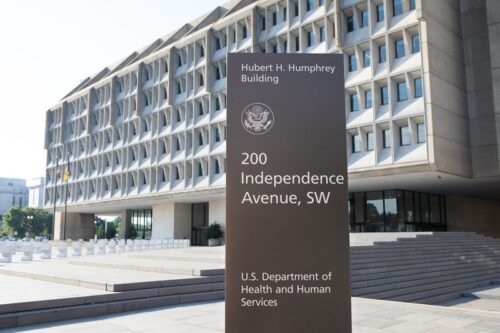
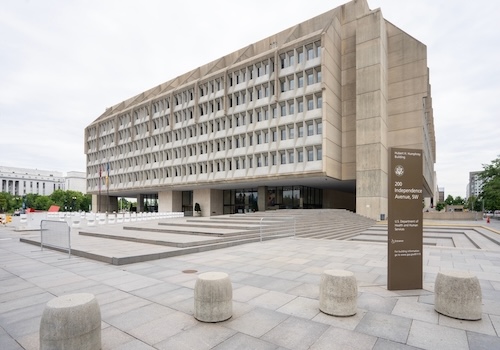
This morning Secretary of Education Arne Duncan and Secretary of Health and Human Services Kathleen Sebelius announced that $500 million will be directed toward early education in the next six months. The money will be awarded through the Race to the Top – Early Learning Challenge, a new state-level competition that Duncan and Sebelius hope will spur states to create holistic, coordinated early care and education systems (including players like childcare centers, Head Start, state-funded pre-k programs, and home-visiting programs) to close the school-readiness gap.
The officials divulged no information on how many winners they expected to name, nor how the money would be divvied up. By law, the money must be awarded by December 31. A notice inviting applications will be posted by the federal government by the end of the summer, according to officials in a conference call this afternoon from the White House, the U.S. Department of Education and the U.S. Department of Health and Human Services.
The program is designed to cover the “birth to age 5” years – it does not include kindergarten, nor does it extend up through third grade, an omission that was dictated by the legislation approved by Congress, according to Jacqueline Jones, senior advisor to the Secretary for early learning in the Department of Education.
The new program was borne out of the 2011 continuing appropriations bill, which was passed last month. In that bill, Congress allocated $700 million in new funding to the Race to the Top grant program and added early learning as another strategy to be added to four education reform areas outlined in the American Recovery and Reinvestment Act of 2009, which guided the structure of the Race to the Top program. (For more information read here and here.)
It is significant that such a large portion of the $700 million – nearly three-quarters of it – will be dedicated to early learning programs. Early childhood advocates were cheering about that news throughout the day, hoping that it will send a message to states about the importance of investing in childcare and state-funded pre-k programs. The remaining $200 million, officials said, would be made available in a new competition for the nine states who made it to the final round of RTTT* but didn’t win last year. (South Carolina has already declined.)
For the Early Learning Challenge program, Congress specified that the Departments of Education and Health and Human Services must jointly administer the early learning funds and outlined three required criteria. To win a portion of the $500 million, states must:
· Increase the number and percentage of low-income and disadvantaged infants, toddlers, and preschoolers who are enrolled in high-quality early learning programs;
· Design and implement an integrated system of high-quality early learning programs and services; and
· Ensure that any use of assessments is consistent with the recommendations of the National Research Council’s reports on early childhood. (One key report is Early Childhood Assessment: Why, What, and How)
As we said in a previous post, the three criteria listed above don’t come close to the level of detail that was first proposed in 2009 in legislation for the Early Learning Challenge Fund but they are complimentary.
Today’s announcement did not provide any additional details on what the states’ applications will have to include. That will be an area of considerable speculation over the next few months.
But here are some things we do know:
Funds will go directly to states and the application framework is expected to look similar to the Race to the Top application. ED and HHS are aiming to give states enough time (at least six weeks) to submit thoughtful, high-quality applications. The areas that states will be required to show progress in or to develop plans to address are still undefined. In light of the short turnaround time the Departments were granted a waiver to hold an official public comment period, and instead are asking stakeholders to weigh in with their suggestions, ideas and comments on the Race to the Top-Early Learning blog post.
Based on information from Obama Administration officials thus far, here is what we anticipate:
1) States will be prompted to challenge the “status quo” as they were in the Race to the Top- K-12 program. Duncan said this means addressing uneven quality and leveling the playing field for children beginning kindergarten.
2) States will be asked to consider the health, social-emotional and cognitive development of young children. Sebelius talked about the importance of each of these domains in ensuring that children are ready to succeed in school and in life.
3) Systems-building will be key. A press release from the Departments said that states will be encouraged to “bolster training and support for the early learning workforce, create robust evaluation systems to document and share effective practices and successful programs and help parents make informed decisions about care for their children.”
As to what states will really be asked to address in their applications, Early Ed Watch sees three possible existing models that could define the areas of focus for the Race to the Top-Early Learning Challenge.
1) The four assurances from the American Recovery and Reinvestment Act, which requires states to focus on:
a. Effective teachers
b. High-quality standards and assessments
c. Data to support instruction
d. Plans to turnaround low-performing schools
2) The Early Learning Challenge Fund legislation, which called for:
a. Early learning standards reform
b. Evidence-based program quality standards
c. Enhanced program review and monitoring of program quality
d. Comprehensive professional development
e. A coordinated system for facilitating screenings for disability, health, and mental health needs
f. Improved outreach and support to parents
g. A process for assessing children’s school readiness
h. Use of data to improve child outcomes
3) The three basic areas included in the Full-Year Continuing Appropriations Act of 2011 that we mentioned above. The Departments of Education and HHS could simply choose to stick with the prioritiesof Congress.
Then there is always the possible wildcard option: The priorities that arise from the comments. So, be sure to offer your own suggestions.
Look for several more posts on the Race to the Top Early Learning Challenge in the coming days, weeks and months as we learn more and provide commentary on the implications of this new initiative. One area that we’ve stressed – the connection between the early years and the early grades of elementary school – is missing in this grant program, which we expect may cause trouble down the road. But the larger point – the availability of new money for early childhood programs that are extremely strapped for funds and the insistence on building better systems for young children – deserves big applause.
* The first phase of the original Race to Top program, which provided $4-billion in grants, featured only two winners, Delaware and Tennessee. In the second phase, 10 won. This time, as then, all 50 states, Washington, D.C. and Puerto Rico are invited to compete in this new Early Learning Challenge program.
P.S. Already, the National Institute for Early Education Research is providing some helpful context in its blog post today, “Winning the Future: Early Learning, Race to the Top, and Federal Funding.”
Senior Fellow, Early & Elementary Education