Lisa Guernsey
Senior Director, Birth to 12th Grade Policy; Co-Founder and Director, Learning Sciences Exchange

There are at least 10 actions the federal government can take to improve early education without rewriting laws or requiring a large infusion of new funding, according to a report released Friday from the Center for American Progress (CAP). Among them: partnering with states to create common early learning standards, improving coordination and consistency in federally funded technical assistance programs, and requiring districts or schools to expand children’s participation in early learning programs to turnaround failing elementary schools.
The report, “Increasing the Effectiveness and Efficiency of Existing Public Investments in Early Childhood Education,” was written by Donna Cooper, a senior fellow on CAP’s economic policy team, and Kristina Costa, research assistant for CAP’s Doing What Works program. To gather ideas, Cooper and Costa drew on the expertise of a committee of 19 early childhood researchers and policy specialists that met several times over the past year. (I participated on behalf of the Early Education Initiative here at the New America Foundation.)
While the report acknowledges that “additional federal and state financing is needed” to ensure that a greater number of children have access to good early learning programs, the committee was charged with recommending how to improve the quality of what is currently funded without relying on Congress or new funding streams.
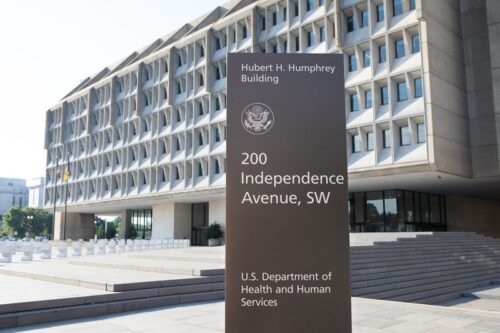
The report highlights 10 areas that can be strengthened or reformed by officials in the U.S. Department of Education and the U.S. Department of Health and Human Services:
1. Partner with states to align early learning standards that define expectations for all early learning programs
2. Invest with states to build assessments and assessment systems that demonstrate standards are being met
3. Increase consistency, quality, and systemwide access to federally procured and federally required, locally procure technical assistance
4. Implement a more consistent, state-of-the-art approach to high-quality professional development for existing staff and help determine the optimal set of skills and knowledge that should be imparted in preparation programs for early childhood program staff
5. Improve early childhood data and harmonize reporting requirements to help increase knowledge of inputs and outcomes
6. Promote the replication of successful strategies to build continuity from early childhood programs to kindergarten and continue to remove data and other bureaucratic barriers to successful continuity systems
7. Build more federal, state, and local capacity to meet the increasing demand for culturally and linguistically appropriate services for children who are dual-language learners
8. Close the gaps in universal developmental screening across all federally supported early learning or care programs
9. Require expanded early learning program participation as a means of boosting performance of failing elementary schools
10. Establish a permanent office that creates a common infrastructure to advance system reforms for both the Department of Health and Human Services and the Department of Education
We could write a blog post on each of the above bullet points, but let’s zoom in on one that doesn’t get as much attention in the early childhood world as we think it should: the point that early childhood investments should be a big part of turning around failing elementary schools.
The report calls on the Department of Education to advance efforts to “increase the percentage of incoming kindergarten students that have participated in high-quality early childhood programs” and increase “the availability of full-day kindergarten.”
In multiple studies, these two interventions have been associated with learning gains for children that can be sustained, building on each other throughout a child’s years of school. For example, researchers studying the Chicago Parent-Child Centers – a program originally designed to extend from pre-k through 3rd grade, with explicit inclusion of full-day kindergarten – have found that participation in the program is connected with a person’s success in life 25 years later. Studies on the power of high-quality pre-K programs are legion, and research on full-day kindergarten has shown that children who attend full-day programs have more success in literacy and math skills compared to counterparts who only attend for half the day. And yet pre-K programs struggle to maintain funding and kindergarten is on the margin, if considered at all, in education reform efforts.
As we’ve noted in our issue brief on 12 Ideas for the 112th Congress, and in a previous blog post and recent podcast, the U.S. Department of Education’s efforts to turnaround schools is missing this emphasis on access to high-quality pre-K and full-day kindergarten. Expansion of early learning programs is described as being encouraged or permitted, but not required.
The CAP report’s recommendation strengthens the call: The U.S. Department of Education should require that school improvement strategies at the elementary level “include efforts to increase enrollment of the incoming kindergarten class in high quality early childhood programs and full-day kindergarten.”
We hope that officials at the department who oversee the School Improvement Grant program will take heed.
P.S. For more resources on building alignment between pre-K, kindergarten and the early grades of elementary school, see our ever-growing Before Birth & Up Through Third Grade resource page.
Senior Director, Birth to 12th Grade Policy; Co-Founder and Director, Learning Sciences Exchange