What is a Smart City?
As researchers from the Brookhaven National Lab observed in 2000:
A vision of the city of the future has been presented—one that rests on the integration of science and technology through information systems. A future that will require a re-thinking of the relationships between government, city managers, business, academia and the research community. The title of this vision is Smart Cities.1
This observation sets the stage for our study of smart cities.
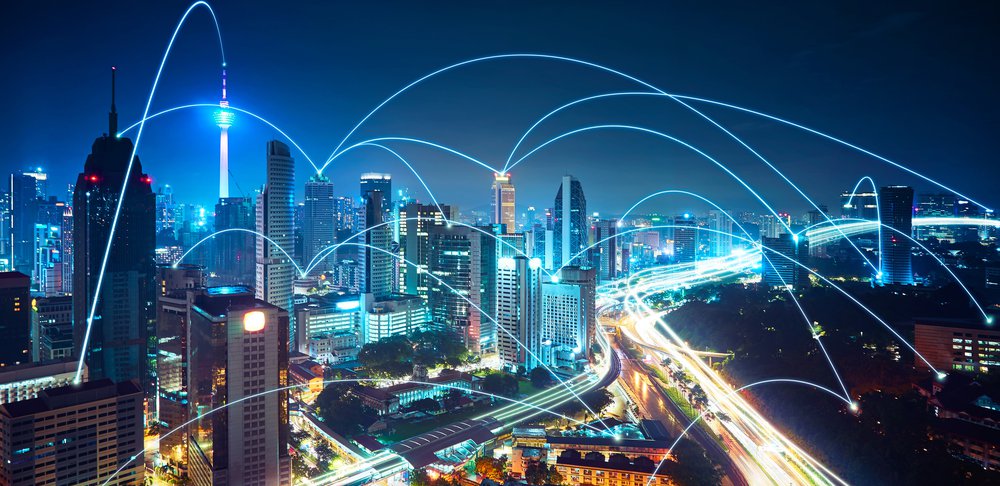
Our definition does not stray much from Hall et al’s. A smart city uses information and communication technologies to increase operational efficiency and effectiveness, share information with the public, and improve the quality of services. To achieve these aims, cities deploy technology across various parts of city infrastructure. These technological systems will use sensors to collect data about the environment and city operations, centralized and distributed or embedded computing power to process that data, and actuators to manipulate urban infrastructure and adjust city operations. In this sense, the smart city transforms the city into a large socio-technological system (or a system of such systems) that “senses, thinks and acts.”2
But this wide-scale implementation of technology introduces challenges in risk transfer, liability, citizen protection, data management, and citizen consent.
Citations
- Hall, Robert E., B. Bowerman, J. Braverman, J. Taylor, H. Todosow, and U. Von Wimmersperg. The Vision of A Smart City. Report. Brookhaven National Laboratory. Paris, France: 2nd International Life Extension Technology Workshop, 2000.
- Schneier, Bruce. "The Internet of Things Will Be the World's Biggest Robot." Schneier on Security. February 4, 2016. source.