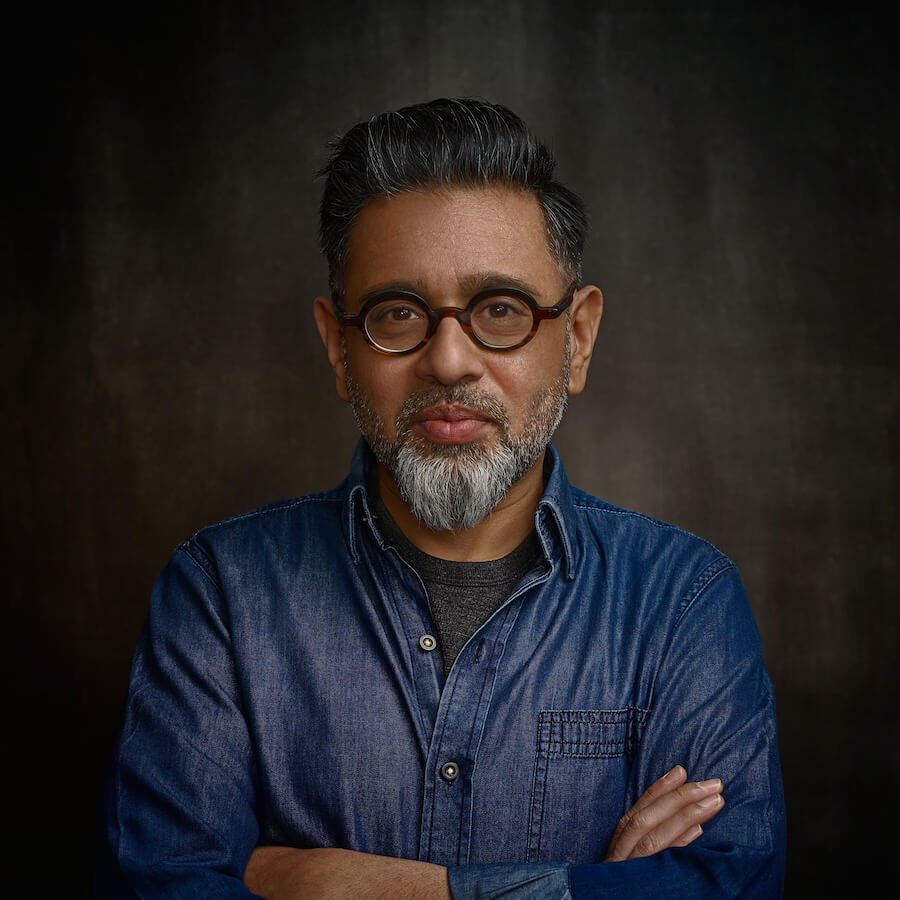
Saket Soni
New America (ASU Future Security) Fellow, 2026

New America (ASU Future Security) 2026 Fellow Saket Soni spoke about his forthcoming book, Hurricane Hustlers, for “Three questions” in The Fifth Draft, the Fellows Program’s monthly newsletter. Soni is the founder of Resilience Force, where he works to protect and empower disaster recovery workers.
Your forthcoming book, Hurricane Hustlers, examines the booming—and often hidden—economy behind climate disaster recovery. What convinced you that this book needed to be written?
Behind the tale of an economy is the story about morality. When hurricanes and other climate disasters strike, many people dive in, and everybody’s hustling, from teenagers hawking bottled water to undocumented roofers hammering at shattered homes to the CEOs of multinational restoration companies snapping up contracts. Everyone is grabbing for their piece of the $100 billion-plus the U.S. spends on disaster repairs every year. But you get to the point when the hustle undoes you—personally, emotionally, even spiritually. That brings us to the question of whether we can build something better than an endless hustle in the aftermath: a more resilient future. I’ve gone deep with many people who’ve lived out this journey, many of whom I’ve known for 20 years, since Hurricane Katrina. Their stories are the heart of this book.
Disasters lay bare the way we all share a common fate. Facing them together is a way to build a common future.
Disaster recovery is often discussed as emergency spending, leaving this resilience work as an afterthought. What would be a better way for America to understand disaster recovery, especially as climate disasters accelerate?
As I wrote in an op-ed in The New York Times last month, we’ve been locked in a cycle of wait-repair-repeat for too long. The crisis is even more acute now that the Trump administration has thrown federal emergency response—often inadequate in the best of times—into chaos. But there’s a hidden opportunity right now for states to get right what the federal government has long gotten wrong. States can shift to a model of preparing and adapting before disasters hit, which is vastly more cost-effective than only repairing after. And as we make this shift, we need to focus on building up a skilled, scaled resilience workforce that can prepare and adapt year-round.
As climate disasters become more common and public spending on recovery ramps up, how decisive is this moment and what can we do to protect our own communities now and in the future?
Climate disasters are inevitable. Catastrophic destruction is not. Thoughtful people are looking around the corner and finding ways to rebuild our homes and communities, not just back to what they were, but more resilient for the future. They’re building new social cohesion, too. I’ve seen for myself how building resilience can bring together people who might think they’re on opposing sides of American politics. I think about the Republican mayor who ran on an anti-immigrant platform, but after a hurricane, started bringing immigrant resilience workers water and asking what else they needed. More people are also coming to understand that building resilience is an issue of American security. Disasters lay bare the way we all share a common fate. Facing them together is a way to build a common future.
Subscribe here to receive next month’s issue of The Fifth Draft.
New America (ASU Future Security) Fellow, 2026