Jason Delisle
Director, Federal Education Budget Project

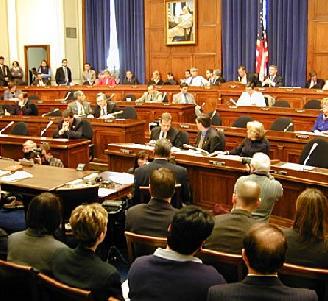
On Thursday, the U.S. House of Representatives Financial Services Committee is set to hold a hearing on auction rate securities — a broken investment mechanism that non-profit student loan companies have relied on heavily for financing. The hearing is largely the brainchild of Rep. Paul Kanjorski (D-PA), a member of the committee who is using it to gin up support for federal policies to help non-profit lenders. This was evident from Kanjorski’s initial press release on the hearing, in which he faulted the Bush Administration for failing to use “its full authority to help non-profit lenders like PHEAA,” the primary student loan provider in the Congressman’s home state.
 Clearly Kanjorski thinks that the way the U.S. Department of Education enacted the Ensuring Continued Access to Student Loans Act (ECASLA), the law Congress passed last spring to help student loan providers weather the credit crunch, did not do enough to help non-profit lenders. We at Higher Ed Watch disagree. Instead, we believe Kanjorski has framed the non-profit lender problem in a dubious manner, and is proposing to solve this “problem,” with a series of flawed solutions.
It seems that we have to keep reminding policymakers (and sadly, the media, too) that the one, and only, goal of the federal student loan program is to provide loans to college students that are more generous than those offered in the private market. That’s it. So, yes, there would be a problem if students weren’t able to get federal loans, which even top industry lobbyist John Dean agrees should be the “litmus test” of whether or not there is a “crisis.”
But Kanjorski and many in the media have framed the problem in terms of lenders, not students. Certainly, some nonprofit lenders, including PHEAA, have suspended their lending operations this year because they’ve had trouble financing loans. This has forced students and colleges to find alternative lenders, but there has not been a breakdown in federal loan availability. Students have been able to borrow all the loans to which they are entitled.
Why the hearing then? It appears that Kanjorski believes that the student loan program is supposed to serve two sets of beneficiaries: students and lenders. By this logic, if non-profit lenders can’t make loans, then the program isn’t working — even if students are able to obtain federal loans from other lenders.
Ultimately, we believe Kanjorski is acting for political reasons, not for fear that students are in danger of losing access to aid. After all, this wouldn’t be the first time, as Higher Ed Watch has previously reported, that Kanjorski has done the bidding of the student loan industry.
Kanjorski, like other Members of Congress, wants to help non-profit lenders, not for pressing policy reasons, but because of the political hold they have over Congress’ home state constituencies. Many non-profits are intertwined with state governments and serve as big employers. By keeping non-profits in business — protecting the federal subsidies these nonprofits receive through the federal loan program — elected officials can take credit back home. But not all non-profits are using taxpayers’ dollars wisely. A recent report by the Pennsylvania state auditor found that the Pennsylvania Higher Education Assistance Authority “created an elite compensation package for its executive staff that included excessive salaries and incentive payments not typical of a prudent state agency.” This included salaries of close to $300,000 for both the president and CEO and over $200,000 for several executive vice presidents.
It is also important to note that non-profits gain political favor by hiring former Members of Congress. These individuals are hardly experts on the student loan industry, but have valuable Washington connections. In addition, non-profit lenders and their trade associations maintain a revolving door with the U.S. Department of Education, as well as key Congressional committees and offices. To be clear, we don’t take issue with lobbying per se, or with organizations building effective lobbying staff. But lawmakers who are persuaded by such lobbying to enact policies that are not in the best interests of students and taxpayers should be called on the carpet.
To demonstrate how influence trumps good policy let’s consider one policy that Kanjorski promotes on behalf of non-profit lenders.
As part of ECASLA, Congress allowed private lenders to sell their loans to the Department of Education. The policy ensures that the federal student loan market remains liquid. Lenders are more apt to make federal loans if they know that there is a willing buyer who can give them cash for the loan if they need it. The Department chose to implement the loan purchase authority for new student loans (those issued for the 2008-2009 academic year) even though ECASLA gave it the authority to buy loans issued as early as 2003. Kanjorski has chastised the Department for not buying earlier issued loans, an action he claims would help non-profit lenders. In reality, the Department acted responsibly by protecting the interests of taxpayers; Kanjorski’s proposal, on the other hand, would benefit lenders at taxpayers’ expense.
If lenders were allowed to sell loans that they made prior to 2008, then they could cherry pick their least profitable and most risky loans and unload them on the Department, keeping only the best loans on their books. (Lenders have been doing something similar with federal consolidation loans for years, forcing delinquent borrowers into the direct loan program rather than making the loans themselves).
The White House Office of Management and Budget and the Department of Treasury recognized the potential for cherry picking scenario in their risk assessment of the loan purchase program. Loans issued prior to 2008 would likely have enough performance history for a lender to assess default risk and flip riskier loans to the Department. But lenders are less able to make such determinations for new loans that lack a performance history. As a result, the Department of Education limited its loan purchase agreement to 2008-2009 loans only.
In condemning the prudent course the Department has taken, Kanjorski puts the interests of non-profit student lenders before the interests of taxpayers. Meanwhile, students aren’t having any problem getting federal student loans. Of course, the hearing isn’t really about them anyway.
Director, Federal Education Budget Project