Raúl O. Paz-Pastrana
Eric & Wendy Schmidt Fellow, 2020
Your documentary film Border South follows the migrant routes from southern Mexico to the U.S.-Mexico border. Can you share a bit about the origins of this project?
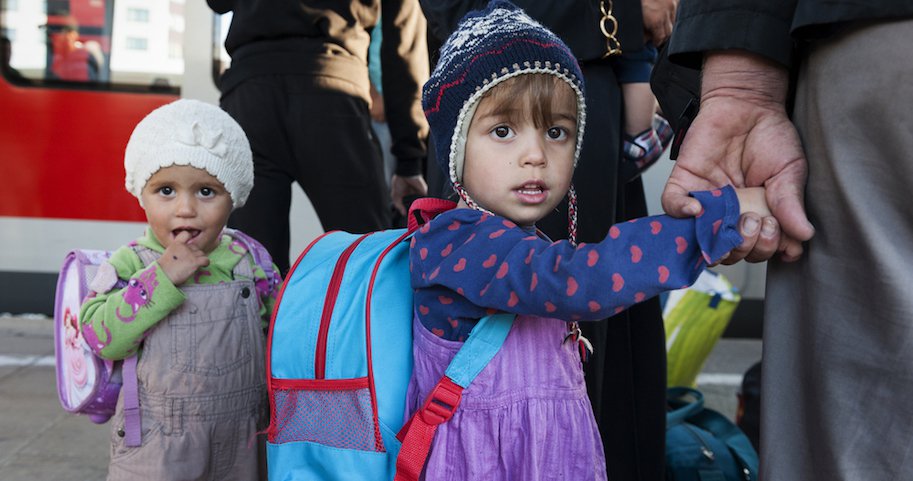
This project originated because I was unsatisfied with films in which immigrants are depicted simply as victims. So many films and media reports tell the story of immigrants as downtrodden pawns caught in a political tug of war for cheap labor where immigrants themselves serve primarily as b-roll background while expert academics explain the harrowing conditions.
With Border South I wanted to capture the great acts of humor and kindness, and especially the ingenuity that migrants must summon to make one of the most dangerous journeys in the world. I also wanted to make a film in which immigrants are the experts of their own experience. That’s when I reached out to anthropologist Jason De León with the Undocumented Migration Project. We were already filming when “Plan Frontera Sur,” the U.S. strategy to deter and detain immigrants at Mexico’s southern border, went into effect in 2014. The rest is history.
I wanted to make films that use the art of cinema to move away from the “perfect migrant” narrative championed by activism, and instead show our complex humanity.
As an immigrant and filmmaker, has your personal experience had any influence on your decisions regarding which stories you approach, how you approach them, and how you ultimately tell them? If so, how?
The type of characters that I am attracted to are immigrants. At first this happened somewhat organically. That is the world that I come from, those are the stories and the people that I know. Somewhere along the way I became even more intentional about making films that feature immigrants and people of color because I saw the lack of representation in front of and behind the camera.
My approach is mostly observational filmmaking because it is sublime the way in which people react to circumstances in the present tense. The moment someone makes a choice, uncertain of its outcome, is the most heroic. It also allows characters to own their experiences and be the true experts in their own stories.
Given my own immigrant experience, I am fascinated about stories that explore characters’ sense of psychological and socio-political belonging and the greater forces that shape that sense of belonging.
Your art is geared towards inciting social change. How did you first come to see the intersection of art/film and social change, and how has your view of that intersection evolved throughout your career?
Art without striving for a better and new world is meaningless. There is no “objectivity.” Everything, whether you are a journalist or an artist, or both, is filtered through our point of view and upbringing. In Mexico and the U.S. I grew up seeing the ways in which the working class and people of color are exploited and marginalized and wanted to be a part of a greater movement for social justice. This intersection of art/film and social change became very clear to me through my work as a community and labor organizer in Denver, Colorado. During that time, I realized that activist films not only preached to the choir, but were very simple and paternalistic in nature, leaving out the complex stories of the people most affected by the work I was doing.
I wanted to make films that use the art of cinema to move away from the “perfect migrant” narrative championed by activism, and instead show our complex humanity. I feel this approach liberating, and also a better way to invite audiences to participate in the human drama unfolding in my films, allowing us to see each other eye to eye and evolve.
Subscribe here to receive next month’s issue of The Fifth Draft.
Eric & Wendy Schmidt Fellow, 2020