Introduction
A healthy representative democracy requires a balanced distribution of power across different levels of government. Since the time of the Founding Fathers, one major debate around the American democratic model has centered on potential overreach by the national government. But while questions about federal interference in state action have spanned centuries, the issue of state interference in local matters is a relatively modern one.
In contrast to the balance between federal and state power, state power over localities was not enshrined in the Constitution. In fact, localities receive no mention in the Constitution. Instead, states were delegated the authority to establish local governments by the 10th Amendment. Then in the late nineteenth century, as more and more states agitated for a formal check on local government corruption, the principle of state supremacy over local governments known as "Dillon’s Rule" or the “creature of the state doctrine” emerged. Meanwhile, progressive reformers were advocating for a counterweight that would address their concerns about state-level (not municipal) corruption and the inefficiency and rigidity of pure Dillon’s Rule regimes. They also wanted to codify their belief that “citizens had a ‘moral’ right to self-government” on the premise that “they had the best understanding of local needs.”1 The concept of "Home Rule," or "local autonomy," was thus born alongside other Progressive Era reforms. From there, the relationship between many state and local governments became more complex, and more similar to the relationship between federal and state governments.
Beginning in the Prohibition era, those similarities evolved to include the application of the doctrine of preemption. Related to federalism, preemption allows a higher level of government to overrule authority at a lower level. Until recently, states used their preemptive authority over localities primarily to avoid the type of complicated or harmful regulatory patchworks that can arise in a federal system. That kind of preemption was, and is, a healthy and natural way for states to exercise their considerable power. But there has been a dramatic shift in the way states use preemption—from a legal precedent to a political weapon. Since 2011, state lawmakers have frequently employed preemption to increase the power of their own legislative majority and their allies, and to diminish the power of those who threaten it, even when it means that “the mandate of the people is undermined.”2 This form of preemption, the so-called “new preemption,” is rarely neutral about policy outcomes, and it falls in the same category of policy strategies that impede democracy as gerrymandering, voter suppression, and dark money.
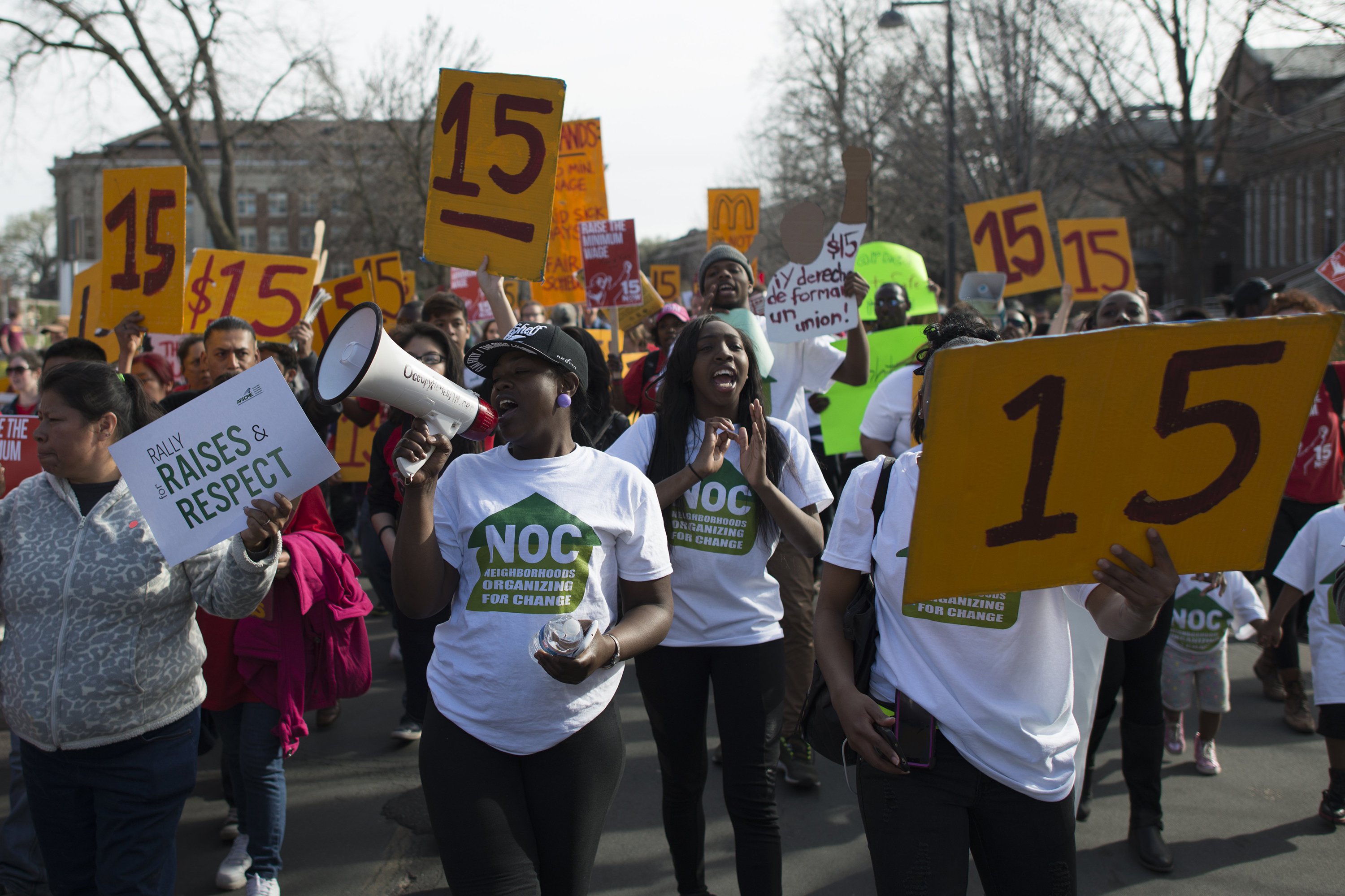
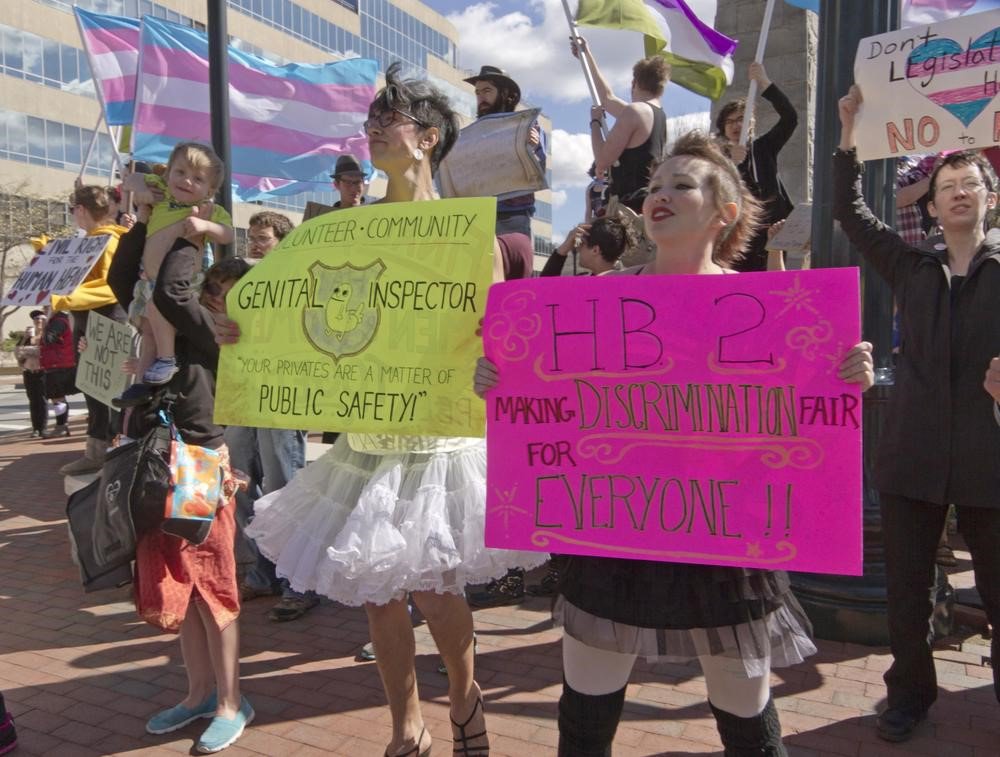
For example, in 2016, the North Carolina state legislature set off a national media frenzy when it passed H.B. 2, otherwise known as the “bathroom bill.” The bill demanded that individuals use the bathroom corresponding to the gender assigned to them at birth. It was a direct attack on supporters of the transgender community, and it was passed in retaliation against the City of Charlotte’s move to increase its legal anti-discrimination protections. The same bill also explicitly preempted local regulation of employment standards, such as increasing the minimum wage and mandatory paid sick days. Though few state preemption bills attract the level of attention that H.B. 2 did, the bill in many ways typifies this form of politically motivated state encroachment into local democracy.3
In the era of preemption, context is everything.4 To confront runaway state preemption, practitioners must first understand the spatial and regional political divides between Democrat-led cities and Republican-led state legislatures that have enabled its rise.5 The new preemption is not confined to Republican-controlled states, but red states have been especially hawkish in their efforts to curtail the authority of blue cities like Charlotte. The National League of Cities reports a surge in preemption conflicts that have “pitted rural- and suburban-dominated state legislatures against cities with large populations of low wage earners and ethnic minorities.”6 With approximately 80 percent of Americans residing in cities today,7 preemption has only intensified the challenges of governing increasingly populous and diverse metropolitan areas—in red and blue states alike.
The new preemption is marked by “new sweeping state laws that clearly, intentionally, and at times punitively bar local efforts to address a host of problems.”8 Its large-scale emergence over a decade of heightening polarization between cities and state legislatures has prompted a reevaluation of the relationship between state and local power from both legal and normative perspectives. Alongside this reevaluation, local officials, organizers, and issue activists continue to fight an uphill battle to defend a broad scope of progressive policy areas—like workplace and health equity, environmental protections, non-discrimination ordinances, and firearms regulations, among others—against the rising tide of state interference.9
This report will shed light on stakeholders’ ongoing struggle against abusive state preemption in a period of conservative and corporate state capture. Part One will provide an overview of state preemption and situate it in the current political landscape. Once it is established that there is such a thing as bad preemption—the kind that damages the intergovernmental power structure, deters policy innovation, and undermines basic principles of democracy—Part Two of this report will provide practical guidance on how to tackle it—or at least attempt to work around it.
Citations
- Adam Coester, “Dillon's Rule or Not?," National Association of Counties, January 2004, source.
- Nicole DuPuis et al., “City Rights in an Era of Preemption: A State-by-State Analysis” (Washington, D.C: National League of Cities, 2018), 1, source
- Richard Briffault, “The Challenge of the New Preemption,” Stanford Law Review 70, no. 6 (June 2018): 2001, source.
- DuPuis et al., “City Rights.”
- “Preemption Conflicts between State and Local Governments,” Ballotpedia, source.
- DuPuis et al., “City Rights,” 3.
- Christopher Ingraham, “Americans say there’s not much appeal to big-city living. Why do so many of us live there?,” Washington Post, December 18, 2018,source..
- Briffault, “New Preemption,” 1997.
- Lori Riverstone-Newell, “The Rise of State Preemption Laws in Response to Local Policy Innovation,” Publius: The Journal of Federalism 47, no. 3 (July 2017): 403–25, source.