Edward Salo
Associate Professor of History and Associate Director of the Heritage Studies PhD Program, Arkansas State University
Strategies for Safeguarding Nuclear Energy Infrastructure amid Growing Global Threats
This brief is part of a series by New America’s Nuclear Futures Working Group, which brings together emerging researchers from academic, government, advocacy, and policy spaces to develop research on nuclear security policy problems through the lens of a changing global environment.
Witnessing Russian aggression toward Ukrainian nuclear energy power plants and infrastructure during the recent invasion, the world must examine potential threats to other nuclear power plants scattered across the globe. While the nuclear policy community has been active in protecting these sites from terrorist attacks, the challenge is how we can better respond to future nuclear energy infrastructure (NEI) threats during conventional or unconventional warfare.
Attacks on NEI can have military, political, or other values or objectives. To counter these threats, the nuclear policy community must advocate for the legal and physical protection of NEI from conventional or unconventional attacks. These protections are necessary to ensure that attacks on NEI are not normalized or that armies do not use NEI sites as bases. Furthermore, protecting these sites is necessary to ensure that nuclear energy continues to be a viable power source.
Policy Recommendations
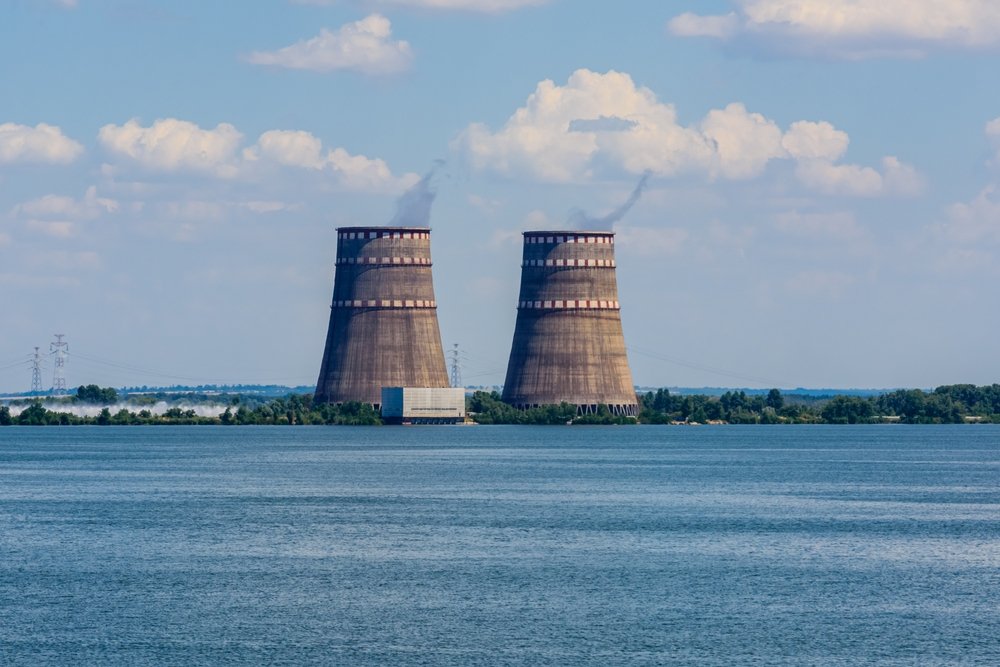
During Russia's 2022 invasion of Ukraine, Russian military forces targeted nuclear energy sites as part of a larger military operation. The invasion included the bombing of a nuclear waste storage site near Kyiv; the capture of the Chernobyl nuclear accident site; and a battle to capture Zaporizhzhia, the largest nuclear power plant in the world. Russian forces shelled the plant, causing fires and other damage that threatened the reactor and, thus, a potential nuclear accident. After the battle, Russian forces continued to occupy by deploying troops and munitions at the plant. Military operations around both sites caused concern that military action might cause a release of radioactive material or other dangers.
While this incident shook the international community, the threat of conventional military attacks damaging nuclear power reactors is not unique to Ukraine and could happen in various global trouble spots. Bennett Ramberg, a former State Department analyst and author of Nuclear Power Plants as Weapons for the Enemy: An Unrecognized Military Peril, told the New York Times, “History underscores the urgency…The scale of the current threat demands a renewed effort by the international community.” He went on to call for both legal and physical protection of atomic plants during the time of war. In 2023, approximately 440 nuclear power reactors were operating in 32 countries plus Taiwan, with another 55 power reactors currently being constructed in 19 countries, notably China, India, Russia, and the United Arab Emirates.
Just as nations have feared terrorists using nuclear devices, they have also feared a “dirty bomb,” which is a conventional explosive device that can spread radioactive materials. Nuclear power plants are possible military targets for several reasons, including the fact that their destruction or capture can hinder the energy infrastructure of a nation, which can be a valid military objective. However, conventional military attacks on nuclear power plants bring about more issues than attacks on conventional power plants, because whether deliberate or accidental, they can create radioactive fallout similar to that would emerge from a large-scale dirty bomb. Likewise, irregular forces can also target these sites to disrupt the power infrastructure and make the sites unusable again.
How can the nuclear policy community better respond to future NEI threats during conventional or unconventional warfare? How can we protect these sites, and what would that protection mean for larger military planning?
The first question we need to ask is why a military would want to attack the NEI of another nation. Such an action could have several motives:
Listed below are six recommendations for stopping or discouraging military forces from attacking NEI. These possible solutions are based on methods developed to protect cultural heritage sites during armed conflicts. While NEI facilities have a higher potential of causing harm if attacked, the concepts on how to protect heritage sites work very well when utilized to protect NEI facilities.
Of course, these proposed solutions are far from perfect, and their implementation would likely face several obstacles. For example, there’s significant disagreement among nations about even basic rules of war, much less those that would protect NEI. As Russia has illustrated during its recent military operations in Syria, Ukraine, and other places, many nations do not follow established rules of war, even when the nations have signed international agreements. The costs and engineering requirements of the proposed fortification and the retrofitting of NEI facilities may be unaffordable to some nations, and others may not abide by the recommendations. Another possibility is that, because of the fear of causing a nuclear accident or incident, armies will use NEI sites for protection during armed conflict since they see the enemy as cautious about attacking the sites. Finally, due to the fear of attack on their NEI facilities, nations might move away from nuclear energy back to fossil fuels. This will result in an increase in carbon emissions, as well as continued reliance on other nations for energy needs, which could have larger geopolitical consequences.
The Russian attacks on Ukraine have illustrated that a previously unthinkable option is no longer off the table. While the use of nuclear weapons might be off the table, the threat of using attacks on NEI facilities is a current terror weapon. To counter this threat in future battlefields across the globe, the world community must protect nuclear power plants and infrastructure from being used as weapons. We must strengthen both the legal and physical protections of the plants through stronger treaties and engineering. Also, we must train militaries to understand the importance of not targeting the sites and make the penalties for those actions as severe as possible. This threat must be a wake-up call to stop the weaponization of NEI facilities before we face such peril again.
Associate Professor of History and Associate Director of the Heritage Studies PhD Program, Arkansas State University