Table of Contents
- Executive Summary
- Introduction
- Current State of Knowledge
- Exploring the Intersection of OSINT and Data Privacy in the Digital World
- Methodology and Results
- Analysis and Assessment of the Impacts of OSINT on Data Privacy
- Explaining and Developing the OSINT Privacy Impact Framework (OPIF)
- Conclusion
- Appendix 1 | Survey Findings
- Appendix 2 | Reflections from Research Webinar Focus Groups Discussion
- Appendix 3 | Interview Protocol for Semi-Structured Interviews
Appendix 1 | Survey Findings
The research survey was administered online from March 2024 to June 2024. The survey findings in this report are drawn from a purposive sampling of 51 experts with requisite experience in OSINT, artificial intelligence, cybersecurity, and data privacy (referred to as the “expert sample” throughout this report). Participants were selected for their specialized knowledge because they converged in more than one of the requisite experiences, ensuring that the insights captured were both accurate and contextually relevant to the study’s specific aims. This approach, typical in exploratory research on complex topics, prioritizes expertise over a broad sample, thereby providing depth and reliability in the analysis. Targeting seasoned professionals under the expert sampling yields nuanced, actionable data that supports the study’s objectives and contributes to the field of practice. The aggregate results are illustrated in this section.
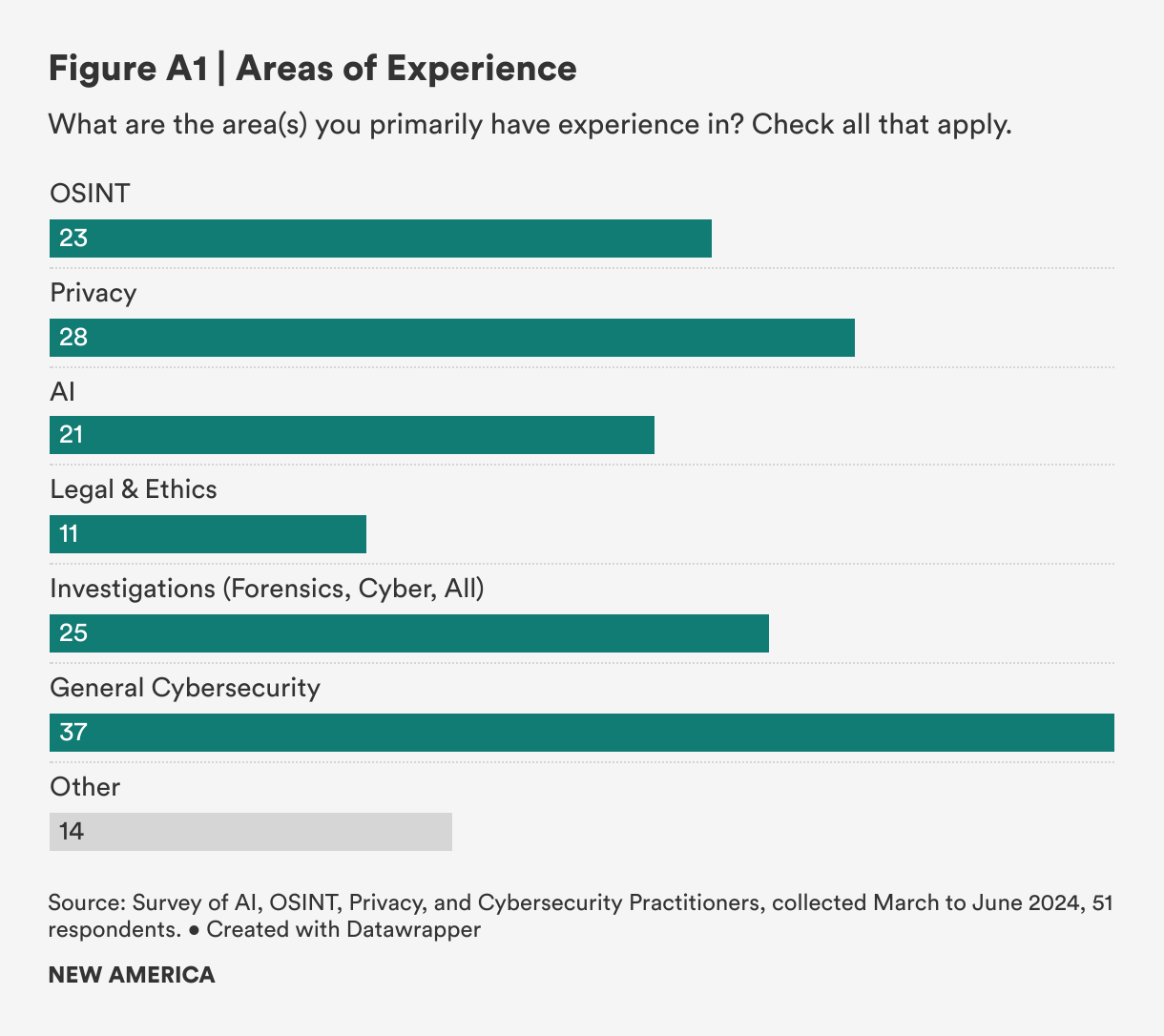
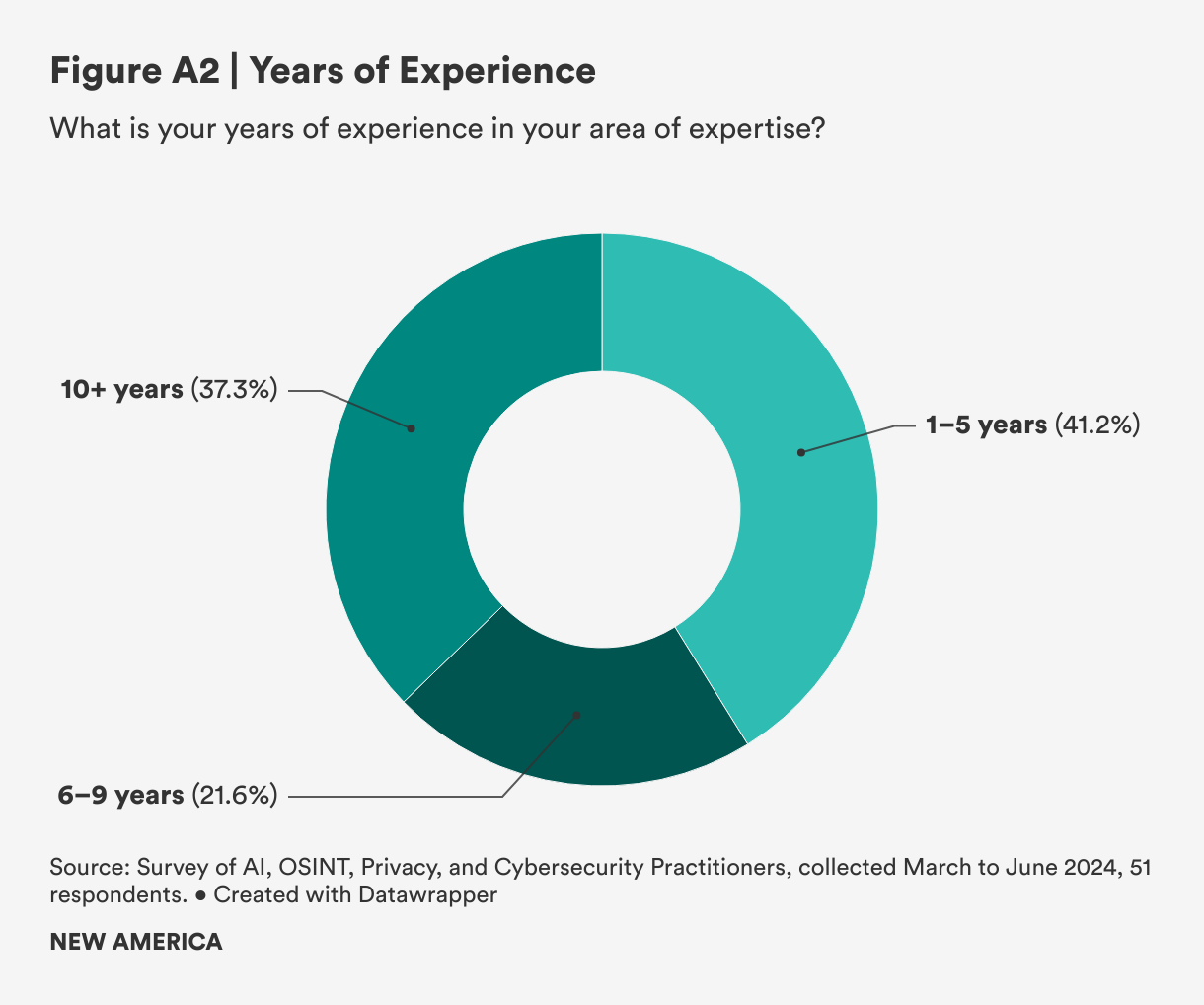
Areas and Years of Experience of Respondents
Theme 1 Findings: Current Practices of OSINT and AI Integration
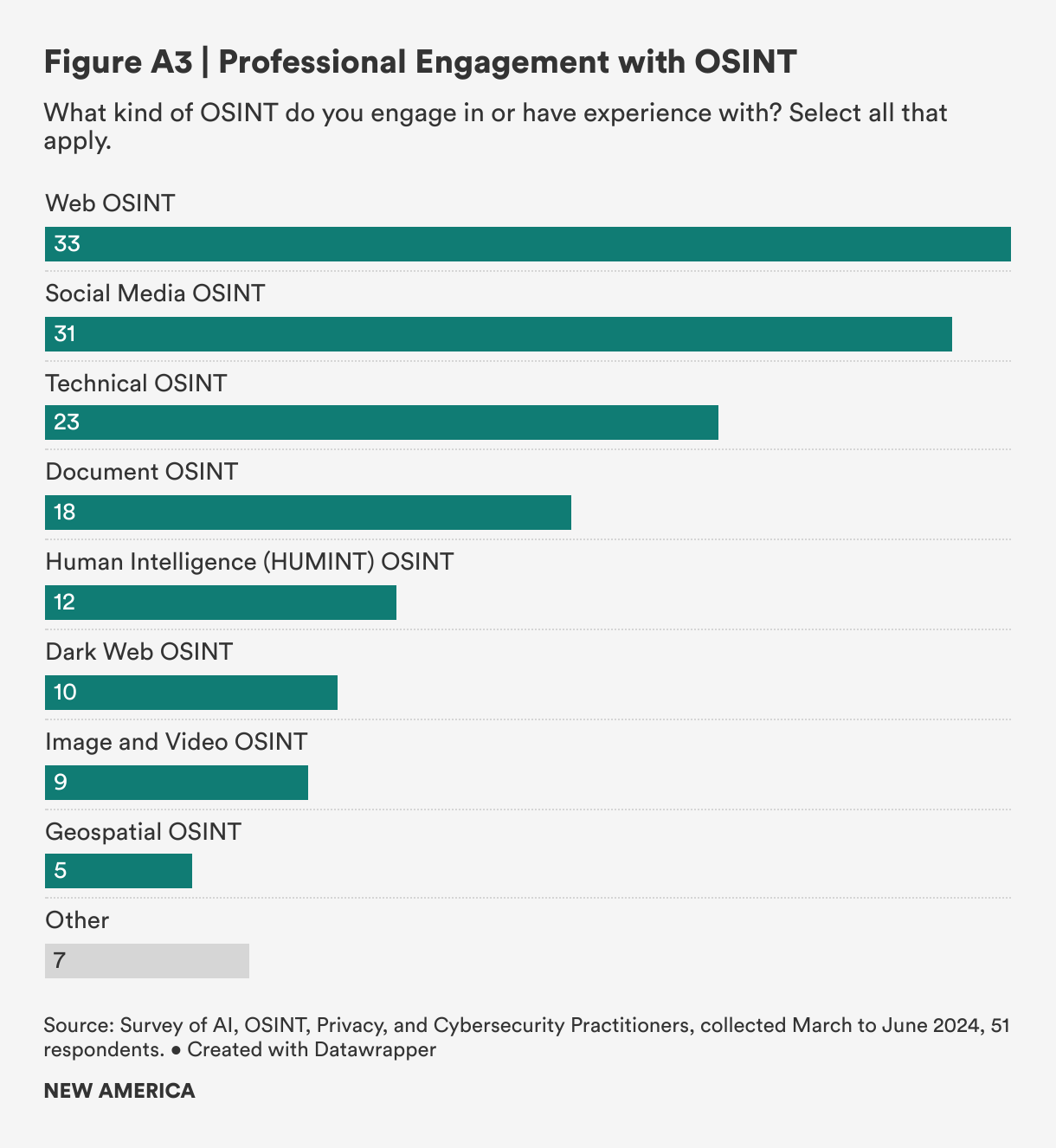
Engagement with Different OSINT Types
Survey responses indicate a wide range of experience across different kinds of OSINT engagements.
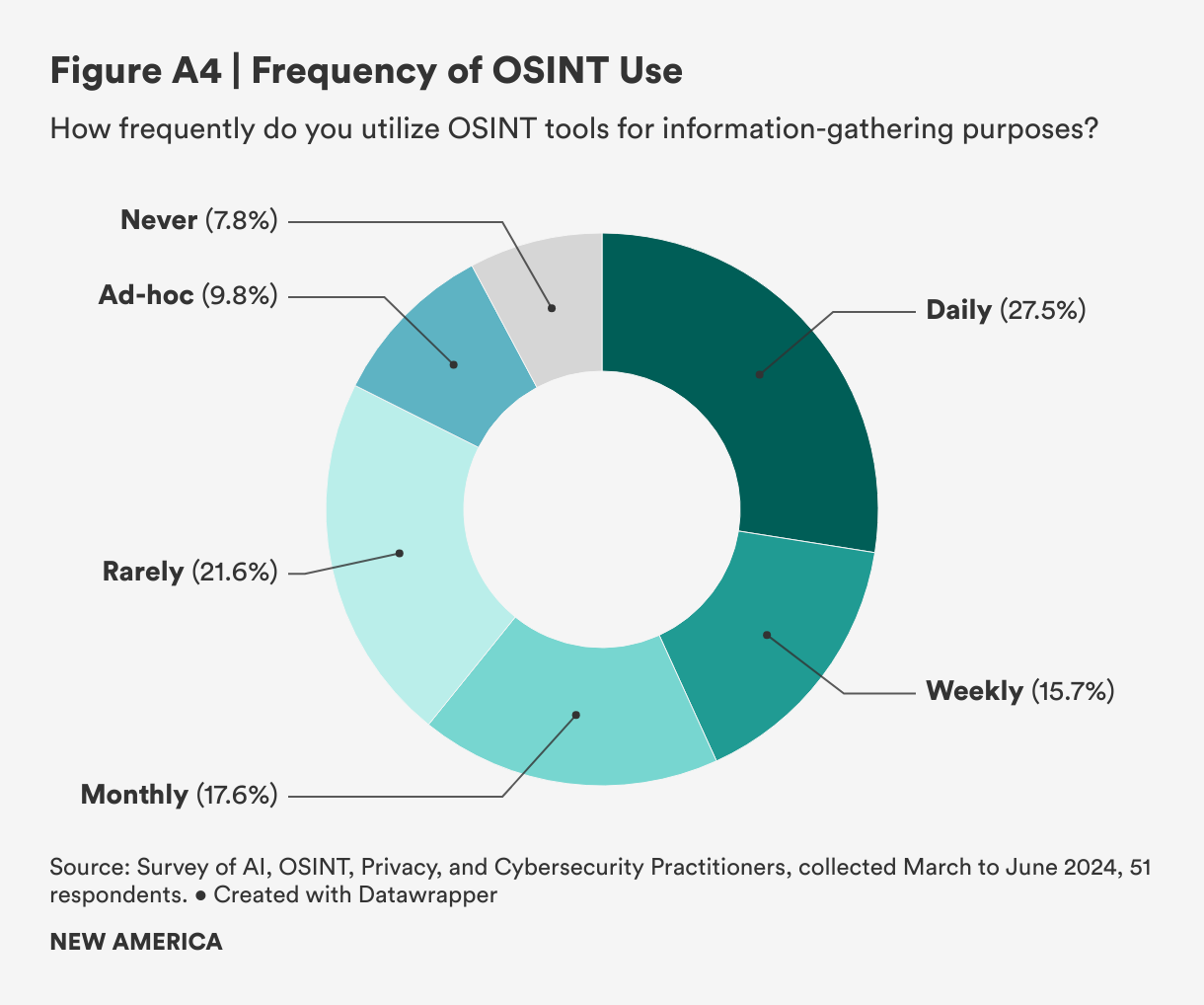
Frequency of Use
The research shows that on a daily basis, nearly 28 percent of the expert sample used OSINT tools for information-gathering purposes. This is significant when combined with the 33 percent who used it on a weekly and monthly basis, reinforcing the position that the use of OSINT practitioners is crucial, and that OSINT tools are central to their work.
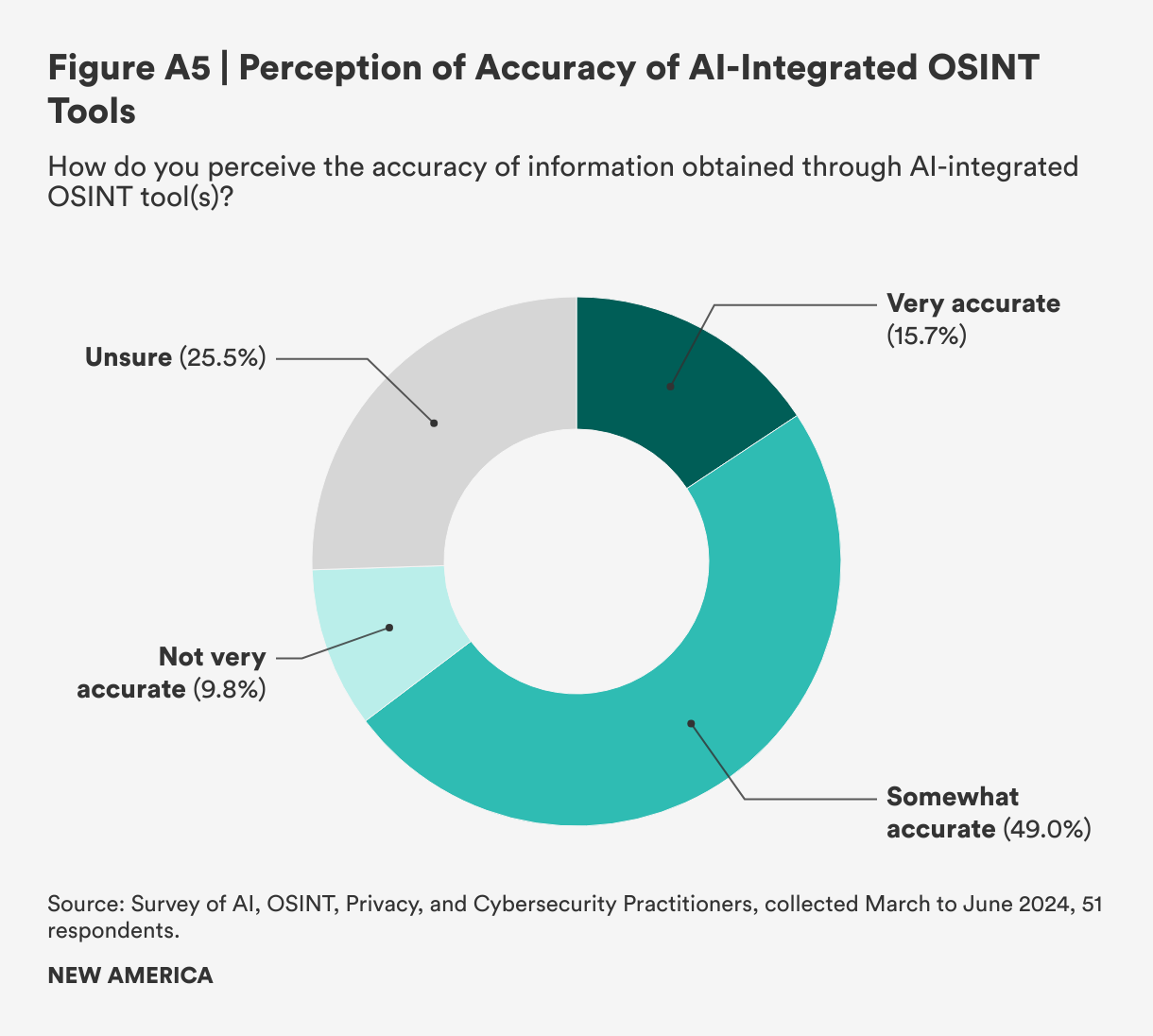
Perceived Accuracy of AI-Integrated OSINT Tools
The survey sought to understand how the expert sample perceived the accuracy of information obtained through AI-integrated OSINT tools. Nearly half (49 percent) perceive the tools as “somewhat accurate,” while roughly 16 percent perceive these tools as “very accurate.”
Theme 2 Findings: Ethical and Legal Concerns in AI-Integrated OSINT
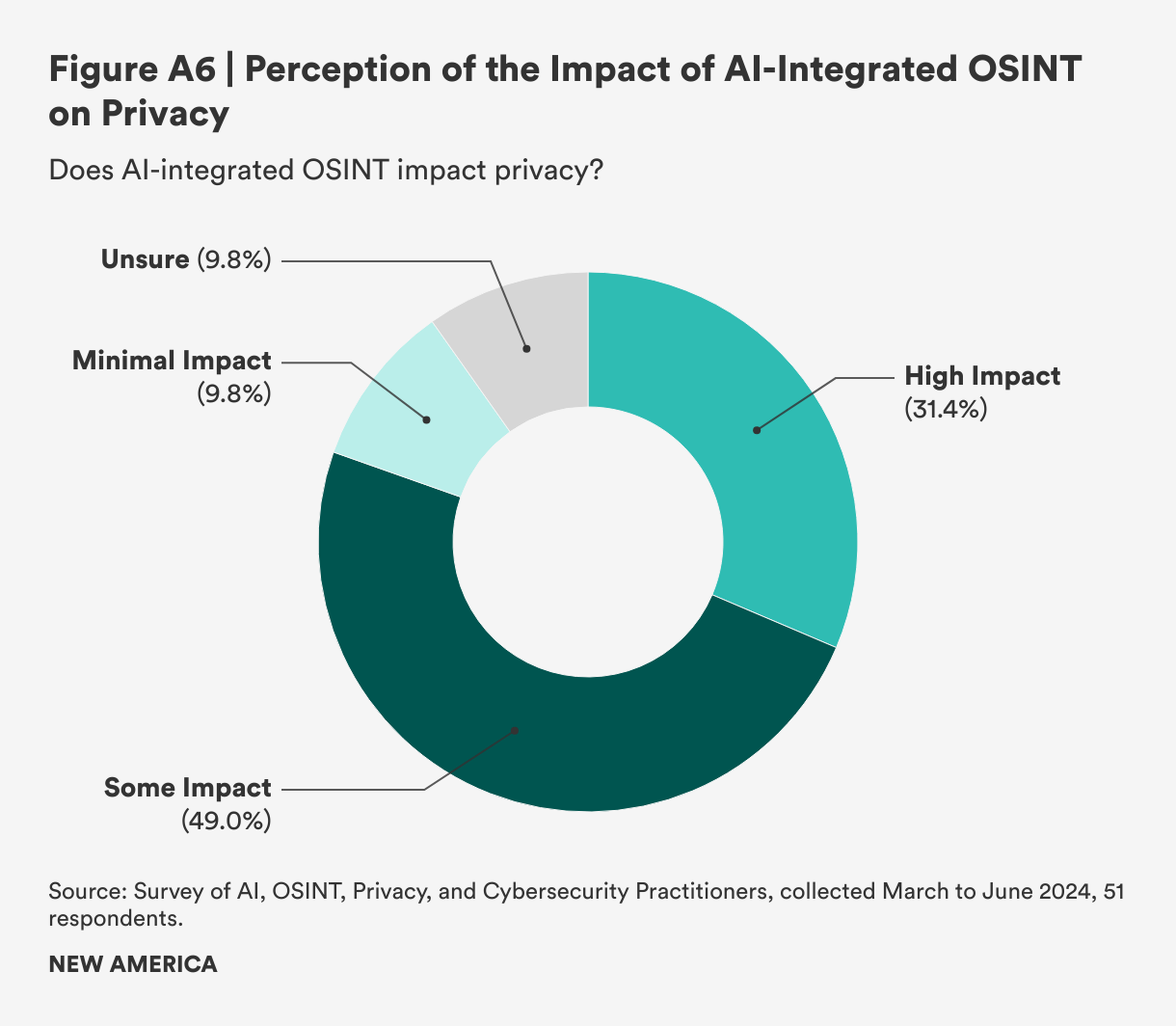
Perceived Impact on Privacy
The expert sample exhibited varied perceptions about the impact of AI-integrated OSINT on individuals’ privacy. Overall, 31 percent perceived it as “high” and nearly half (49 percent) perceived it as having “some impact,” indicating concerns about AI’s effects on privacy practices.
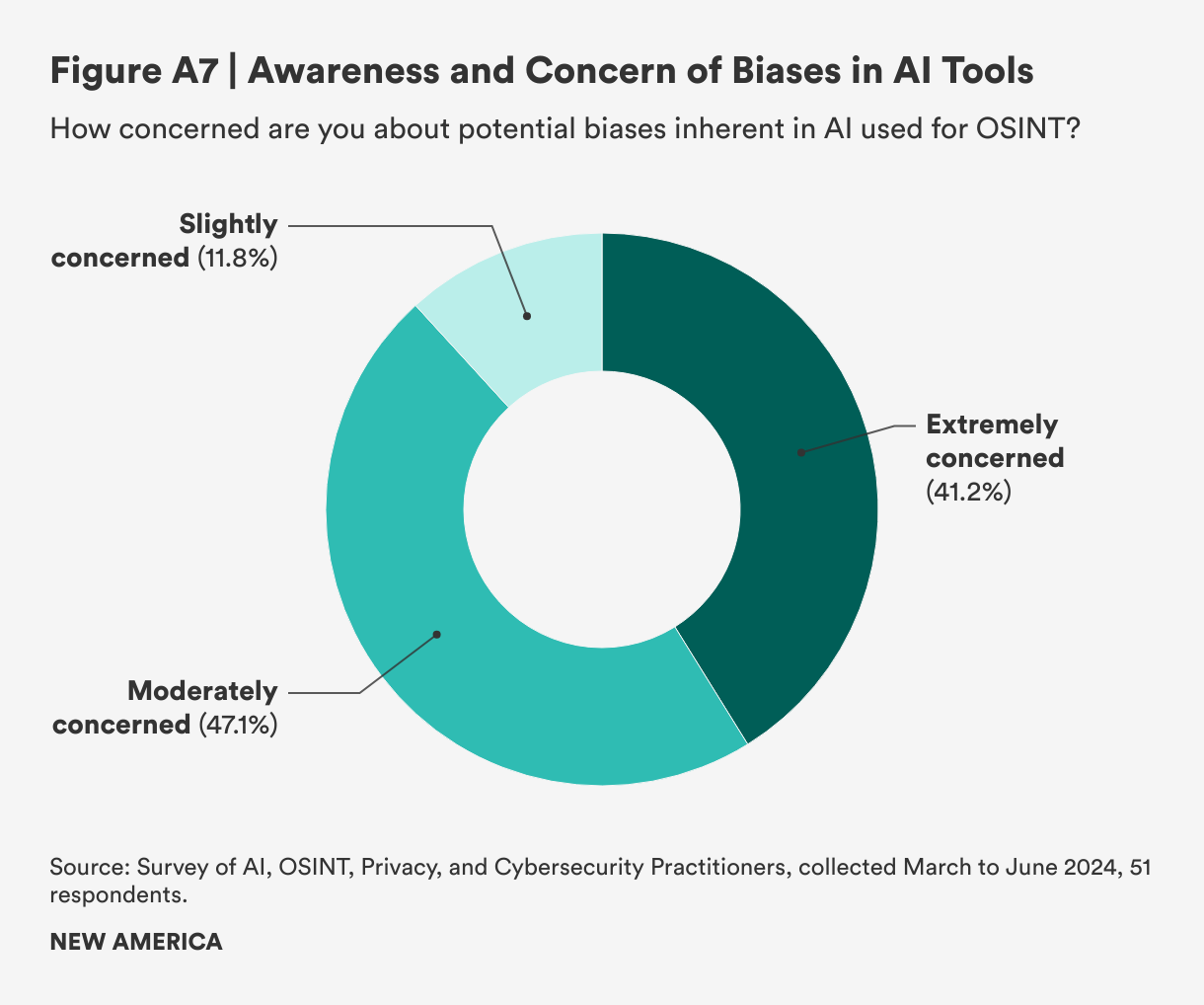
Concerns About Potential Bias
The expert sample survey indicates an awareness and concern about biases in AI systems used for OSINT. Notably, none of the respondents expressed having “no concern,” and 41 percent were “extremely concerned.” Both findings underscored an apprehension about the potential inaccuracies and ethical implications.
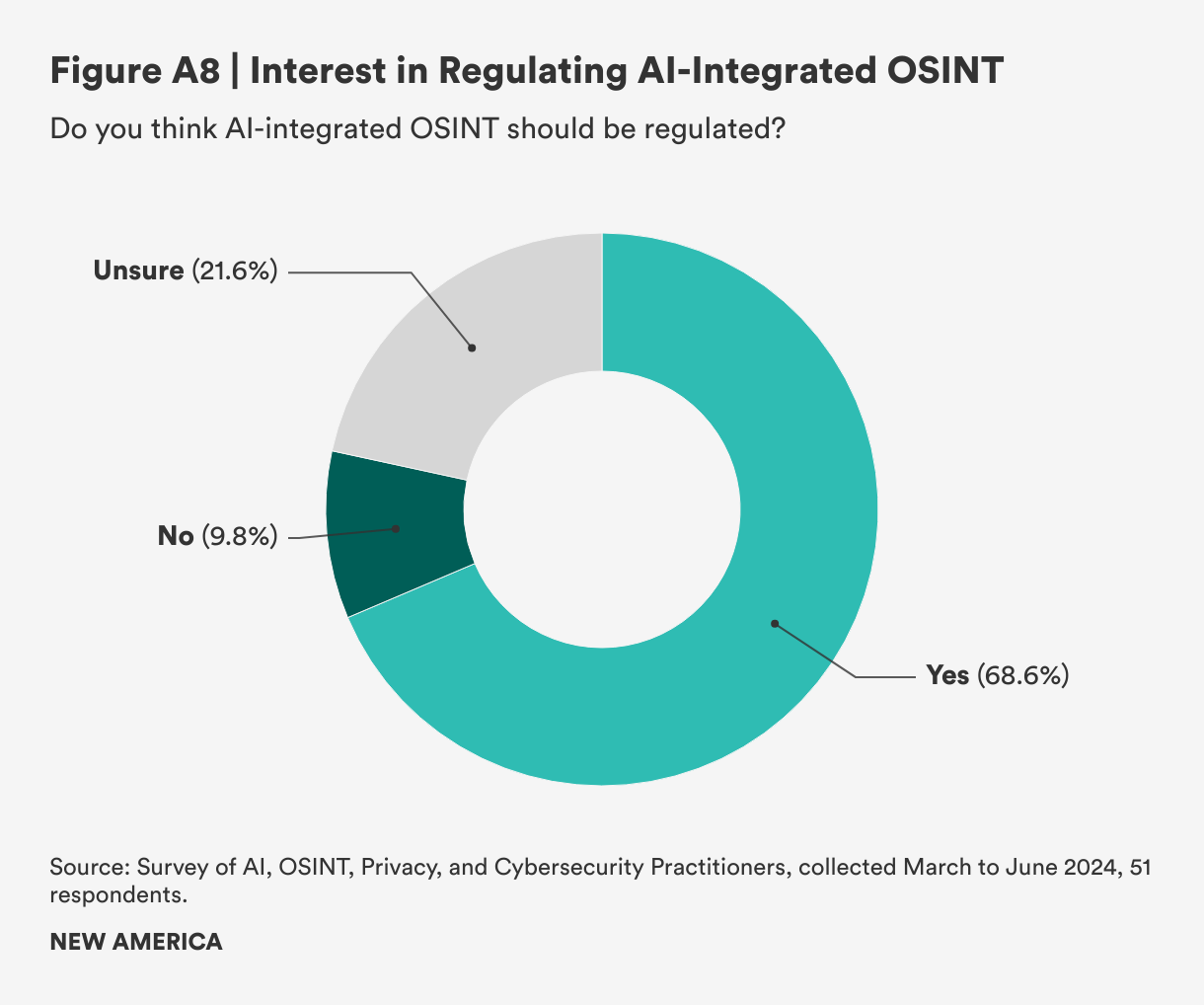
Perceived Interest in Regulations
From the expert sample, nearly 69 percent advocate for regulating AI-integrated OSINT, which in this survey means establishing legal frameworks to protect individual privacy. It includes enforcing ethical guidelines and implementing technological safeguards to ensure the responsible and secure use of AI in OSINT. The expert sample expressed a preference for an oversight, highlighting the need for frameworks to protect individual right to privacy through data minimization, transparency, accountability, and the enforcement of ethical guidelines to ensure responsible and secure use.
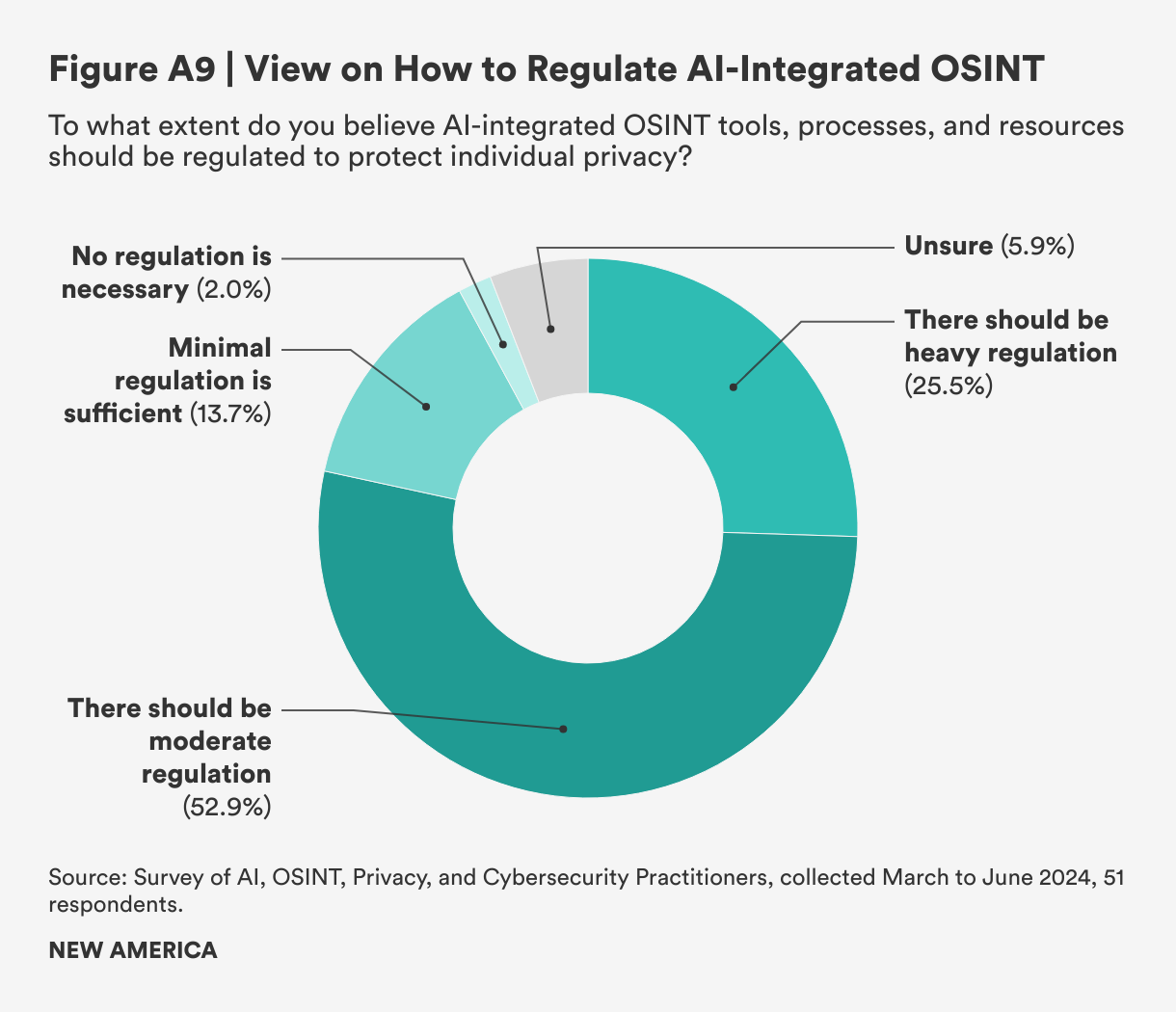
Desired Degree of Regulation
The survey, based on an expert sample, reflects a consensus for regulation; however, there is divergence in the degree of regulation of AI-integrated OSINT tools to safeguard privacy. It was recorded that nearly 53 percent advocate for moderate regulation as a balanced approach.
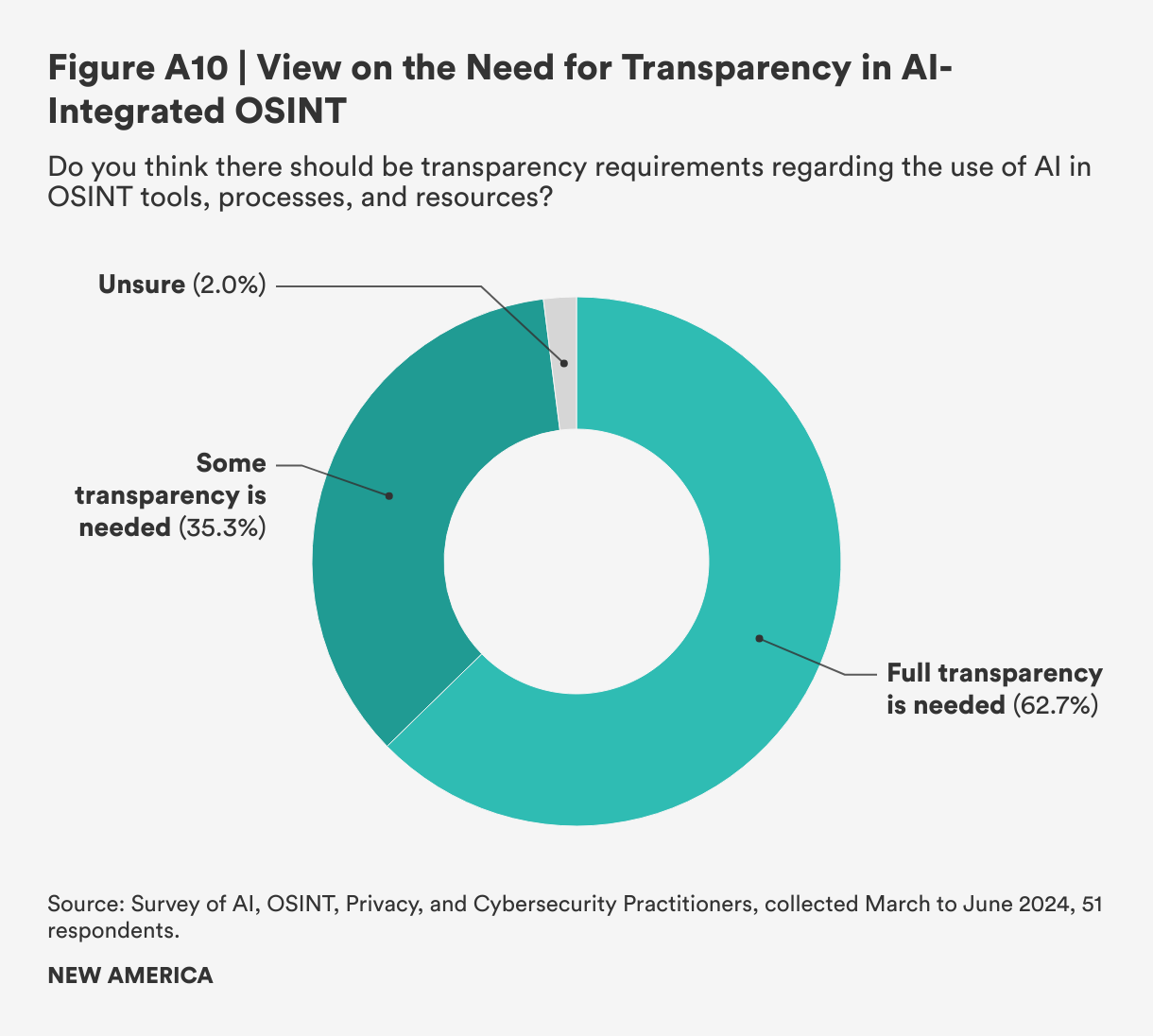
The Need for Transparency
The expert sample was asked about the need for transparency requirements of AI-integrated OSINT tools, processes and sources. Notably, roughly 63 percent advocate for full transparency in the use of AI in OSINT, emphasizing the need for ethical standards through clear and open practices.
Theme 3 Findings: OSINT Privacy-Preserving Framework in the Age of AI
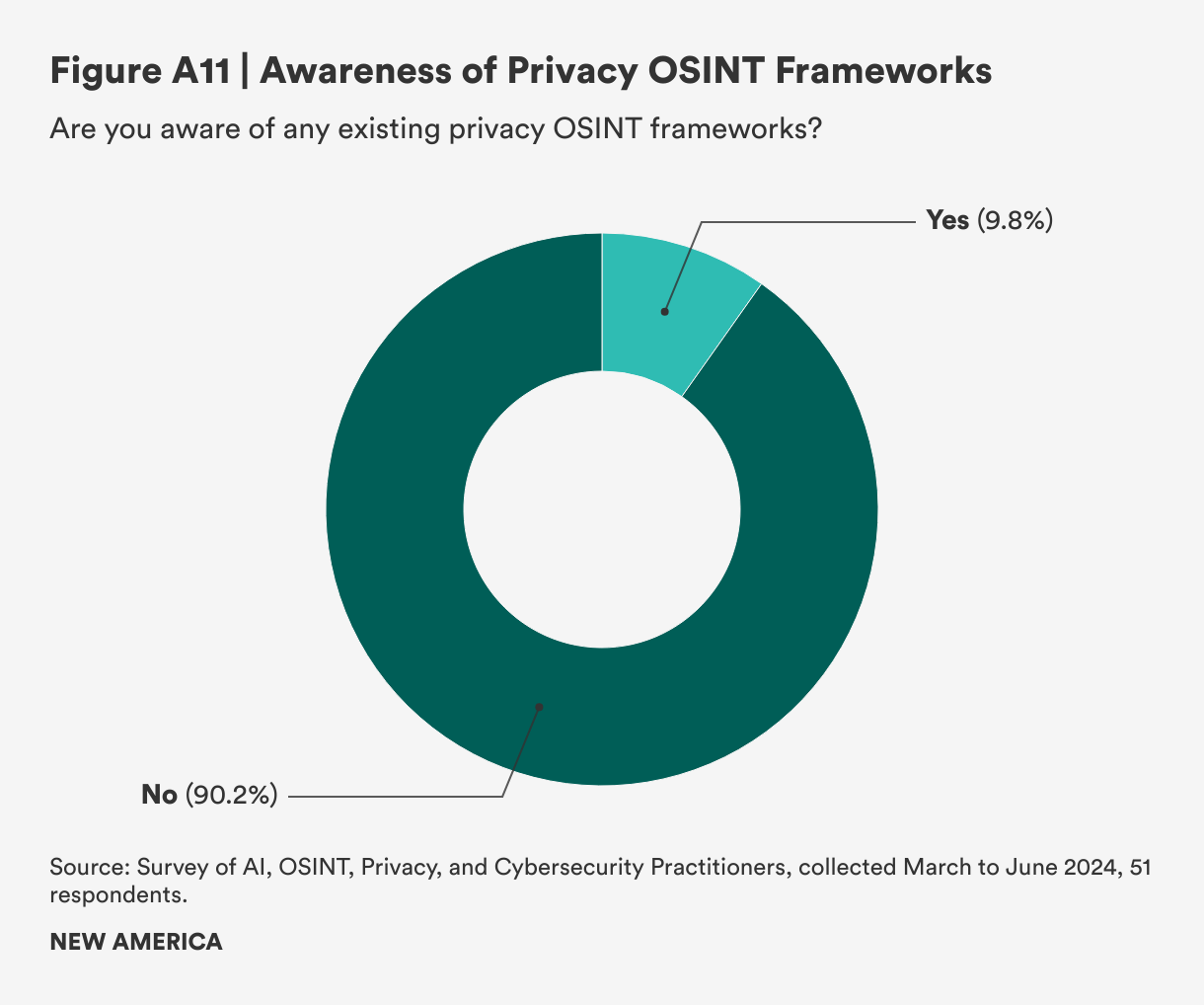
Awareness of Privacy OSINT Frameworks
The expert sample survey was used to determine the level of awareness of any existing OSINT privacy frameworks where 90 percent confirmed no awareness. This highlights a gap in knowledge or dissemination of information regarding these frameworks, and indicates a potential area for increased educational efforts to raise awareness about available privacy OSINT frameworks within the professional community.
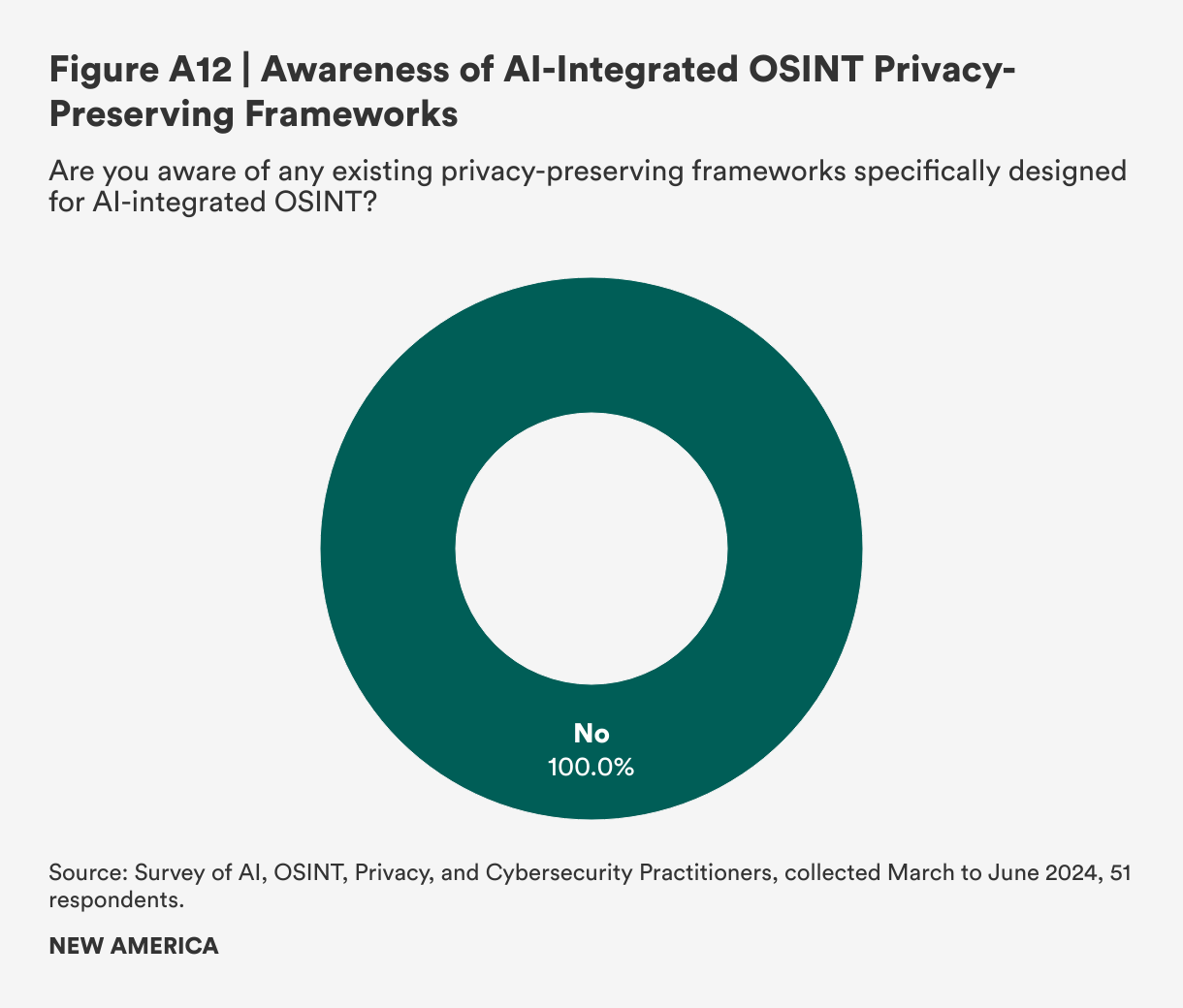
Awareness of AI-Integrated OSINT Privacy-Preserving Frameworks
From the expert sample, the survey highlighted a lack of visibility or existence of privacy-preserving frameworks specifically designed for AI-integrated OSINT, tools, processes, and resources, suggesting that research, development, and education are needed to ensure privacy considerations are met in the deployment of AI-integrated OSINT technologies.
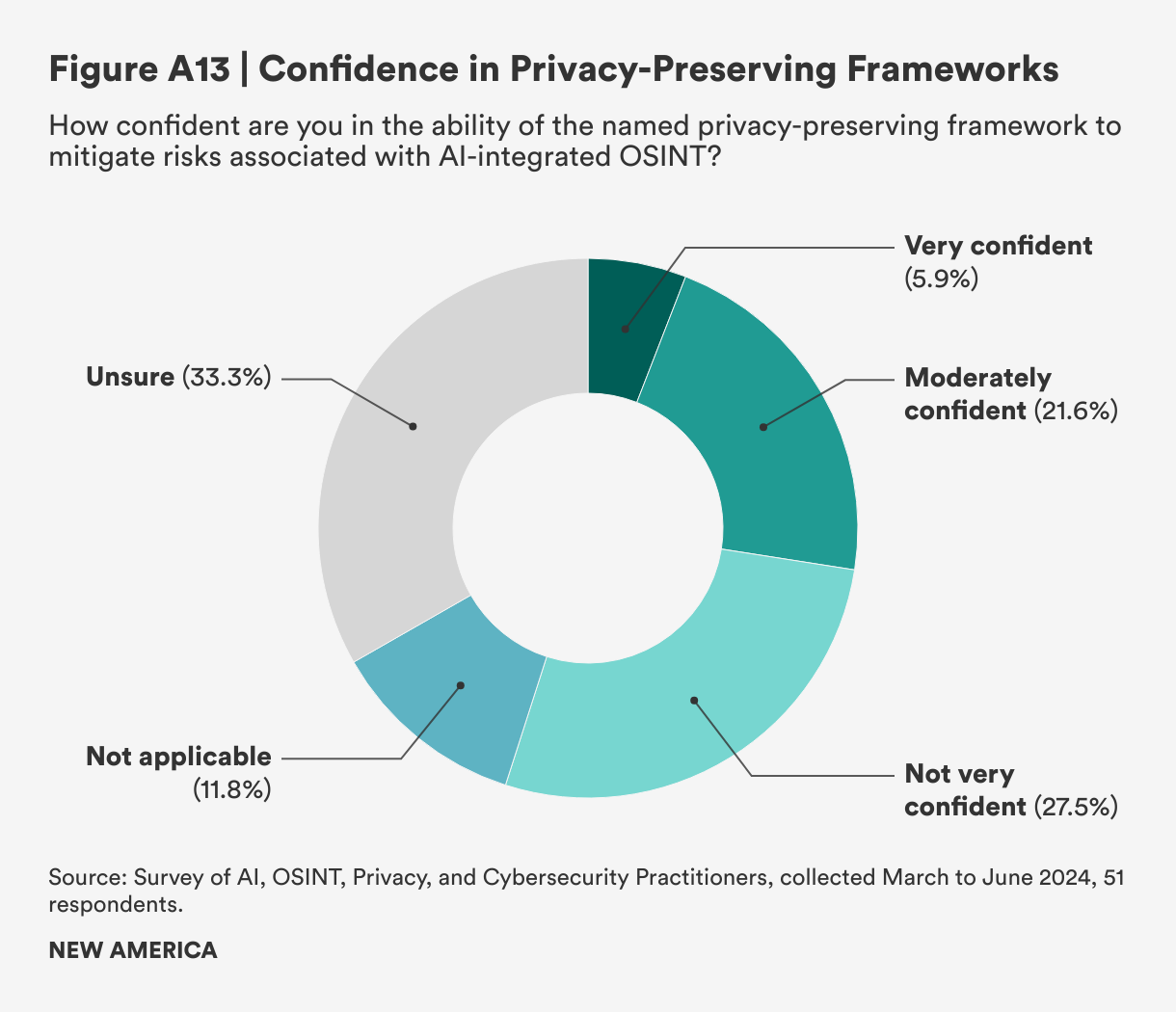
Confidence in Privacy-Preserving Framework
The responses from the expert sample indicate a varied level of confidence in the effectiveness of a privacy-preserving framework, where about 6 percent were “very confident,” 33 percent were “unsure,” 28 percent were “not very confident,” and 22 percent were “moderately confident.” This diversity in confidence levels highlights some degree of skepticism and uncertainty about the capabilities of these frameworks to address privacy concerns effectively.
Key Features of the Privacy-Preserving Framework
The expert sample shared key features of their named privacy-preserving framework to mitigate risks associated with AI-integrated OSINT. Data aggregation, user consent mechanisms, and ethical guidelines for AI developers were mentioned by different respondents, to capture their understanding of what constitutes effective privacy-preserving measures in AI OSINT frameworks.
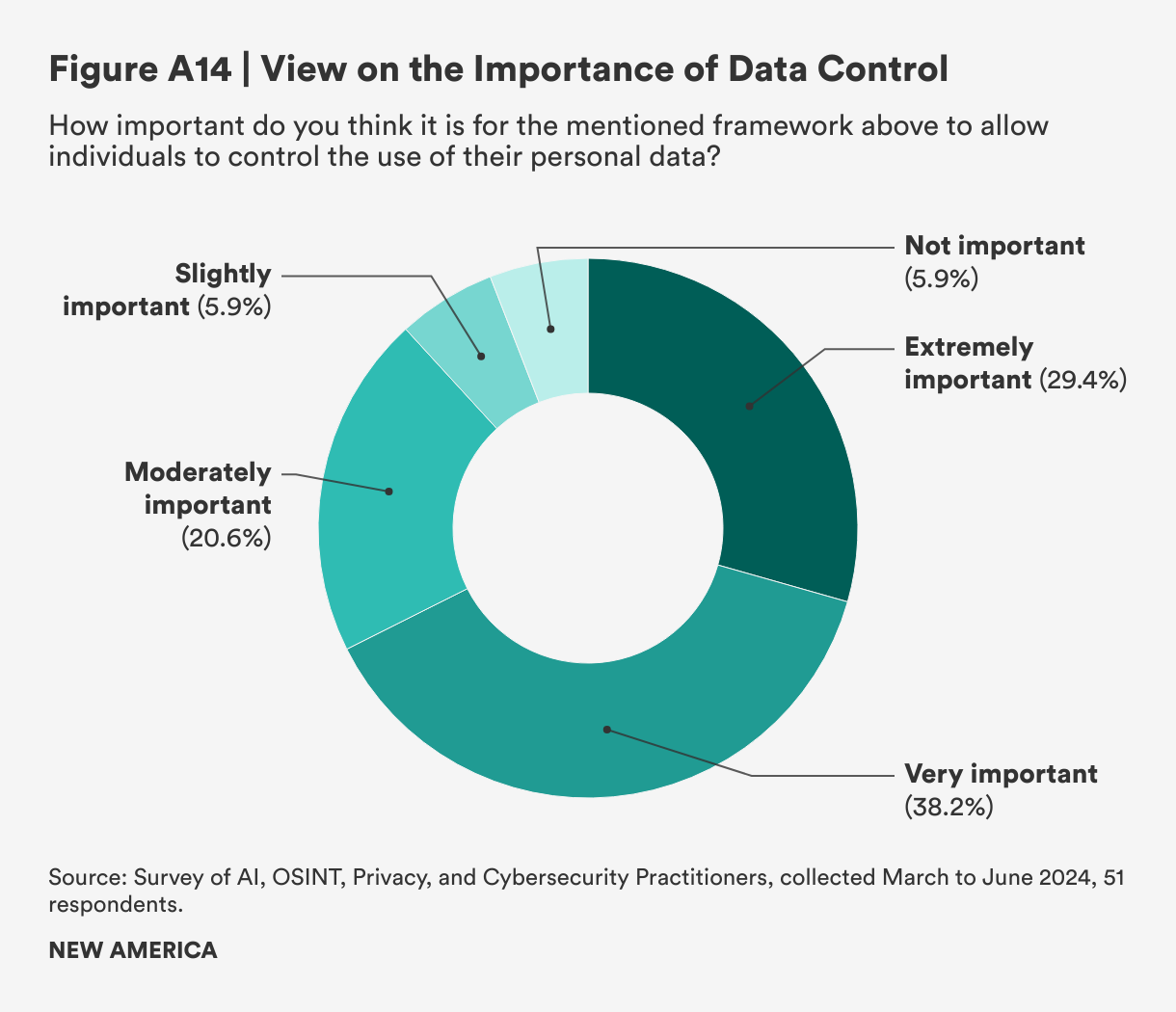
Importance of Personal Data Control
The expert sample responses see controlling personal data in AI-integrated OSINT tools as an important element within the privacy frameworks, with 29 percent considering it “extremely important,” 38 percent “very important,” and 21 percent rating it as “moderately important.”
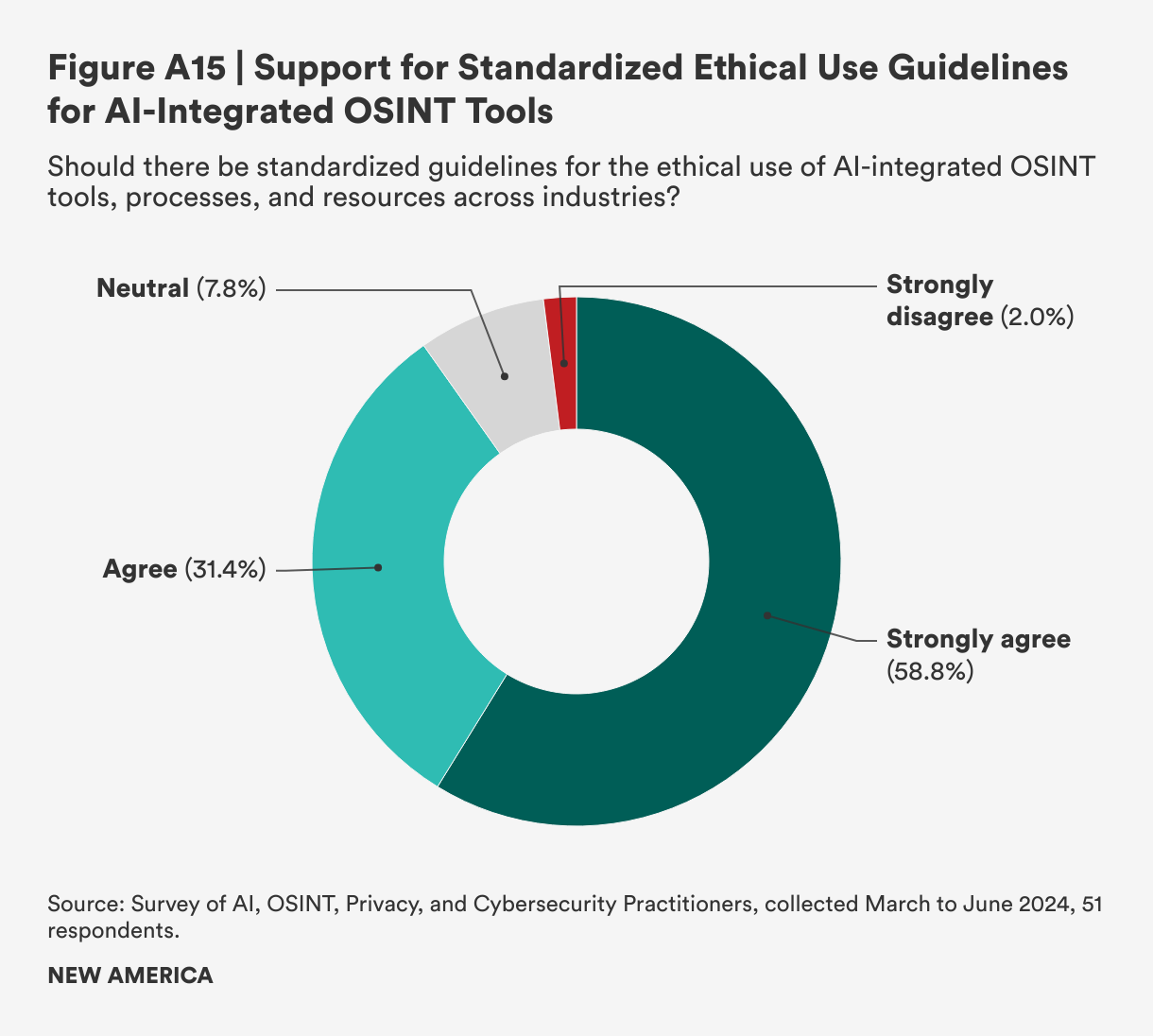
Standardized Guidelines for Ethical Use of AI-Integrated OSINT Tools
The majority of the expert sample supports the need for standardized guidelines: 59 percent “strongly agree” and 31 percent “agree” with the need for regulatory measures in the ethical use of AI OSINT tools.
Support for the Development of Privacy-Focused Frameworks
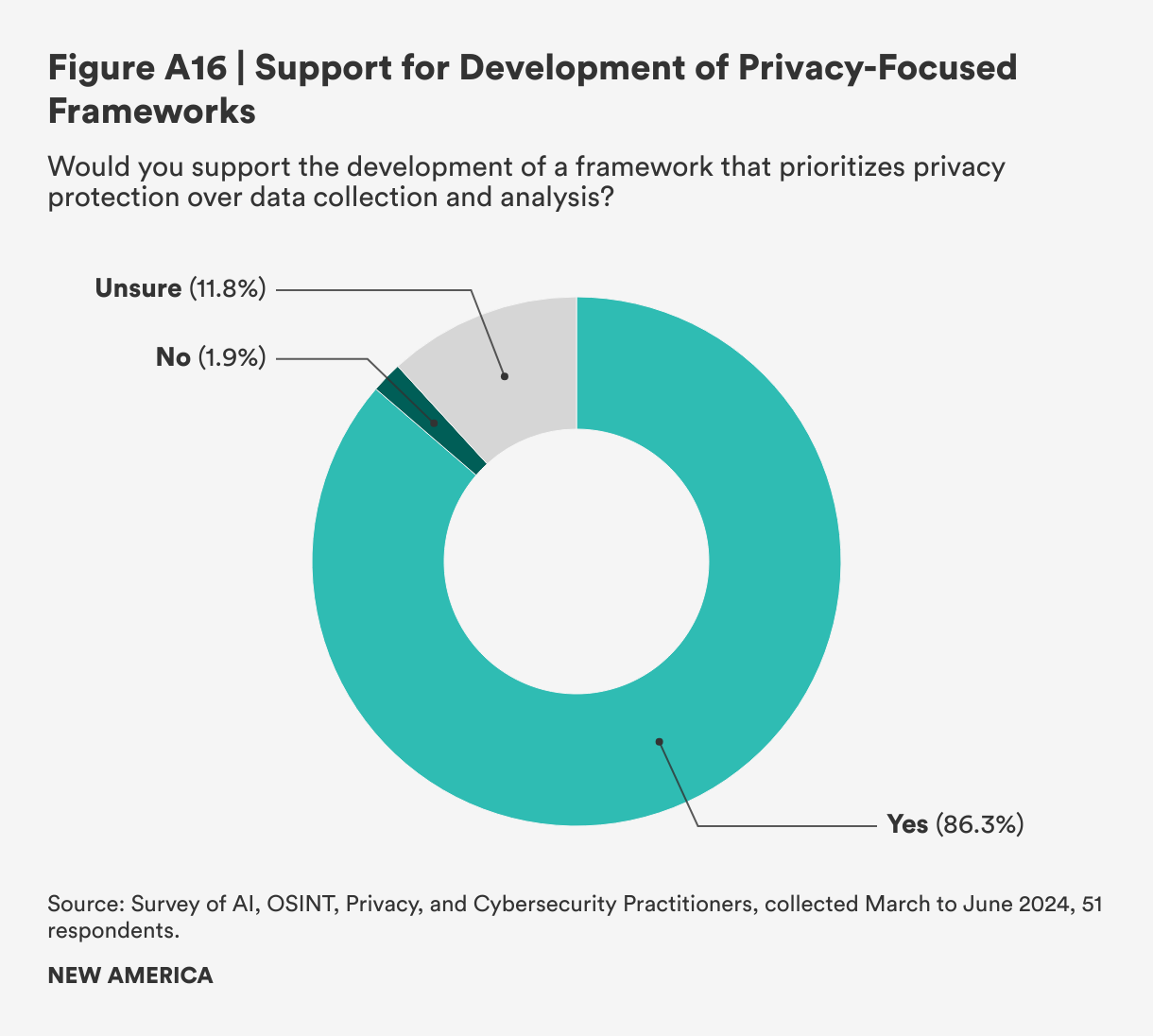
The expert sample shows a preference for privacy-first approaches, where 86 percent of the expert sample supports the development of frameworks that prioritize privacy protection over data collection and analysis.
International Agreements on AI-Integrated OSINT Privacy
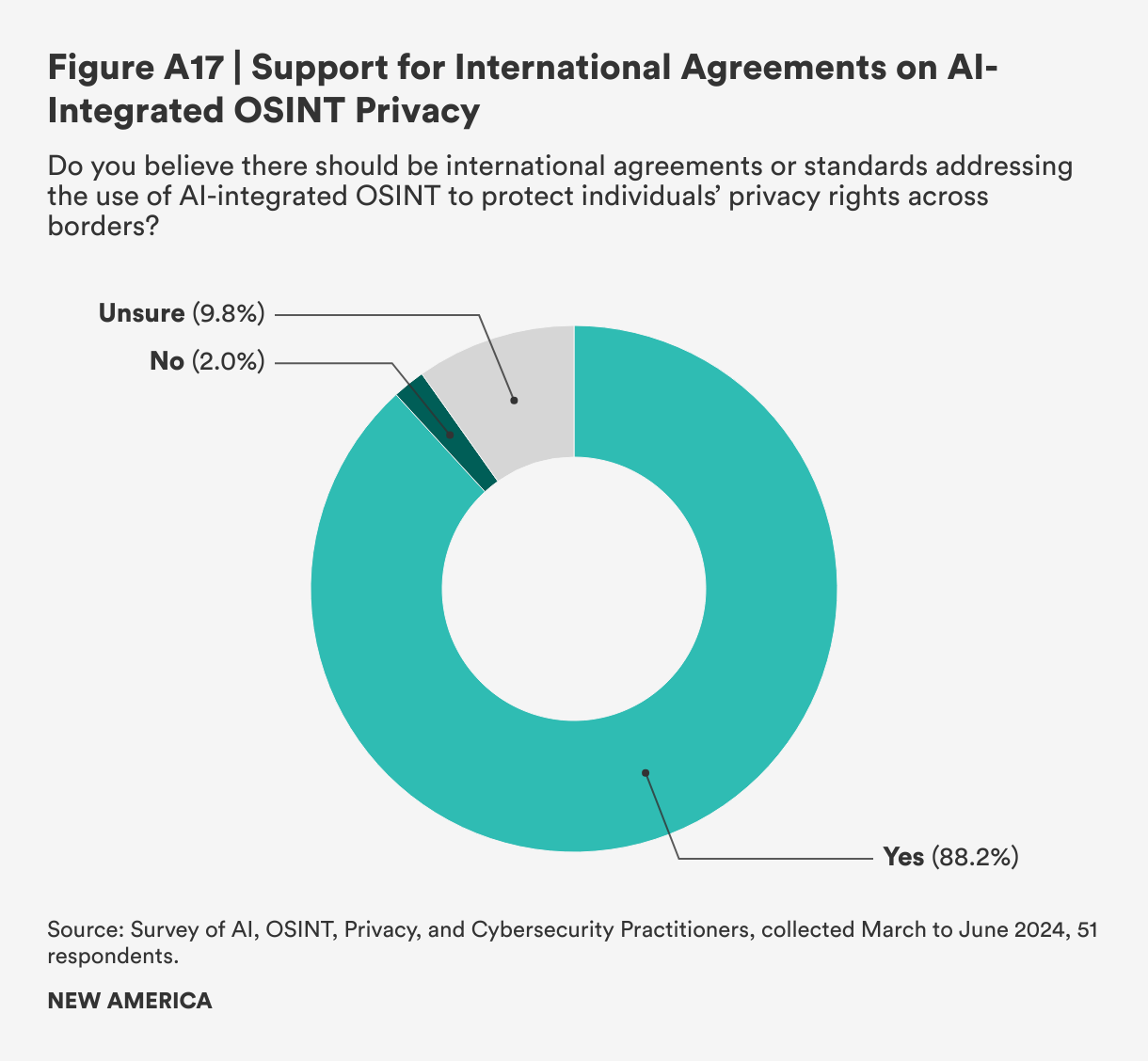
The majority of the expert sample believes there should be international agreements or standards to protect individual privacy rights in the context of AI-integrated OSINT, with 88 percent recognizing a need for international cooperation in regulating AI-integrated OSINT privacy.
Concerns About Misuse of AI-Integrated OSINT Tools
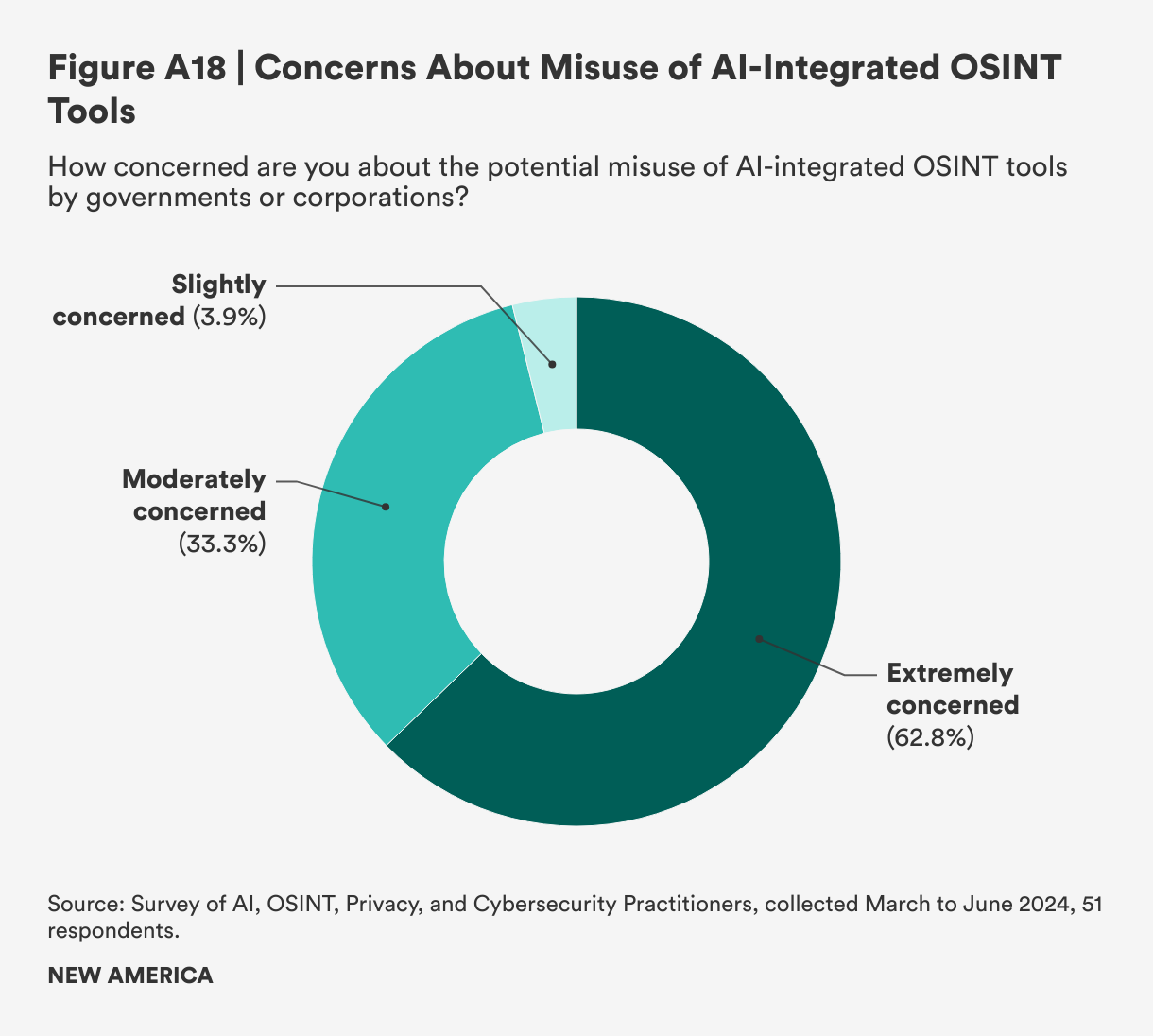
The expert sample survey identified a high level of concern about governments' or corporations' potential misuse of AI-integrated OSINT tools with 63 percent “extremely concerned,” and 33 percent rated “moderately concerned,” indicating apprehensions about these technologies’ ethical implications and potential abuses.
Measures for Transparency and Accountability
When asked in an open-ended question what measures could be implemented to enhance transparency and accountability, respondents suggested measures like improved regulation and oversight, enhanced user consent mechanisms, ethical guidelines development, and educational efforts to enhance transparency and accountability in AI OSINT tools. The variety of responses from the expert sample underscores a multifaceted approach to addressing transparency and accountability concerns in the use of AI-integrated OSINT.
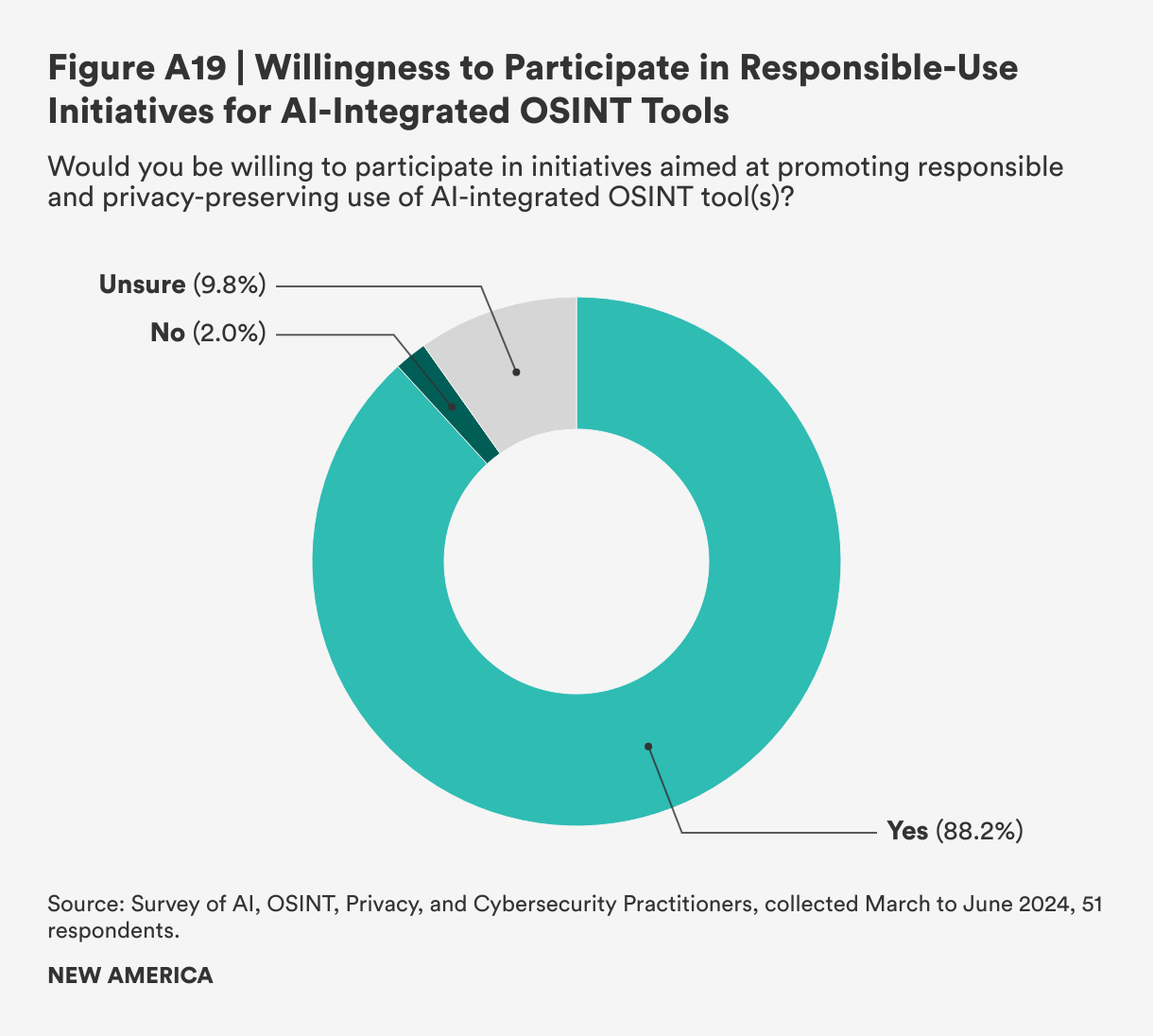
Willingness to Participate in Responsible Use Initiatives
About 88 percent of the expert sample are willing to engage in initiatives promoting responsible privacy-preserving use of AI-integrated OSINT tools and contribute to shaping better practices in the field of OSINT.