Laura Bornfreund
Senior Fellow, Early & Elementary Education

Last week I spoke about the future of early learning in federal education policy at the annual policy symposium of the National Association of Child Care Resource & Referral Agencies.
While early learning has long been included in the Elementary and Secondary Education Act (ESEA), whose latest iteration is No Child Left Behind, it has not had a major role. For example, states and districts are allowed to use Title I funding to support children from low-income families from birth through grade 12, but experts estimate that less than 3 percent of Title I funds are used for children under the age of 5. But the limited inclusion of early learning could be changing. Members of Congress and the Obama administration have shown an interest in including more of a focus on early learning in federal education legislation, specifically in the next reauthorization of ESEA.
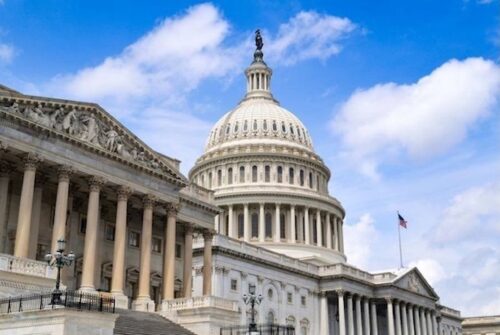
As we’ve written before, ESEA reauthorization is five years overdue. There wasn’t much movement toward reauthorization until last year, when the House and Senate education committees began drafting legislation. Senator Tom Harkin (D-IA) introduced a comprehensive ESEA bill that includes more of a focus on early learning. In the House, Rep. John Kline (R-MN) introduced five ESEA bills that would change specific sections of NCLB, but do not expand the role of early learning.
For the time being, both the House and Senate bills are stalled, and due to the upcoming November election, it doesn’t look like ESEA will be reauthorized this year. The make-up of Congress – and who is elected President – will play a significant role in how early learning will or will not be included in the next ESEA.
You can read my entire presentation here.
Senior Fellow, Early & Elementary Education