Playing, and Reflecting on Play, in Central Park Next Weekend

Pull out your hula hoop and sidewalk chalk. On October 3, a group of researchers and child advocates are holding “The Ultimate Block Party” in New York City’s Central Park. The free party will showcase more than 30 interactive activities that demonstrate the links between active play and learning.
The event is likely to catalyze a new round of discussions and debate about children’s playtime at home, playful learning in school, and how American childhood is changing. These are incredibly important conversations. Let’s hope that they can be couched in the context of what the science is telling us about children’s capacity for learning and their need for hands-on projects and rich social interaction — instead of relying on the remembrances of well-meaning grownups whose views of playtime are colored by nostalgia. (I have to plead guilty to this myself sometimes.)
So let’s take a look at a couple of videos that The Ultimate Block Party has posted on YouTube with an eye to the latter. They help to distill some new questions for the next frontier of play research.
Here’s the first video:
Most powerful is the argument that play-based learning is one of the keys to fostering a creative and adaptable next-generation workforce. The clips showing interactive, hands-on learning are compelling. And I particularly like this quote from Roberta M. Golinkoff, a linguist and psychologist at the University of Delaware and one of the leaders of the project:
“What we hope to do is influence a wide swath of American society to view learning in a new way, and to think about the ways in which they played as children and the kinds of experiences they had that promoted their own learning and development. We want to share the science because we know how kids learn best. It’s out there, it’s not a secret anymore.”
But I’m not so sure we can definitively say, as Golinkoff does in a later quote, that childhood today is in peril of being “taken away.” The way children play and interact may be changing, yes, but it may be too early to adequately capture all the changes and analyze whether they add up to such a negative result for all kids.
The next video tries to lay out the research case for that argument. Some points are built on solid evidence, others less so. The segment highlights the need to be careful about making broad generalizations given the vast disparities in what childhood looks like for kids of different socio-economic levels, both today and in yesteryear. Let’s take a look:
The numbers on children’s use of media are from a recent national survey on 8-18 year olds by the Kaiser Family Foundation. The data on the elimination of recess has been documented in peer-reviewed journals. Both are significant findings that should guide parents, educators and policymakers. What may be most important, however, is to examine how these trends are affecting subgroups of children differently. One recent study on recess shows that children who are black and poor are least likely to get it.
The research cited on kindergartners centers on school time, not kindergartners‘ time throughout their full day. And the definition of “play” in those studies was primarily centered on whether children have “free choice” time in their classrooms, which tells us a little bit about how children guide their learning but doesn’t necessarily encompass all the ways children may experience playful learning in school.
We also need more research on how children are spending their afternoons once the 3 p.m. bell has rung. There is no doubt that kids need unstructured time to run around, engage in make-believe play and simply be alone with their friends and toys. We need more studies on which subgroups of children have the least unstructured time and what conditions will enable them to get more of it at home or in other afterschool settings. How much is media playing a role here, and what kinds of media are we talking about? What about all those dance lessons, soccer games and piano practices — are they just as much a crimp on unstructured time?
The concern about “nature deficit disorder” is understandable given the numbers on how much media children use today. But I’d argue that we need more studies that connect the dots and provide information on exactly what causes what. With media use, for example, many people assume that children are more sedentary than in the past. But in fact studies are starting to show that the content of commercials for junk food are more strongly connected to weight gain and that children are sedentary even without heavy media use. We need to look more closely at the content of children’s media diets to see how they are affecting playtime and obesity.
Here are a couple of other lines of inquiry for future research on play:
- How is play fostered in various settings, and what are the differences between, say, home, school, grandma’s house or the local gymnasium for afterschool programs?
- Do parents of different socio-economic and ethnic backgrounds have different takes on what constitutes playful learning and why it is important? Is there a correlation between parents’ concerns about their children’s ability to achieve in school and their views of playtime? Do high-income parents allow their children less unstructured playtime than parents with lower incomes?
- How can teachers provide more time for make-believe or “pretend” play (which has been shown to help children build self-regulation skills) while still providing their students with the instructional guidance and rich language experiences that they are being paid to deliver?
- Can we document the benefits and drawbacks of “free choice” periods in early childhood and kindergarten classrooms? (A new study in Child Development, for example, provides some provocative results showing some provocative results that may surprise play advocates.)
- What changes to public policies would enable parents to spend more time with their kids in playful activities? How can museums, libraries and recreation centers play a role? And what about the impact of parental leave policies in the workplace?
If The Ultimate Block Party can help to elevate the need for more of this kind of research, it will be doing a real service not just for kids but for the education field as well. And if next Sunday’s event — and follow-up events around the country — can inspire families to engage in more playtime at home, all the better. Time to go dig out the jump ropes.
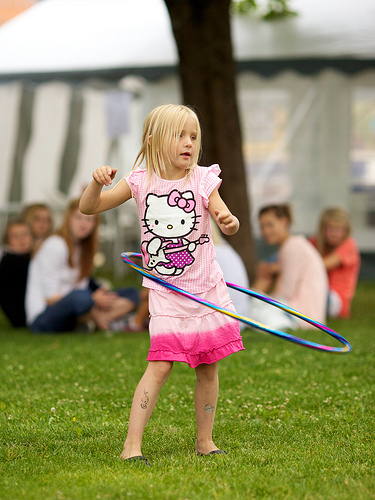
Photo by Flickr user Ernst Vikne courtesy Creative Commons license.
Issues
Programs/Projects/Initiatives
Related

Federal Early Education Update: March 2026

A Bureaucratic Shakeup Threatens Future Child Care Research