Michael Bohn
Partner, Studio One Eleven
This article is part of The Rooftop, a blog and multimedia series from New America’s Future of Land and Housing program. Featuring insights from experts across diverse fields, the series is a home for bold ideas to improve housing in the United States and globally.
If American downtowns feel increasingly empty, it’s because they are: Office vacancy rates for central business districts in the United States sit near historic heights, rising from 10 percent in 2019 to over 20 percent in 2025. Downtown office space in cities like San Francisco, Houston, and Austin is around 25 percent unoccupied.
Moody’s Analytics has noted that 902 million square feet of vacant office space is currently available nationally. Due to remote work and reduced leasing demand, anemic rent increases exist for most sectors other than high-quality, amenity-rich Class A spaces. To return to 2019 occupancy rates, approximately 450 million square feet of space needs to be taken off the market.
A smaller portion of employees actually work from the office on a daily basis, resulting in lower downtown populations than vacancy rates suggest, impacting the viability of ground floor retail, particularly restaurants. The result is that many downtown markets have little to no street life, further reducing desirability.
At the same time, the U.S. has a housing shortage, particularly in the affordable and “missing middle” markets, with estimates ranging from 2 to 4 million units. This shortage can increase property values and rents, forcing many residents to move further away from job centers, resulting in longer commutes, increased congestion, and greater pollution.
Yet a significant opportunity exists to simultaneously address these two challenges—falling office demand and soaring residential needs—by converting office space into housing, while also positively reshaping urban landscapes.
Where my firm, Studio One Eleven, is located, in downtown Long Beach, California, there is 4 million square feet of office space with a current vacancy rate hovering around 25 percent. A key trend to mitigating vacancy is the decrease in inventory as developers convert underutilized office space into housing, with two towers already complete and four more conversions underway.
More office space was removed from the market than added last year, a first since at least 2018, according to commercial real estate firm CBRE. The demand for housing is driving many conversions, and numerous cities across the country present prime opportunities for reuse. In fact, office-to-housing conversions are seeing an upswing across the nation, with key cities such as Los Angeles, New York, Chicago, and Washington, D.C., leading the charge. 2025 saw the highest number of units in the pipeline, with further growth in the first quarter of 2026.
So how does the U.S. encourage more conversions? First, city-level adaptive reuse ordinances (AROs) have energized the conversion of office buildings, notably in Los Angeles. Originally passed in 1999, the Los Angeles ordinance helped create 12,000 housing units in the urban core, which is walkable, amenity-rich, and connected to various modes of transit. Most importantly, these units helped establish more vibrant downtown neighborhoods.
The revised ARO adopted this year provides additional incentives. Originally applicable to buildings built before 1974, the ordinance now uses a rolling 15-year threshold, allowing office buildings constructed as recently as 2011 to be converted. It applies citywide, requires no minimum unit size, and can be approved “by right,” avoiding lengthy environmental reviews and public hearings.
My firm is currently working with the City of Riverside to create its first adaptive reuse ordinance to ensure greater certainty and clarity for developers interested in office conversions. Rather than focusing solely on downtown, where many buildings are mid- and high-rises, opportunities also exist at smaller scales, such as converting two- and three-story buildings located throughout the city. In nearby Santa Ana, for example, my firm utilized the local ARO to convert the upper floor of a two-story building known as Fourth Street Lofts from office space into a 24-unit loft community, leasing all units even before the development was fully completed. There are thousands of buildings like this in Southern California that sit as untapped opportunities.
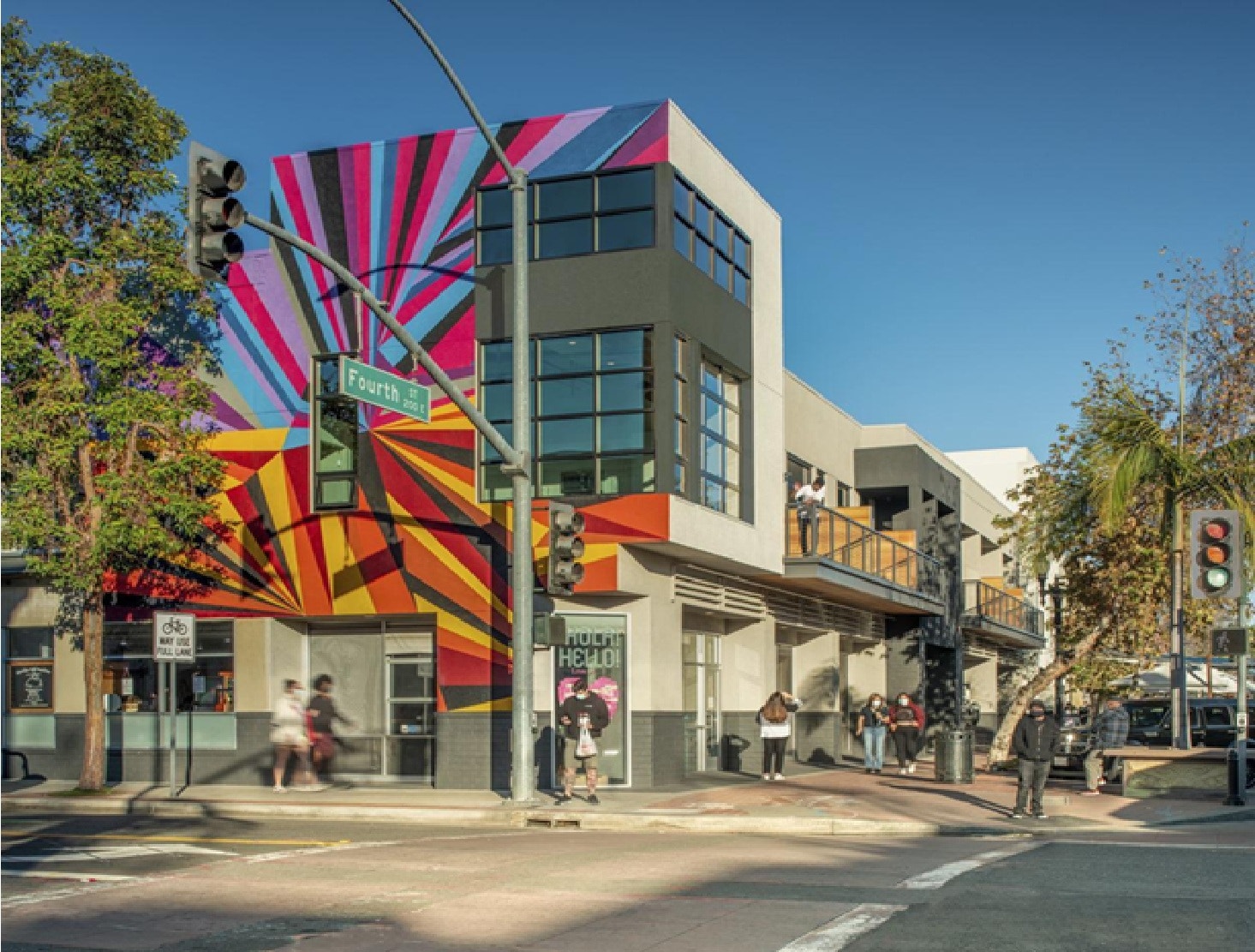
Fourth Street Lofts, Photography Copyright Carlos Hernandez, Courtesy Studio One Eleven
Other incentives for developers often include tax exemptions, density bonuses, which allow more housing units, floor area, or height than normally permitted, opportunity zones, to spur economic growth and job creation in low-income communities while providing tax benefits to investors, and expedited permitting processes, all aimed at making projects economically viable. New York City and downtown Washington, D.C. provide 100 percent property tax abatement during construction and post-construction, ranging from 20 to 30 years. To reduce 6 million square feet of downtown office space, the City of Calgary, Canada, provides developers with a direct financial subsidy of up to $75 per square foot, while Portland, Oregon, offers a simplified review process and exemptions from certain development charges. Coupled with an adaptive reuse ordinance, these incentives can assist cities to energize office-to-housing conversions.
Moving from policy to practice, developers need to consider three critical factors before investing considerable resources into a conversion.
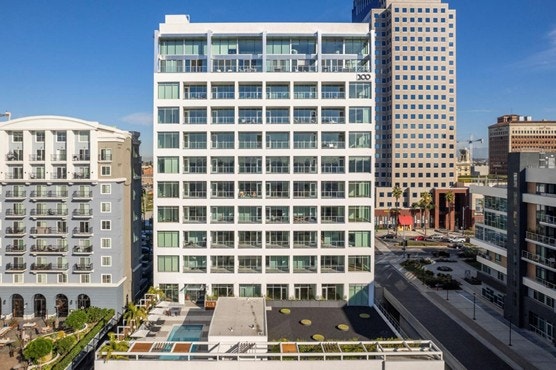
First are floor-plan dimensions and configuration. Ideal office building depths range from 60 to 100 feet deep. In new builds, residential units tend not to exceed 30 feet in depth; however, as office buildings have taller ceilings with large glass windows, natural light can penetrate further, allowing units to be deeper. Alternatively, for Studio One Eleven’s 200 Ocean development in Long Beach, California, we created 8-foot-deep balconies to actually reduce unit depth, provide outdoor space, and shade the south-facing façade.
The second consideration is the lease durations of commercial tenants in the existing office building. Many of Studio One Eleven’s clients, for example, have commercial tenants on month-to-month agreements, allowing the facility to be cleared easily ahead of conversion.
Finally, there’s the age of the building. In general, less investment is required for newer buildings, particularly for structural improvements, such as seismic upgrades. But pre-war buildings generally require significant upgrades. Studio One Eleven is currently converting an office tower that was completed in 1986, for instance, and minimal structural enhancements are needed.
Despite some of these challenges, office-to-housing conversions offer real opportunities for community development.
For example, office building conversions can save both time and money to deliver more housing. New developments often face long and unpredictable entitlement and permitting processes, while conversions are already in place physically and are generally accepted by the community, resulting in limited neighborhood pushback.
Further, parking and traffic demand for housing are less impactful than for office buildings. For instance, the Santa Ana Arts Collective, a national model for affordable housing with an artist preference, originally included both underground and surface-level parking to meet demand. But because residential units don’t need as much parking, the surface-level lot was replaced with ten townhomes, improving the project’s economic outcomes.
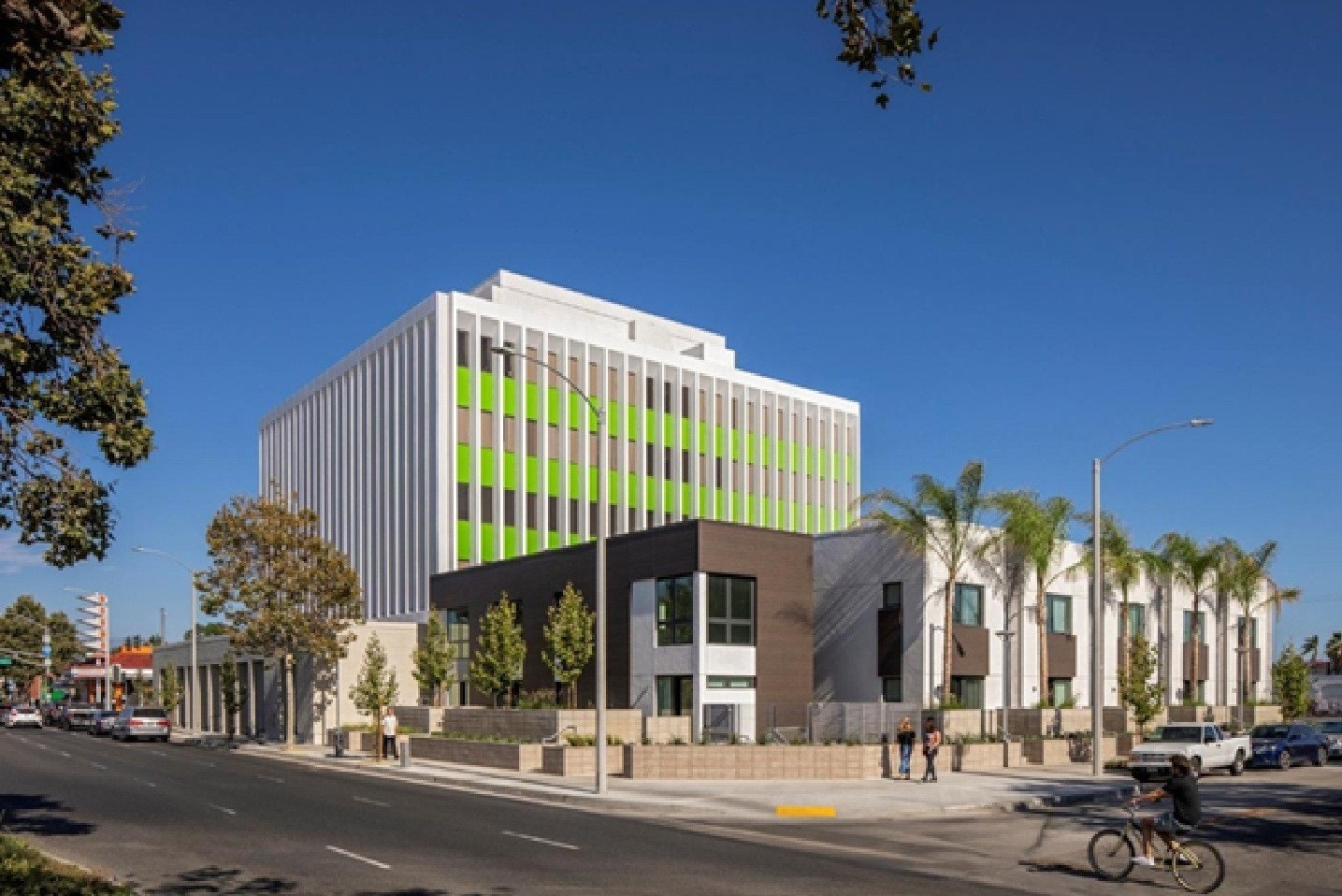
Santa Ana Arts Collective, Copyright Paul Turang, Courtesy Studio One Eleven
Conversion projects also offer tremendous value regarding sustainability when compared to ground-up construction. The more green buildings are the ones that are saved, not built, when comparing mid-rise reuse developments with ground-up projects. In fact, our own studies show such conversions can avoid 25 million tons of debris and reduce embodied carbon by 60 to 80 percent.
Due to the character of office buildings, leaning into features such as floor-to-ceiling glass, high ceilings, and distinctive finishes such as brick, marble, or wood can establish authenticity. These features further provide marketing advantages over many generic ground-up developments, and attract residents uninterested in cookie-cutter solutions, resulting in greater neighborhood diversity. Due to this unique character, conversions tend to achieve higher rents per square foot and remain occupied longer, as residents become more rooted.
Central business districts, traditionally populated exclusively by office buildings, are often unused at night and during the weekends. Post-pandemic, the problem is exacerbated by low activity during business hours. If vacant buildings are transformed into housing to create mixed-use environments where people work, live, and shop, then they become bustling communities, increasing value for all stakeholders. By having residents and office workers co-mingle, retail and street life become stronger, making neighborhoods safer and more livable.
Alternatively, if retail is still struggling, these spaces can be converted into urban homes, such as live-work lofts that support makers, creatives, and innovators who otherwise can’t afford to separate their living and working lifestyles. Distressed retail corridors might evolve into beautiful residential streets lined with townhomes, featuring large stoops with bedrooms located on upper floors. At Studio One Eleven, we’ve found that ground-floor lofts and townhomes are popular with tenants and help with lease-ups due to their diverse housing options and direct connection to the street.
In Southern California, cities with adaptive reuse ordinances, including Los Angeles, Long Beach, and Santa Ana, are generating thousands of new homes while removing underperforming office buildings. At Studio One Eleven, we believe that the timing is ripe for even more conversions, as lenders are willing to invest in housing rather than Class B or C office space. Ultimately, although conversions are not the silver bullet to solve the U.S. housing crisis, they are certainly an effective method to help chip away at the challenge.
While conversions help provide housing in desirable areas, downtown housing also contributes to the economic, social, and environmental development in our cities. Perhaps most importantly, these projects create a unique sense of place, in contrast to many new formulaic developer-driven projects. The result is more authentic places to live and vibrant neighborhoods, providing a robust return on investment for both developers and communities.
Editor’s note: The views expressed in the articles on The Rooftop are those of the authors alone and do not necessarily reflect the opinions or policy positions of New America.
Partner, Studio One Eleven