Table of Contents
Ten Questions to Ask Before Building a Network of Places
By Denice Ross
Are you a nonprofit, funder, or government leader working on a big problem plaguing many communities, like opioids, climate change, or disaster resilience? In recent years, networks have risen in use as a way to connect practitioners, as well as organize investments and innovation across places. Networks may be especially well suited if:
- The problem you are solving is bigger than one place can solve on its own.
- You’ve identified local innovations already happening and you want to share learnings across places.
- You want to reduce the risk of innovation and embolden local innovators to do more.
Authors Denice Ross and Tara McGuinness interviewed the leaders behind 25 place-based networks like What Works Cities and 100 Resilient Cities, ranging in size from 10 cities to over 200. They found a lot of hard-earned wisdom about the myriad design choices that go into building and improving networks. Even across domains as different as homelessness and carbon emissions, they found that network leaders had similar challenges and successes. This article distills some of the learnings from the interviews into a tool for people thinking about building networks.
Below are the 10 most important questions you’ll want to answer when designing a network.
1. What is the purpose of the network?
Be specific about naming what the network is designed to achieve. A shared purpose will inform network design, such as whether to have a “teams of teams” model or a hub-and-spoke model. A network focus also helps align activities so the people doing them have more to talk about. This can go several ways: sharing goals within a specific domain (e.g., increasing bicycling in underserved neighborhoods like the Big Jump Project) or sharing approaches (e.g., partnering universities and local government leaders to use cities as a living laboratory like MetroLab). While sharpening your purpose, it’s also worth questioning whether a network is actually the best approach at this time. (It may be that a workshop, research project, or a single-place pilot would be a better fit for this stage of your work.) Whatever your goal, be audacious. Built for Zero communities, for example, are aiming to eliminate homelessness.
2. What organizations or people will be in the network? How will you choose them?
Networks by definition are people or things that are interconnected. Who are you connecting, and how will being in a network help them? One of the most important design decisions for a network is the unit of participation. Is it a city government (e.g., Cities of Service)? A school district or university (e.g., #GoOpen or Educational Partnerships for Innovation in Communities Network)? A nonprofit or community-based organization (e.g., Code for America Brigade)? A local cross-sector partnership (e.g., StriveTogether)? Some networks have a mix of institutional types, such as the National Neighborhood Indicators Partnership which includes members hosted at universities and nonprofits. Note that even in networks for specific roles, such as the Civic Analytics Network of municipal Chief Data Officers (CDOs), or the eponymous Urban Sustainability Directors Network, the unit of membership is with the city, and when a CDO or sustainability director moves on, for example, their successor steps in with the network.
Using a competitive or invited application process can help ensure that members have sufficient capacity to be successful, and allows you to carefully curate the cohort (to match cities by size, or focus areas). The downside of selecting for capacity, of course, is that lower-capacity places may be left behind. Another option is to design low barriers to entry, such as the Alliance for Innovation, which has a sliding scale fee for membership based on municipal population size, or even to recruit members with different levels of resources and staffing to do the work, as the Police Data Initiative does to build the field across different types of police departments.
Small and Mid-Sized Cities
Some network leaders we talked to observed that resources often have a greater impact in smaller and mid-sized cities that might not be able to compete head-to-head with the Seattles and Bostons of the world. One of the greatest aspects of place-based networks is when peers learn from each other. It’s hard for a city like Denton, Texas to find commonality with New York City. If you want cities like Denton in your cohort, you must recruit more cities like Denton.
3. Who will be the points of contact between the member organization and the network?
Most networks have designated a point of contact (POC) for each member organization in order to simplify communication and increase accountability. The point of contact quarterbacks the work inside, and communicates back with the network regularly. The more aligned network participation is with the POC’s main job, the more robust the connection will be. When the network work isn’t aligned, POCs often lament that they can’t devote more resources to participating. 100 Resilient Cities addressed this by funding their resilience officers to work in member cities. FUSE Executive Fellows are specifically recruited and funded to work on a project mutually defined by FUSE and their host city, so they have both bandwidth to deliver and unusually high alignment between their network work and their city role. One cautionary tale from several networks was that a member’s participation often drops off when their local point of contact leaves that position. An organizational commitment to network participation can help ensure that a new person steps in to continue the work. Kathy Pettit, Director of the National Neighborhood Indicators Partnership, observes that in addition to having a main point of contact, they work to engage other staff members both for continuity when people leave, and also as “part of [their] mission to help develop more junior professionals in the field.”
4. How big will your network be?
The overarching factors in network size are how much central staff support is required to run the network, and how large the pool of resources is that the network is supplying to its members. Some networks cap participation, like What Works Cities, which added cities over the course of two years until reaching 100, or 100 Resilient Cities, which covered the salary of 100 chief resilience officers in cities globally. Some networks grow very slowly, with great intentionality, like the National Neighborhood Indicators Partnership which has a high bar for membership and might add a new city once a year, while providing ongoing support for candidate organizations. Other networks continue to scale indefinitely. #GoOpen is nearly a self-replicating network, as school districts find so much cost-savings in using open-licensed curricula that the regional sub-networks continue to recruit districts. Alliance for Innovation charges a membership fee that helps cover management costs as the network grows. Benchmark Cities, a network of 29 police chiefs who compare their data annually to up their game, doesn’t itself increase in size, but inspired the International Association of Chiefs of Police (IACP) to create the Law Enforcement Benchmarking and Performance Analytics Portal that can be used by any IACP member jurisdiction.
Joel Carnes, President and CEO of the Alliance for Innovation captures issue of network scale well:
“The secret sauce to working at scale is creating enough space so that network participants can ‘carry the load’ themselves by creating and sustaining groups and programs, while also creating a strong set of guard rails to ensure that everything stays on topic/mission.”
Running a Network
Roughly speaking, the people and internal systems you’ll need for running a network of less than 20 places can be more personal and ad hoc. For networks that range from 20-65 places, more formal systems need to be in place from the beginning to ensure a valuable experience for the participants. For networks larger than 65 places, support staff may be assigned to different sub-networks, and specialized software may be necessary to keep track of the progress and needs of the members.
5. How do you sustain engagement?
Once a network exceeds 20 members, it’s probably worth creating subgroups based on common attributes (geographic location, population size, issue of focus, capacity/maturity, etc.) to shrink their interactions to a manageable size. StriveTogether has its primary membership of organizations (which all meet a basic threshold for civic infrastructure), and also provides support through monthly conference calls, online resources, and technical assistance for would-be members who don’t yet qualify. What Works Cities has a rolling cohort of active cities (that are actively engaged for up to nine months) before transitioning into a lower intensity role. C40 organizes around initiatives such as urban flooding and mass transit. #GoOpen has “Ambassador” school districts who have met their commitments, are scaling and sustaining their efforts, and are then mentoring districts that are still in process. In Built for Zero, communities move progressively through a series of cohorts as they accomplish key milestones. Subnetworks are most effective with dedicated staffing to deliver value for each group. Systems to track progress and challenges will help you measure outcomes and identify common pain points. (See Question 10 below for more on tracking.)
6. What does it take to get into the network?
The barriers to entry increase as you go from requiring commitments from the practitioner, to the whole organization, to multiple stakeholders in a community. However, the impact can also increase as you go from one innovative practitioner to a collective impact model. When you are in the process of recruiting members is the best time to garner commitments for network participation. Though the high level people who make commitments are generally not the ones to do the work (with a few exceptions, such as the Bloomberg-Harvard City Leadership Initiative for mayors and senior officials), their buy-in provides cover and resourcing for those doing the work. Commitments are also an opportunity to get silos within the community to start talking to each other up front. In the Police Data Initiative, for example, the police chief and municipal chief information officer both have to sign off on the commitment to open data on policing, paving the way for the police department to take advantage of the CIO’s infrastructure for data publishing (a connection that often doesn’t manifest spontaneously).
7. Is your network time-limited? or permanent?
Given the reality that many points of contact will need to put in extra time or pull in additional resources to fully participate in your network, timeboxing the effort can make this surge doable. Another benefit of setting an end-date to a network is that once you sunset one network, you can then design the next generation network, iterating on the design based on what you learned the previous round. Building a next gen network (rather than merely continuing the original network) allows you to move the goalposts to reflect the progress you made, trim out any members that haven’t been participating, and invite in new members with high potential.
Timeboxing the network can go hand in hand with the commitments and goal-setting, especially with something like a final report or event at the end to celebrate success and create a sense of urgency to meet goals. End dates aren’t ideal for all networks, though. Some networks are better thought of as permanent civic infrastructure. The Code for America Brigades is a network in perpetuity with surges of activity, for example when disaster strikes. Living Cities is an umbrella of funding institutions that launch time-limited networks opportunistically around the network’s high-priority issues. The Alliance for Innovation is designed to build participation over decades, allowing local governments to develop both the external relationships and the internal capacity to get the most out of the network over the long-term.
8. How do network members connect?
The most appropriate combination of tools to keep a network connected depends on the needs of the network members. Networks typically go with the “lowest common denominator” technology that all participants regularly access. Keep in mind that many local governments may not be able to easily access Slack, Google apps, or webinars. Additionally, government workers may be especially risk averse in sharing their challenges and plans in a forum that might become public. That said, the more personal and relevant the communications to the network are, the more effective they are. The best cadence of check-ins depends on whether the network has an end-date, and its goals. For networks with aggressive goals and a set deadline, bi-weekly works well. For networks more long-term in nature, monthly is good, especially if there’s a means for spontaneous conversation in between. Connect less frequent than monthly, and your network may drop to the bottom of members’ consciousness.
| Scheduled Check-ins | Spontaneous Check-ins |
|---|---|
| Annual meetings and/or piggyback onto existing conferences (e.g., [C40](https://www.c40.org/) meets up at the United Nations Climate Change Conferences and [National Neighborhood Indicators Partnership](https://www.neighborhoodindicators.org/) at the Community Indicators Consortium) Site Visits (These could be trips by administrative staff to each of the sites, or travel as a cohort to see an exemplar city together, such as the [Big Jump Project](https://peopleforbikes.org/placesforbikes/the-big-jump-project/) bringing the network on a European tour to study bicycling infrastructure.) Phone or video calls ([Police Data Initiative](https://www.policedatainitiative.org/) splits up its 130 agencies into smaller groups who report out in regular 30-minute calls.) Webinar-enabled learning (Often these showcase local innovations at the beginning of the webinar, and then open up the floor for Q&A. [What Works Cities](https://whatworkscities.bloomberg.org/) hosts monthly webinars.) |
Email listservs (Whether configured as a distribution or a conversation list depends on the network size and the composition of the list.) Slack channels (most networks tried this and note that it didn’t work). The [Code for America Brigade](https://brigade.codeforamerica.org/) has had success with Slack for quick questions and Discord for more permanent conversations. Web-based forums ([USDN](https://www.usdn.org/home.html?returnUrl=%2findex.html) assures confidentiality of communications in their web site, does a newsletter roundup of the hot topics in the forum so those who aren’t logging on are still in the loop.) Participant directories to facilitate reaching out to colleagues. Facebook groups ([Built for Zero](https://www.community.solutions/what-we-do/built-for-zero) has a closed Facebook Group with more than 1,600 members that go beyond its 70 official cities.) |
9. How will you share successes and tackle common obstacles?
Most networks have some form of storytelling to showcase the success of their members and, ideally, transfer solutions across places. In truth, another benefit of storytelling we heard from our interviews was less about spreading good ideas, and more about the benefits to the place whose story was told. Having a local organization’s work recognized by a national network increases the prominence of the work locally, placates public relations staff who may be anxious about risk-taking, and helps get the work prioritized because it is viewed as high profile. Next Century Cities, whose purpose is making internet access fast, affordable, and reliable everywhere, has a savvy way to collect success stories from their members: they host an annual contest where cities submit their innovations.
Conversely, network members (especially governments) may be reluctant to share what’s not working, but doing so can be transformative for the field. In the Police Data Initiative, a high-capacity jurisdiction once explained during a check-in call that the quality of their traffic stop data was so bad it was unpublishable. This was a relief to the other jurisdictions who thought they were the only ones with that problem, and the disclosure allowed them to move forward with more confidence. Data Driven Justice network members had common concerns about how to comply with HIPAA as they share data about individuals across criminal justice and health organizations, so DDJ partners worked with the U.S. Department of Health and Human Services to create a document that addressed frequently asked questions.
10. How will you know if it is working?
As important as setting goals is tracking them. Demonstrating collective progress is invigorating for the community of practice, and can help demonstrate the value of the work to funders and other external stakeholders. The most common tool for tracking progress of participating cities is a spreadsheet, and the most common regret we heard from networks was that many did not gather baseline data or track progress in a structured way from the beginning. The Big Jump Project got ahead of this by making the first order of business for their cohort of 10 cities to install bicycle counting devices, and the reporting of bicycling data will continue for a year after the three-year network concludes. The larger your network, the more formalized your data tracking will likely need to be. Technical assistance provided by the network administration is often captured in a system that could be as simple as shared Google Docs among TA providers, a custom shared system for note-taking, or specialized customer relationship management software. Member surveys and independent evaluations can also give useful insights on how well your network is delivering value to its members and how you can improve.
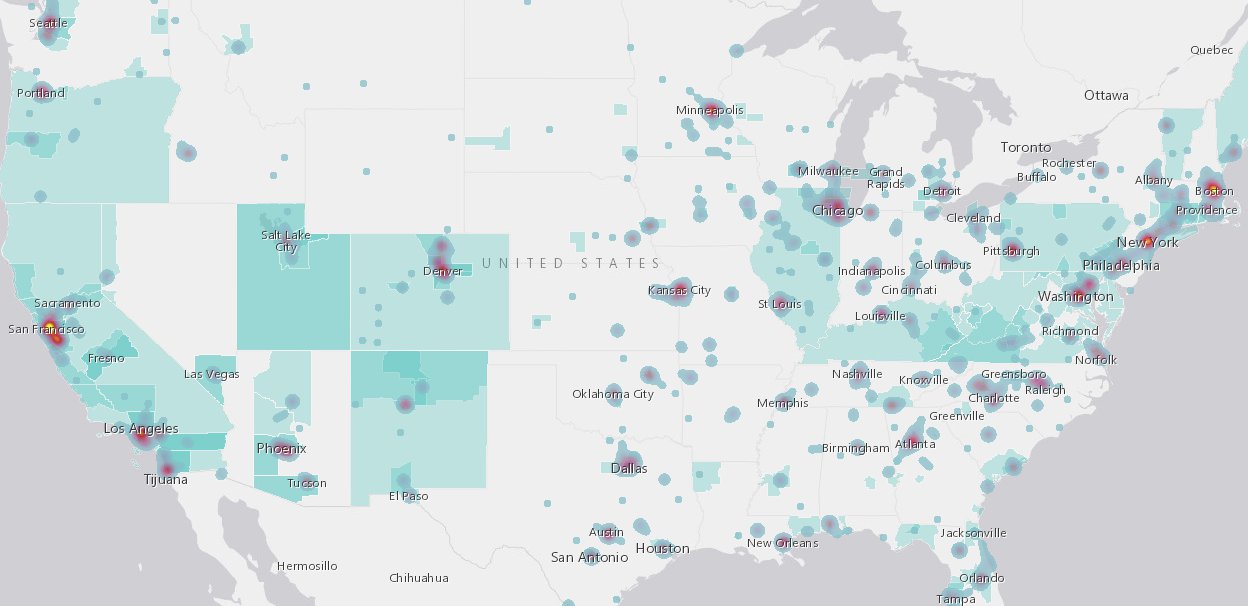
In sum, there is no one best way to design or run a network. The most important thing about designing an effective network is to be deliberate in your design plan. If you’d like to learn more about the research we conducted on place-based networks, visit the interactive map of the 25 networks (as of September 2018), or read Can Networks Supercharge American Ingenuity? or the case study on Chicago, which is a super-networked city.
Common Pain Points for Networks and how to Overcome Them
Once your network is up and running, here are some tips and tricks from the interviews we conducted with network managers:
| What can go wrong | How to mitigate |
|---|---|
| Not enough bandwidth at the local level | Provide seasoned talent to lead the work locally, perhaps partnering with a network like [FUSE Corps](https://fusecorps.org/about/). Make the timeframe for the network short enough that local participants can surge their efforts without burning out. |
| Miscommunicating resources | When announcing funding for the network, make it clear exactly how local places benefit, so members can align expectations with available resources. |
| Places left behind | Create a deliberate strategy to include communities that need more help. Consider a tiered network that allows lower capacity members to get involved. Tell success stories of places with lower capacity to model what is within reach. |
| Member places who no longer contribute | Graduate those who’ve met their commitment, and give them a chance to participate as alumni if they wish, but give them a graceful exit if they don’t. Create requirements for participation, and de-list members who don’t meet them. Re-animate members by finding different local points of contact or backbone orgs, or providing intensive technical assistance. Track participation and change the status of members who are not meeting requirements for participation. The National Neighborhood Indicators Partnership has [formalized](https://www.neighborhoodindicators.org/library/guides/nnip-policy-partner-organizations-transition) this in a policy. |
| Overall participation starts to wane | Make sure that participating in the network always delivers more value than the energy members put into it. Create a new challenge that aligns well with the original purpose to reinvigorate the group. Create a governance structure where members guide decisions about resources and priorities and make the network operator more accountable to the membership. |
| Members with lower capacity fall behind | Track participation and reach out to underperformers with offers of technical assistance, funding, staffing. Consider pairing them with mentor or ambassador places like them that are doing well. Provide more than networks, dig in on root causes of execution struggles (staff, funds, other issues.) |
| Funding for local work is scarce | Increase storytelling to amplify local successes to remind communities and funders why they invest in this work. Consider bringing a few places together to pitch funders for cross-site initiatives to accelerate progress on a critical issue. Provide guidance on fundraising to members through venues like funder panels or guides, and share sample proposals and business plans across members. |
| Leadership transitions happen and participation in the network becomes less of a priority | Encourage diverse stakeholders for the local work to insulate against leadership changes. Garner organizational commitments up front so it’s the organization, not an individual, who makes the commitment. Promptly initiate personal connections and other onboarding procedures with new points of contact. |