
More Time, Better Work, More Support
The poll also found that nearly half of all women said more paid time off would help manage work and care a lot. Forty-nine percent of the women surveyed said more access to paid vacation or other paid time off to rest and recover would help a lot in managing work and family responsibilities. Forty-eight percent said more access to paid leave for personal or family health issues would help a lot. And 43 percent said having more control over their work time, through more access to predictable work hours or a flexible schedule they have input into would help a lot in easing work-care conflict.
A majority of Latina and Asian women, and half of Black women say having more control over their time would help work-care balance a lot, as compared to less than half of Native American and white women.
Fewer women – about one-third of those surveyed – said having more help with child or family care from either family members or paid caregivers would help them manage their work and care responsibilities a lot. Nearly half of Asian women said more help from paid caregivers would help them a lot.
About one-third of all women surveyed said better enforcement of anti-discrimination laws would help a lot in combining work and care responsibilities. Larger shares of women of color say this would help the most, with Black women (59 percent) and Native American women (51 percent) reporting the highest shares, followed by Latina women (49 percent) and Asian women (46 percent).
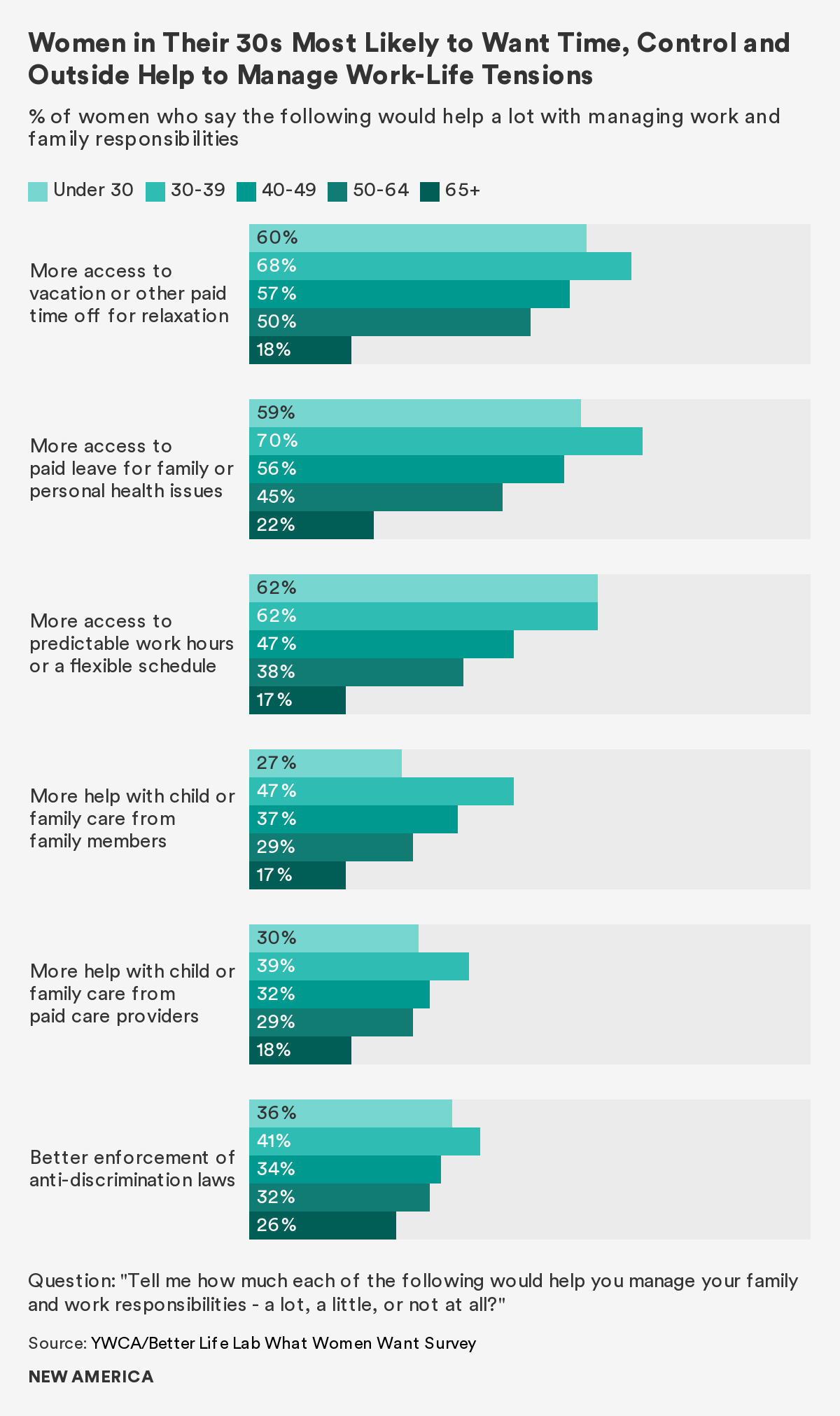
Young and middle-aged women resoundingly said more access to paid time off and control of their schedules would help a lot, with 70 percent of women in their 30s saying access to paid family leave would be most helpful, and 68 percent saying paid vacation time would help a lot. Sixty-two percent of women under 40 rated access to predictable and flexible schedules as something that would help them manage work and care demands a lot.
Women in their 30s were also more likely to report that better enforcement of anti-discrimination laws would help a lot in managing work and care concerns.