Categorization of Frameworks
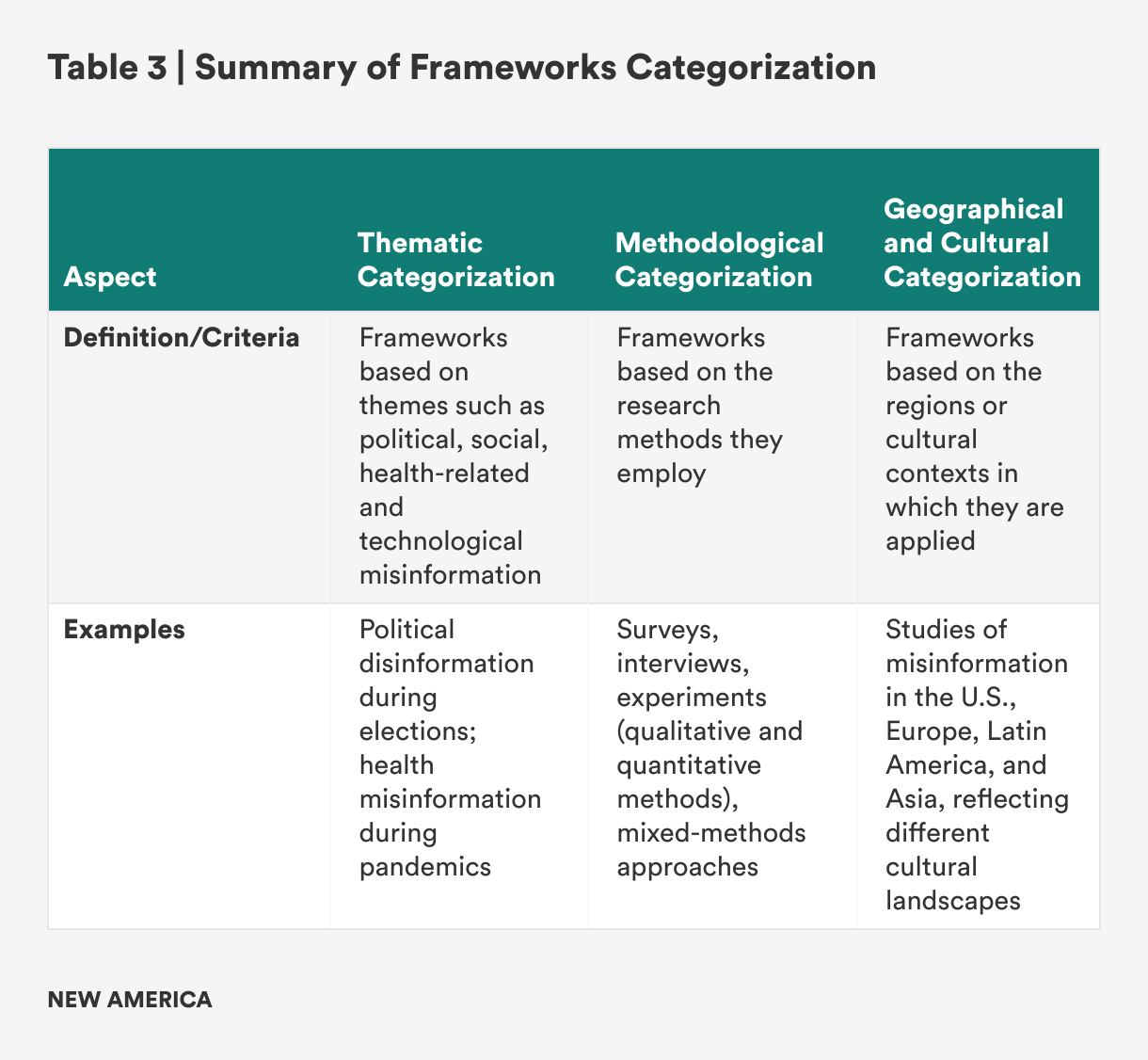
The diverse array of frameworks for understanding misinformation and disinformation can be overwhelming due to the various perspectives and methodologies they encompass. In this chapter, we divide the existing frameworks into thematic, methodological, and geographical or cultural considerations. Practically, when frameworks are categorized by themes, methods, or regional contexts, the focus is on tailoring research approaches and interventions to specific settings or problems. This is in contrast to the previous chapter, where frameworks were grouped into actor, process, impact, and typology categories and examined based on what aspect of misinformation and disinformation they target.
Thematic Categorization
Thematic categorization involves grouping frameworks based on the primary themes or issues they address. This approach helps to highlight the specific aspects of misinformation and disinformation that each framework focuses on, whether it be political, social, health-related, or technological.
Political Frameworks
Frameworks in this category focus on the role of misinformation and disinformation in political contexts. They examine how false information is used to influence elections, shape public opinion, and destabilize political systems. For example, frameworks that analyze disinformation campaigns during elections or state-sponsored propaganda efforts fall into this category. These frameworks often emphasize the strategic use of misinformation and disinformation by political actors to achieve specific goals, such as voter manipulation or undermining opponents.
Social Frameworks
Socially oriented frameworks explore how misinformation and disinformation affect social dynamics and relationships. They may focus on how false information spreads within communities, influences social norms, or exacerbates societal divisions. Frameworks in this category often address issues like the role of social media in amplifying misinformation, the formation of echo chambers, and the impact of misinformation on social cohesion. These frameworks are particularly relevant for understanding how misinformation contributes to polarization and the fragmentation of public discourse.
Health-Related Frameworks
Given the significant impact of misinformation on public health, several frameworks specifically address the spread and effects of health-related misinformation. Health-related frameworks often emphasize the need for accurate communication, the dangers of misinformation in undermining public health efforts, and strategies for combating health misinformation through education and public awareness campaigns.
Technological Frameworks
Technological frameworks focus on the role of digital platforms, algorithms, and artificial intelligence (AI) in the spread of misinformation and disinformation. They explore how technology facilitates the rapid dissemination of false information, the role of social media algorithms in promoting sensationalist content, and the potential for automated tools like bots and deepfakes to spread disinformation. These frameworks often address the challenges of regulating digital platforms and the ethical implications of technological interventions designed to counter misinformation.
Methodological Approaches
Methodological approaches group frameworks based on the research methods they employ. This categorization highlights the diversity of techniques used to study misinformation and disinformation, ranging from qualitative analyses to quantitative data-driven models.
Qualitative Frameworks
Qualitative frameworks often involve case studies, interviews, content analysis, and other non-numerical methods to explore misinformation and disinformation. These frameworks are valuable for understanding the nuanced and contextual factors that influence how false information is created, spread, and received. For example, qualitative studies may examine the narratives used in disinformation campaigns, the motivations of actors involved in spreading false information, or the experiences of individuals who encounter misinformation.
Quantitative Frameworks
Quantitative frameworks rely on numerical data and statistical analysis to study misinformation and disinformation. These frameworks often involve large-scale data collection, such as social media analytics, survey data, or experiments designed to measure the effects of misinformation. Quantitative approaches are useful for identifying patterns in the spread of misinformation, assessing the prevalence of false information, and evaluating the effectiveness of interventions.
Mixed-Methods Frameworks
Some frameworks combine qualitative and quantitative approaches to offer a more comprehensive understanding of misinformation and disinformation. Mixed-methods frameworks might use qualitative research to explore the context and motivations behind misinformation, followed by quantitative analysis to measure the scale and impact of these phenomena. This approach allows for a more holistic view, capturing both the detailed, context-specific elements and the broader trends in misinformation spread and impact.
Computational Frameworks
With the rise of big data and machine learning, computational frameworks have become increasingly important in the study of misinformation and disinformation. These frameworks use algorithms, network analysis, and other computational tools to model the spread of misinformation, detect false information, and simulate the effects of different interventions.
Geographical and Cultural Considerations
Geographical and cultural considerations involve categorizing frameworks based on the regions or cultural contexts in which they are applied. Misinformation and disinformation do not operate in a vacuum; they are deeply influenced by the social, cultural, and political environments in which they spread.
Regional Frameworks
Some frameworks are designed to address misinformation and disinformation in specific geographical regions, such as North America, Europe, Asia, or Africa. These frameworks consider the unique political, social, and media landscapes of each region, which influences how misinformation spreads and is perceived. For example, frameworks developed for democracies might focus on the role of free speech and the media, while those for authoritarian regimes might emphasize state control and censorship.
Cultural Frameworks
Cultural frameworks examine how cultural factors, such as language, values, and traditions, shape the creation and spread of misinformation and disinformation. These frameworks recognize that misinformation is often tailored to resonate with specific cultural beliefs or biases, making it more effective in certain communities. For instance, disinformation campaigns may exploit cultural tensions or stereotypes to create division or mistrust.
Cross-Cultural Frameworks
Cross-cultural frameworks compare the spread and impact of misinformation across different cultural contexts. These frameworks are useful for identifying universal patterns in misinformation spread, as well as context-specific factors that influence how misinformation is received and acted upon. Cross-cultural studies can reveal how different societies respond to misinformation and what lessons can be learned from various approaches to combating false information.