Navigating the Landscape of Misinformation and Disinformation
Abstract
In the era of digital communication, the rapid spread of misinformation and disinformation presents significant challenges to society. This report provides an in-depth examination of the existing frameworks developed to understand and address these phenomena. More precisely, this report categorizes and compares various frameworks, including typology-based, process-oriented, impact-oriented, and actor-centric approaches. It highlights the strengths and limitations of each framework type, with a particular focus on their applicability to combat misinformation in diverse contexts. The report underscores the importance of adopting a holistic and flexible approach that integrates multiple frameworks and adapts to the evolving nature of technology, particularly AI-driven disinformation. Finally, it provides recommendations to guide policymakers and practitioners in developing effective strategies to combat misinformation in ways that prioritize transparency, accountability, and public trust.
Acknowledgments
I would like to thank Peter Singer for his guidance throughout this project and Bridget Chan for her relentless efforts to bring this report to fruition.
Editorial disclosure: The views expressed in this report are solely those of the author(s) and do not reflect the views of New America, its staff, fellows, funders, or board of directors.
Downloads
Introduction
As false information spreads more rapidly and widely than ever before, understanding the frameworks that scholars and practitioners use to analyze and address these phenomena is essential for developing effective strategies to combat its spread, protect public trust, and mitigate its societal impacts. This report aims to provide a comprehensive overview of the key frameworks developed to understand and address misinformation and disinformation. The report categorizes and compares these frameworks based on specific criteria, such as focus, scope, and methodology. By critically evaluating each framework, this report analyzes their strengths and weaknesses in addressing misinformation and disinformation. Ultimately, the objective is to provide actionable recommendations for researchers, policymakers, and practitioners to effectively combat misinformation and disinformation, contributing to a more informed and resilient public discourse.
This report is structured to guide the reader through a comprehensive examination of misinformation and disinformation frameworks, beginning with foundational concepts and progressing through detailed analyses, comparisons, and practical implications. The background section sets the context and outlines the report’s objectives, followed by an overview of misinformation and disinformation, including definitions and societal impact. The core chapters present and categorize various theoretical and methodological frameworks, offering a comparative analysis to highlight their strengths, weaknesses, and applicability. The discussion synthesizes key insights, addressing the broader implications and suggesting future research directions, and concludes with a summary of findings and actionable recommendations for the use and improvements of available frameworks.
Background
In an era dominated by digital communication and instant information sharing, the concepts of misinformation and disinformation have become increasingly significant. Both terms refer to the spread of false or misleading information, but they differ fundamentally in intent and impact. Understanding these differences is crucial for comprehending the broader challenges they pose to society.
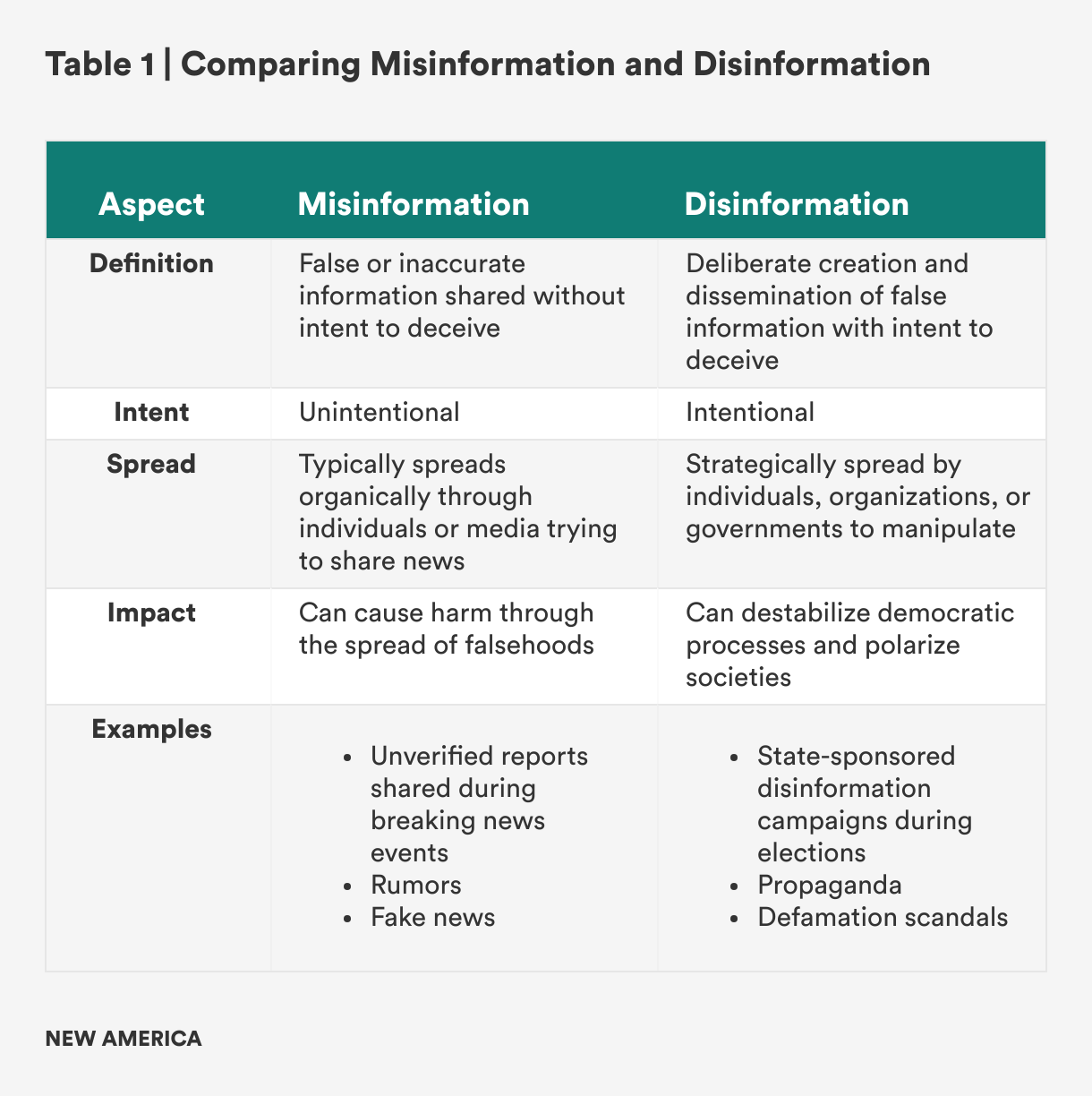
Misinformation is defined as false or inaccurate information that is shared without the intent to deceive.1 It typically spreads when individuals or organizations disseminate information they believe to be true but is actually incorrect or misleading. This happens for various reasons, such as misunderstandings, lack of verification, or reliance on untrusted sources. For instance, during breaking news events, misinformation often spreads rapidly as people share unverified reports in an attempt to make sense of evolving situations. Although misinformation is usually shared in good faith, it can still cause significant harm by perpetuating falsehoods and misleading others.
Disinformation, in contrast, refers to the deliberate creation and dissemination of false information with the intent to deceive or manipulate.2 Unlike misinformation, disinformation is a calculated strategy often employed by individuals, organizations, or even governments to achieve specific objectives. These objectives may include influencing public opinion, manipulating political outcomes, damaging reputations, or creating social unrest. Disinformation campaigns are typically sophisticated and well-organized, exploiting the vulnerabilities of digital platforms and human psychology to maximize their reach and impact. The intentional nature of disinformation makes it particularly dangerous, as it can undermine trust in institutions, polarize societies, and destabilize democratic processes.
The study of misinformation and disinformation has become increasingly important as these phenomena have a profound impact on various aspects of society. The rise of social media and other digital platforms has dramatically amplified the speed and reach of information dissemination, including the spread of false information. The COVID-19 pandemic, for example, highlighted the dangers of misinformation, as the spread of false health information undermined public health efforts and contributed to widespread confusion and harm. Disinformation campaigns, in particular, have been used as tools to create confusion, foster distrust, and deepen societal polarization, weakening the social fabric and the foundations of democratic governance.3 In an era where trust in traditional institutions and media is already under strain, the impact of disinformation can be particularly damaging, leading to increased cynicism and disengagement among the public.
“In an era where trust in traditional institutions and media is already under strain, the impact of disinformation can be particularly damaging, leading to increased cynicism and disengagement among the public.”
The complexity of detecting and responding to misinformation and disinformation further underscores the importance of studying these phenomena. The methods used to spread false information are becoming more sophisticated, employing technologies such as bots, deepfakes, and algorithmic amplification to reach wider audiences and evade detection. This technological evolution makes it more challenging to identify and counteract misinformation and disinformation effectively. In addition, the proliferation of misinformation and disinformation raises important ethical and legal questions.4 Society must navigate the delicate balance between protecting free speech and preventing harm, determining the responsibilities of platforms and governments in regulating content, and upholding the public’s right to accurate information.
The distinction between misinformation and disinformation is not merely academic; it has practical implications for how society addresses these challenges. The interdisciplinary nature of misinformation and disinformation studies highlights their broad relevance. These phenomena intersect with various fields, including communication, political science, psychology, sociology, and computer science. Each discipline offers unique insights and methodologies that contribute to a more comprehensive understanding of these complex issues.
Citations
- Darrin Baines and Robert JR Elliott. “Defining Misinformation, Disinformation, and Malinformation: An Urgent Need for Clarity during the COVID-19 Infodemic,” Discussion Papers 20-06, Department of Economics, University of Birmingham (2020), source.
- Baines and Elliott, “Defining Misinformation, Disinformation, and Malinformation,” source.
- Pablo Moral, “The Challenge of Disinformation for National Security,” in Security and Defence: Ethical and Legal Challenges in the Face of Current Conflicts, ed. Juan Cayón Peña (New York: Springer International Publishing, 2022), 103–119.
- Rafael Cacciolari Dalessandro, José Augusto Chaves Guimarães, and D. Grant Campbell, “Fake News as an Emergent Subject Domain: Conceptual and Ethical Perspectives for the Development of a Critical Knowledge Organisation,” in The Human Position in an Artificial World: Creativity, Ethics and AI in Knowledge Organization, ed. David Haynes and Judi Vernau (Baden-Baden, Germany: Ergon Verlag, 2019), 208–217.
Overview of Misinformation and Disinformation
Understanding the concepts of misinformation and disinformation is critical in today’s information-saturated world. This chapter provides an in-depth overview of these phenomena, exploring their definitions, historical contexts, and the significant impact they have on society.
Definitions and Differences
The terms misinformation and disinformation are often used interchangeably, but they have distinct meanings that are crucial to appreciating their respective impacts. Realizing the distinction between these two concepts is essential because it influences how we approach the challenge of combating false information.
The fundamental difference between misinformation and disinformation lies in intent.1 The key characteristic of misinformation is the lack of intent to deceive. Those who share misinformation typically do so in a naïve way, often unaware that the information they are passing on is false. The deliberate nature of disinformation makes it a more insidious and dangerous phenomenon than misinformation because it not only seeks to mislead but also to manipulate public perception and behavior in ways that serve the interests of the disinformation creators. The tactics used in disinformation campaigns often involve exploiting emotional triggers, such as fear, anger, or outrage, to bypass rational analysis and provoke a strong, immediate reaction from the audience. This emotional manipulation makes disinformation particularly difficult to combat, as it can entrench false beliefs and polarize communities.
Another key difference is the level of organization involved and the methods of dissemination. Misinformation can spread organically through word of mouth or social networks, often as a result of individuals sharing content they believe to be true or even news outlets that do not adequately verify their sources. Disinformation, however, is typically part of a coordinated effort to achieve a specific outcome, whether political, financial, or ideological. These efforts can be highly sophisticated, involving the use of multiple channels and platforms to reach a wide audience and create a sense of credibility or legitimacy around the false information. Tactics include creating fake accounts or websites, using algorithms to amplify certain messages, or targeting specific demographics with tailored content designed to resonate with their existing beliefs and biases.
While our main focus in this report is on misinformation and disinformation, it is worth mentioning that malinformation is yet another concept that refers to the deliberate sharing of true information with the intent to cause harm or manipulate.2 Unlike misinformation, which involves false or inaccurate information spread without intent to deceive, and disinformation, which is deliberately false, malinformation involves truthful content used maliciously. Examples of malinformation include leaking private data, sharing confidential communications, or releasing damaging information at strategic moments to manipulate public perception or stir conflict. While the information itself is accurate, its context or timing is manipulated to harm individuals, groups, or institutions. This makes malinformation particularly dangerous as it can be used in smear campaigns, often without the protections afforded to outright falsehoods.
Societal Impacts
Misinformation and disinformation have far-reaching consequences for society, affecting various aspects of life, including politics, public health, social cohesion, and trust in institutions. In the political realm, disinformation campaigns often target vulnerable populations, exploiting existing divisions and amplifying tensions to achieve specific political goals. For example, during the 2016 U.S. presidential election, Russian operatives conducted a disinformation campaign aimed at sowing discord among American voters by creating fake social media accounts and targeted advertisements to influence voter behavior.3 This not only contributed to the polarization of American society, but also raised concerns about the integrity of the electoral process and the vulnerability of democratic institutions to foreign interference.
In the public health domain, the spread of false information about medical treatments, vaccines, and diseases can lead to harmful behaviors, such as vaccine hesitancy, the use of ineffective or dangerous remedies, and the rejection of evidence-based medical advice. The COVID-19 pandemic is a stark example of how misinformation can exacerbate a public health crisis. Throughout the pandemic, misinformation about the virus’s origins, transmission, and treatment spread rapidly on social media, leading to confusion, fear, and mistrust among the public. Disinformation campaigns promoting false cures, such as the use of hydroxychloroquine or the ingestion of bleach, put people’s lives at risk.4 Furthermore, misinformation about vaccines fueled vaccine hesitancy, complicating efforts to achieve herd immunity and prolonging the pandemic.
Social cohesion is another area where misinformation and disinformation can have a detrimental impact. Spreading false information that exacerbates divisions along racial, ethnic, religious, or ideological lines contributes to the polarization of societies. When people are repeatedly exposed to disinformation that reinforces their preexisting beliefs and biases, they are more likely to become entrenched in their views and less willing to engage in constructive dialogue with those who hold different opinions. This polarization can lead to increased hostility between different groups, reducing the potential for compromise and collaboration. In extreme cases, disinformation can incite violence, as seen in incidents of hate crimes or politically motivated attacks.
“Perhaps one of the most significant impacts of misinformation and disinformation is the erosion of trust in institutions, including the media, the government, and the scientific community.”
Perhaps one of the most significant impacts of misinformation and disinformation is the erosion of trust in institutions, including the media, the government, and the scientific community. When people are exposed to conflicting information, particularly from sources they perceive as credible, they may become skeptical of all information sources, leading to a phenomenon known as information nihilism.5 This skepticism can be exploited by those who seek to undermine trust in established institutions for political or ideological reasons. For example, disinformation campaigns that target mainstream media outlets, labeling them as “fake news,” can erode public trust in journalism and make it more difficult for people to distinguish between reliable and unreliable sources of information. Similarly, disinformation that casts doubt on scientific consensus, such as the denial of climate change or the safety of vaccines, can undermine public confidence in science and hinder efforts to address pressing global challenges.
Citations
- Bernd Carsten Stahl, “On the Difference or Equality of Information, Misinformation, and Disinformation: A Critical Research Perspective,” Informing Science 9 (2006): 83–96, source.
- Kacper T. Gradoń, Janusz A. Hołyst, Wesley R. Moy, Julian Sienkiewicz, and Krzysztof Suchecki, “Countering Misinformation: A Multidisciplinary Approach,” Big Data & Society 8, no. 1 (2021), source.
- Scott Shane and Mark Mazzetti, “Inside a 3-Year Russian Campaign to Influence U.S. Voters,” New York Times, February 16, 2018, source.
- “Coronavirus: Outcry after Trump Suggests Injecting Disinfectant as Treatment,” BBC News, April 24, 2020, source.
- Justin R. Pidot, “Environmental Nihilism,” Arizona Journal of Environmental Law & Policy 10, no. 1 (Fall 2019), source.
Existing Frameworks
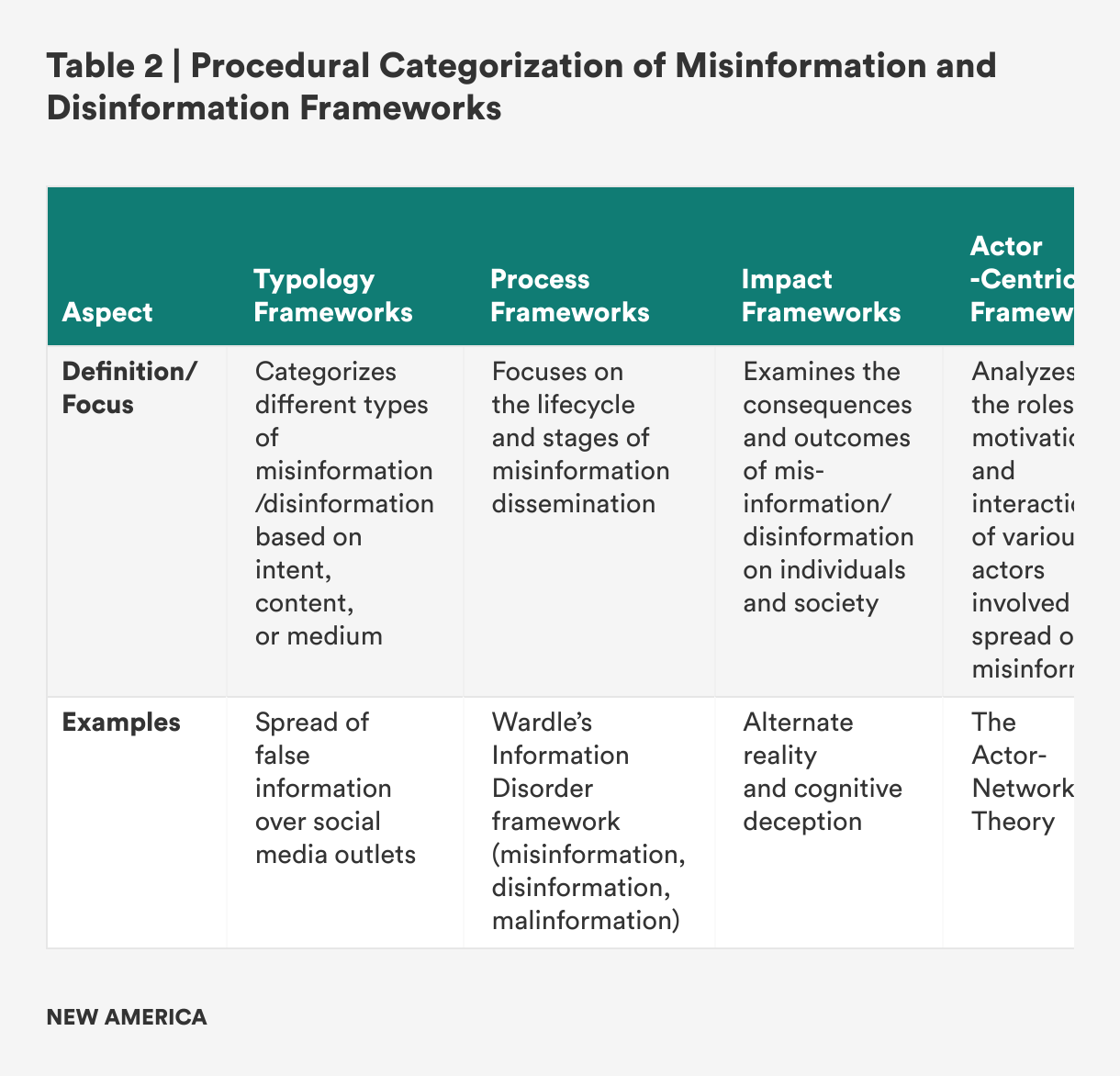
A variety of frameworks have been developed to understand, categorize, and address how misinformation and disinformation are created, spread, and mitigated. In this chapter, we explore the major existing frameworks, categorizing them based on their focus and approach.
Typology-Based Frameworks
Typology-based frameworks focus on categorizing misinformation and disinformation into distinct types based on various factors such as intent, content, and dissemination method.
Intent-Based Typologies
One of the most common typological approaches is to classify false information based on the intent behind its creation and dissemination. For example, some frameworks distinguish between misinformation (unintentional) and disinformation (intentional) as primary categories. Further subcategories might include malinformation, which refers to the deliberate spread of truthful information with the intent to cause harm, such as doxing or releasing private information.1
Content-Based Typologies
Another approach focuses on the nature of the content itself. These frameworks classify misinformation and disinformation based on the type of falsehood or distortion present in the content. For example, Wardle introduced a typology that categorizes false information into seven types: (1) satire or parody, (2) false connection, (3) misleading content, (4) false context, (5) impostor content, (6) manipulated content, and (7) fabricated content.2 Each type represents a different way in which the truth is distorted, providing a detailed map of the misinformation landscape.
Dissemination Method-Based Typologies
Some frameworks classify misinformation and disinformation based on the methods and channels used to spread them. These might include distinctions between organic spread (e.g., via social media sharing) and coordinated campaigns (e.g., through bot networks or paid advertisements). Understanding the dissemination methods helps in identifying the mechanisms by which false information reaches and influences audiences.3
Process-Oriented Frameworks
Process-oriented frameworks focus on the lifecycle of misinformation and disinformation, examining how these phenomena are created, disseminated, consumed, and ultimately affect audiences. These frameworks often draw from communication and media studies to map out the stages through which false information travels and the factors that influence each stage.
The Information Disorder Framework
This type of framework identifies three key stages in the lifecycle of false information: (1) creation, (2) production, and (3) distribution.4 It also distinguishes between three elements involved: agents (creators, producers, and distributors), messages (the content itself), and interpreters (audiences). This framework is useful for understanding how misinformation and disinformation are constructed and spread across different platforms and contexts.
The Misinformation Lifecycle
Another process-oriented approach is the misinformation lifecycle model, which outlines the stages through which misinformation moves from its initial creation to its eventual impact on public perception. These stages typically include creation, amplification, dissemination, and correction.5 This model emphasizes the role of social media algorithms, news cycles, and audience engagement in the amplification and spread of misinformation.
The Knowledge-Based Approach
This type of framework focuses on how individuals process and interpret misinformation.6 It examines the cognitive processes that occur when people encounter false information, including how they decide whether to believe it or share it. The model suggests interventions at different stages of information processing, such as providing corrective information or promoting critical thinking skills, to reduce the spread and impact of misinformation.
Impact-Oriented Frameworks
Impact-oriented frameworks are concerned with the consequences of misinformation and disinformation on individuals, communities, and societies. They assess the effects of false information and help identify the broader implications on public opinion. Each model below represents a cluster of frameworks rather than a single framework, considered as a many-to-one mapping.
The Trust Erosion Model
This family of frameworks explores how disinformation campaigns erode public trust in institutions, media, and democracy.7 It posits that repeated exposure to false information, especially when it aligns with existing biases or distrust, leads to a gradual decline in trust. The model is particularly relevant for understanding the long-term societal impacts of disinformation and the challenges in restoring trust once it has been damaged.
The Public Health Impact Model
This family of models examines the spread of health-related misinformation (e.g., about vaccines or treatments) and its impact on public health, such as vaccine hesitancy or non-compliance with health guidelines.8 The framework also considers the role of public health communication in countering misinformation and promoting accurate information.
Behavioral Impact Model
This cluster of frameworks looks at how misinformation and disinformation influence individual and collective behavior.9 It considers factors such as cognitive biases, social influence, and emotional responses that lead individuals to accept or act on false information. The framework is useful for designing interventions that address the behavioral drivers of misinformation spread, such as social norms campaigns or behavioral nudges.
Actor-Centric Frameworks
Actor-centric frameworks focus on the roles and motivations of different actors involved in the creation, dissemination, and consumption of misinformation and disinformation. These frameworks analyze the behaviors, strategies, and networks of various stakeholders, including individuals, organizations, governments, and platforms.
The Actor-Network Theory
This sociological framework explores the complex relationships between different actors (both human and non-human, such as algorithms) involved in the spread of misinformation and disinformation.10 The Actor-Network Theory examines how these actors form networks that facilitate the dissemination of false information and how power dynamics within these networks influence the spread and impact of misinformation. The framework is useful for understanding the interconnectedness of different actors and the systemic nature of misinformation ecosystems.
The Political Economy Framework
This approach focuses on the economic and political motivations behind disinformation campaigns.11 It examines how state and non-state actors use disinformation as a tool for political gain, financial profit, or social influence. The framework also considers the role of media ownership, advertising revenue models, and regulatory environments in shaping the spread of misinformation and disinformation. Understanding these motivations is crucial for designing policies and interventions that address the root causes of disinformation.
The Platform Responsibility Framework
With the rise of social media and digital platforms, this framework addresses the responsibilities of these platforms in managing misinformation and disinformation.12 It examines the role of algorithms, content moderation policies, and platform governance in either exacerbating or mitigating the spread of false information. The framework also explores the ethical and legal implications of platform actions, such as content removal or algorithmic transparency.
Citations
- Elinor Carmi, Simeon J. Yates, Eleanor Lockley, and Alicja Pawluczuk, “Data Citizenship: Rethinking Data Literacy in the Age of Disinformation, Misinformation, and Malinformation,” Internet Policy Review 9, no. 2 (2020): 1–22, source.
- “Fake News. It’s Complicated,” First Draft, Accessed September 25, 2024, source.
- Yariv Tsfati, Hajo G. Boomgaarden, Jesper Strömbäck, Rens Vliegenthart, Alyt Damstra, and Elina Lindgren, “Causes and Consequences of Mainstream Media Dissemination of Fake News: Literature Review and Synthesis,” Annals of the International Communication Association 44, no. 2 (2020): 157–173, source.
- Claire Wardle and Hossein Derakhshan, Information Disorder: Toward an Interdisciplinary Framework for Research and Policymaking (Strasbourg, France: Council of Europe, 2017), source.
- Alisson Andery Puska and Roberto Pereira, “Exploring Digital Misinformation as a Sociotechnical Phenomenon: Insights from a Small-Scale Study,” in Proceedings of the XXII Brazilian Symposium on Human Factors in Computing Systems (2023), 1–12, source.
- Leticia Bode and Emily K. Vraga, “See Something, Say Something: Correction of Global Health Misinformation on Social Media,” Health Communication 33, no. 9 (2017): 1131–40, source.
- Tosan Atele-Williams and Stephen Marsh, “Information Trust Model,” Cognitive Systems Research 80 (2023): 50–70, source.
- Cristina M. Pulido, Laura Ruiz-Eugenio, Gisela Redondo-Sama, and Beatriz Villarejo-Carballido, “A New Application of Social Impact in Social Media for Overcoming Fake News in Health,” International Journal of Environmental Research and Public Health 17, no. 7 (2020): 2430, source.
- Elie Alhajjar, “Alternate Reality—The Use of Disinformation to Normalize Extremism,” in The Great Power Competition Volume 3: Cyberspace: The Fifth Domain, ed. Adib Farhadi, Ronald P. Sanders, and Anthony Masys (New York: Springer International Publishing, 2022): 157–165.
- Bruno Latour, Reassembling the Social: An Introduction to Actor-Network-Theory (Oxford: Oxford University Press, 2005).
- Kathy Dobson and Jeremy Hunsinger, “The Political Economy of WikiLeaks: Transparency and Accountability through Digital and Alternative Media,” Interactions: Studies in Communication & Culture 7, no. 2 (2016): 217–233, source.
- Varun Ramdas, “Identifying an Actionable Algorithmic Transparency Framework: A Comparative Analysis of Initiatives to Enhance Accountability of Social Media Platforms,” National Law University of Delhi Student Law Journal 4, no. 74 (2022), source.
Categorization of Frameworks
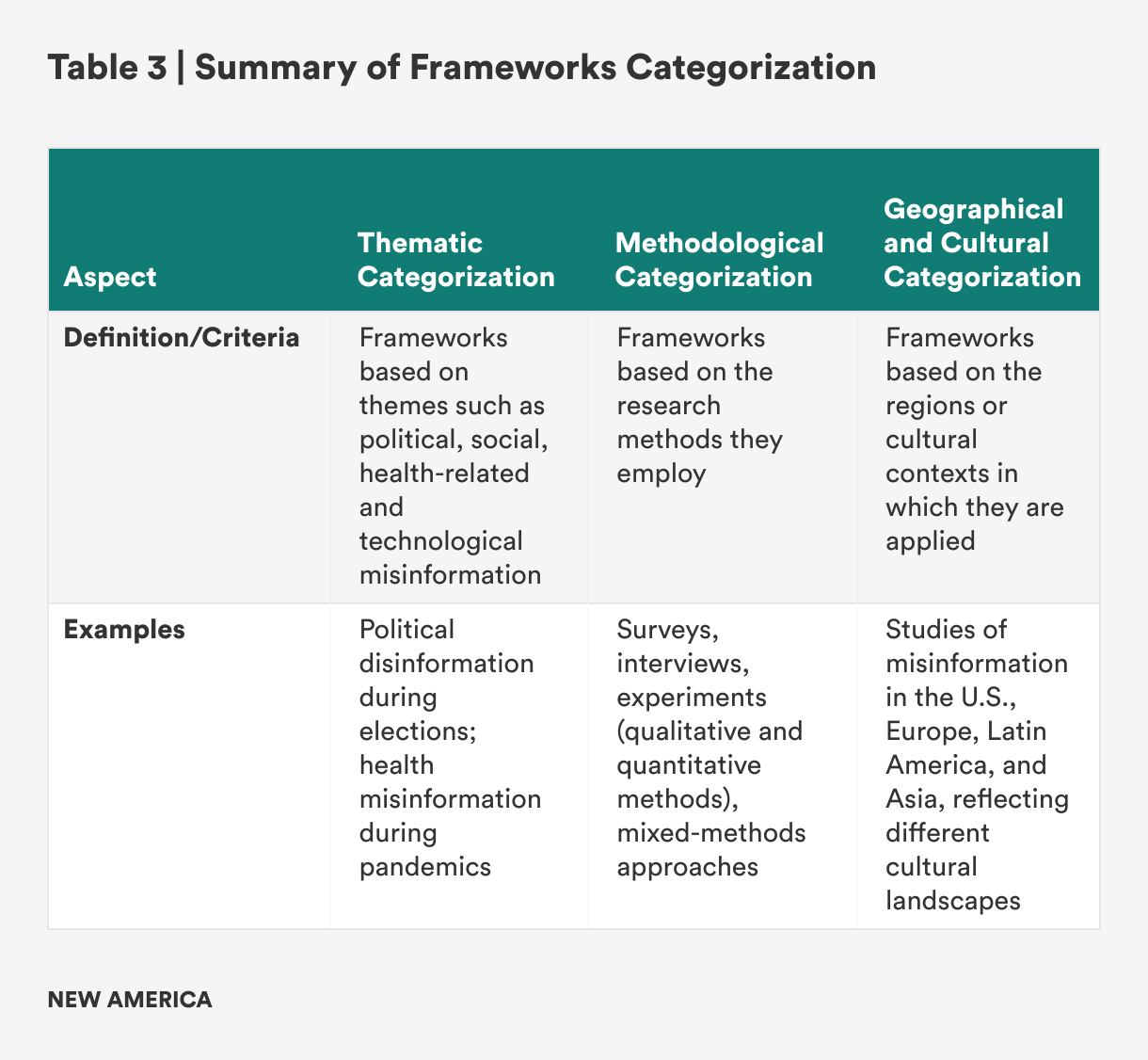
The diverse array of frameworks for understanding misinformation and disinformation can be overwhelming due to the various perspectives and methodologies they encompass. In this chapter, we divide the existing frameworks into thematic, methodological, and geographical or cultural considerations. Practically, when frameworks are categorized by themes, methods, or regional contexts, the focus is on tailoring research approaches and interventions to specific settings or problems. This is in contrast to the previous chapter, where frameworks were grouped into actor, process, impact, and typology categories and examined based on what aspect of misinformation and disinformation they target.
Thematic Categorization
Thematic categorization involves grouping frameworks based on the primary themes or issues they address. This approach helps to highlight the specific aspects of misinformation and disinformation that each framework focuses on, whether it be political, social, health-related, or technological.
Political Frameworks
Frameworks in this category focus on the role of misinformation and disinformation in political contexts. They examine how false information is used to influence elections, shape public opinion, and destabilize political systems. For example, frameworks that analyze disinformation campaigns during elections or state-sponsored propaganda efforts fall into this category. These frameworks often emphasize the strategic use of misinformation and disinformation by political actors to achieve specific goals, such as voter manipulation or undermining opponents.
Social Frameworks
Socially oriented frameworks explore how misinformation and disinformation affect social dynamics and relationships. They may focus on how false information spreads within communities, influences social norms, or exacerbates societal divisions. Frameworks in this category often address issues like the role of social media in amplifying misinformation, the formation of echo chambers, and the impact of misinformation on social cohesion. These frameworks are particularly relevant for understanding how misinformation contributes to polarization and the fragmentation of public discourse.
Health-Related Frameworks
Given the significant impact of misinformation on public health, several frameworks specifically address the spread and effects of health-related misinformation. Health-related frameworks often emphasize the need for accurate communication, the dangers of misinformation in undermining public health efforts, and strategies for combating health misinformation through education and public awareness campaigns.
Technological Frameworks
Technological frameworks focus on the role of digital platforms, algorithms, and artificial intelligence (AI) in the spread of misinformation and disinformation. They explore how technology facilitates the rapid dissemination of false information, the role of social media algorithms in promoting sensationalist content, and the potential for automated tools like bots and deepfakes to spread disinformation. These frameworks often address the challenges of regulating digital platforms and the ethical implications of technological interventions designed to counter misinformation.
Methodological Approaches
Methodological approaches group frameworks based on the research methods they employ. This categorization highlights the diversity of techniques used to study misinformation and disinformation, ranging from qualitative analyses to quantitative data-driven models.
Qualitative Frameworks
Qualitative frameworks often involve case studies, interviews, content analysis, and other non-numerical methods to explore misinformation and disinformation. These frameworks are valuable for understanding the nuanced and contextual factors that influence how false information is created, spread, and received. For example, qualitative studies may examine the narratives used in disinformation campaigns, the motivations of actors involved in spreading false information, or the experiences of individuals who encounter misinformation.
Quantitative Frameworks
Quantitative frameworks rely on numerical data and statistical analysis to study misinformation and disinformation. These frameworks often involve large-scale data collection, such as social media analytics, survey data, or experiments designed to measure the effects of misinformation. Quantitative approaches are useful for identifying patterns in the spread of misinformation, assessing the prevalence of false information, and evaluating the effectiveness of interventions.
Mixed-Methods Frameworks
Some frameworks combine qualitative and quantitative approaches to offer a more comprehensive understanding of misinformation and disinformation. Mixed-methods frameworks might use qualitative research to explore the context and motivations behind misinformation, followed by quantitative analysis to measure the scale and impact of these phenomena. This approach allows for a more holistic view, capturing both the detailed, context-specific elements and the broader trends in misinformation spread and impact.
Computational Frameworks
With the rise of big data and machine learning, computational frameworks have become increasingly important in the study of misinformation and disinformation. These frameworks use algorithms, network analysis, and other computational tools to model the spread of misinformation, detect false information, and simulate the effects of different interventions.
Geographical and Cultural Considerations
Geographical and cultural considerations involve categorizing frameworks based on the regions or cultural contexts in which they are applied. Misinformation and disinformation do not operate in a vacuum; they are deeply influenced by the social, cultural, and political environments in which they spread.
Regional Frameworks
Some frameworks are designed to address misinformation and disinformation in specific geographical regions, such as North America, Europe, Asia, or Africa. These frameworks consider the unique political, social, and media landscapes of each region, which influences how misinformation spreads and is perceived. For example, frameworks developed for democracies might focus on the role of free speech and the media, while those for authoritarian regimes might emphasize state control and censorship.
Cultural Frameworks
Cultural frameworks examine how cultural factors, such as language, values, and traditions, shape the creation and spread of misinformation and disinformation. These frameworks recognize that misinformation is often tailored to resonate with specific cultural beliefs or biases, making it more effective in certain communities. For instance, disinformation campaigns may exploit cultural tensions or stereotypes to create division or mistrust.
Cross-Cultural Frameworks
Cross-cultural frameworks compare the spread and impact of misinformation across different cultural contexts. These frameworks are useful for identifying universal patterns in misinformation spread, as well as context-specific factors that influence how misinformation is received and acted upon. Cross-cultural studies can reveal how different societies respond to misinformation and what lessons can be learned from various approaches to combating false information.
Discussion
In this chapter, we undertake a comparative analysis of the existing frameworks for understanding misinformation and disinformation. By systematically comparing these frameworks, we aim to identify their strengths, weaknesses, and areas of overlap or divergence. This analysis will help clarify which frameworks are most effective in addressing specific aspects of misinformation and disinformation based on scope and effectiveness and summarize key insights from the study and implications for future research in this field.
Comparative Analysis
Typology-based frameworks are designed to offer a comprehensive categorization of misinformation and disinformation, attempting to classify all forms of false information into a structured taxonomy. By creating categories based on criteria such as intent, content, and medium, typology frameworks allow for a systematic analysis of the different types of misinformation that exist. This broad classification system is advantageous because it provides a high-level overview that can help identify patterns and trends in the spread of misinformation. However, the very breadth of typology frameworks can also be a limitation as they may not delve deeply into the specific processes that lead to the creation and dissemination of misinformation.
Process-oriented frameworks, in contrast, focus on the lifecycle of misinformation. This narrower focus allows for detailed insights into the stages of misinformation spread, identifying critical points where interventions could be most effective. By understanding these processes, stakeholders can develop targeted strategies to disrupt the spread of misinformation at key stages. However, the focus on processes can limit the ability of these frameworks to account for the broader social, political, or cultural contexts that influence the spread of misinformation. While they provide valuable insights into the mechanics of misinformation dissemination, process frameworks may not fully capture the external factors that shape the environment in which misinformation thrives.
Impact-oriented frameworks take a different approach by concentrating on the consequences of misinformation rather than its classification or lifecycle. These frameworks are particularly effective in highlighting the tangible effects of misinformation by linking false information to specific outcomes. By focusing on the measurable consequences of misinformation, impact frameworks provide critical insights into the harm caused by false information and the importance of addressing it. However, the reliance on measurable outcomes can be both a strength and a limitation. While impact frameworks excel in demonstrating the immediate and direct effects of misinformation, they may struggle to capture the full range of impacts, particularly those that are long-term, indirect, or difficult to quantify.
Finally, actor-centric frameworks offer a broad scope by considering the wide range of players involved in the creation, dissemination, and consumption of misinformation, as well as the complex relationships between them. By focusing on the motivations and behaviors of key actors, actor-centric frameworks can reveal the underlying drivers of misinformation. However, the inherent complexity of actor-centric frameworks can make them challenging to apply. The interactions between various actors are often intricate and not easily discernible, especially when motivations are hidden or intentionally obscured. This complexity requires significant resources and expertise to untangle, making actor-centric frameworks more difficult to implement effectively compared to other frameworks that focus on more straightforward aspects of misinformation.
Key Insights
Each framework brings unique strengths to the table, contributing valuable perspectives on how false information is generated, disseminated, and impacts society. However, the analysis also highlights the limitations of each approach, suggesting that a multifaceted strategy combining elements from multiple frameworks may be the most effective way to combat misinformation. One of the most significant insights is that no single framework can fully address the complexity of misinformation and disinformation. This suggests that relying on one framework alone may lead to an incomplete understanding of the problem and potentially ineffective interventions.
“No single framework can fully address the complexity of misinformation and disinformation.”
Another important insight is the critical role that context plays in the effectiveness of different frameworks. Effectiveness in this context is measured by how well a framework achieves its intended purpose, which can vary depending on the framework’s focus. Misinformation and disinformation are deeply influenced by social, political, and cultural factors in different environments. In typology-based frameworks, effectiveness is measured by how well the framework categorizes different types of misinformation or disinformation based on key factors like intent, content, or dissemination method. A typology framework is considered effective if it provides a clear, comprehensive, and useful classification system that helps researchers and practitioners distinguish between various forms of false information, such as misinformation, disinformation, and malinformation. For process-oriented frameworks, effectiveness is determined by their ability to map the lifecycle of misinformation, identify critical intervention points, and develop strategies to disrupt its dissemination. Impact-oriented frameworks are judged by how accurately they assess the consequences of misinformation, such as changes in public opinion or behavior, while actor-centric frameworks are evaluated based on their capacity to reveal the motivations and behaviors of those involved in spreading misinformation.
“Misinformation is not solely a communication issue but also intersects with other disciplines, bringing diverse methodologies and insights to the discussion.”
Misinformation that resonates in one cultural setting may not have the same impact in another, and the strategies used to combat it must be tailored accordingly. The analysis also highlights that misinformation is not solely a communication issue but also intersects with other disciplines, bringing diverse methodologies and insights to the discussion. By combining these perspectives, a more robust and comprehensive understanding of misinformation can be developed. Moreover, the analysis reveals that the rapid evolution of digital technologies necessitates continuous adaptation of existing frameworks. Misinformation and disinformation are increasingly spread through new and evolving platforms, such as social media, where traditional approaches may no longer be sufficient. This dynamic environment requires frameworks that are not only comprehensive but also flexible and adaptable to change and that can keep pace with technological advancements as well as the changing nature of information dissemination.
Implications for Future Research
One of the primary implications for future research is the need for more integrative approaches that combine the strengths of multiple frameworks. For instance, combining typology frameworks with process frameworks could provide a more comprehensive understanding of both the classification of misinformation and the mechanisms by which it spreads. Similarly, integrating actor frameworks with impact frameworks could help elucidate how the motivations of key players influence the tangible outcomes of misinformation. Future research should prioritize developing hybrid frameworks that draw on the strengths of existing models while addressing their respective shortcomings.
On the level of contextualization of misinformation, future research should focus on comparative studies that examine how misinformation operates across diverse contexts, including non-Western societies that are often underrepresented in the literature. This would not only broaden the understanding of misinformation globally but also inform the development of context-specific interventions that are more likely to be effective in diverse environments.
In addition to the plethora of misinformation and disinformation instances, a new phenomenon has emerged in the last couple of years: AI-enabled misinformation.1 AI-driven technologies, which include everything from automated news outlets that produce content with minimal or no human intervention to sophisticated AI image generators that create convincing but entirely fabricated visuals, have opened new avenues for the production and dissemination of misleading information.2 With AI’s capabilities to generate large volumes of content quickly and convincingly, misinformation purveyors now have powerful tools at their disposal to create and spread false narratives on an unprecedented scale. This development poses serious challenges to the integrity of information ecosystems. The line between genuine and fabricated content increasingly blurs, making it harder for the public to distinguish truth from falsehood. The ease with which these tools can be used to produce deceptive content underscores the urgent need for robust strategies to detect and counteract AI-generated misinformation.
Finally, there is a pressing need for interdisciplinary research that brings together scholars from various fields to tackle the complex problem of misinformation. Future research should encourage collaboration across these fields to develop more comprehensive and multidimensional frameworks. This interdisciplinary approach would facilitate a deeper understanding of the psychological, social, and technological factors that drive misinformation, leading to more effective strategies for prevention and intervention.
Recommendations
The diverse range of frameworks for understanding and combating misinformation and disinformation offers useful instruments for researchers, educators, and practitioners. However, selecting the right framework for a particular context and improving upon existing models is crucial to effectively address the challenges posed by false information. This chapter focuses on recommendations for selecting the most appropriate frameworks based on their focus and suggests ways to enhance their effectiveness in a rapidly evolving information landscape.
Typology-based frameworks are particularly useful in the initial stages of research, education, or intervention design, as they provide a clear, systematic way to understand the landscape of false information. The goal of these frameworks is to categorize and differentiate between various types of misinformation and disinformation, helping to clarify the information ecosystem, which is particularly useful for academics or AI researchers. For example, distinguishing between misinformation (unintentional), disinformation (intentional), and malinformation (harmful truth) is essential for tailoring interventions to the specific nature of the false information in question. While current typologies effectively classify false information, they should, for instance, include AI-enabled misinformation, which is increasingly relevant due to advancements in generative AI tools.
Process-oriented frameworks are valuable in identifying key stages where interventions can be implemented to disrupt the spread of false information. They are particularly useful for platforms, policymakers, and social media companies seeking to design interventions at the critical points of amplification or correction. These frameworks are best suited for analyzing the lifecycle of misinformation and disinformation, from creation to dissemination and eventual impact. Process frameworks can be enhanced by integrating insights from actor-centric frameworks, which provide a deeper understanding of the motivations and roles of key players involved in spreading misinformation. By combining process analysis with actor motivations, interventions can be better targeted at the stages where specific actors—whether individuals, bots, or state actors—are most active. Process frameworks can include feedback loops that account for how false information may evolve or adapt in response to fact-checking or countermeasures. This would provide a more realistic understanding of how misinformation resists correction and what measures can be taken to address this.
Impact-oriented frameworks are essential for public health agencies, political organizations, and media outlets seeking to understand the effects of misinformation campaigns and design responses that mitigate their harm. These frameworks are most useful when the goal is to assess the real-world consequences of misinformation and disinformation. One of the limitations of many current impact-oriented frameworks is their focus on immediate or short-term consequences. Impact-oriented frameworks should expand to include long-term and indirect effects, such as the erosion of trust in democratic institutions or public health over time. This could be achieved by incorporating longitudinal studies and behavioral research into the framework design. These types of frameworks benefit from integrating more behavioral and psychological insights, such as how misinformation shapes cognitive biases, emotional responses, and social behaviors. This would allow for more precise predictions about how misinformation affects different segments of the population and help tailor interventions accordingly.
Actor-centric frameworks are particularly valuable for policymakers, law enforcement, and media companies trying to disrupt the organized efforts behind disinformation campaigns, such as those conducted by state actors or coordinated bot networks. These frameworks are ideal for understanding the roles, motivations, and strategies of the various individuals, organizations, and platforms involved in the spread of misinformation and disinformation. Current actor-centric frameworks can be improved by employing more sophisticated network analysis tools to map out the intricate relationships between human actors (e.g., influencers or political groups) and non-human actors (e.g., bots or algorithms) involved in the spread of misinformation. They should more deeply explore the varying motivations behind the spread of misinformation beyond the traditional political, financial, or ideological reasons. For instance, frameworks could be expanded to account for the psychological or social rewards that motivate individuals to spread misinformation, such as social validation or attention-seeking behavior. Actor-centric frameworks can be enhanced by more clearly outlining the roles and responsibilities of digital platforms. This would include how algorithms and content moderation policies contribute to misinformation spread and what platforms can do to disrupt these efforts.
Conclusion
The challenges posed by misinformation and disinformation are among the most pressing issues facing societies today. As we approach the 2024 elections, the role of misinformation and disinformation in shaping public opinion and influencing voter behavior is more critical than ever. The integrity of the upcoming elections will depend heavily on our ability to detect and counteract such tactics, ensuring that voters have access to accurate information and can make informed decisions at the ballot box. The frameworks discussed in this report provide valuable tools for analyzing the spread of misinformation and disinformation and also pinpoint the limitations of any single approach.
The selection and improvement of frameworks for combating misinformation and disinformation require a nuanced understanding of the problem’s complexity. Each framework—whether typology-based, process-oriented, impact-focused, or actor-centric—offers distinct advantages and limitations. By choosing the right framework for the specific context and continuously improving upon existing models, researchers and practitioners can develop more effective strategies to counter misinformation. The key to addressing new challenges, including AI-enabled misinformation, lies in embracing a holistic and flexible approach. By integrating multiple frameworks, adapting strategies to specific contexts, and fostering interdisciplinary collaboration, more effective methods can be developed for combating misinformation and disinformation. As technology continues to evolve, it is essential to remain vigilant and proactive, continuously updating and refining our frameworks to keep pace with new developments. This ongoing effort requires not only innovation but also a commitment to transparency, accountability, and public trust. By staying ahead of emerging threats and fostering a culture of critical thinking, we can build a more resilient information ecosystem for the future.
More About the Authors

Elie Alhajjar
#ShareTheMicInCyber Fellow, 2024 Class
Issues
Programs/Projects/Initiatives
Topics
Fellowships
Related