NATO Retrenchment at Two Years: Not Working
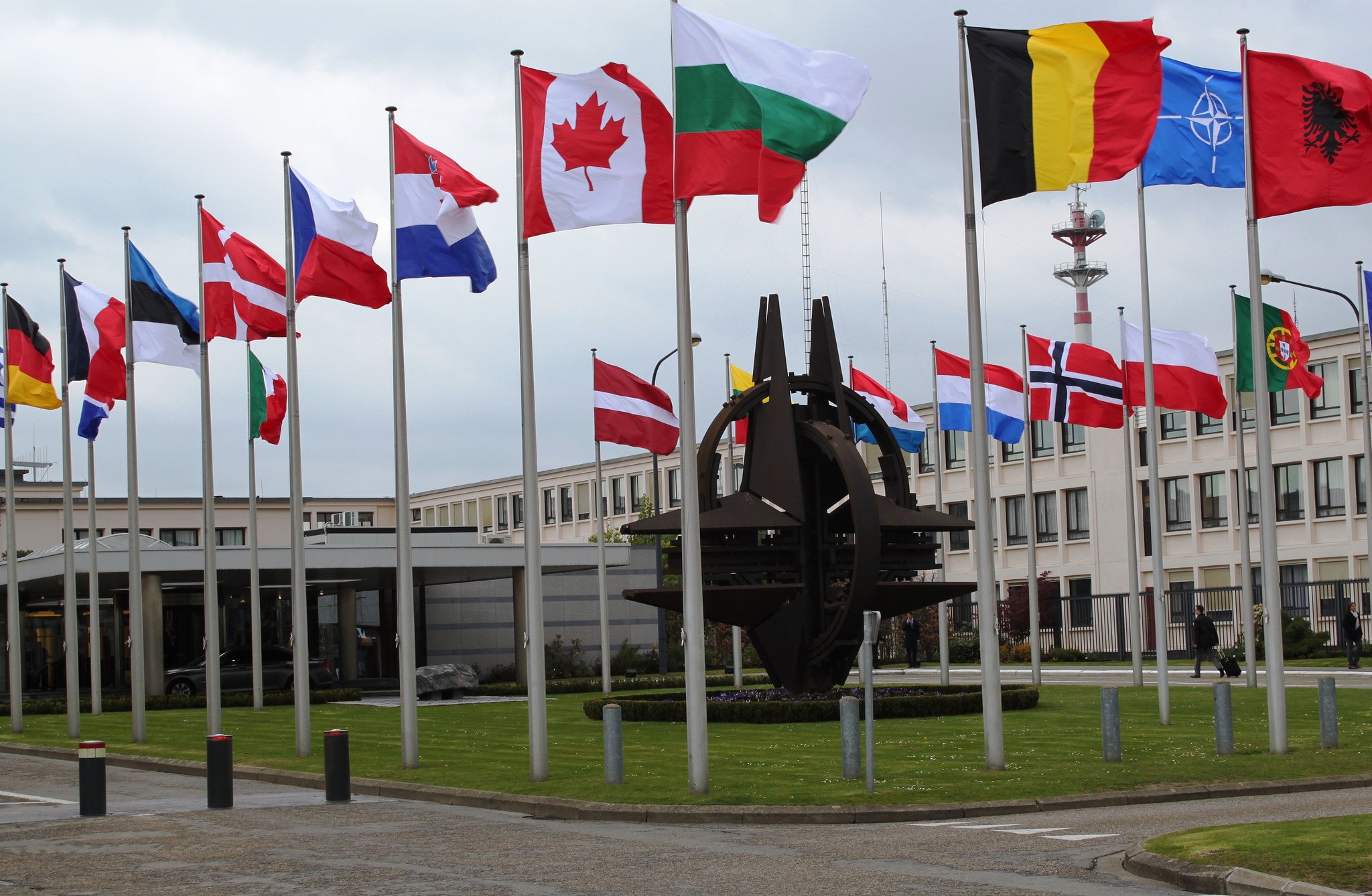
Following Russia’s aggressive actions in Ukraine, NATO
members collectively decided in September 2014 to refocus efforts on
territorial defense. Two years later, this policy of retrenchment has failed to
slow Moscow’s militaristic foreign policy, a failure that coincides with the
effective abandonment of the alliance’s longstanding open door policy. It now
seems increasingly clear that expansion, and not retrenchment, is the more
dynamic and flexible instrument for Euro-Atlantic security.
Today, in the face of Russia’s aggressive policies, retrenchment reeks of timidity and insecurity, and does little to punish or appreciably dissuade Moscow from pursuing a foreign policy of permanent adventurism. By contrast, expansion—that is, an open door policy that shepherds willing
aspirants into the Euro-Atlantic space through a true measures-based process—could
compel Russia to compete in the arena of ideas rather than force, or face
marginalization.
Just over two years ago, still reeling from the broader
Western shock over the Russian intervention in Ukraine, NATO members met in
Wales to craft a unified, Alliance-wide response to the seizure of Crimea and
the still-unfolding separatist project Moscow had manufactured in the Donbas.
The resulting declaration was unequivocal in its
condemnation of Russia’s belligerent activities in Ukraine — and in other
regions across its periphery. It proposed a variety of steps and mechanisms to
shore up territorial defense: the enhancement of the NATO Response Force; the
establishment of a Very High Readiness Joint Task Force aimed at rapidly
responding to contingencies where NATO borders faced Russian forces; and a
suite of spending and policy targets to enhance Alliance interoperability and
defense, among other things.
Noticeably diminished in the 2014 declaration were longtime
NATO preoccupations with Alliance expansion and faraway stabilization missions, such as recent Alliance
efforts in Afghanistan. On the latter front, Western withdrawals from
Afghanistan and the more immediate specter of Russian aggression in Europe have
made peacekeeping an understandably quieter NATO priority. However, on the
issue of expansion, the rationale for the 2014 declaration’s stoicism was less
clear.
At least rhetorically, NATO is still on the hook for
expansion. In the 2008 summit in Bucharest, NATO declared that aspiring members
Georgia and Ukraine would someday be members. Other potential members, such
Moldova, have seen their relations with NATO also gradually accelerate since the mid-2000s.
While Georgia, Moldova, and Ukraine received boilerplate assurances of the
Alliance’s continued open door policy in the 2014 Wales Summit Declaration—and
Georgia won an array of institutional sweeteners to mark its undeniable technical progress–it was clear
that serious discussion of near-term eastward expansion had been shelved with
Russia an increasingly apparent military menace. Indeed, earlier that year, there
was quiet optimism that expansion would once again find its way back onto the top
of the NATO agenda in Wales, with the mood increasingly cordial as the Sochi Olympics neared, and the memory of
Russia’s destructive 2008 adventure into Georgia seen as a momentary aberration.
The Russian invasion of Ukraine dashed those
hopes, and the Alliance’s chief priority heading into Wales was strategic
retrenchment. This past summer’s NATO Summit in Warsaw only doubled down on 2014’s inward-facing
focus—and the possibility of meaningful Alliance expansion remains as
distant as ever.
In the two years since NATO embraced retrenchment, the
Western military club has little to show for it. The Alliance’s understandably
defensive posture was chiefly meant to broadcast reassurance to potentially
vulnerable member states, and to incentivize Russia to abandon its adventurist
foreign policy and comply with international (and preferably Euro-Atlantic)
interstate norms. Neither has occurred. NATO members abutting
Russian-garrisoned regions are no more secure than they were before. To the
contrary, at the 2016 Warsaw summit, Eastern European anxiety over Russian
aggression contributed to the decision to establish four rotational
multinational battalions in Poland and each of the three Baltic states.
Fortifying “fortress Europe” against the perceived threat of
Russian aggression has done little to buttress the ailing condition of broader
Euro-Atlantic security. Moscow’s intervention in Ukraine, if not as urgent or
purposeful as it once appeared, remains flagrant and destructive, with little
end in sight. Meanwhile, Russia has rescued Syria’s singularly destructive regime of Bashar al
Assad from the edge of defeat and established a potent launch pad for projecting its
military and political weight in the Eastern Mediterranean, elevating
itself as a power broker in the Middle East.
Russia has deployed advanced air defense systems in Syria,
the South Caucasus, and along its periphery, and nuclear capable Iskander
missiles appear to be heading to its European exclave
of Kaliningrad. And Moscow’s ability to project influence into Europe appears
to have become more potent, not less. Despite biting
international sanctions, historically low energy prices, and a significant
degree of international isolation, there is little evidence that Russia’s
ability to prosecute a malign agenda has been appreciable attenuated, much less
arrested, by NATO retrenchment.
The failure of retrenchment matters. With this strategy,
NATO has effectively jettisoned its open door policy—its most effective vehicle
for strategic influence and a founding pillar of the Alliance’s very
existence. Throughout its history, NATO expansion has served as an instrument
for extending the frontiers of interstate norms and values that underpinned Europe’s
transition from a carnage-prone postwar ruin into a paragon of transnational
peace and prosperity. After the Cold War, the possibility of expansion was an
enormous source of leverage. It helped the Alliance guide the transition of
communist systems into functioning democracies and contributors to the
Euro-Atlantic project (and no, Russia was not promised that NATO would never enlarge).
The practical utility of expansion can hardly be overstated.
While the inculcation of liberalism, democracy, and free markets was no small
element of the NATO enterprise, these were seen as desirable byproducts next to
the overarching goal of upsetting the centuries-old European cycle of
destructive conflict that threatened peace the world over. Expansion, far from
a question of a country’s potential military utility or the realization of some
postmodern utopian reverie, helped extend the realms of Lockean order against
the chaotic volatility that had historically typified interstate affairs. NATO
expansion was also a national security imperative for the United States, which
had been drawn into two horrifying World Wars and, at the dawn of the nuclear
age, far preferred to subsidize and police the broad contours of European
security than leave the continent to its own devices.
As things currently stand, Russia has perfected the art of
inoculating would-be members like Georgia, Ukraine, and Moldova against NATO
membership by erecting a constellation of separatist quasi-statelets within
their borders. Providing creative membership pathways to these states would not
only serve as a means of extending the writ of the Euro-Atlantic order, but
would also serve as a kind of wrecking ball to Moscow’s costly but brutally
effective separatist fabrication apparatus. Just as importantly, effectively
conceding the sovereignty of non-NATO members to aggressive powers only
exacerbates internal threat perceptions among members, which could trigger spiraling
demands for ever-greater demonstrations of reassurance or deterrence, or spark
a crisis of credibility—or both.
As tensions between the West and Russia continue to
intensify, the integrity
of the security architecture undergirding the decades-long European
experiment is no longer a wonky policy abstraction, but an increasingly
material threat to the future peace and prosperity of the Euro-Atlantic space.
Retrenchment may have offered a sort of simple-seeming tonic for European
anxieties about Russian machinations, but it has failed in its basic objective
of undercutting Moscow’s ambitions and reach in the region. Only the
restoration of a genuine, attainable open door NATO policy can undermine
Moscow’s increasingly institutionalized reliance on aggression and upset its confident calculus of the West’s
geopolitical decline.
The 28-member Alliance has upcoming summits in Brussels in 2017 and in
Istanbul in 2018. Now is the time for NATO to reexamine its retrenchment policy
objectively and reinvigorate its open door agenda. Continued or further
strategic protectionism will only allow the Alliance’s challenges to compound,
and contribute the ongoing atrophy of the structures that support Europe’s
brittle and hard-won peace.
More About the Authors
Related

Funding the ADA’s Promise

English Learners Need More Federal Support to Succeed, Not Less

From Bletchley to Bharat: Can Middle Powers Chart a Third Way in AI?