Table of Contents
Executive Summary
Mass violence connected to incel ideology has increased public and academic scrutiny of incel communities online. Although not all such communities support violence, and not all those who identify as incel will go on to commit violence, incel communities have drawn the public, academic, and policy world’s attention.
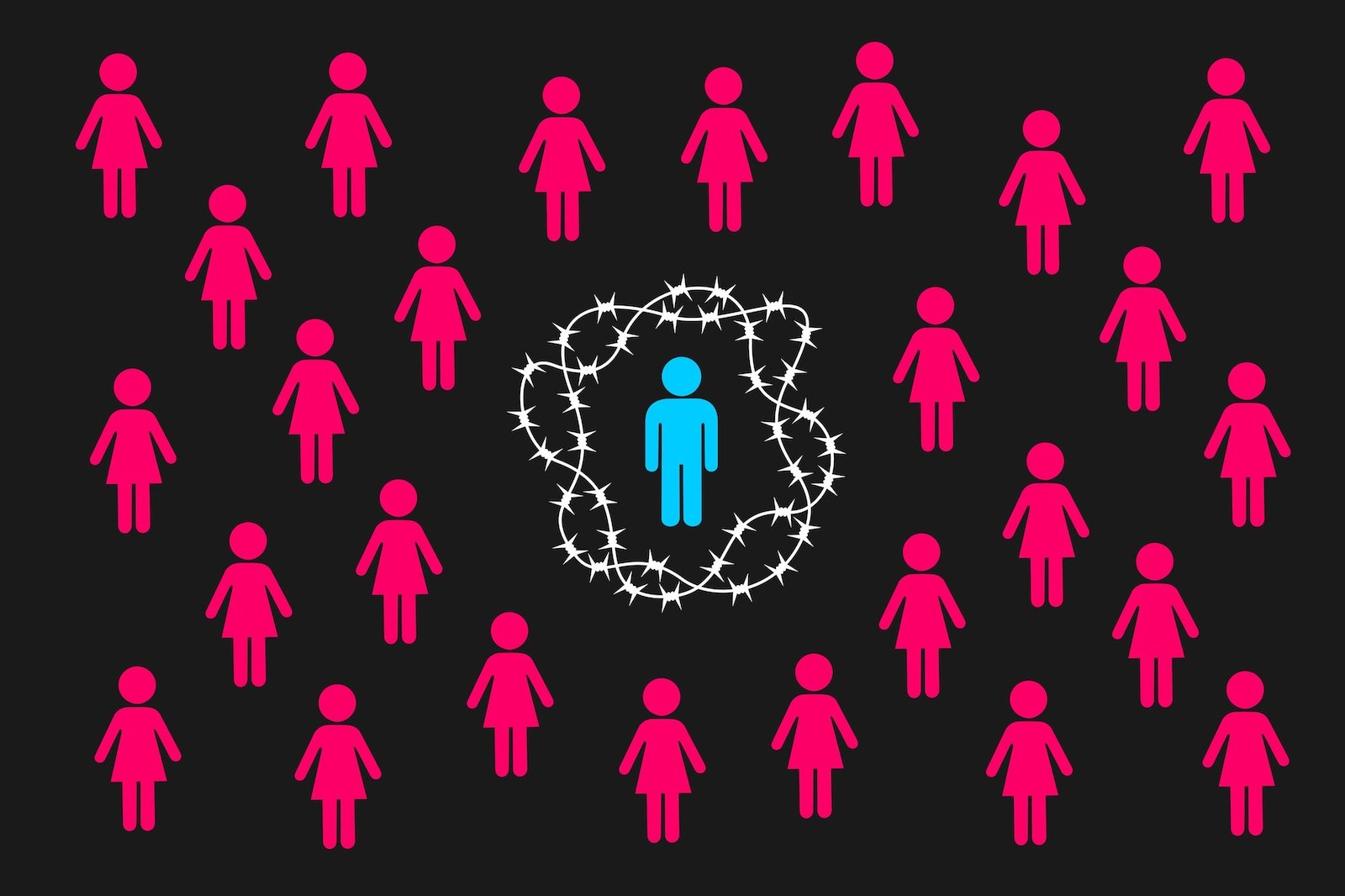
The Institute for Research on Male Supremacism recommends the term misogynist incel (which can be understood linguistically as similar to the construction of the term “racist skinhead”) to distinguish the male supremacist ideology and movement from personal identification with the term incel. A failure to distinguish people who identify as incels or “involuntarily celibate” (including women) from misogynist incels leads to flawed recommendations and significant misunderstandings of the nature of this community, the prevalence of misogyny in our societies, and violence against women. In this brief, we overview the formation and history of the incel community, focusing on the ideology of misogynist incels, and its basis in dehumanization of women and male entitlement, as it connects to the glorification and perpetration of violence.1
Misogyny is not unique to incels. Male supremacism can be understood as operating on a spectrum, and misogynist incels cannot be separated from broader societal patterns of misogyny. Misogynist incel beliefs develop from a male supremacist culture that consistently fails to mitigate violence against women and girls, and teaches men that they are entitled to women for sexual and romantic fulfillment, and that women are only valued for their instrumentality to these ends. Although misogynist incels use more extreme dehumanizing language and glorification of violence, their belief systems and ideologies are developed from and supported by the cultural and societal contexts in which they live.
Practitioners countering violent extremism, and others, must keep in mind that misogynist incels are not unique in their misogyny, and take care that interventions do not enable other forms of misogyny as solutions to the incel threat. Understanding misogynist incels as one of several contemporary male supremacist movements, the recommendations made at the end of this brief apply broadly to male supremacist ideological violence. Other acts of violence in 2020 connected to misogynist ideology, but not the misogynist incel movement, include the targeting of a woman federal judge by a men’s rights lawyer who frequented male separatist Men Going Their Own Way (MGTOW) forums.
We make five key recommendations as a starting point to address threats posed by misogynist incel violence and other forms of male supremacism:
- Support improved mental health services and access as a social good—but don’t mistake this for a solution to ideological violence.
- Provide possible alternatives for intervention programs, and suggest that interventions should draw on examples of programs designed to deal with domestic abuse perpetrators and counter racist violence for specialized counseling.
- Avoid interventions that reinforce boys’ and men’s entitlement—collaborations with gender justice organizations can strengthen program design.
- Intervene early and through routine systems to prevent movement along a spectrum of dehumanization and misogyny toward violent extremes.
- Fund more research and collaborations into male supremacism broadly, and protect researchers’ ability to work in the face of threats and doxing.
Citations
- This is not a reference guide to terminology; the 2020 Moonshot CVE Incels: A Guide to Symbols and Terminology is useful in this respect: source