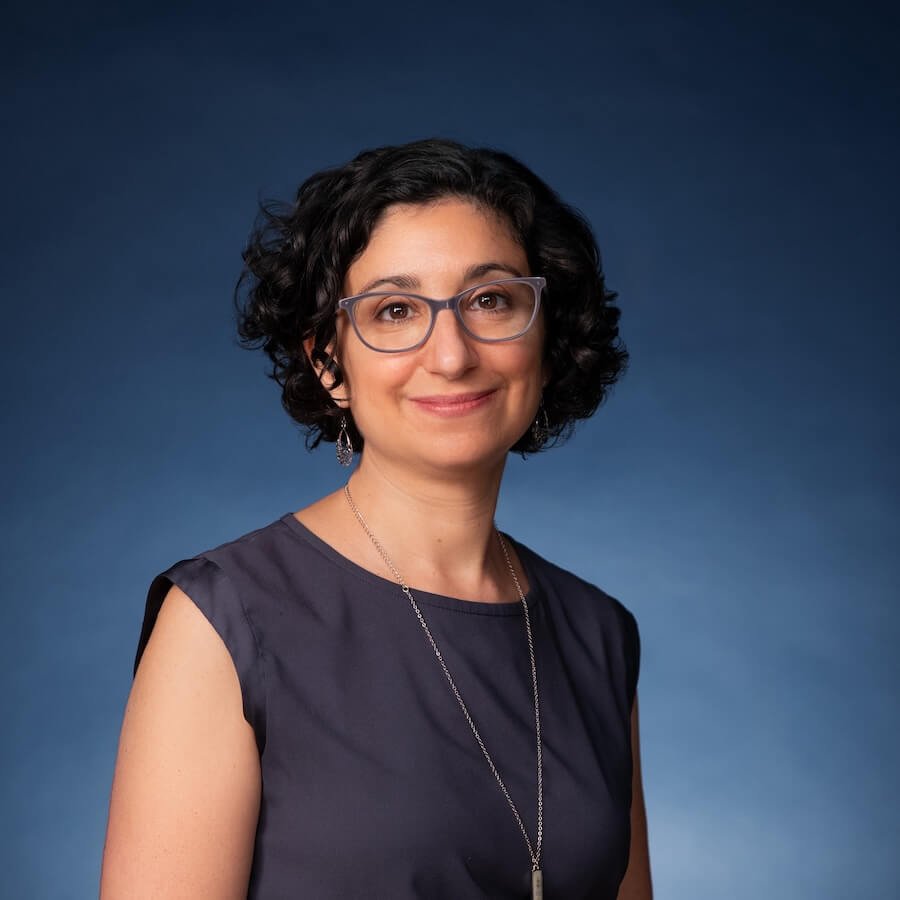
Marcella Bombardieri
New America Fellow, 2026
New America 2026 Fellow Marcella Bombardieri spoke about her forthcoming book, College Material, for “Three questions” in The Fifth Draft, the Fellows Program’s monthly newsletter. Bombardieri is a reporter who covers education.
Your forthcoming book, College Material, grows out of an article you wrote in 2018 in The Atlantic. At what point did you realize that the story you began reporting there needed to become a full book?
I was drawn to the story of a quirky president trying to support students in poverty, but I was only beginning to understand community colleges. Over the next several years, I became convinced that these little-respected institutions are the most important part of the higher education system. Half of the people who earn a bachelor’s degree attended a community college at some point along the way. But community colleges only get half the funding of four-year public colleges, and they could do much more for society with just a modest reinvestment. I thought there should already be a trade book about the magic of these places. Since there wasn’t, I needed to write it myself.
But community colleges only get half the funding of four-year public colleges, and they could do much more for society with just a modest reinvestment.
How does the current political climate shape the way you think about the story you hope to tell in College Material?
In contrast to the false narrative that too many people are being pushed into college, low college attainment is part of what’s driving despair and antipathy towards public institutions of all kinds in this country. Meanwhile, as damaging as it was that the Supreme Court ended affirmative action, community colleges offer opportunities to more students of color than selective colleges ever will. These are truly the institutions we need right now. And they have bipartisan appeal. My book is set in the Texas Panhandle, one of the most conservative parts of the country, where people came together around the idea of marshaling “love” to support the most marginalized students.
What narrative choices have you wrestled with the most in your writing process?
Oh boy, I’m wrestling with a lot right now. Perhaps the most interesting question is about where to end the story of this college’s transformation. The visionary president who initially drew me to Amarillo College has moved on, but what has happened since continues to shed light on the challenges and costs of reforming an organization, in fascinating ways that sometimes complicate the lessons I originally had in mind.
Subscribe here to receive next month’s issue of The Fifth Draft.
New America Fellow, 2026