
Table of Contents
- Introduction
- National Naloxone Access Map
- National Prescription Drop-off Map
- Celebrating Lost Loved Ones Map
- Case Study: Northern Kentucky
- Case Study: Tri-County, Colorado
- Case Study: DuPage County, Illinois
- Case Study: Cook County, Illinois
- Case Study: Alameda County, California
- Case Study: Tempe, Arizona
- Case study: Northeastern University
- Getting Started With Local Opioid Work
National Naloxone Access Map
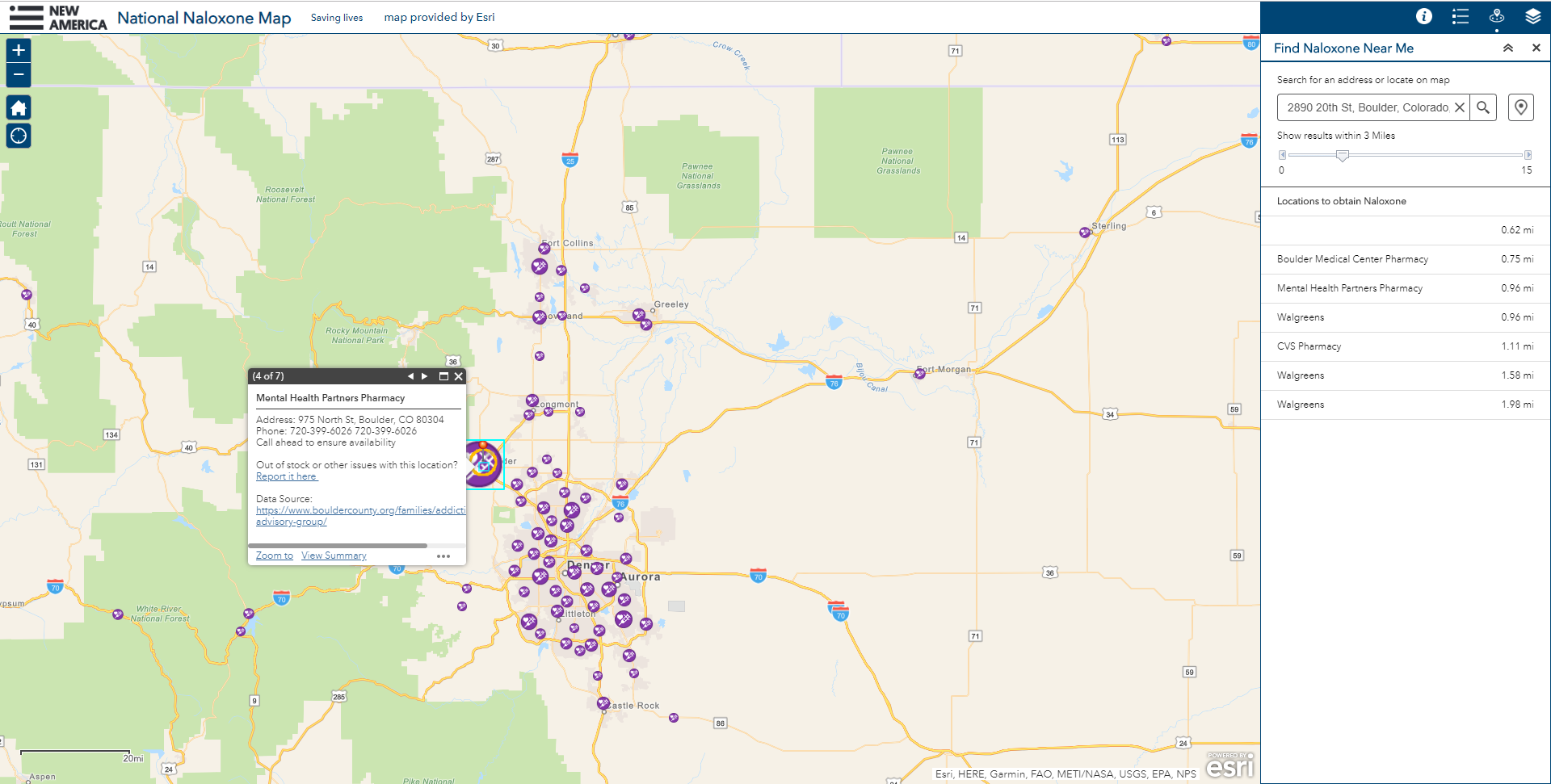
Naloxone is a lifesaving drug which can reverse the effects of an opioid overdose when it is administered in time. While this is crucial for first responders—and many participants in the Opioid Mapping Initiative have made it a priority for first responders to carry a supply of it—naloxone is also useful in the hands of the general public. Most states have made the drug more accessible, especially within pharmacies, or made it available without a prescription. The U.S. surgeon general even suggested that everyone carry naloxone, even if they believe that they don’t know anyone who is struggling with opioid addiction.
Many local governments have undertaken community mapping initiatives to notify the public about where they can find naloxone in their area. But piecemeal efforts couldn’t give a national representation of locations, so in an effort to stitch these maps together, a national map was created. Thanks to data obtained from Walgreens and CVS, the map now plots 25,000 locations. It represents the most comprehensive overview of naloxone access in the country, and serves as a tool for those who are trying to locate it in their communities.
The map has since been embedded into broader efforts to promote the acquisition and use of naloxone by community members. FEND, an organization which combines the tech, music, and streetwear scenes in an effort to empower youth to fight the opioid crisis, has integrated the Naloxone Access map into their app, winning a humanitarian award from Billboard Magazine. Local governments, including those in the Opioid Mapping Initiative, have used this map to help enlist the community to promote awareness and aide in saving lives, which largely falls at the hands of first responders. Some governments, such as the City of New Orleans, have even embedded the map directly into their local government sites to use for public education.
The national map was officially introduced in conjunction with the short film Dear You, a PSA-style production which chronicles a story of addiction to opioids. Director Kat Prescott said, “The film serves to highlight the often unseeable nature of opioid addiction and the alarming rates of fatal overdoses among America's teens and young adults, as well as showcasing the existence and importance of the overdose-reversal drug naloxone.”