Table of Contents
- Introduction
- National Naloxone Access Map
- National Prescription Drop-off Map
- Celebrating Lost Loved Ones Map
- Case Study: Northern Kentucky
- Case Study: Tri-County, Colorado
- Case Study: DuPage County, Illinois
- Case Study: Cook County, Illinois
- Case Study: Alameda County, California
- Case Study: Tempe, Arizona
- Case study: Northeastern University
- Getting Started With Local Opioid Work
Case Study: DuPage County, Illinois

“The DuPage County NARCAN Program Digital Map Series, along with our RX Dropbox application, has provided the county an informative avenue for educating the public and county officials about these successful programs and the impact they make by saving lives in DuPage County.”
Tom Ricker, GIS Manager, DuPage County
Though naloxone is now nearly universally recognized as a powerful anti-overdose tool for use by individuals and local governments, this was not always the case. Naloxone wasn’t available in Illinois without a prescription until 2016. That same year, other states vetoed bills that would allow the same thing.
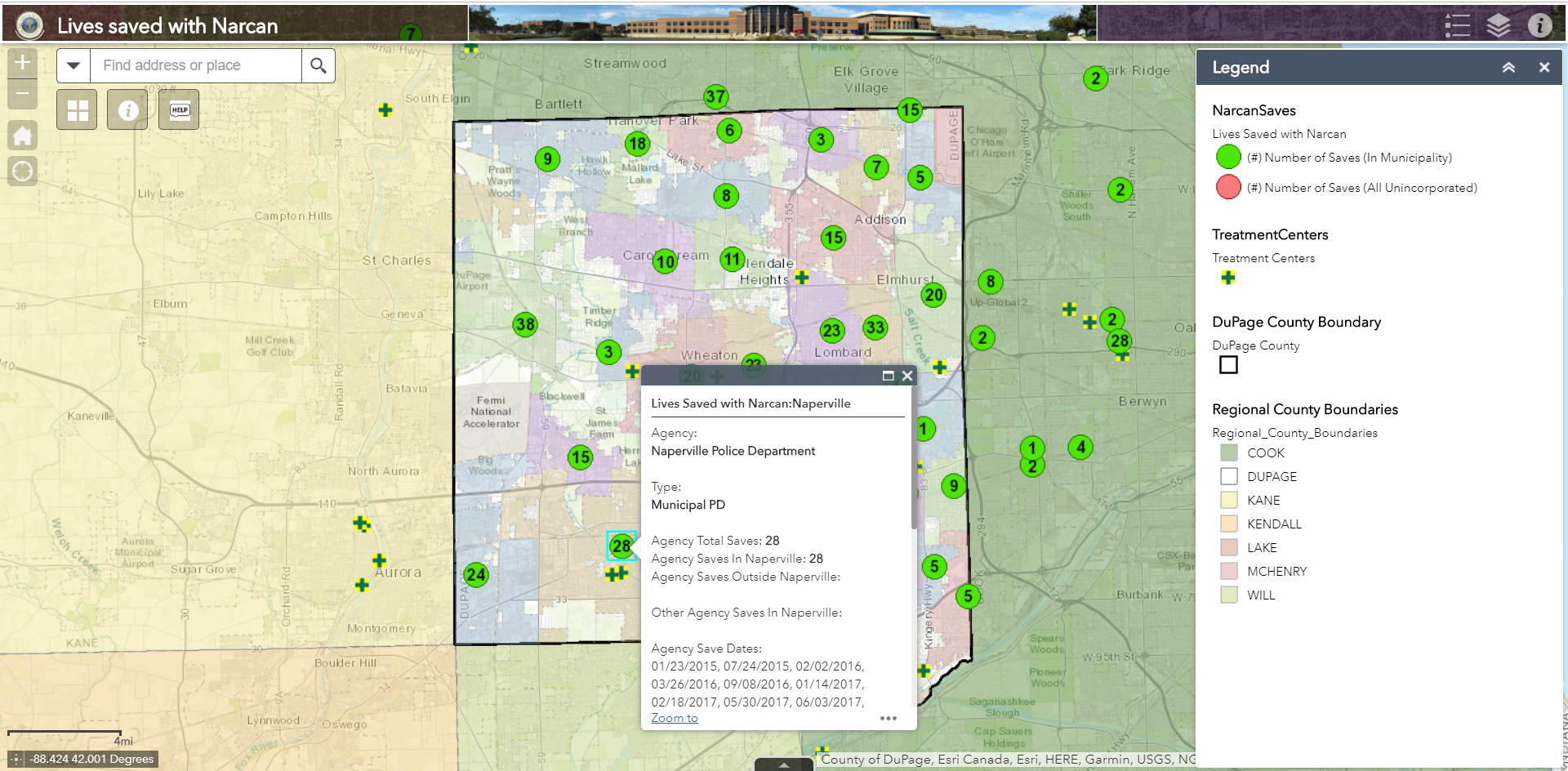
But DuPage County, Ill. recognized the utility of naloxone earlier than most of their neighbors. In 2014, the county introduced the DuPage Narcan Program, which trained more than 4,000 first responders and citizens on how to use the drug. In 2017, when the county joined the Opioid Mapping Initiative, they created a revolutionary map to show the importance of naloxone to their community. The NarcanSaves illustrates the hundreds of lives that have been saved thus far through the administration of naloxone.
DuPage County was also one of the first locations to start a local promotional campaign for prevention efforts that centered on prescription drop-off locations. Recently they released a comprehensive site that shows a variety of datasets, including deaths of the opioid epidemic. This new page also shows deaths over time and cause, showing a surge of fentanyl in last few years.