
Table of Contents
- Introduction
- Obstacles to Developing a Strong Workforce
- Early Care and Education in the Bayou State
- Reform #1: Measuring Quality Through Teacher-Child Interactions Alone
- Reform #2: Raising Requirements for Early Childhood Educators
- Reform #3: Supplementing Wages with Tax Credits
- Connecting ECE to Kindergarten and the Early Grades
- Concluding Thoughts, Lessons, and Policy Considerations
- Appendix: Interviews Conducted
Introduction
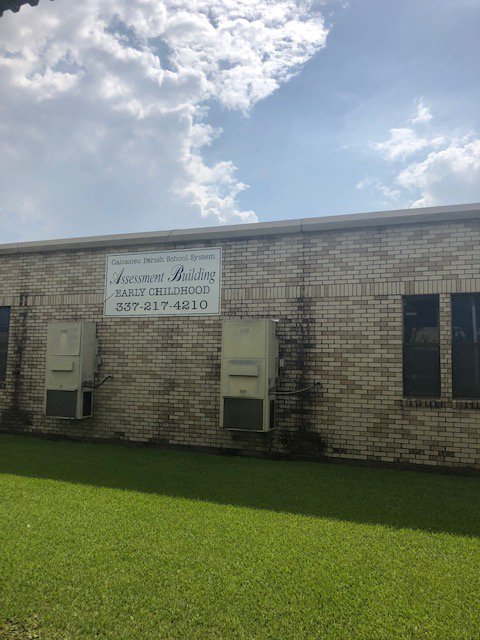
It’s a hot and muggy Tuesday evening in between summer thunderstorms in Lake Charles, Louisiana. From the unassuming look of the Calcasieu Parish School System Assessment Building, it would be hard to guess the excitement taking place inside, though the completely packed parking lot might be a clue. Inside the building’s gymnasium, over 200 families are gathered with balloons, flowers, and posters. Even though 200 chairs have been set up, it is standing room only. This audience, ranging from infants to great-grandparents, is there to see their loved ones graduate.
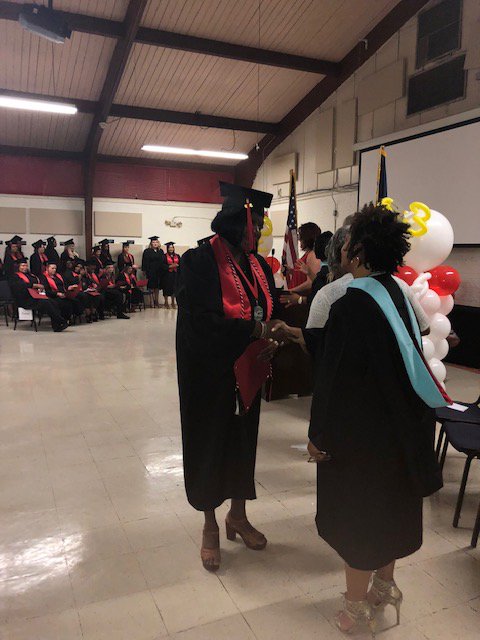
Falicia Coleman and her team have spent the entire day setting up. Wearing a cap and gown with the graduate level distinction, Coleman, executive director of Children First Professional Development Center, quiets the room and welcomes everyone. She introduces the graduating class of 2018 in from a side door and 33 women and one man file in wearing black caps and gowns with red honors stoles. Two valedictorians take seats up in the front next to the other speakers.
Jenny Cowan from Louisiana Pathways, the state’s workforce registry, is the keynote speaker. She asks, “What is more important than playing a role in the development of young people’s minds?” The question is met with a few “amens.” She tells the graduates, “you are providing the opportunities for learning that give children foundations for the rest of their lives….you are all making a difference in the world and I’m proud of each and every one of you.”
Courtesy of author
The graduation has more pomp than some college graduation ceremonies. But the graduates are not earning their bachelor’s degrees or associate degrees. They are earning what the state of Louisiana has termed the Early Childhood Ancillary Certificate. Cowan drove over four hours to get to Lake Charles for the graduation. Erin Carroll, director of Classroom and Workforce Improvement in the state’s Office of Early Childhood, is also present. Carroll has attended more than a handful of Early Childhood Ancillary Certificate program graduations across the state over the past year, but none quite like this.
The Ancillary Certificate is what the state describes as an “enhanced CDA” or Child Development Associate credential. By 2019, all lead teachers working in early childhood education classrooms serving children birth to age five that receive any type of public funding will need to have a certificate, at a minimum. The credential requirement is one of three major policy changes in Louisiana meant to strengthen the early education workforce.
Transforming this workforce is no easy feat, but it is something that many states are working toward. The moving graduation ceremony in Lake Charles described above is the result of years of thoughtful policy implementation. This paper explores the policy changes in Louisiana that led to it and offers important lessons for other states grappling with how to prepare and support their early childhood educators to better serve young children. Louisiana has implemented policies that aim to strengthen early educator qualifications, evaluate and improve the quality of teaching, and increase wages to help retain talented educators.