Introduction
By Charles Euchner
Without tradition…there seems to be no willed continuity…neither past nor future, only sempiternal [eternal] change of the world and the biological cycle of living creatures in it. —Hannah Arendt1
A farming community in south-central India struggles to survive in the face of global and national policies that promote monocropping and chemical fertilizers. In a land turned to dust, two activists embrace traditional methods to form a collective that supports farmers and revives the hills and farmlands of the country’s driest territory.
Indigenous communities in southwestern Mexico, buffeted by the destructive practices of mining companies and corrupt governments, find their voice by reviving and transforming a centuries-old tradition of communal festivals. Rejecting corporate-sponsored carnivals, they come together for an annual gathering of truth-telling, which bolsters grassroots activism.
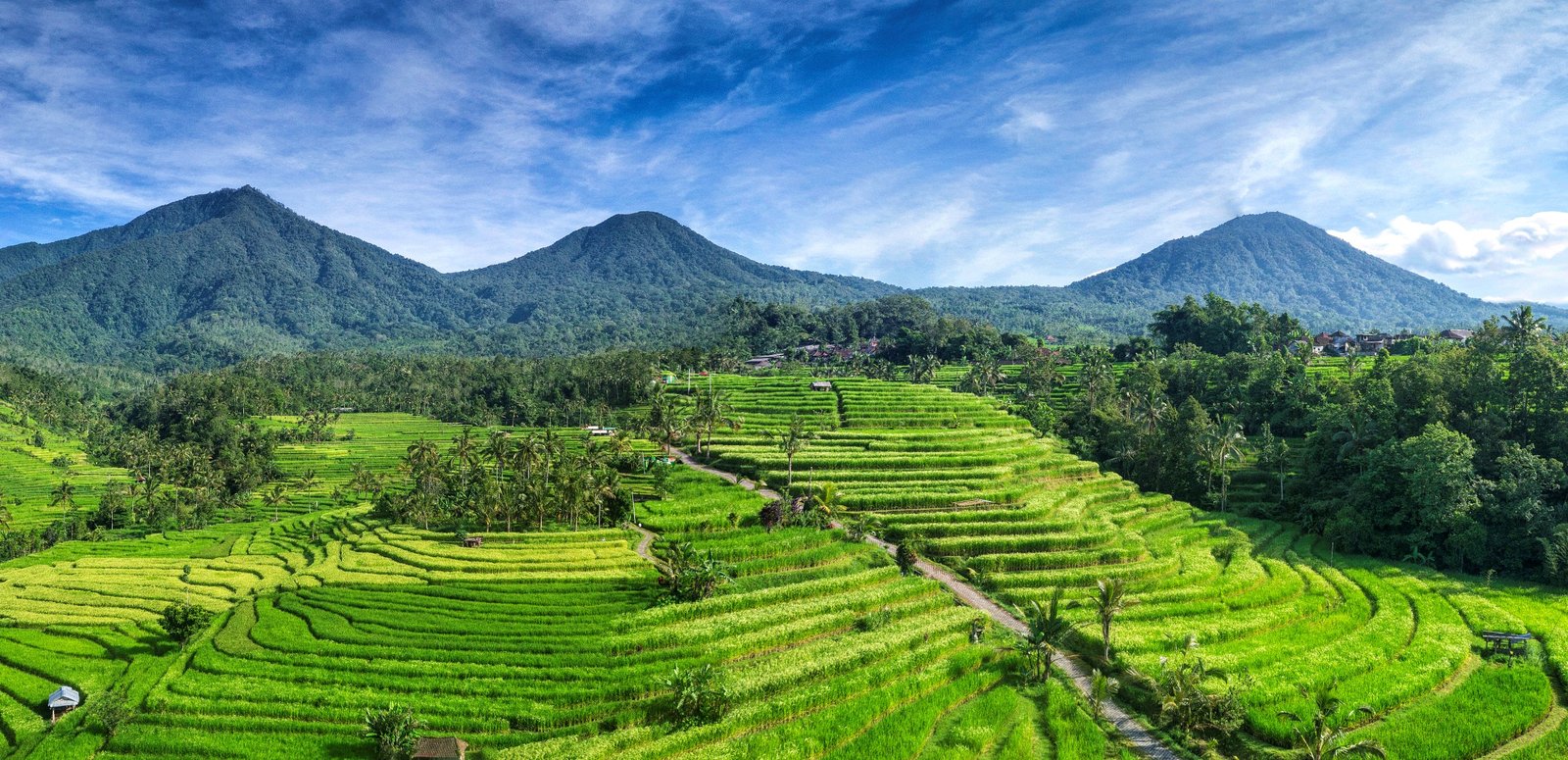
In Bali, rice farmers organize themselves into cooperatives called subaks to share limited water and synchronize planting cycles. Dating to the eleventh century and based on communal governance and religious traditions, the subak system preserves the land, maintains social harmony, and generates abundant rice harvests more effectively than a modern government could.
In three distinct parts of the world—captured in detailed case studies by New America’s Future of Institutions project—ordinary people in villages have discovered the power of the past to open new possibilities for the future. In each case, ancient wisdom is embodied in an institution that asserts people’s control over their lives. In a world where the short-sighted pursuit of profit and power is destroying the planet and dividing societies, these communities offer practices and principles for good, sustainable, abundant lives. Understanding their strategies may help us develop new governance tools to tackle challenges like climate change or artificial intelligence, for which our current political systems are falling short.
At their core, these cases embody the concept of intergenerational justice. This concept is simple, if hard to pursue: Every generation has an obligation to future generations, owing “enough and as good” resources and opportunities (to use John Locke’s classic phrase) that it received. A future-oriented approach helps us move beyond the myopic demands of the present to think—and act—in a way that goes beyond just reacting to crises to proactively shaping the world we want to build.
Too often, we lack appreciation for the past and future. New technologies and new discoveries can make traditional cultures, wisdom, and practices seem irrelevant. In every realm—business, agriculture, community life—the need to produce now subverts old ways of living. Modern society turns on the need for growth in the short term. The focus on stock prices and quarterly earnings is just one signal of this orientation. Tapping the power of Indigenous practices offers a deeper way to meet the challenges of the present and lay the groundwork for a better future.
In a variety of settings, Indigenous communities offer us strategies to take control of our lives and look out for future generations. A number of lessons come from these case studies:
- Address Inequality: Activists and policymakers need to address structural inequalities. Traditional practices offer ways to control and develop resources in the face of political injustice, colonialism, and extraction.
- Tap into Intergenerational Wisdom: People can connect the wisdom of the past with their desire for a sustainable future, which can offer insights for the present.
- Embrace Something Old, Something New: Communities can evolve with experimentation, since the best policies and practices emerge when time-tested knowledge is combined with new facts from science and experience.
- Organize at the Grassroots Level: People need to organize at the local level, with open dialogue, training in skills, and collective efforts to devise actionable agendas.
- Count Small Wins: People need a chance to produce quick successes to build momentum for a long-term vision of opportunity and sustainability.
- Engage Existing Systems: Communities need to devise effective strategies to work within the limitations of existing political systems. These three cases show that one key to effective engagement is to understand your own core values and how to address pressures to compromise on those values.
The United Nations in 2024 will host the Summit of the Future, an opportunity for the world to develop strategies for more effective global governance that, among other things, consider the interests of future generations. Rather than taking a “one-size-fits-all” approach, these case studies explore different approaches to intergenerational governance in different local environments. These case studies show, contrary to sentimental views of Indigenous peoples, a determined, pragmatic, and stubborn approach to building a robust future with old values. To embrace traditional values is not to long for the past. Rather, it is to use its deepest and most enduring resources and insights to face the challenges of the present.
Charles Euchner is special projects editor for the Future of Institutions project at New America. A longtime author and policy analyst, he has written or edited a dozen books.
Citations
- Hannah Arendt, Between Past and Future (New York: Viking, 1961), 5.