Lawmakers Approve Short-Term Budget, Avoid Federal Shutdown
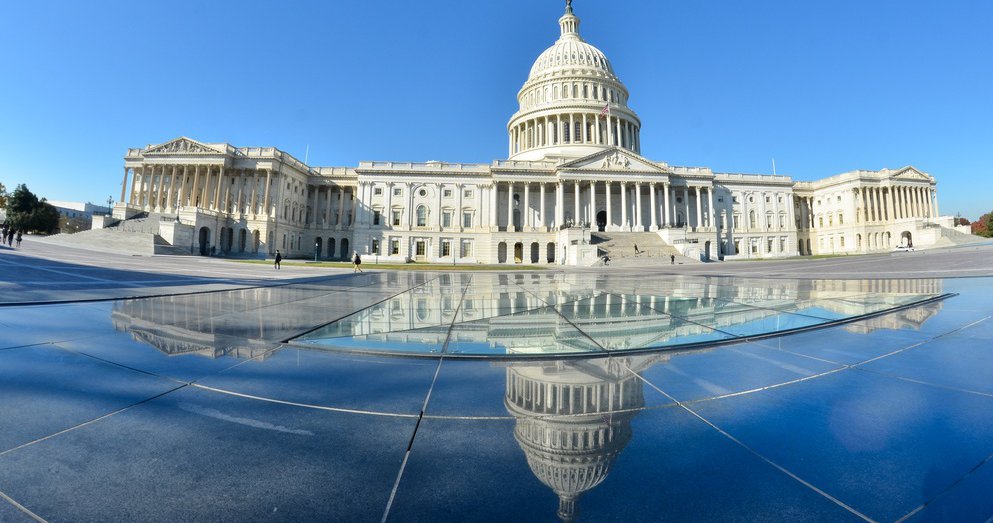
Just a few days before they head out of D.C. and back to the campaign trail through the November elections, lawmakers voted this week to approve a short-term bill that will fund the government through December 11. The bill, H. J. Res. 124, passed the House on Wednesday and the Senate on Thursday. Observers, many of whom had noted the fast-approaching deadline and some disagreement among legislators about for how long the continuing resolution should extend, can breathe a sigh of relief. The continuing resolution will fund the government at the same levels as were in place for fiscal year 2014, which expires on September 30, less a 0.0554 percent haircut.
Considered together with the authorization of additional funds were provisions that address a few hot-button policy debates. One of the main sticking points on the bill–whether to include a reauthorization of the Export-Import Bank, which is also set to expire on September 30–was approved, extending it through June 30 of next year. By that time, a new legislature will be firmly in place, and yet another Ex-Im Bank extension may be easier for congressional leadership to wrangle. And the lawmakers also voted to approve President Obama’s requested assistance for rebel groups in Syria. Given those provisions, the vote count was hardly typical. In the House, the final tally was 319-108, with 55 Democrats and 53 Republicans voting against the package. The Senate totals were 78-22.
But the lengthy process of negotiating an appropriations bill is far from over. Up next for federally funded programs: the lame-duck session. Once the elections have been completed on November 4 but before the newly elected lawmakers start their jobs on January 3, 2015, Congress will have to return to Washington for another vote on funding the government, likely as another temporary funding bill that will carry it into the next session.
Fortunately, that battle should be an easier one. Last year’s more-than-two-week-long shutdown of the federal government ended when House and Senate Budget Committee members Sen. Patty Murray (D-WA) and Rep. Paul Ryan (R-WI) reached an agreement that lifted the spending caps for fiscal years 2014 and 2015. That deal paved the way for a much simpler appropriations process this year. And it’s still paying dividends, now that lawmakers know they won’t have to worry about it in the midst of heated congressional elections.
Moreover, unlike last year, when the federal government fully shut down for more than two weeks over questions about the overall discretionary spending (appropriations) limit placed on the federal government by the Budget Control Act (BCA) of 2011, funding challenges are less severe now. According to a report issued by the Congressional Budget Office in August, the federal budget is on track to meet–and not exceed–the limits set by the BCA for the 2015 fiscal year. That means where lawmakers were debating last year whether to permit the sequestration (across-the-board, automatic spending cuts) of most federal programs or to instead revise the Budget Control Act to lift the limit and allow more federal spending, there’s no need for controversy this year.
But the relative calm of this year’s budgeting also means that, if policymakers don’t keep spending in check next year, they’ll be right back where they were. Still, with Republicans poised to potentially take over the Senate and retain control of the House this fall, budgeting is likely to run more smoothly next year, with stronger pushes to maintain or even reduce funding for some programs.
Check back with EdCentral ahead of the next deadline for the federal budget on December 11.
More About the Authors
Issues
Programs/Projects/Initiatives
Topics
Related
Inside 2025: A Year of Urgency and the Wins That Mattered Most

Reflecting on 2024: The Work and Wins That Drove Us
What to Know About Education Funding in Biden’s Budget