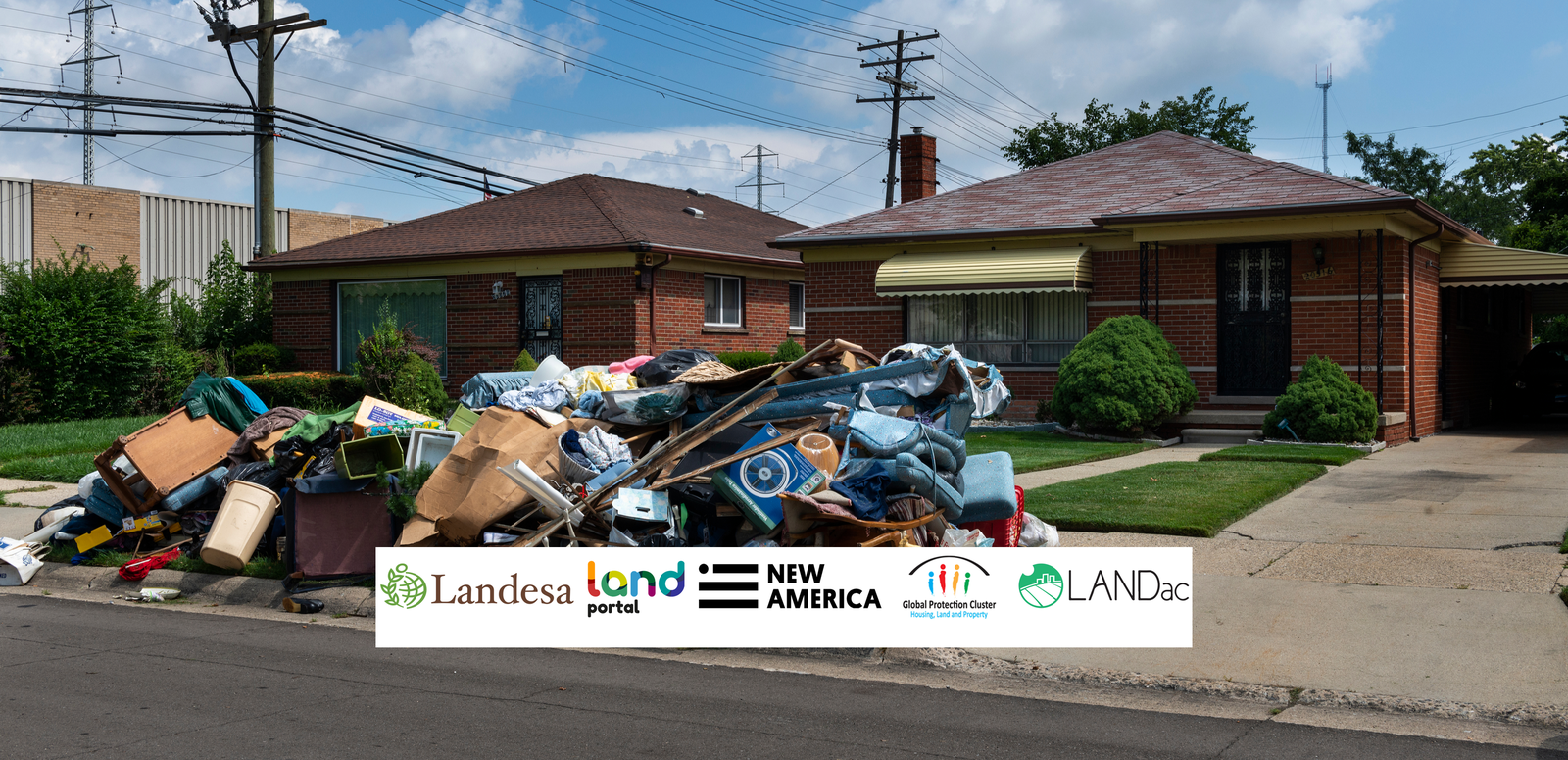
Evictions and COVID-19
By Alexandre Corriveau Bourque and contributing authors1
In the six months since the coronavirus began its global spread, more than 15 million people have been diagnosed with COVID-19 and more than 600,000 have perished, causing governments around the world to institute lockdowns and shut down businesses while entire industries have been devastated. This brief, inspired by and sourced heavily from the Land Portal’s Eviction Response During and After COVID-19 webinar and discussion series, spotlights a selection of these challenges, and provides suggestions for how they may be addressed.
The Challenge
Even before COVID-19 hit, vulnerable populations all over the world faced chronic threats of eviction from their homes and settlements. The pandemic has exacerbated virtually all of the intersecting factors which increase the risks of eviction, namely:
- Structural inequalities and discrimination amplified: Communities such as immigrants, migrant workers, internally displaced persons (IDPs), refugees, Indigenous Peoples, racialized communities, marginalized castes, and women-headed households have been historically excluded from access to adequate housing and face chronically insecure tenure. Because of these structural discriminations, they have less ability to claim and exercise their rights, and are therefore more likely to face forced evictions. Vulnerable and poor communities are also more likely to live in overcrowded and inadequate housing, which increases the risks of virus transmission. With the emergence of the pandemic, many communitie face increasing xenophobic, racist, and sexist attacks while also being systematically excluded from protections and social safety nets that are being delivered by governments in response to the COVID-19 crisis.
- The economic crises created or deepened by the health crisis: People working in the informal economy are exceptionally vulnerable as their livelihoods are curtailed by government restrictions on different kinds of work and access to specific spaces. At the same time, they do not benefit from any social protections and therefore cannot afford to lose their jobs. These people are increasingly unable to pay their rent. As people lose their livelihoods as the crisis draws on, the pool of economically vulnerable populations expands.2
- Stigma associated with actual or perceived risk of exposure to the virus: Many of these historically marginalized communities are doing the “essential” jobs which increase their risk of exposure to the virus. They, and other front-line care workers, are threatened with eviction by landowners and neighbors who are afraid of exposure.
- Decreasing oversight, due process, and protections: Opportunistic actors (governments, armed groups, and landowners) are using this crisis to justify evicting people from houses, camps, and informal settlements—often under the guise of “public health measures” and without consulting these communities, seeking their consent, nor following due process.
Even in non-pandemic times, evictions are humanitarian crises with lasting effects on the health, wellbeing, education, and livelihoods of not only those who have been evicted, but communities as a whole.3 In the pandemic, this has taken an additionally nefarious dimension since access to adequate housing is essential to reducing the spread of the virus.
Unfortunately, much of the conversation around the risk of evictions in the era of COVID-19 remains anecdotal, with little available data to track and follow eviction trends—with some notable exceptions like Somalia and the United States.
Early Responses and Key Considerations
While some governments have enacted measures to secure housing tenure for tenants and occupants of camps and informal settlements in response to this crisis, many have not.
Among those jurisdictions who have put in measures, the most common measure has been to enact moratoriums on some types of evictions and utilities shut-offs (Baidoa, Somalia; Indiana, USA; South Africa; Uganda).
While moratoriums are an important and often game-changing measure, they have important limitations:
- Moratoriums do not necessarily recognise that housing is part of a complex social and economic ecosystem, nor take into account the full range of calculations being made by landlords and tenants during this health crisis. Some landlords rely on rent for their subsistence, so the loss of rent may be devastating to them. Others may prefer to keep properties occupied with a formerly reliable tenant rather than evict in a situation where there may not be a renter to replace them. Policies and initiatives should take into account these local dynamics.
- In many countries, the relationships between the landowner and the tenant/occupant are informal, which often renders them invisible to the state. While a moratorium may be a point of leverage for advocacy (or even used as a threat to punish landlords who continue evictions), it will remain largely ineffective without a community-based strategy for monitoring and response.
- Moratoriums often postpone the problem of evictions since they do not address the issue of unsustainable debt accruing during the moratorium period. Once the various moratoriums expire, a spike in eviction cases is widely expected. Furthermore, without some form of debt relief or reduction in rents, accumulated debt can have devastating legal consequences and force households to adopt negative coping mechanisms such as child labor and sex work, and expose them to predatory actors who will extract debt payments through debt bondage and/or sexual violence. Owners of micro-enterprises are also at high risk of eviction—and if they are evicted, reviving their livelihoods once lockdown measures ease will be an even bigger challenge.
In anticipation of this last issue, a small number of jurisdictions have enacted measures to reduce or freeze rents or offer rental subsidies to the most vulnerable households (El Salvador; Los Angeles, USA; Tigray State Ethiopia; and British Columbia, Canada). From a programmatic approach, humanitarian basic needs, shelter, and protection actors in Jordan have organized to expand the delivery of unconditional cash payments to refugee households who are most likely to be at risk of eviction.
Recommendations
Beyond the emergency policy and programming measures outlined above, there are concrete things that governments and civil society actors can do to address these vulnerabilities on the medium- and long-term. None of these recommendations are new for this sector, COVID-19 has only shed light on their critical importance for resilience of communities.
- Establish monitoring mechanisms (especially community-based): To serve as early warning systems which can allow practitioners to mount timely programmatic and/or legal responses to keep people securely housed.
- Guarantee tenants and occupants’ access to legal representation in all formal eviction proceedings: To ensure a full respect of tenants’ and occupants’, rights and to mitigate against excessively harsh judgements.
- Implement and enforce rent controls to stabilize housing markets: To maintain remaining affordable housing supply.
- Invest in the construction of social housing: To increase stock of affordable and adequate housing—and make it available to economically and socially vulnerable communities, including those who are already homeless, IDPs, and refugees.
- Secure community tenure in informal settlements: Through programmes that use innovative approaches and instruments like community land trusts.
- Resist the instinct to impose austerity measures—instead, invest in and expand social safety nets: These important systems improve health, educational, and economic outcomes, especially for the most vulnerable communities and make them more resilient to shocks and crises.
- In the exceptional event that evictions or relocations are unavoidable and must be undertaken for bona fide and proportionate health reasons, ensure that these are done in full compliance with applicable international4 and national laws, after consideration of all possible alternatives. These processes must also adhere to global best practices for consulting, seeking consent from, and re-housing affected communities.
Citations
- Joseph Jackson, Ibere Lopes, Nathalia Watanabe, Robert Lewis-Lettington, and Theresa Williamson
- Landowners who rely on rental income for their subsistence (especially retirees in countries without social safety nets) may also enter the pool of economic vulnerability and may risk defaulting on debts and facing foreclosure due to the reduction of this income.
- Desmond, M. 2016. Evicted: Poverty and Profit in the American City. New York: Broadway Books.
- In particular the right to adequate housing and protection against forced eviction as per article 25 of the Universal Declaration of Human Rights (UDR), Article 11 of the International Covenant on Economic, Social and Cultural Rights (ICESCR), and ICESR General Comments 4 and 7.