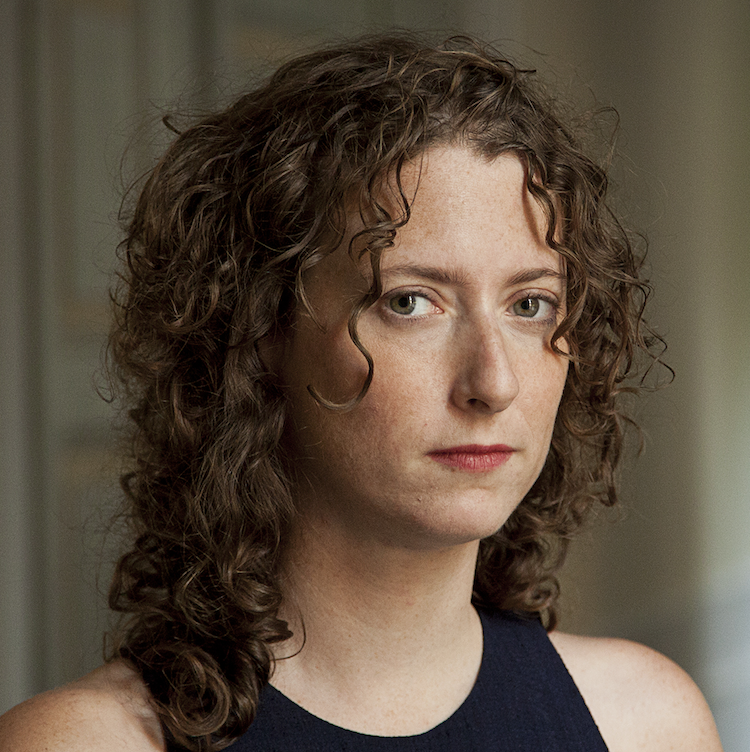
Jessica Bruder
Eric & Wendy Schmidt Fellow, 2020
New America 2020 Fellow Jessica Bruder spoke about economic insecurity and the changing nature of work for “Three questions” in The Fifth Draft, the Fellows Program’s monthly newsletter. Bruder is a narrative journalist and adjunct associate professor at the Columbia Journalism School whose work explores subcultures, social issues, and collaboration.
Your Fellows Project focuses on a tight-knit community of East Africans working at an Amazon facility in Shakopee, Minnesota. Can you share the genesis of this project?
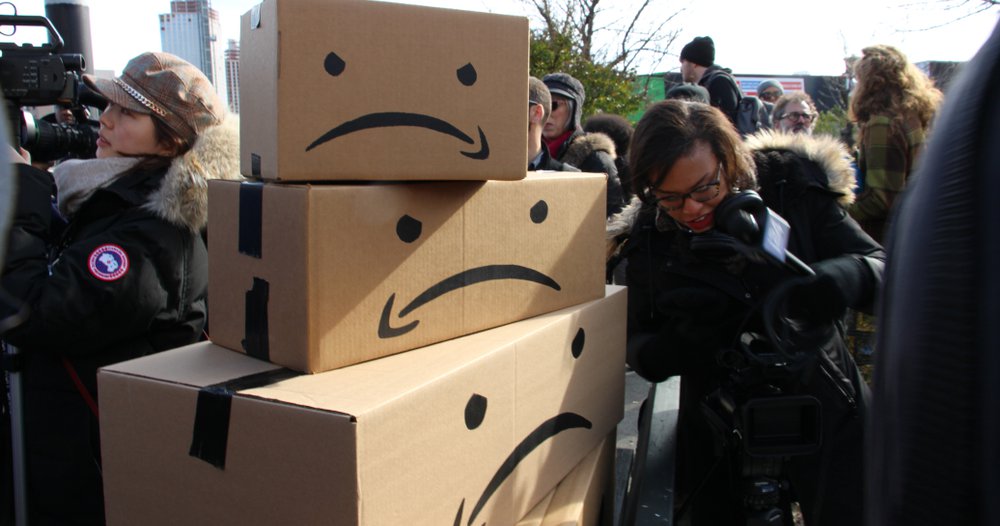
Over the past three years, a small, scrappy workers’ collective has emerged at the forefront of the American labor movement. The name of the group is Awood, which means “power” in Somali, and its members are mostly recent East African immigrants who are Amazon warehouse workers. Their achievements are unprecedented in North America, including strikes and walkouts, bringing management to the table, and building ties with labor groups all over the world.
I’d read shorter pieces about Awood—The New York Times, along with Minnesota and labor-focused publications, had done some great coverage—and my WIRED editor thought it would be an amazing subject for a longform, deep-dive, character-driven story. I’ve long been fascinated by the power of subcultures to move the mainstream, and in an age of corporate dominance, economic inequality, racism, xenophobia and anti-Muslim sentiment, the strength and bravery of these workers is inspiring. Immigrants have historically driven so much progressive change in America, making this the latest chapter of a much larger history. They’re a force for the kind of renewal we need so desperately right now.
I’ve always been obsessed with subcultures, groups that demonstrate internal cohesion, solidarity and a shared sense of meaning, often against staggering adversity.
That project and your recent cover story for WIRED, along with your previous book Nomadland, which followed groups traveling around the country in RVs looking for work, focus on subcultures. What interests you about these groups and how do you balance journalistic distance while still getting the deep stories?
I’ve always been obsessed with subcultures, groups that demonstrate internal cohesion, solidarity and a shared sense of meaning, often against staggering adversity. My passion for writing about them has only grown in recent years, during an age of social and political atomization. Doing immersion reporting on subcultures is always a tightrope walk. You get incredibly close to your subjects, but in the end, you go home and write. Your foremost responsibility is to the reader—the outsider you’re bringing into another world—and to getting the story correct. It takes a tremendous amount of trust to make these kinds of projects happen, lots of time on the ground.
I maintain a lot of boundary-building habits to reinforce that I’m on the scene as a documentarian—keeping my notepad out, using a large recorder, reminding people of what “off the record” and “on background” mean, never making promises I can’t keep. Often sources want to influence the narrative—the arc of the final story—and grill me about my angle. I have to remind them that part of the reporting process is learning and hunting for the story—if I arrived on the scene hoping to just report out my own preconceptions, what use would that be? I try to be very patient. I don’t push people to talk to me when they don’t want to. Sometimes, if I hang out long enough, they come around.
Snowden’s Box, a book you wrote with Dale Maharidge about your involvement in Edward Snowden’s revelations, is being published this April. What was the collaborative writing process like?
Dale’s my best friend and we’ve been working together for years, co-teaching journalism classes at Columbia, serving as readers for each others’ drafts and sharing other projects, too. The biggest challenge was finding the format of the book, since it’s such a personal story. We had to create spaces where we could both speak individually, and places where we could step back and address the reader together. We already had a solid basis of trust to build on—17 years of friendship—and that saw us through moments where we had to reconcile our different approaches to book projects. I joke that my writing style is “building a sandcastle with tweezers”—aka super-meticulous—while Dale is more likely to whip out a shovel, forge ahead fast and then go back for tweaks and fixes. I love collaborating with other storytellers and, if anything, I’m trying to do more of that, in new formats, because I find it invigorating. I love working on teams and solo writing can be very isolating.
Subscribe here to receive next month’s issue of The Fifth Draft.
Eric & Wendy Schmidt Fellow, 2020