Jeff Goodell
National Fellow, 2016
New America 2016 Fellow Jeff Goodell spoke about his book The Water Will Come for “Three questions” in The Fifth Draft, the Fellows Program’s monthly newsletter. Goodell is a contributing editor at Rolling Stone whose work focuses on climate change, energy, and the environment.
Your Fellow’s project, The Water Will Come, is a book about rapidly rising sea levels and their effect on civilization. Could you tell us a little more why you chose to write it?
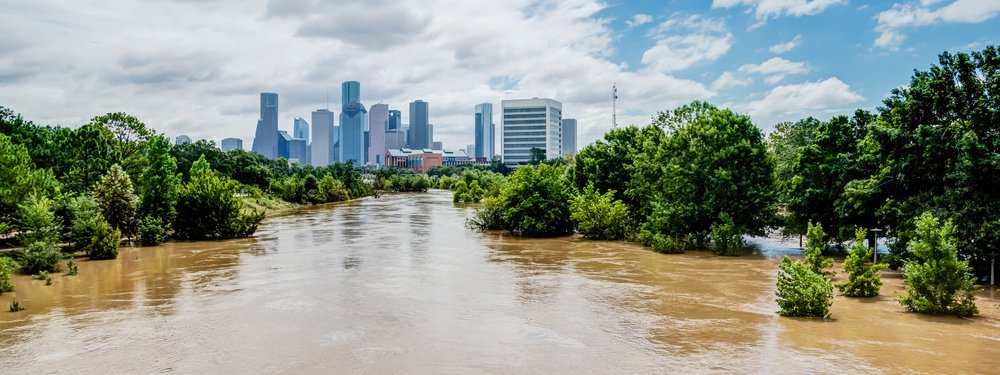
I had been writing about climate change for a decade or so, but never thought much about sea level rise. Like most people, I thought it was a far-off, distant problem. Then Hurricane Sandy hit New York and New Jersey in 2012. I spent a lot of time walking around New York, looking at the damage caused by Sandy’s nine-foot-high storm surge. I started thinking about how vulnerable modern cities are to flooding, both in the short term (from storms) and the long term (from sea level rise). A few months after Sandy hit, I happened to visit Miami Beach during a particularly high tide—there was three feet of water in the streets on a sunny day! I looked into projections for future sea level rise—they ranged from three to seven or eight feet by the end of the century. It was immediately clear to me that if you took those numbers seriously, Miami was in big trouble.
I wrote an article about the implications of all this for Rolling Stone with the oh-so-subtle title, “Goodbye Miami.” And I began to wonder, what does it mean to lose a great American city? How are people in other cities around the world coping with rising waters and risks of sea level rise? And that’s basically how the book began.
What do the rich, who largely caused the problem of climate change, owe the poor, who will be most impacted by climate change?
What other projects have been occupying your time since you finished the book? Anything you’re particularly excited about?
I’m writing this from the bridge of the Nathaniel B. Palmer, a 307-foot-long icebreaker that has been dispatched to Antarctica for what amounts to an emergency research operation to investigate the risk of collapse of Thwaites glacier. Thwaites is essentially the cork in the wine bottle for the entire West Antarctic ice sheet, which contains enough water to raise global sea levels by ten feet. Of course, I just wrote a book about the consequences of sea level rise. But now I’m interested in going deeper into the world of climate science and learning more about how scientists grapple with and communicate risk. But where this will take me, I have no idea.
You’ve said that humans are not, “wired to make decisions about barely perceptible threats that gradually accelerate over time.” Do you think a worldwide cultural shift that would mitigate climate change’s long-term effects is possible—that is to say before unimaginable disasters force us to accept it as a reality?
Well, it’s important to say that every ton of CO2 we avoid dumping into the atmosphere reduces risk of big changes, and the faster we get on with the business of elimination carbon pollution, the less likely we are to end up living through climate catastrophes (I’m using “we” as a crass short-hand for people of the industrialized world). But we are not going to “fix” climate change. It’s way too late for that. What we have before us now are different choices, different paths, different dilemmas: are we going to get serious about cutting carbon pollution to reduce the risk of climate catastrophe—or just keep burning fossil fuels until they are gone and plunge into climate hell? What do the rich, who largely caused the problem of climate change, owe the poor, who will be most impacted by climate change? I’m enough of an optimist to believe we’ll figure this out. But I’m also enough of a realist to believe there’s a lot of economic chaos and human suffering in our future.
Subscribe here to receive next month’s issue of The Fifth Draft.
National Fellow, 2016