It’s Obama

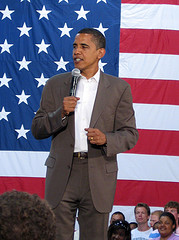 Last night Democratic presidential candidate Barack Obama won the presidential election to become 44th president of the United States. During the campaign, Obama made early education a cornerstone of his education policy agenda, and even highlighted early education as an important investment in our country’s economic future. Let’s take a closer look at the early education proposals Obama put forward during the campaign.
Obama has proposed $10 billion in new federal spending to support a comprehensive “Zero to Five” early education plan, which would include support for pregnant women and families with young children, quality improvements in child care for infants and toddlers, support for states to expand high-quality pre-k, and other services for children from birth through age five. The centerpiece of this agenda would be a new program of Early Learning Challenge Grants, modeled off of the of the Illinois Early Learning Council, which Obama helped create as a state legislator.
In order to receive Early Learning Challenge Grants, states would be required to: match new federal funds, meet quality and accountability standards, develop public/private partnerships, ensure that parents receive valid information, and provide support for both early learning and family support services (such as nurse home visiting). Although Senator Obama’s plan refers to high-quality early childhood care and pre-k, it does not describe the quality standards states would be expected to meet.
Obama would also establish a Presidential Early Learning Council, modeled after the Illinois Early Learning Council, to promote collaboration among various federal agencies that support programs for young children, and to encourage states to better coordinate services across multiple federal early childhood funding streams.
Obama’s plan includes several other steps to expand quality early education, including:
- Quadruple Early Head Start: The Early Head Start program provides services to low-income children ages 0-3, and evaluations of the program have produced very positive findings. Early Head Start currently serves about 61,000 children.
- Increase Head Start Funding, which has stagnated under the Bush administration. The plan does not include specific targets for funding increases or numbers of additional youngsters served.
- Improve Head Start Quality: Provide $250 million to create or expand regional training centers to help Head Start centers implement successful models.
- Increase funding for the Child Care and Development Block Grant, which has stagnated under the Bush administration, resulting in the loss of services for 150,000 children. Obama would double quality funding within CCDBG, and would encourage states to use their quality set-aside funding to develop strategic plans that better coordinate all birth-to-five services.
- Make the Child and Dependent Care Tax Credit refundable, so that low-income families can receive up to a 50 percent tax credit for their child care expenses. Currently, the tax credit is non-refundable and covers only 35 percent of the first $3,000 in child care expenses ($6,000 if a family has two or more children).
- Support Nurse-Family Partnerships: Provide Nurse-Home Visitation for 570,000 new mothers annually. This model, in which nurses visit at-risk mothers during pregnancy and for the first 18 months of their children’s lives to provide support, health services, and education, has been shown to be effective in improving children’s and mothers’ outcomes.
What’s the likely outlook for these proposals in the Obama administration? Given the current fiscal situation, it’s unlikely that we’ll actually see a $10 billion increase in federal suport for early education any time soon. But Obama has made clear that he views early education as an important investment to prioritize even in tough financial times, and the outlook is good for some type of early education legislation to advance this agenda. A bill to create a new federal role in supporting high-quality state pre-k programs already passed the House Education Committee and has strong Congressional and interest group support. Democratic gains in the House and Senate should make the prospects for early education funding brighter next year. Moreover, expanding federal support for quality early education is less controversial than K-12 reform issues involved in NCLB reauthorization, and moving a stand-alone early education bill could be a good way for the new administration and Congress to score an early victory on education prior to tackling the tougher NCLB reauthorization. The Child Care and Development Block Grant is also due for reauthorization, providing an additional vehicle to advance early education reforms in exchange for increased investment.
Early education has been largely ignored at the federal level in the past eight years, as funding for federal early childhood programs has stagnated and states have taken the lead in advancing early education quality and access. That seems likely to change in the next Congress and administration. Early Ed Watch will be keeping a close eye on federal policy developments that affect early education in the next Congress and administration.
More About the Authors
Issues
Programs/Projects/Initiatives
Related
Confronting Harmful Federal Disability Policy in Health and Human Services
Federal Early Education Update: March 2026
A Bureaucratic Shakeup Threatens Future Child Care Research