
Sarah Nzau
Policy Analyst, Center on Education & Labor

Nestled in the rural hills of northwest Massachusetts, Greenfield Community College (GCC) has been recognized for several years as a top-ranked community college in the state. However, like its counterparts across the state, GCC faced declining enrollment because of a regional decrease in population as well as other socioeconomic factors. In 2022, under new leadership, the college began to reverse that trend. New enrollment strategies, a new organizational structure, and a statewide policy allowing students over 25 to attend for free helped the college achieve a 20 percent increase in enrollment for the spring of 2023. This turnaround was the result of strategic decision-making and bold change. GCC exemplifies how a community college can employ practical strategies to boost enrollment, from streamlining its academic programs to embracing new technologies and realigning with local workforce development.
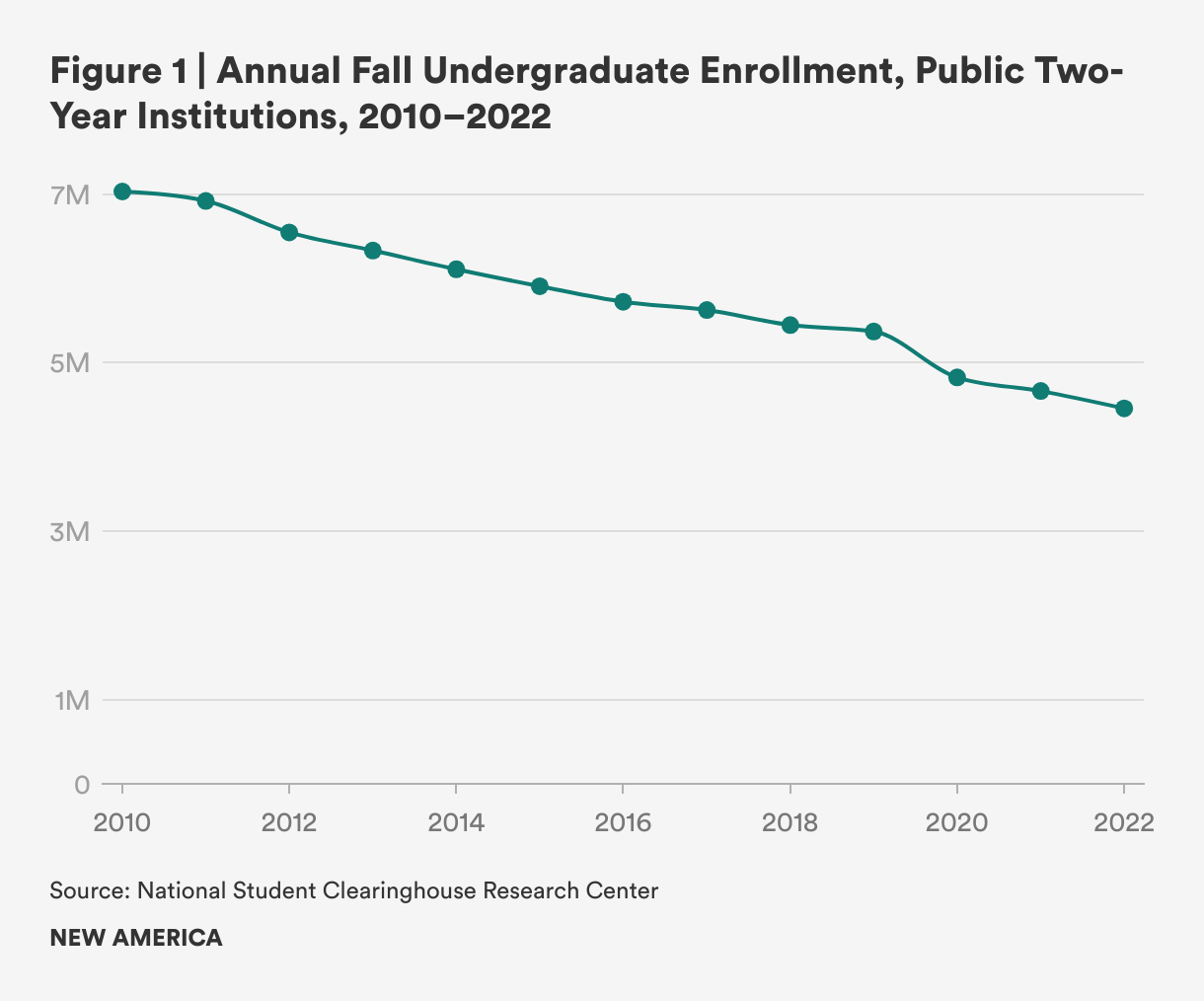
Undergraduate enrollment at community colleges nationwide experienced significant growth, with a 2.6 percent increase in the fall of 2023[1] compared to the previous year. Before COVID-19, this sector had been grappling with declines in enrollment, a trend exacerbated by the pandemic, as illustrated in Figure 1.
Despite these challenges, however, some community colleges weathered the storm more effectively than others. Other institutions not only stopped the decline but also reversed it in a relatively short period. This study aims to document the strategies these successful colleges employed to either maintain or improve enrollment figures, surpassing the performance of the average community college. New America conducted a cross-case study to distill recommendations for colleges and state and federal policymakers based on these findings.
We studied nine community colleges or college systems across the United States to understand the models aimed at strengthening the enrollment enterprise, including a focus on organizational structures, outreach strategies, and student recruitment and enrollment support. The primary case studies outlined in this brief feature Ivy Tech Community College (Indiana), Greenfield Community College (Massachusetts), and Wake Technical Community College (North Carolina). Additionally, we interviewed leadership from six other colleges, conducting thorough, semi-structured, one-on-one interviews with presidents, vice presidents of enrollment, and enrollment office staff. On average, these discussions lasted 60 minutes and were facilitated by two New America staff members via Zoom. All interviews were digitally recorded and transcribed, and they took place between September and December 2023.
Ivy Tech Community College, the largest singly accredited community college in the country,[2] witnessed a decade-long decline in enrollment before the onset of the COVID-19 pandemic. The pandemic exacerbated this decline. However, by 2021, the college successfully reversed the trend, as depicted in Figure 2. In the past two years, Ivy Tech has consistently surpassed its enrollment targets. For the 2023–24 academic year, enrollment was 11 percent higher than the previous year. This year, head-count enrollment is already 10,000 above last year’s total, indicating that growth is continuing.
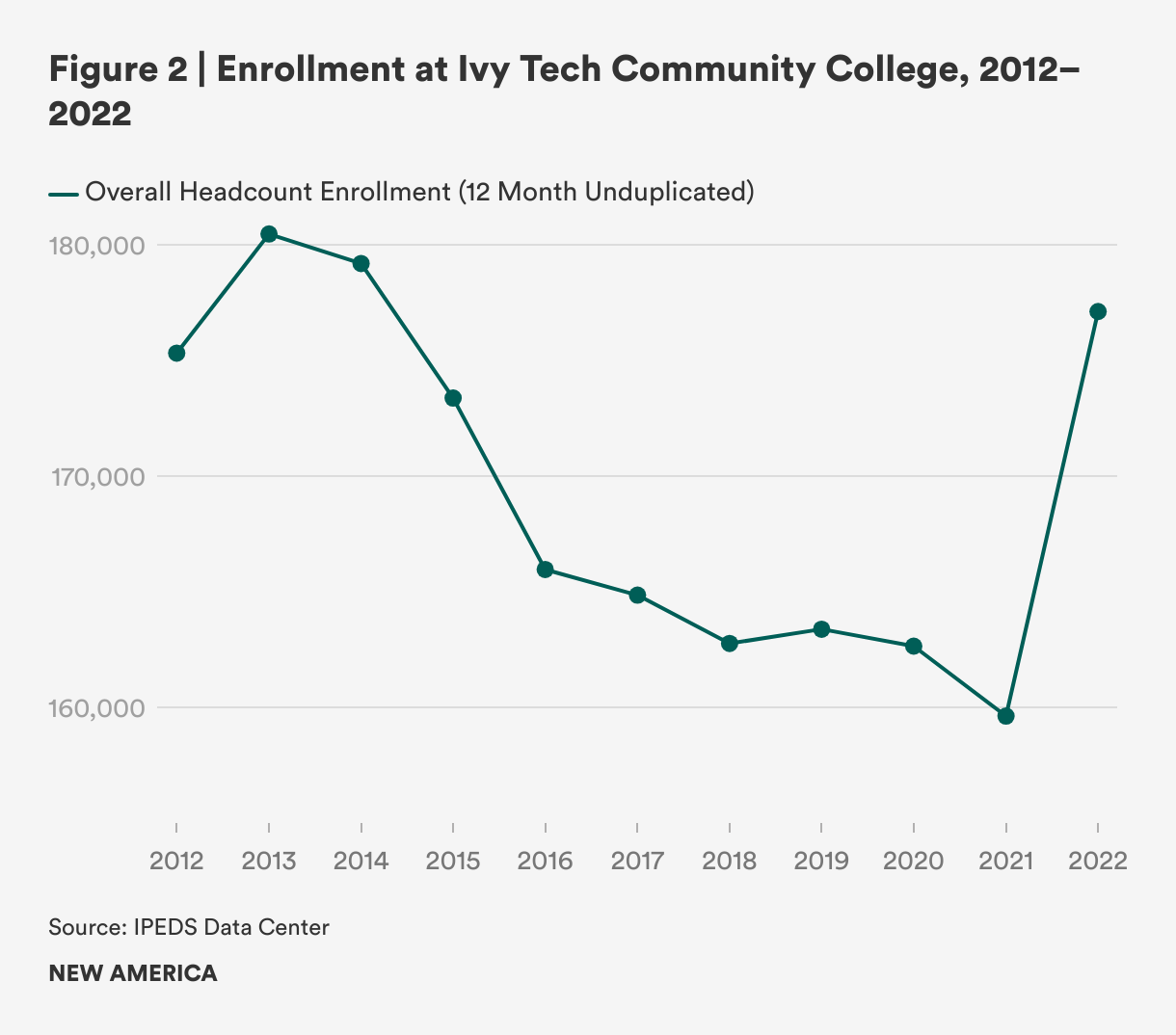
One of Ivy Tech’s key strategies was transitioning from arbitrary enrollment targets to practical, data-driven goals. In 2017, the newly appointed enrollment director was tasked with increasing enrollment by 30 percent within the academic year. However, he quickly realized the impracticality of this goal, given the fact that he assumed the role just a week before the fall semester began. As illustrated in Figure 2, enrollment continued to decline in 2017; the college failed to meet its ambitious target.
In recent years, Ivy Tech has revamped its approach to setting enrollment objectives. The college synchronized its targets with Indiana’s goal of 50,000 completions annually. Recognizing Ivy Tech’s pivotal role in this statewide effort, the college established annual enrollment targets to meaningfully contribute to the goal. Ivy Tech conducted an analysis of the region’s demographic landscape and set a goal of enrolling 0.2 percent of adults aged 18–64 who lacked college credentials at each campus annually. Each campus could choose an area of focus to achieve the goal, such as employer workforce development programs or traditional academic programs. Campuses can review and set new goals each year based on outcomes from the previous academic year. This shift toward data-driven goals has ensured more feasible and attainable targets for each campus.
These efforts are complemented by detailed dashboards that track enrollment data comprehensively. The depth and granularity of the dashboards are impressive. They are user-friendly, allowing data to be broken down by factors such as campus location, where a prospect is in the enrollment funnel, student demographics, and program type.
The second major strategy employed to bolster enrollment centered on enhancing student retention, a critical factor in enrollment figures. While attracting students to community colleges can be relatively straightforward due to their open-access policies, many institutions have historically neglected to provide adequate support to guide students through to graduation.[3] But Ivy Tech decided to change that. In 2019, the college transitioned from traditional 16-week semesters to eight-week subterms, introducing more on-ramp opportunities. Students are encouraged to take additional courses each sub-term to maintain momentum toward completing their program. This change allowed the college to focus on retaining students from subterm to subterm, rather than from semester to semester, which increased retention by around 5 percent.
Focusing on data allowed the college to see that 90 percent of student registration activity occurred within the first five days after the start of classes, creating overwhelming pressure for both students and advising staff. Some students had to wait up to two hours for course advising, for example. Consequently, only 38 percent of students were retained for the following subterm because of the cumbersome course registration process. In response, the college shifted to earlier registration, allowing students ample time for course advising and increasing their likelihood of enrolling in subsequent courses.
The final crucial strategy involved precise and timely marketing of programs, guided by data disaggregation. Traditionally, the college employed a one-size-fits-all marketing approach, simultaneously delivering the same message to everyone. With access to disaggregated data from the dashboards, the college now tailors its marketing efforts to specific demographics and student profiles. By developing student personas based on data insights, Ivy Tech gains a deeper understanding of its target audience and effectively communicates enrollment information in an accessible and appealing manner. Furthermore, it implemented programmatic marketing, dedicating each month to promoting a different school at Ivy Tech and its offerings. This combination of targeted marketing to attract specific student segments and programmatic marketing to highlight individual programs has contributed to the uptick in enrollment.
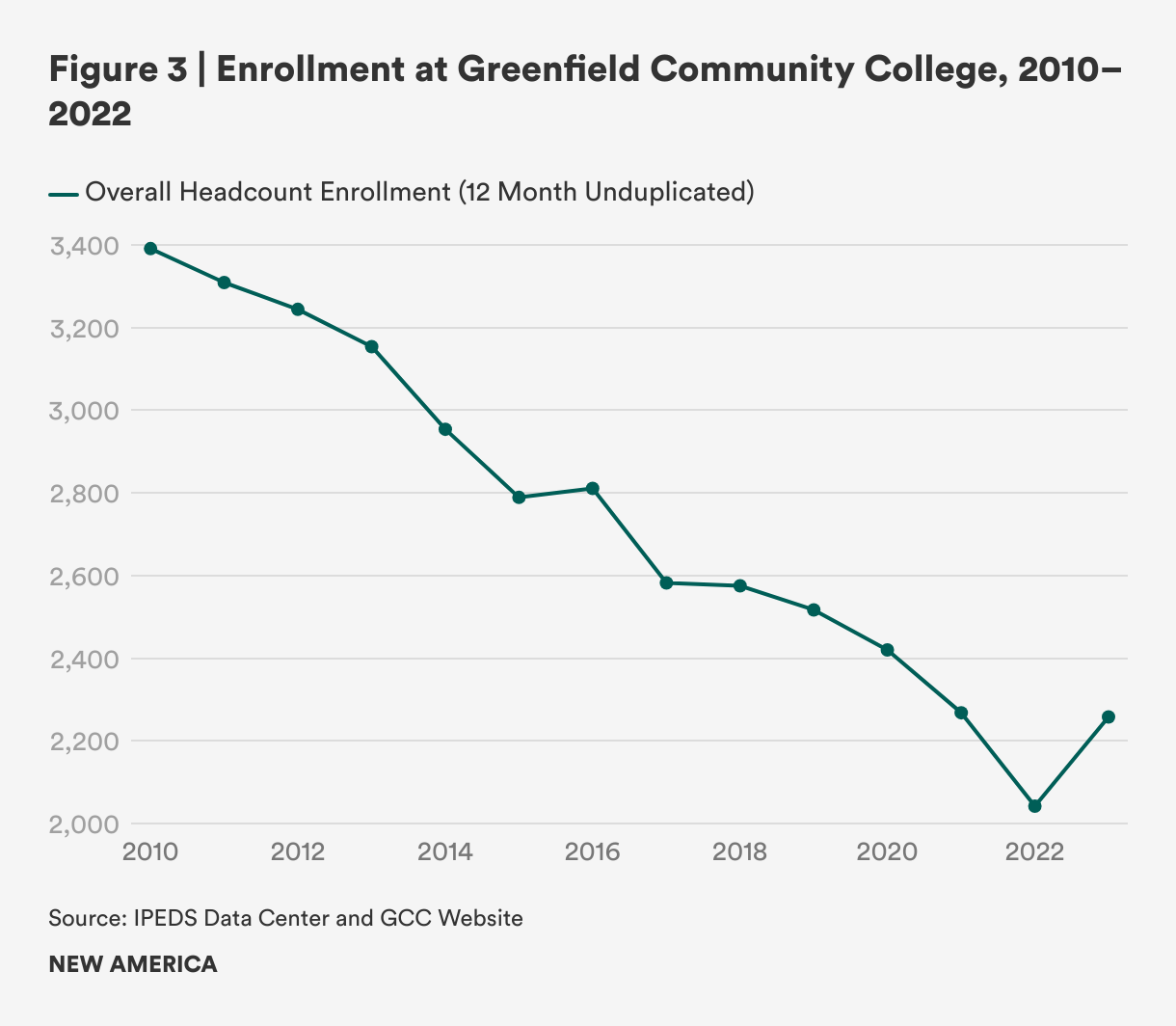
Greenfield Community College (GCC), situated in rural western Massachusetts, faced enrollment challenges even before the onset of the pandemic. Enrollment had peaked during the Great Recession between 2007–09 but rapidly declined in the following years. By 2021, enrollment had decreased by 50 percent. Existing challenges, such as demographic declines within the county, low-enrolled programs, staffing vacancies, and organizational structure misalignment, were only exacerbated by the pandemic. However, the school made the most of the temporary shutdown mandated by the COVID-19 pandemic to reevaluate strategy and reorganize.
As depicted in Figure 3, the downward enrollment trend reversed during the 2022–23 academic year. Notably, enrollment increased by 20 percent in the spring of 2023 compared to the preceding year.
The college launched a bold initiative to streamline its program offerings, cutting them by 40 percent while simultaneously updating all remaining programs. Our interviewees stressed that the long-term sustainability of the institution relied on this critical shift. Despite considerable challenges in implementation, the institution has emerged well-positioned for continued enrollment growth over the next decade.
Amidst growing skepticism about the value of higher education among Americans,[4] it is imperative for community colleges to adapt and cater to the evolving needs of students and their communities. The initial phase of aligning programs at Greenfield with the local economic landscape involved discontinuing programs that no longer met these needs. Additionally, the college embraced guided pathways reform and heightened its emphasis on workforce development programs.[5] These internal transformations, complemented by increased state funding for workforce initiatives, the introduction of the MassReconnect program[6] that pays tuition and fees for adults aged 25 or older at local community colleges, and an increased statewide commitment to funding a climate-ready workforce, contributed to the upsurge in enrollment.
Additionally, GCC made significant investments in technology solutions for data management. Before the pandemic, the college relied on paper-based processes for tasks ranging from handling applications to maintaining student records. The college implemented a course scheduling system. Around 750 outdated courses were removed from both the catalog and Banner, the student information system, to streamline scheduling for the updated programs. Moreover, the college adopted a customer relationship management (CRM) system. The CRM has streamlined the application process, but it still involves multi-step procedures and forms that might pose challenges for some students. GCC is working to further simplify the process.
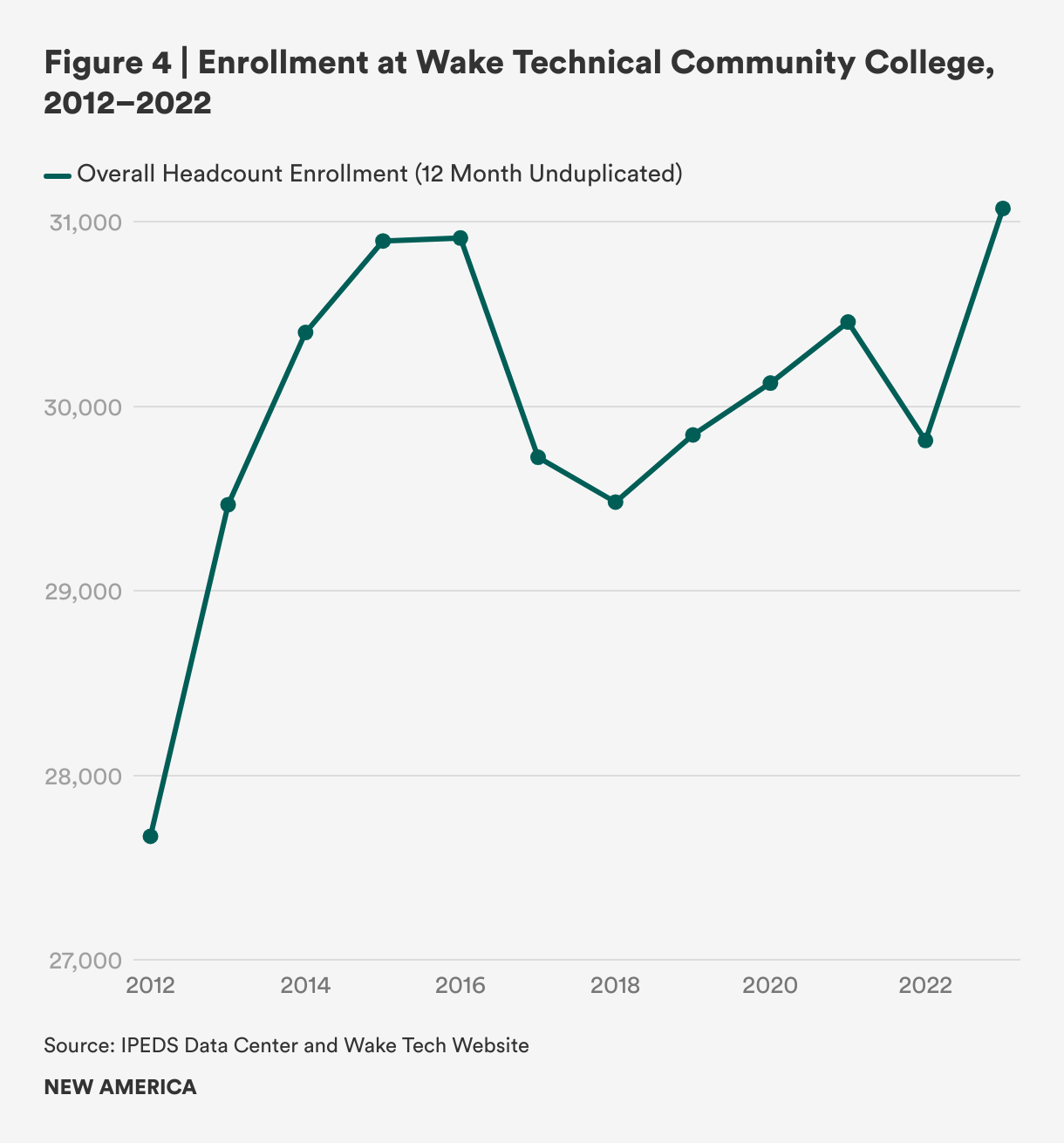
Wake Technical Community College (Wake Tech), the largest community college in North Carolina, has experienced fluctuations in enrollment over the past decade. As shown in Figure 4, the college experienced sustained enrollment growth prior to 2015. This period coincides with post-recession investments in manufacturing and federal funds incentivizing people to reskill. It also coincided with a boom in population in Wake County. There was a relatively small decline in enrollment between 2021–22. By 2022–23, enrollment had rebounded to pre-pandemic levels.
In the fall of 2022, Wake Tech initiated a free tuition campaign aimed at the high school senior class of 2022, which also included GED recipients and adult high school graduates, intending to bolster enrollment. This campaign used a combination of institutional funds and county funding. While the campaign successfully increased enrollment, it was out of funds by 2023. Subsequently, in the fall of 2023, Wake Tech introduced a program offering free textbooks and scholarships. Although free tuition, textbooks, and scholarships are effective strategies for enhancing enrollment, sustainable funding remains challenging.
Also in the fall of 2022, Wake Tech embarked on another strategy by collaborating with Inside Track,[7] a nonprofit organization aimed at supporting the college’s initiatives to increase enrollment among adult students. The project successfully reached approximately 10,000 adults, introducing them to the programs available at Wake Tech. Among those who applied to the college as a result of this outreach, around six in every 10 adults (60 percent) ultimately enrolled. Wake Tech’s president acknowledged that running an enrollment campaign targeting adults would have incurred significantly higher costs for the college without the support of an external organization.
Implementing a new advising model also played a pivotal role in the increased enrollment and retention rates at Wake Tech. Previously, the advising structure did not align with the college’s enrollment or retention objectives. The college president said, “I have always felt like for us and for many community colleges, the strategies are going to be less around how you reach new students to how you keep students…how you recruit first-year students to be second-year students.”
Previously, many students were unaware of their assigned advisor, and some were never paired with one. To address this, the college developed care centers and care teams to support students. Presently, each student is assigned a care team comprising an academic advisor, a success coach, and a career coach. The success coach serves as the link between the academic realm and the wraparound services that students may require. Since the introduction of the new advising model, the college has observed notable increases in retention rates. Although the increase in retention rates cannot be attributed to the new advising model alone, Wake Tech leadership is hopeful that advising reform will sustain the trend.
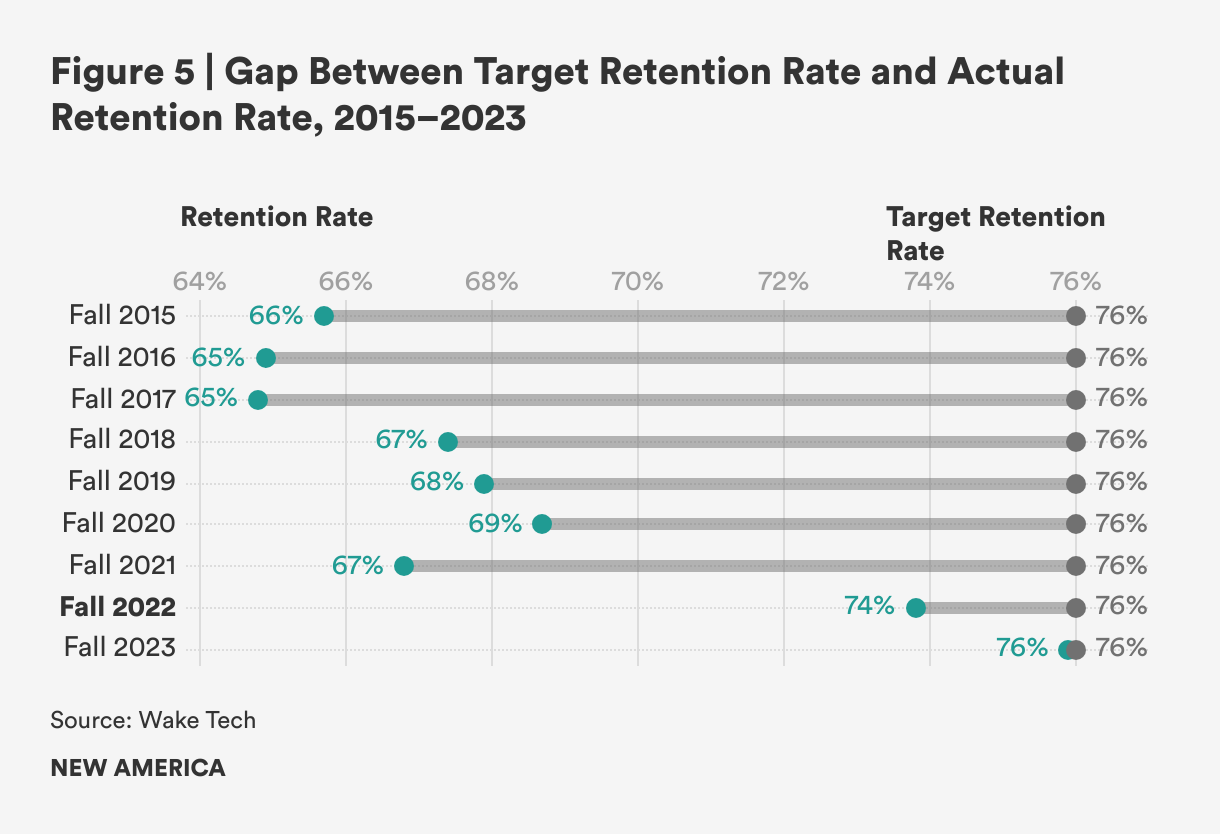
The impact of these strategies on improving the retention rate is evident in the data. In 2020, the college wanted to increase the share of students who started in the fall semester and continued into the spring to 76 percent. As shown in Figure 5, the gap between the target retention rate and the actual retention rate persisted until 2022, when most of the initiatives discussed above were implemented. By the fall of 2023, the target retention rate had been achieved.
While factors such as economic and demographic shifts impact enrollment, practical strategies have proven effective in boosting enrollment at community colleges. As highlighted in the case studies above, colleges can select from a variety of strategies based on their context. Here are some general enrollment improvement strategies that colleges have adopted and adapted to suit their needs:
Community colleges are doing their best to support students in their community. Their efforts to increase enrollment can be further strengthened by the state and federal policies suggested below.
States should consider the following policies to support healthy enrollment in their community colleges:
The federal government should complement state support for community college enrollment by implementing the following policies:
Our team analyzed 216 final evaluations of individual TAACCCT grants and conducted a meta-analysis,[11] revealing that students in participating schools were 91 percent more likely to complete a program or earn a credential compared to nonparticipants and 27 percent more likely to experience positive labor market outcomes, such as employment or wage gains.
Unfortunately, TAACCCT was funded only once, with the funding ending in 2014. Since then, Congress has introduced a smaller program, Strengthening Community College Training Grants (SCCTG), funded at $45 million annually through the Appropriations Act. Congress should officially authorize the program and increase funding for either TAACCCT or SCCTG to at least $1 billion annually while also considering common-sense improvements. In our 2020 blueprint,[12] we outlined recommendations based on our TAACCCT research. We suggested setting aside a portion of each grant to support student services and basic needs, as these interventions were highly effective in the original TAACCCT program. Additionally, we recommended enhancing the evaluation process to inform future investments.
A permanent federal program to fund these services would be transformative. It could build on a revised TAACCCT or Strengthening Institutions program, incorporating a dedicated set-aside for coaching and student support, or it could be a stand-alone competitive program to support wraparound services.
[1] Tableau Public (platform), National Student Clearinghouse Research Center, CTEE Fall 2023 Dashboard.
[2] Ivy Tech Community College (website), “About Ivy Tech.”
[3] Chris Geary, “Community Colleges Have a Completion Problem,” EdCentral (blog), New America, October 16, 2019.
[4] Meghan Brink, “Most Americans Skeptical of the Value of a College Degree,” Inside Higher Ed, July 11, 2022.
[5] Iris Palmer, “An Explainer: Non-Degree vs. Non-Credit Programs,” EdCentral (blog), New America, October 17, 2019.
[6] Massachusetts Department of Higher Education, “Massachusetts Educator Pathways.”
[7] InsideTrack (website).
[8] Iowa Department of Education, “Pathways for Academic Career & Employment: Iowa Skilled Worker and Job Creation Fund: PACE.”
[9] Betty Márquez Rosales “California Colleges Now Have Centers to Help Students with Basic Needs Like Food and Housing,” EdSource, August 11, 2022.
[10] Chris Geary, “What Can Community Colleges do to Help Students Afford Higher Education?,” EdCentral (blog), New America, October 25, 2019.
[11] Grant Blume, Elizabeth Meza, Debra Bragg, and Ivy Love, Estimating the Impact of TAACCCT: Findings from the First Comprehensive Analysis of the Grant Program (New America, October 2019).
[12] New America, Federal Blueprint: The Future of Work.
This brief was funded by The Kresge Foundation. New America thanks the foundation for its support. The findings and recommendations contained within are those of the authors and do not necessarily reflect positions or policies of the foundation.
We would like to thank the leadership at Ivy Tech Community College, Greenfield Community College, and Wake Technical Community College for their contributions to this brief.
We would also like to thank Sabrina Detlef for her copyediting support, and Katherine Portnoy, Amanda Dean, and Natalya Brill for their communication and production support.
Policy Analyst, Center on Education & Labor

Director, Community Colleges