II. Tax Filing Assistance Background
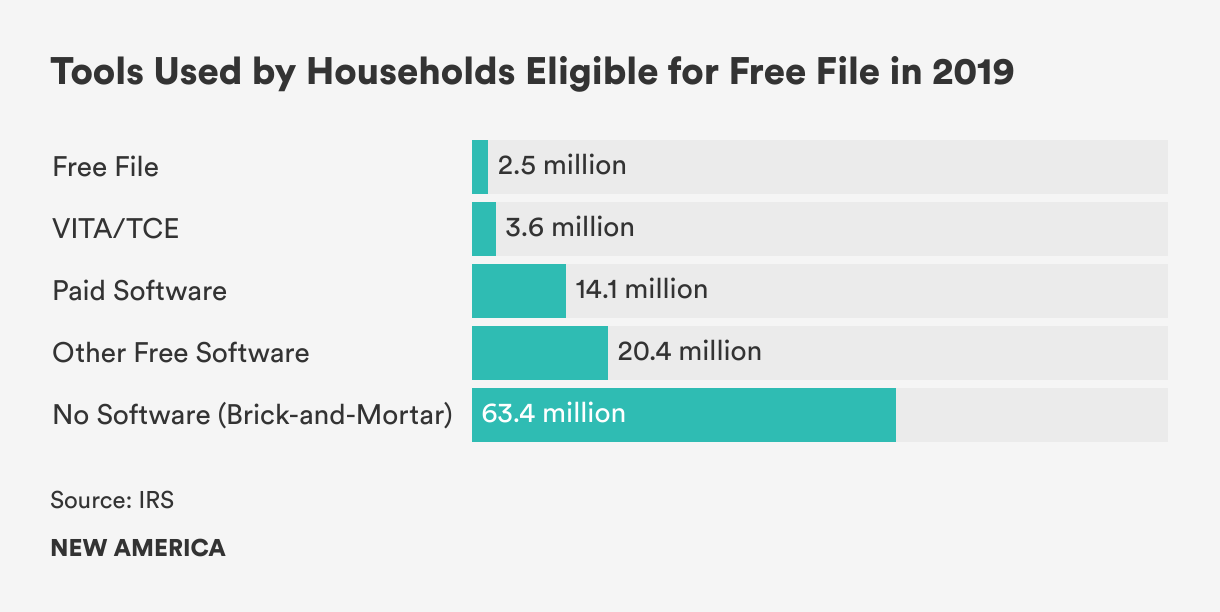
In 2020, Americans filed nearly 150 million tax returns, either as single individuals or married couples. There are two government programs to provide free tax filing assistance to low- and middle-income Americans: the Free File Program and Volunteer Income Tax Assistance (VITA)/Tax Counseling for the Elderly (TCE). The Free File Program is an agreement between the Internal Revenue Service (IRS) and eight private partners to provide free tax-filing software for those under an income threshold—about $72,000 for individual filers. Though 104 million tax filers were eligible for this program (the majority of tax filers), only 2 percent of those eligible actually used this program. Nearly 35 million households paid to use software to prepare their returns, and 14 million of these households paid for software they should have received for free. An additional 67 million households instead went to a brick and mortar tax preparation service.
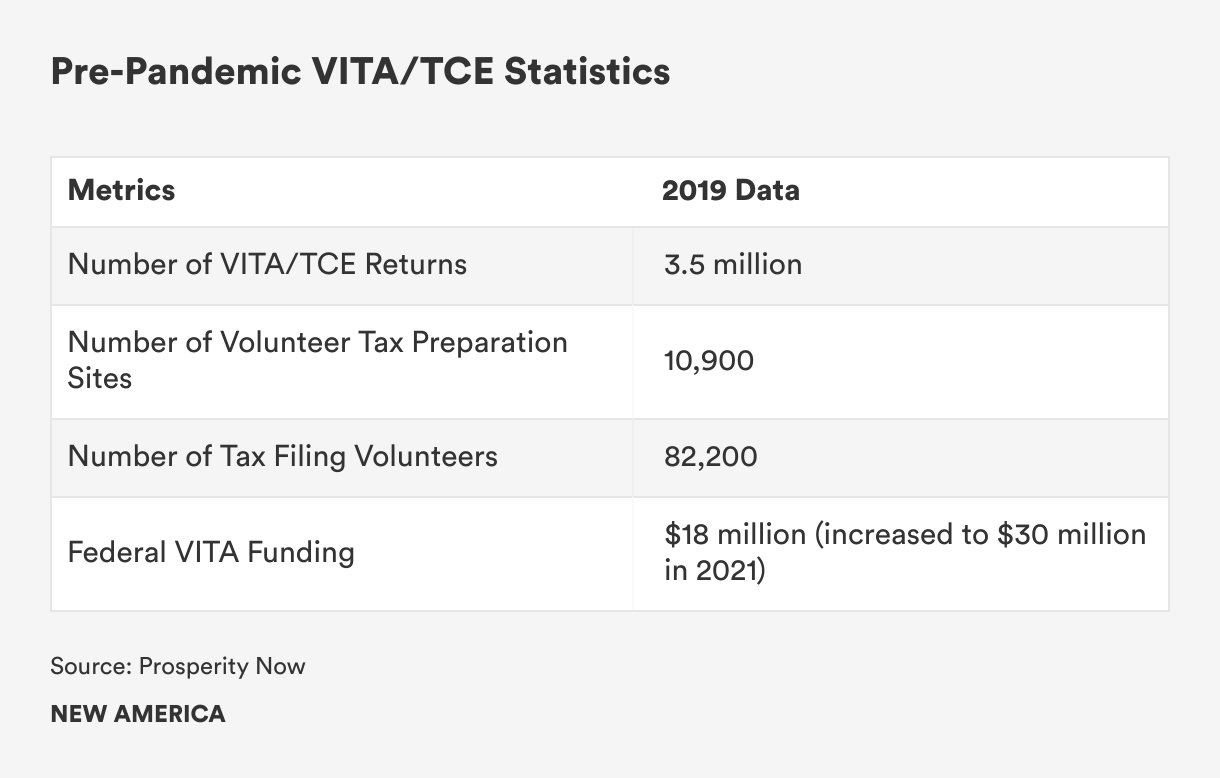
While most low-income Americans who seek in-person assistance use private tax preparers, 3.5 million households have their taxes prepared by IRS-trained volunteers through the IRS-administered VITA program and the TCE program. VITA sites serve individuals who generally make $57,000 or less, individuals with disabilities, and limited English-speaking individuals. The TCE program targets assistance to those who are generally 60 years of age and older, and specialize in retirement questions (although these sites will prepare returns for any taxpayer that meets the VITA requirements). In 2021, the IRS awarded $25 million to 297 VITA grantees and $11 million in TCE grants to 31 organizations. The IRS grants require matching funds from community organizations to fund VITA sites, while TCE does not require a funding match.

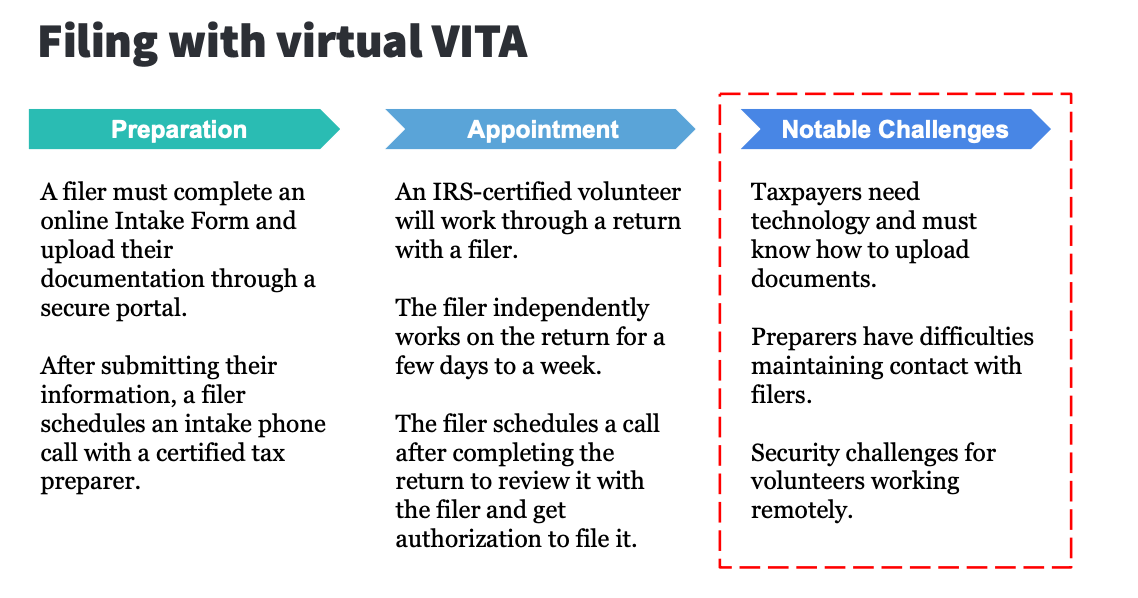
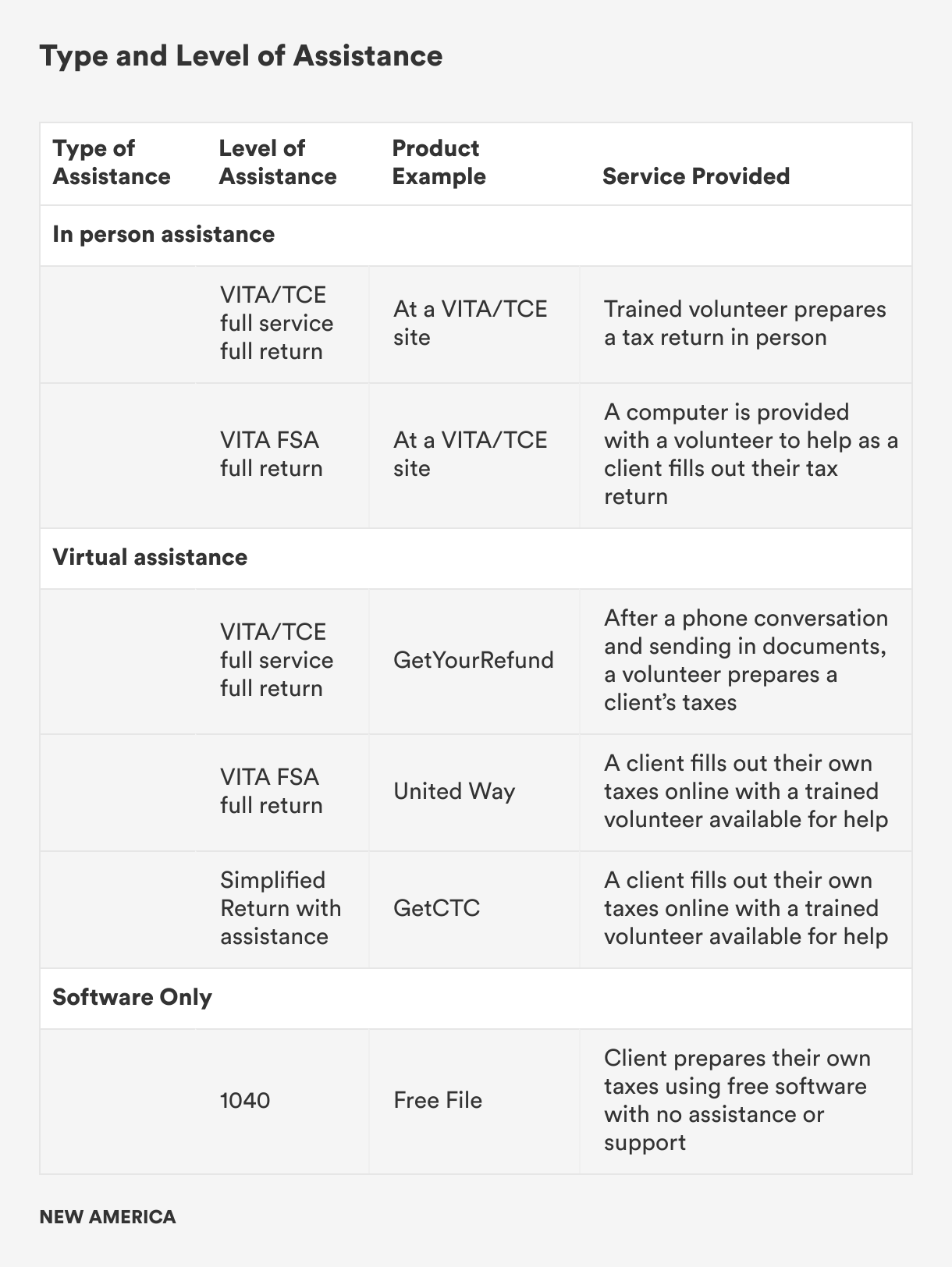
VITA/TCE sites rely on volunteers to coordinate sites and to serve as tax preparers. Sites are typically in person, though some moved online for the pandemic. In addition, Code for America provides infrastructure for virtual VITA and directs people to free tax assistance through GetYourRefund, matching tax filers to VITA sites where volunteers prepare their return. Sites offer full assistance, where a trained volunteer prepares your taxes.
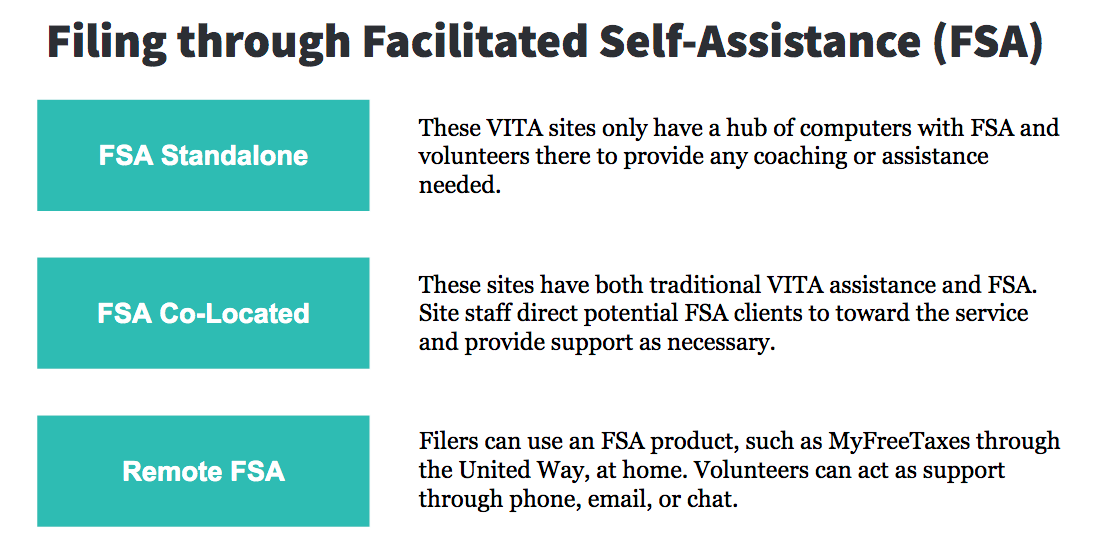
VITA also includes “facilitated self-assistance” (FSA), in which taxpayers use free tax filing software themselves but can get assistance from a volunteer. Some local sites may also separately have paid staff assisting with tax filing, but the IRS does not fund paid staff. These individuals receive the same training as VITA volunteers (and the training can be done virtually), but they do not actually prepare the returns and therefore can be paid. FSA is also offered outside of full VITA sites, for example, by the United Way Worldwide’s MyFreeTaxes service, though an estimated 200,000 were filed this way last year.1
The VITA program is the key government program that provides free, personalized, tax assistance services for low-income families. Volunteers at VITA sites help people save on tax preparation fees, claim eligible tax credits, complete tax returns accurately, and connect to other benefit programs, such as the Supplemental Nutrition Assistance Program and financial coaching.
In 2020 the IRS created an online portal for non-filers to file simplified returns with the IRS to determine if they were eligible to receive Economic Impact Payments (EIPs) and, later, the Child Tax Credit (CTC). In the first round of EIPs, which the Treasury Department began disbursing in April 2020, over 22 million households without 2018 or 2019 tax returns received the benefits either because of the IRS non-filer tool or using information from other government benefit programs, such as Social Security. The non-filer tool has connected eligible households to the EIPs and the CTC; however, non-filers still miss out on other tax benefits, such as the Earned Income Tax Credit (EITC). Nevertheless, the reach and success of the non-filer portal highlight how many people remain outside traditional tax filing channels and the need to provide accessible ways to provide tax benefits to people in need.
Citations
- This is an estimate from multiple providers of FSA assistance. The actual numbers were not available.