
Improving Public Programs for Low-Income Tax Filers
Abstract
During the pandemic, the Internal Revenue Service (IRS) distributed approximately $700 billion in assistance to American families. However, many low-income families who had not filed taxes in the past were left out. Many Americans find tax filing difficult and intimidating, and they require assistance to get through the process. This report will focus on the Volunteer Income Tax Assistance (VITA) program, a free, government-funded program, that serves low-income tax filers in person. Additionally, a small part of this program provides assistance to those filing their taxes online through VITA funded software. Despite VITA’s goal of ensuring low-income Americans can file taxes and access benefits, many Americans do not receive the help they need, and the vast majority of households eligible for assistance still utilize paid preparers who chip away at the value of tax refunds American families are entitled to. To inform future efforts to bring more low-income tax filers into the tax system, this report focuses on the VITA program and investigates the challenges and opportunities to better serve the American people and improve the experience of tax filing.
Downloads
I. Introduction
During the pandemic, the Internal Revenue Service (IRS) distributed approximately $700 billion in assistance to American families. However, many low-income families who had not filed taxes in the past were left out. Many Americans find tax filing difficult and intimidating, and they require assistance to get through the process. Multiple programs aim to provide that assistance. The Free File program provides free tax preparation software to eligible Americans. The Volunteer Income Tax Assistance (VITA), a free, government-funded program, serves a broader group of low-income tax filers in person, while a small part of this program provides assistance to those filing their taxes online through VITA funded software. The Tax Counseling for the Elderly Program (TCE) targets assistance to those who are generally 60 years or older. Despite VITA’s goal of ensuring low-income Americans can file taxes and access benefits, many Americans do not receive the help they need, and the vast majority of households eligible for assistance still utilize paid preparers who chip away at the value of tax refunds American families are entitled to. To inform future efforts to bring more low-income tax filers into the tax system, this report focuses on the VITA program and investigates the following three questions:
- What outreach works to bring people to tax filing assistance sites and services?
- What services and best practices help people file their taxes?
- What does the VITA program need to scale to reach all who need assistance?
To answer these questions, we conducted a literature review and interviewed 15 experts from government, VITA sites, and nonprofits. Little national data exists on VITA sites, on which populations VITA serves and does not serve, and on which VITA sites and services are most efficient. Still, desk research and expert interviews provided initial conclusions:
Outreach: Messages from trusted government sources with connections to assistance were incredibly effective. Both trusted messengers within communities and tax filing assistance embedded in other social programs also increased uptake.
Help: VITA sites are most effective when they can provide the right level of assistance to each client. Automated assistance, such as screeners provided by Code for America, can help triage by sorting tax filers to the correct level of assistance. Investing in different levels of assistance, including expanding facilitated self-assistance (FSA), could better match need to level of assistance. Simpler filing products and more streamlined processes would also help move clients through this process. VITA sites also need to provide multilingual aid and other resources specific to given populations, particularly in areas with limited internet access.
Scale: A challenge for scaling VITA is the program’s reliance on volunteers and fund matching. The pandemic exacerbated this challenge. Better software can act as a “front door” and better triage people into the correct level of assistance needed. This would free up VITA volunteers to provide efficient services to those who need them most. For the funding challenge, counting volunteer hours as matching funds could increase funding levels.
This report proceeds as follows. Section II provides a brief background of public tax filing options. Section III overviews the scant data the IRS publishes on VITA. Section IV summarizes the current challenges for VITA/TCE. Section V includes recommendations to improve VITA such that it better serves at-need communities and can scale. Section VI is an appendix that includes information about our expert interviews.
II. Tax Filing Assistance Background
In 2020, Americans filed nearly 150 million tax returns, either as single individuals or married couples. There are two government programs to provide free tax filing assistance to low- and middle-income Americans: the Free File Program and Volunteer Income Tax Assistance (VITA)/Tax Counseling for the Elderly (TCE). The Free File Program is an agreement between the Internal Revenue Service (IRS) and eight private partners to provide free tax-filing software for those under an income threshold—about $72,000 for individual filers. Though 104 million tax filers were eligible for this program (the majority of tax filers), only 2 percent of those eligible actually used this program. Nearly 35 million households paid to use software to prepare their returns, and 14 million of these households paid for software they should have received for free. An additional 67 million households instead went to a brick and mortar tax preparation service.
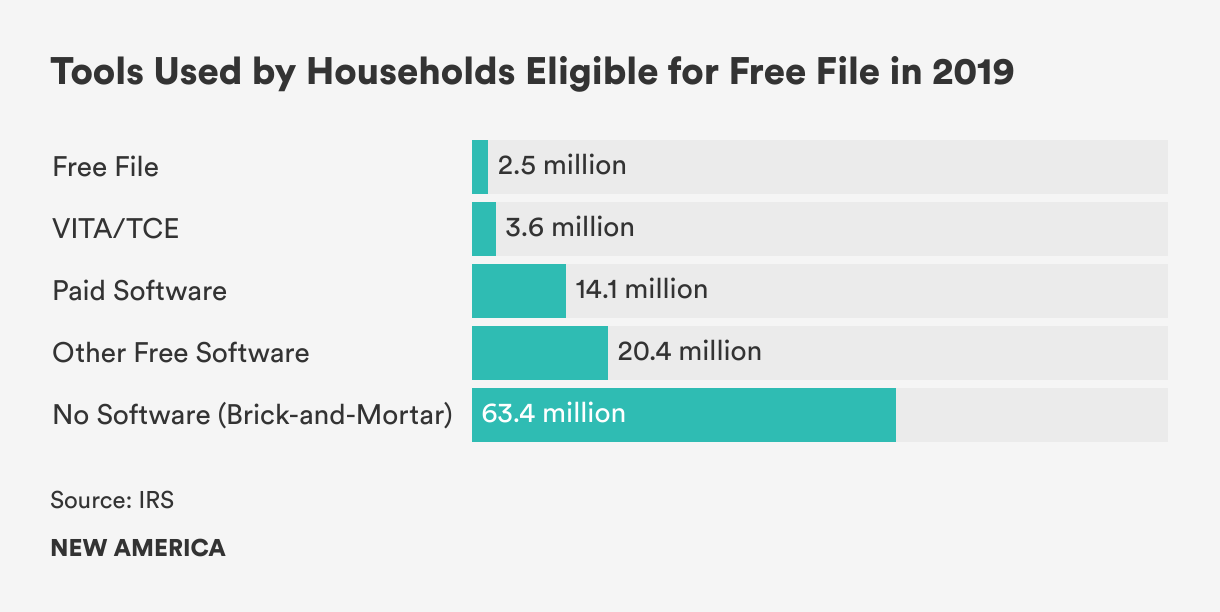
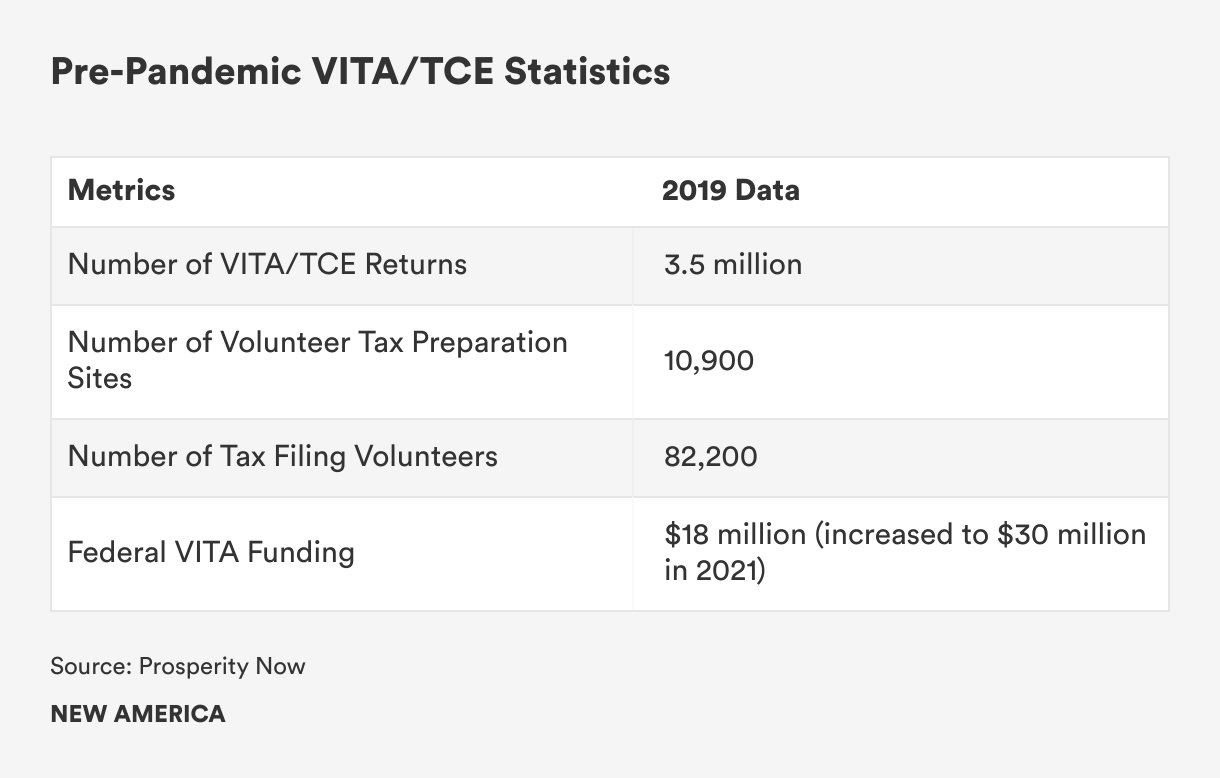
While most low-income Americans who seek in-person assistance use private tax preparers, 3.5 million households have their taxes prepared by IRS-trained volunteers through the IRS-administered VITA program and the TCE program. VITA sites serve individuals who generally make $57,000 or less, individuals with disabilities, and limited English-speaking individuals. The TCE program targets assistance to those who are generally 60 years of age and older, and specialize in retirement questions (although these sites will prepare returns for any taxpayer that meets the VITA requirements). In 2021, the IRS awarded $25 million to 297 VITA grantees and $11 million in TCE grants to 31 organizations. The IRS grants require matching funds from community organizations to fund VITA sites, while TCE does not require a funding match.

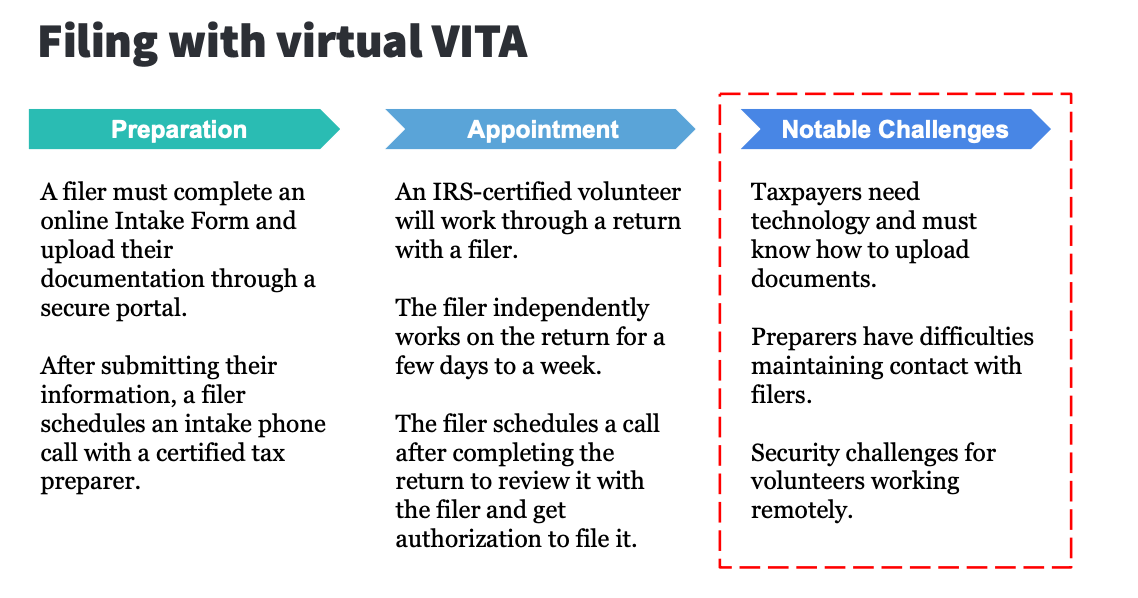
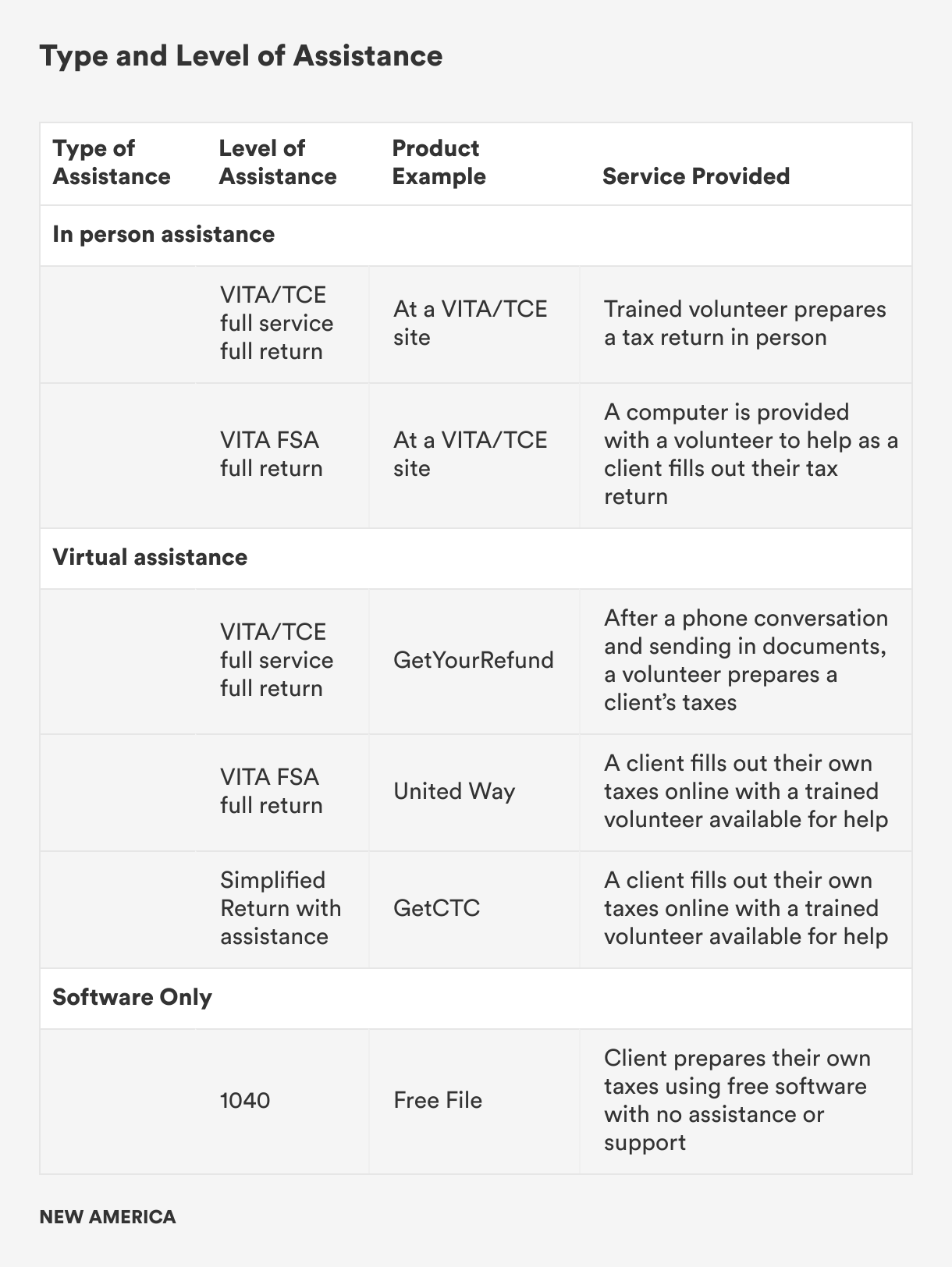
VITA/TCE sites rely on volunteers to coordinate sites and to serve as tax preparers. Sites are typically in person, though some moved online for the pandemic. In addition, Code for America provides infrastructure for virtual VITA and directs people to free tax assistance through GetYourRefund, matching tax filers to VITA sites where volunteers prepare their return. Sites offer full assistance, where a trained volunteer prepares your taxes.
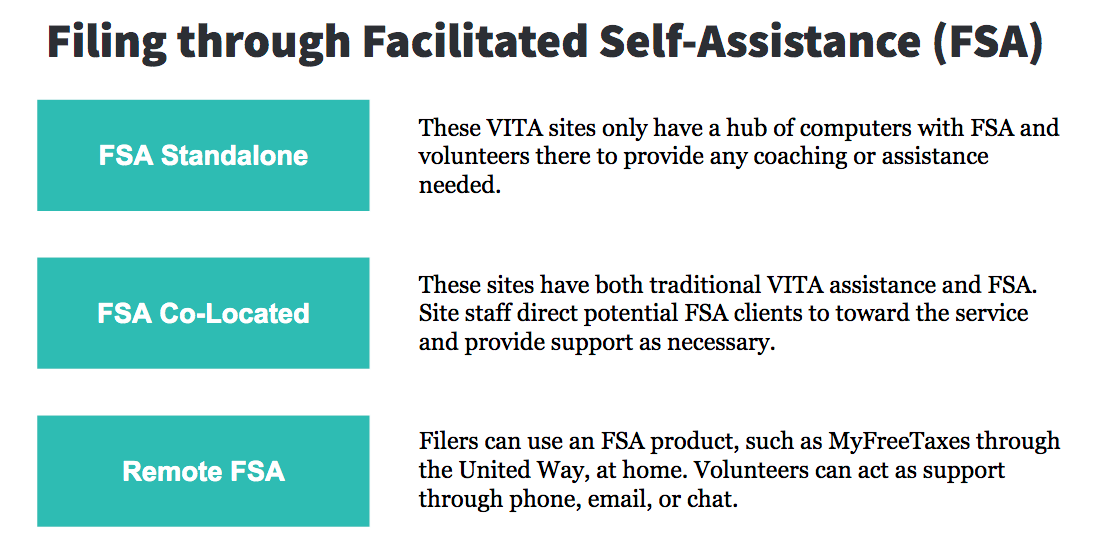
VITA also includes “facilitated self-assistance” (FSA), in which taxpayers use free tax filing software themselves but can get assistance from a volunteer. Some local sites may also separately have paid staff assisting with tax filing, but the IRS does not fund paid staff. These individuals receive the same training as VITA volunteers (and the training can be done virtually), but they do not actually prepare the returns and therefore can be paid. FSA is also offered outside of full VITA sites, for example, by the United Way Worldwide’s MyFreeTaxes service, though an estimated 200,000 were filed this way last year.1
The VITA program is the key government program that provides free, personalized, tax assistance services for low-income families. Volunteers at VITA sites help people save on tax preparation fees, claim eligible tax credits, complete tax returns accurately, and connect to other benefit programs, such as the Supplemental Nutrition Assistance Program and financial coaching.
In 2020 the IRS created an online portal for non-filers to file simplified returns with the IRS to determine if they were eligible to receive Economic Impact Payments (EIPs) and, later, the Child Tax Credit (CTC). In the first round of EIPs, which the Treasury Department began disbursing in April 2020, over 22 million households without 2018 or 2019 tax returns received the benefits either because of the IRS non-filer tool or using information from other government benefit programs, such as Social Security. The non-filer tool has connected eligible households to the EIPs and the CTC; however, non-filers still miss out on other tax benefits, such as the Earned Income Tax Credit (EITC). Nevertheless, the reach and success of the non-filer portal highlight how many people remain outside traditional tax filing channels and the need to provide accessible ways to provide tax benefits to people in need.
Citations
- This is an estimate from multiple providers of FSA assistance. The actual numbers were not available.
III. IRS Data on VITA Programs
The IRS publishes little granular data on the VITA program. For example, there is no public data on the demographics of VITA filers, the cost of each VITA filing in terms of funding, the usage of FSA services as compared to full assistance, and more. In interviews, experts confirmed that no comprehensive public data source exists. What does exist is national annual data on the number of VITA and TCE filings, the number of tax preparation volunteers, and the number of VITA and TCE sites.
Both the number of VITA and TCE returns and the number of tax filing assistance programs have risen since the early 2000s and then dropped precipitously during the pandemic. The rate of growth has slowed in recent years, despite increases in funding in 2007 (to $8 million), 2012 ($12 million), 2015 ($15 million), 2019 ($18 million), and 2021 ($30 million). This tracks with what experts told us: the scale of VITA right now is largely reliant on the number of volunteers and increased funding does not guarantee an inflow of volunteers. One former VITA site coordinator said that to scale, “The first key point is the main variable asset: volunteers.” A government employee agreed, stating that tax filing assistance is an “extremely resource-intensive operation and volunteers are the key component—that’s the whole game.” A non-profit executive added that “getting volunteers is hard in rural and low-income communities,” which are those with the greatest need.

Moreover, despite increases in funding, the number of volunteer tax filing preparation sites has declined over recent years. This also reflects what experts shared—grants have become larger and have gone to larger, established organizations rather than spurring new VITA sites, particularly due to the matching requirement, which might be outside of the capacity of smaller sites.
IRS data also suggests the returns filed by VITA and TCE sites have a high level of accuracy. On the other hand, samplings of returns filed by private preparers show far lower accuracy rates, especially because paid preparers are not regulated in most states. A Government Accountability Office sample found that only two of 19 privately-prepared returns showed the correct EITC refund, and preparers overestimated the refund by more than $100 in 13 of those returns. A large study done of IRS data showed that paid preparers had a 60 percent error rate, due to a combination of both preparer errors and the taxpayer providing incorrect or incomplete information. This is a higher error rate than returns prepared by taxpayers themselves. In 2008, the U.S. Treasury Inspector General for Tax Administration tested 28 paid preparers and found that just 11 prepared an accurate return.
Citations
- This is an estimate from multiple providers of FSA assistance. The actual numbers were not available.
IV. Current Challenges
Through desk research, IRS data, and expert interviews, we identified three stages that posed difficulty for people to file their taxes, and within those stages, we broke down the different challenges people face: 1) Making sure Americans know that refundable credits are available (outreach, data, client confusion and lack of trust); 2) Getting people to the right door (lack of coordination, VITA rules); and 3) Getting people through the tax filing process (difficulty scaling, the pandemic). An investment in all three is required to ensure Americans receive the assistance they need, and maximize the benefit of refundable tax credits. If there is significant outreach but insufficient assistance, or insufficient outreach yet an increase in assistance, there will still be an uptake gap. Therefore, it is essential to scale up all three.
Getting People to the Door
1. Outreach
Government and non-profit organizations spend millions every year on outreach to encourage participation in tax-administered benefit programs, such as the EITC. Nevertheless, take-up rates on these programs remain low. Current outreach efforts are mixed in increasing take-up for the EITC and CTC.
Multiple organizations have conducted outreach experiments to assess which strategies would best improve participation. The California Policy Lab conducted an experiment to “nudge” eligible households to enroll in the state and federal EITCs, and found little difference in tax filing (however, they did not have the option of simplified filing). They did note that government outreach was moderately more successful than outreach by community organizations. In another experiment, researchers found that “IRS letters about free tax preparation modestly increased filing.”
Recent outreach sending non-filers to the Code for America CTC portal (GetMyCTC) provided additional insights. This outreach clearly demonstrated the importance of government outreach combined with actionable information and a simplified process. The biggest driver to the Code for America portal was messaging and advertisements from the White House, Social Security Administration, states, and cities, indicating that trusted government messengers with a connection to assistance can move the needle. Many interviewees mentioned the importance of a government source of information, as the IRS can be intimidating, and knowing that the information is correct is essential. Combining government outreach with validation from community-based organizations could be extremely effective. Additionally, the simplified process lowered the barrier to filing for many families, indicating that outreach combined with a simplified process is a powerful intervention for increasing uptake.
Moreover, evidence and experts point to the need for outreach tailored to the needs of the community. The Massachusetts Association for Community Action ran six Super VITA sites, which included other services, such as financial planning assistance, for clients. A review of these six sites found a need to “[c]ustomize outreach activity to draw attention to additional services available at the VITA site and target outreach to non-traditional clients,” which could include access to benefits. A non-profit leader we spoke with agreed, adding that “outreach needs to be tailored to each community and their cultural norms; it needs to be creative, too.” Another non-profit leader emphasized the need for outreach to come from a local partner that has credibility and trust in the community.
One former VITA site coordinator noted success from embedding tax filing assistance programs with other service providers, such as health clinics or HeadStart. Research suggests that these can be very helpful, but these interventions are not operating at scale. Furthermore, non-profit leaders emphasized the need for relying on known and trusted channels, such as multilingual radio stations, as well as including PTAs and faith-based organizations, to make warm introductions for clients to tax filing assistance programs. One community non-profit executive conveyed the importance of building trust over time, explaining that it isn’t simply enough to be around during tax filing, but to be embedded in the community over time. This trust builds when volunteers “meet [clients] when they’re available [with] expanded hours of services, expanded days of services, being around year-round, [and] patience.”
2. Lack of Data
As mentioned above, there is a significant lack of data regarding the VITA program in general. However, there is also a dearth of data when it comes to non-filers, who would be the target for better outreach. For example, the IRS and Census should publish the numbers of actual non-filers and where they are. While these data would not be perfectly accurate, by combining data from W2s, 1099s, and 1095s with counts from the Census, they could create a reasonable estimate of where the gaps are in filing. These data could be updated throughout the year so that non-profits, states, cities, and VITA can better target their outreach on an ongoing basis.
Additionally, the IRS does not provide information on where tax filers are in the process, and where their refund is. Publishing this information would help tax filers understand the process, and improve customer experience.
3. Client Confusion and Lack of Trust
Experts overviewed three broad challenges clients face when seeking tax filing assistance, and also discussed unique issues for specific communities, such as immigrants and Native Americans. One source of frustration for clients is determining eligibility for tax credit programs. For example, determining whether a child constitutes a “qualifying child” for an assistance program can be a challenge. In addition, income documentation required for some tax credits can prove difficult to produce, especially for gig economy workers. Even though VITA could help taxpayers understand and navigate these eligibility questions, these questions often stop taxpayers from seeking assistance. IRS online tools can also be difficult to parse because of legal jargon, so taxpayers may not understand which benefits they could receive by filing.
Immigrant and Native communities also face unique challenges to tax filing. Immigrant families, especially mixed-status families, must navigate whether they qualify for certain programs, balancing immigration questions with tax law. They consequently need access to volunteers who are multilingual and who understand the intersection of tax and immigration law.
Similarly, Native communities face barriers that prevent them from filing taxes through VITA. A First Nations Development Institute report on VITA sites in Native communities highlighted several problems: Geographic isolation, low volunteer retention rates, economically distressed communities, and distrust of the federal government. In 2007, the First Nations estimated that in some Native communities, as many as 70 percent of eligible filers failed to claim the EITC. Another issue for VITA sites in these communities is that funding does not go as far. The Oklahoma Native Assets Coalition, Inc., a nationally-serving Native non-profit that administers the national Native EITC/VITA Network, shared that due to a number of Native families not having adequate broadband access and newer devices to complete tax filings online, the digital divide is another barrier to tax filing during the COVID-19 pandemic.
In Native communities, there must be increased financial support for in-person and remote drop-off services, provided by Native VITA programs that Native families trust, for those who cannot scan and send their tax materials to remote VITA preparers. Over the past few years, the Native VITA programs that remained open have provided innovative remote and socially distanced tax assistance services that meet the needs of their communities. For Native-administered VITA programs, especially those serving Native families in rural areas, there is great need for increased funding to cover costs of, for example, a Native VITA program flying their staff and all their VITA equipment to remote Alaskan villages to serve families that are otherwise not receiving VITA services.
Taxpayers also commonly raise mistrust and fear of the government as a reason to avoid tax filing. The IRS is an intimidating agency, and the threat of an audit has a chilling effect. One VITA site coordinator stated that VITA would be far more effective if it could “immunize against the audit process to increase trust.” While this seems impractical, it demonstrates the fear taxpayers have of audits and the difficulty organizations have rebuilding trust. Beyond the IRS, taxpayers also have little trust in sustained government benefit provision. Changes in administrations and political rhetoric around benefit programs drive taxpayers away who do not believe programs will exist or will serve them.
Finally, VITA and Free File products are unable to provide clients with additional services, which means that many families choose for-profit providers. For example, Refund Anticipation Loans, though predatory, are very attractive products for many families accessing tax credits, particularly with delays at the IRS. If IRS services were faster and more transparent, the appeal of these products would decrease. Overall, our interviews highlighted that many tax filers are in need of real assistance due to opaque government processes, and that sometimes companies like H&R block are more accessible and trusted.
Getting People to the Right Door
1. Lack of Coordination
Outreach, according to one expert, is most effective when messengers are “aligned on what our call to action is and what solution we’re providing.” The expert noted that the IRS does not promote facilitated self-assistance (FSA) as a standalone product, and the White House recently promoted GetCTC, not VITA sites. At the time, this made sense because many VITA sites had already closed. However, during tax season, households should have access to a broader suite of services if they want them. A central screening tool that all organizations could link to would enable outreach to be more trusted, cohesive, and effective. Additionally, allowing tax filers to switch stream mid-process and upgrade the level of assistance being provided would be helpful for those who get stuck.
2. VITA Rules
Some VITA rules actually inhibit effectiveness for low-income families. Requiring tax filers to provide a Social Security card as identification is a far higher barrier than other programs have, and many people do not have theirs on hand. Allowing a driver’s license to be used as identification could help. Matching funds, which will be discussed in section 6, are another barrier to increasing VITA access.
Getting People Through the Process
1. Difficulty Scaling
Experts suggest that three factors limited VITA sites from scaling: the volunteer model, IRS software, and funding. First, the current VITA program relies on volunteers, who require both training and certification. Increasing the number of volunteers and retaining them proves challenging, especially in communities that need the most assistance as volunteers, one expert noted, generally are university students, middle-class professionals, or retirees. In addition, the number of volunteers dropped significantly during the pandemic, and it is unclear how many will return. Many volunteers struggled to adapt to hybrid VITA assistance as sites went online during the pandemic.
Second, multiple experts pointed to the TaxSlayer software provided by the IRS for FSA as a pain point because of its inability to offer a varying, correct level of service and because of inaccessible legal jargon. Though this software is an improvement upon prior options, it still is not on par with the software paid preparers offer. In contrast, paid tax preparation services are better able to triage their services through their software and use language that is more accessible for taxpayers. One non-profit leader said a platform must utilize “non-legalistic, non-code language.” Unlike the IRS, “TurboTax has a great interactive software product that works really well and cuts through Mumbo Jumbo.” Another spoke to the Code for America tool being successful because it “didn’t use IRS jargon [or] get bogged down in government bureaucratic language.” Experts said increased funding could be used to create a new IRS-owned software, which could then be upgraded as needed.
Lastly, the necessity of matching funds in VITA poses an important challenge. Smaller organizations are often unable to scale donations quickly, and are therefore unable to absorb additional funding. Importantly, TCE sites are not required to provide matching funds.
2. Pandemic
The pandemic created novel problems for VITA that impacted both volunteers and clients. As one expert put it, “VITA stands for volunteers and the whole volunteer pool has really dried up.” As VITA services moved online, volunteers struggled to adapt because of digital literacy and technological resources. As sites began opening up, problems still existed. Some volunteers felt uncomfortable working in person, and did not return. The necessity for social distancing during the pandemic also decreased the capacity of VITA sites, which already tend to have overwhelming demand. As a consequence, both the number of returns filed and the number of volunteers plummeted during the pandemic. Similar problems emerged for clients. As VITA services moved to Zoom or through the phone, clients needed their own devices and Internet access. Even if they could access help, many clients struggled with digital literacy.
Beyond VITA, the pandemic also hampered the operations of the IRS more broadly. Backlogs in tax return processing built up, and IRS call response rates dropped as the IRS workforce had to adjust to COVID protocols. In addition, the IRS struggled to ramp up its employment to deal with backlogs and faced an unprecedented rate of retirements. Although some of these problems will come and go with the pandemic, COVID exposed systemic areas for reform, such as creating an adequate IRS workforce, reducing the need for manual tax return reviews, and modernizing systems.
Citations
- This is an estimate from multiple providers of FSA assistance. The actual numbers were not available.
V. Recommendations
With these findings, we have several broad recommendations for additional tax filing assistance funding.
Simplifying the Process Overall
The single most important improvement would be simplifying the process of tax filing overall. This would mean collecting only data that the IRS does not have, like household composition. Filing taxes is difficult and intimidating, and as the tax code becomes an increasingly important delivery mechanism for benefits, it is essential that this process become more accessible. Simplified filing during the pandemic was a crucial first step. Using the GetCTC tool, over 115,000 households, about a quarter of which had never filed taxes before, also successfully filed their taxes, claiming around $440 million in tax benefits. However, that simplified filing option is not currently available. Bringing back the simplified filing portal, and incorporating additional benefits for those who do not have a filing obligation (such as the EITC, which the recently released revenue procedure does), would be an important step. Moreover, providing a public option for tax filing for all Americans, as we have previously argued, should be the long-term goal. Despite existing programs, millions of Americans do not receive the assistance they are entitled to and need, and simplifying the process would decrease the amount of assistance required while simplifying interactions with the IRS.
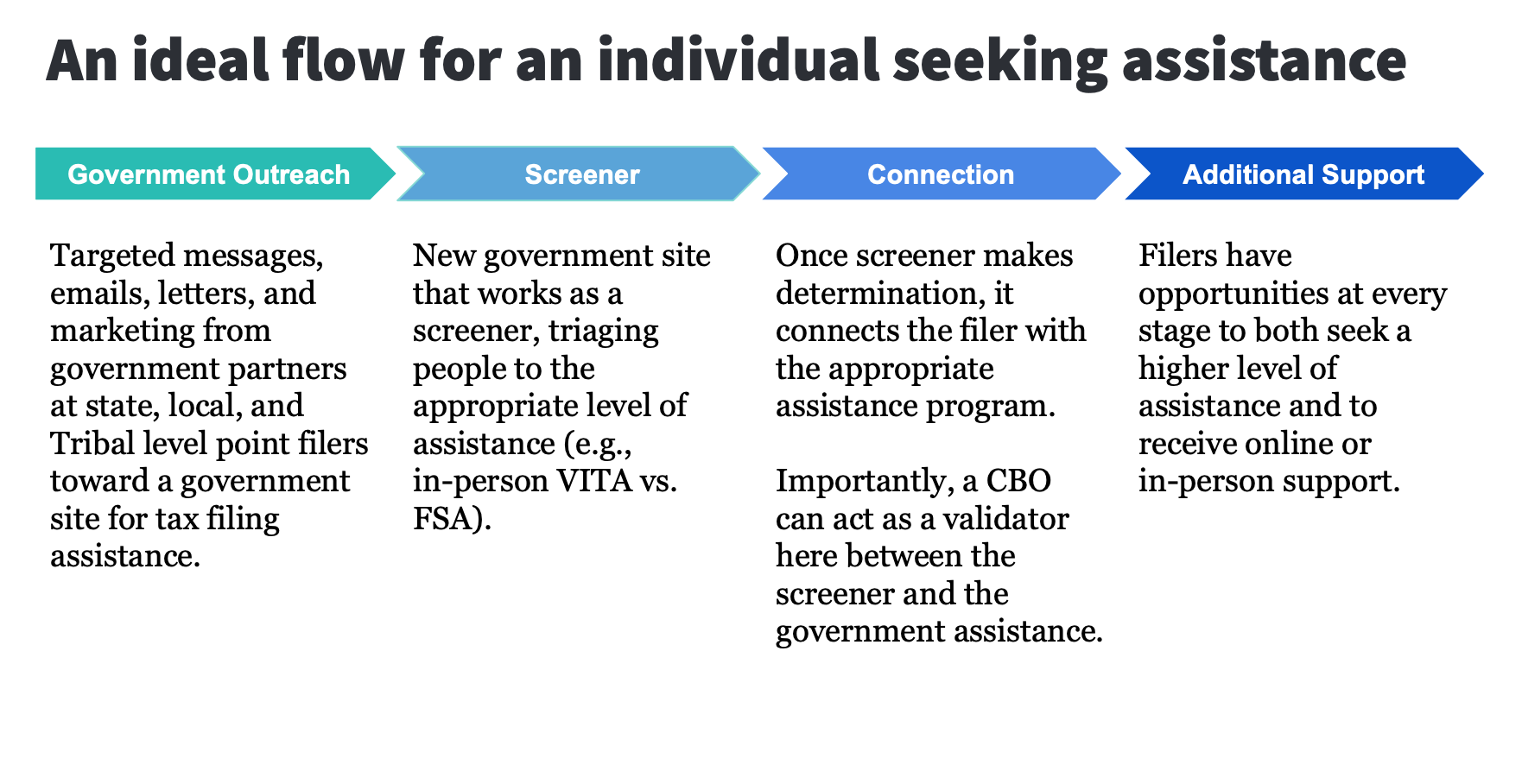
However, for the current tax season, before simplified filing is available, some smaller changes could help improve the process for tax filers. In the figure below, we outline how the process could work to address many of the challenges in the previous section, each step of which is laid out in detail in the following recommendations.
Getting People to the Door
- Improved Outreach: Research suggests that simplifying the return process for tax filing paired with text outreach is more effective than mailers that simply seek to raise awareness. The most effective outreach this past tax season consisted of state government agencies texting all of their users clear, actionable information about tax filing. This indicates that increased data sharing and outreach across programs could be a powerful tool for increasing uptake. In addition, funding could go toward embedding tax filing assistance programs with other social programs, including Head Start and legal aid bureaus, that the community trusts.
- Data Collection and Metrics: The IRS should collect nationwide VITA data, including on demographics of filers and the average costs of filing in different communities. Such data would better enable the IRS and VITA to find areas with the most need and target them. Data collection could also work to find best practices and share them in reports.
Getting People to the Right Door
- New Front Door: One expert, who runs a call center helping with tax filing assistance, said, “What you need is a trained group of intake specialists to help do the triaging,” and the, after triaging, use “trained tax preparers that give their time, talents, and efforts to tax law application.” Scaling such a call center would be challenging, and the government could instead aim to have a better online front door. Either GetYourRefund or a new online portal must better triage people to the right level of services. The GetCTC tool provides a useful example of a triage/screener, which funnels those who qualified for GetCTC into the tool and could point others toward more appropriate resources.
VITA sites are overwhelmed and lack the ability to scale their volunteer base. By relying on a better triaging system, VITA can best serve those taxpayers that need the most assistance. Such a system can also point taxpayers with greater savvy or those who have familiarity with tax filing to utilize FSA. Providing a one-stop-shop for all services, whether it is simplified filing, FSA, VITA, or Free File, and allowing clients to channel themselves to the appropriate level of assistance and then “upgrade” if necessary would improve outreach by simplifying communications and save resources by providing only as much support as is necessary. It is essential for such a one-stop-shop to be a government organization as the consolidation of outreach efforts and trust in government resources lead to success. More broadly, both the tax filing process and tax benefit programs are government-run, and the government should play a leading role in helping Americans access both.
This New Front Door solution is not for everyone though. While increased technology and referrals for callers to use online portals can work for those with broadband access and updated devices that allow them to access such online assistance, there must be support for local VITA programs that serve marginalized and rural residents that do not have adequate access to broadband, home scanners, and any device but a flip phone. Until there is universal broadband access and there are mechanisms for all filers to have devices that will allow them to file their taxes online, there has to be VITA support for in-person and remote drop-off sites for families to receive tax services.
Getting People Through the Process
- Expanding FSA: Only about three percent of eligible households utilize VITA services. One expert said that across the nation, probably only 200,000 households utilize FSA. Although FSA is not the right level of service for every household, FSA can scale if targeted to people with digital skills (for example, the 35 million people who pay for online tax software). FSA is currently offered by United Way and Code for America at the national level, as well as at local VITA sites. Expanding how people access this program could increase uptake, and advertising it along other services would increase awareness. Moreover, as those providing support through FSA are not preparing tax returns, they can be paid, indicating that additional funding could be used to ramp up this offering quickly, and with training now online, potential assisters could get paid to do training and provide assistance from their own home. If people with greater digital literacy and more confidence in their filing ability utilize FSA, that will open up VITA sites for those with greater need for full assistance. Additionally, those who currently pay for online tax prep could also benefit from this program, as they would be able to save more of their refund.
- More Flexibility for Matching Funds in VITA: Matching funds are harder to access for some organizations than others. For example, small non-profits that serve particularly disadvantaged communities, such as rural areas, Native, and immigrant communities, have greater difficulties matching funding. However, these are the communities that would most benefit from these interventions. Increasing flexibility in matching funds, including taking into account expenses and needs, would do much to increase access.
For example, while it is currently permissible to use volunteer hours as matching funds, not all sites do, and the amount assigned to each hour of labor varies. If the IRS assigned a standardized hourly rate in line with the tax accounting firms (approximately $200/hour), this would increase the capacity of VITA sites to absorb new funds while also more accurately measuring their value.
- National Digital Infrastructure: Investment could close the digital divide and improve digital literacy. The need for digital infrastructure is greatest in communities with the most need, such as Native communities.
Citations
- This is an estimate from multiple providers of FSA assistance. The actual numbers were not available.
More About the Authors

Cassandra Robertson

Samarth Gupta
Issues
Programs/Projects/Initiatives
Related