Image by author
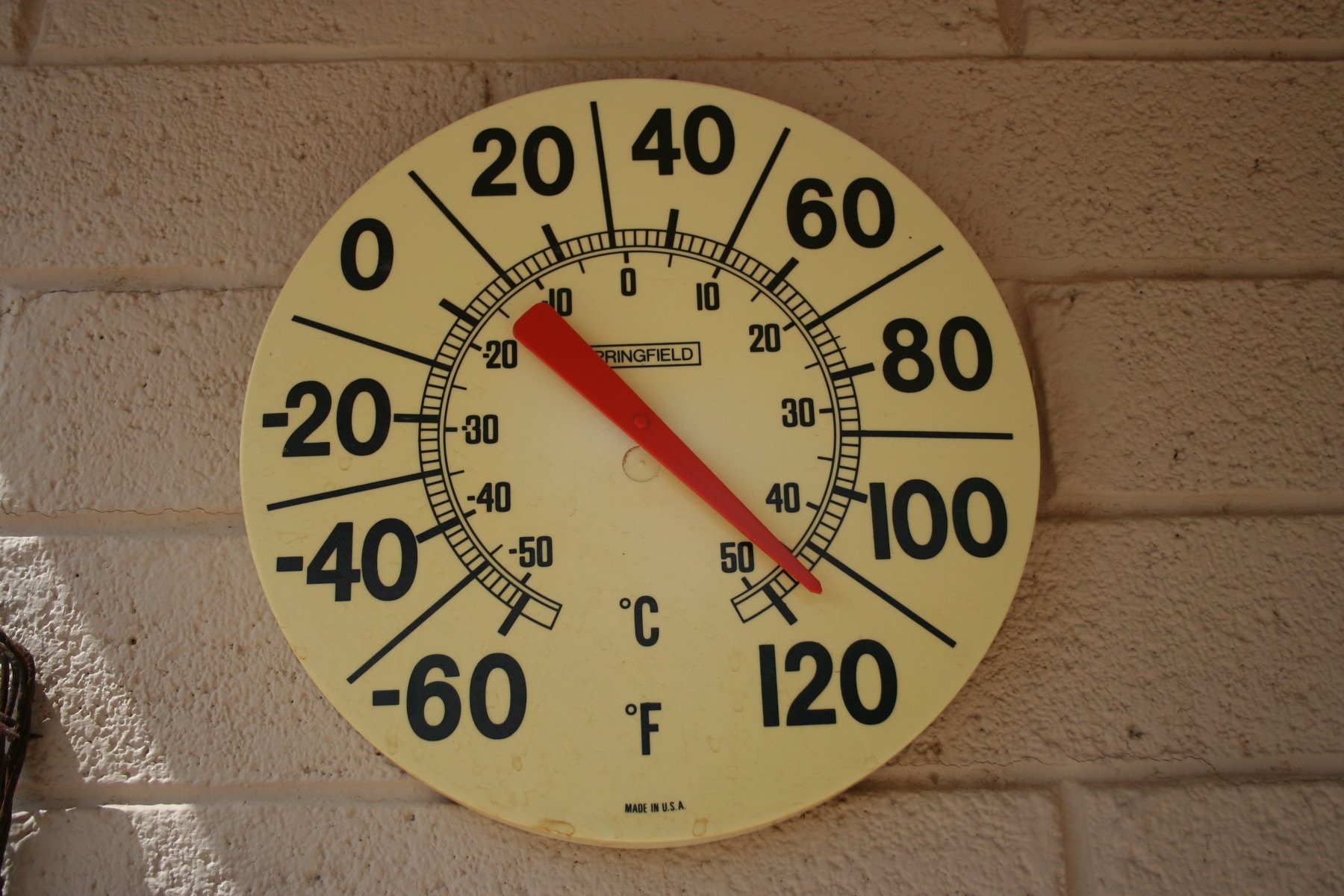
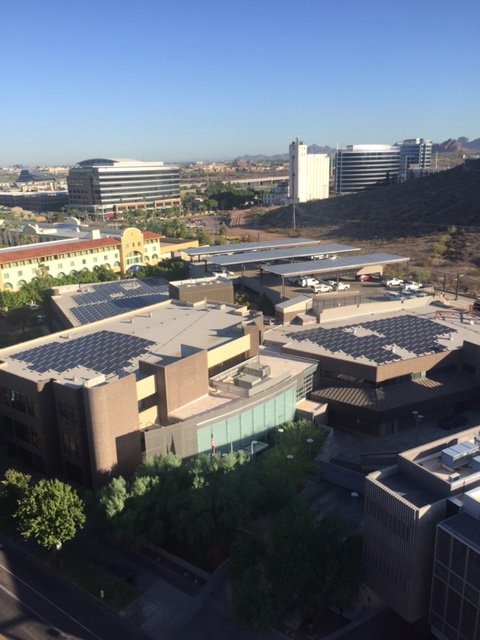
Morning dawned bright and early on the rooftops of Tempe, Arizona on July 14, 2016. The good news: These photos are visual proof of Arizona State University’s ambitious commitment to sustainability. In addition to green roofs and other conservation measures, the university has more than 24 megawatts of solar power, the largest such commitment by any university in the country.
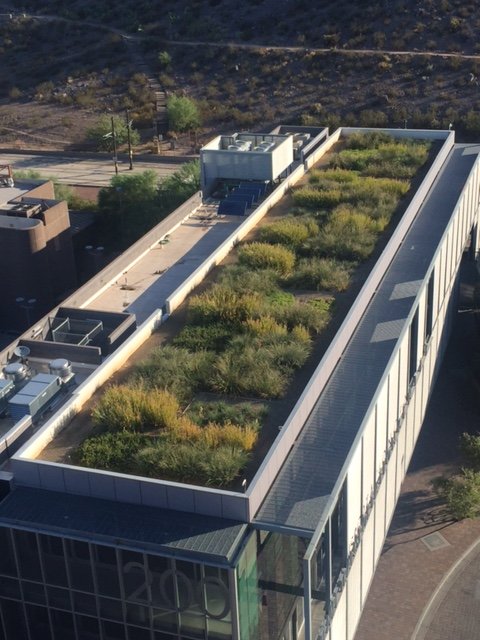
Image by author
The bad news: Even at 7:00 am, when I took these pictures,
it was already 98 degrees, and the day would peak at 111 degrees. Last month,
record high heat in Phoenix crested at 118 degrees on June 19th. As one local
told me, they refer to these as “misery days,” which have been on the
rise since 1970. Tolerance for high heat varies from person-to-person, but basically any
temperature over 90 degrees fahrenheit puts most people at risk for heat
exhaustion, and over 105 degrees all but guarantees it for prolonged exposure.
Between the urban-heat-island effect of this fast growing city and climate change, some scientists call into question the long-term sustainability of Phoenix. And while Phoenix is not the hottest place in the nation (that distinction belongs to Death Valley, CA), it the nation’s 13th largest city, with a population of 4.3 million (Death Valley’s population is 263). Protecting the city’s future, especially for those most vulnerable to heat stress (children, the elderly, and low-income), is an increasingly urgent challenge.
Phoenix is not alone, of course. Temperatures are rising all over the world, to the point where some areas may become uninhabitable by the end of the century, if not sooner. Although misery days will certainly affect prosperity and stability around the globe, there is little research to date on the relationship between human and/or hard security and heat stress.
More About the Authors
Related
Climate Security: Building a Community of Practice

Climate Change, Peace and Security, and the UN Group of Friends

Infrequently Asked Questions