Vicki Shabo
Senior Fellow for Gender Equity, Paid Leave & Care Policy and Strategy, Better Life Lab
Research shows viewers want to see child care depicted honestly in TV and movies. Here’s how writers can upend tired tropes.
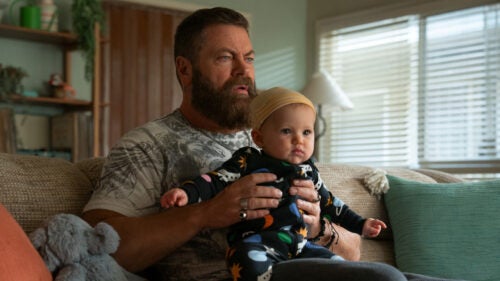
Child care is a common pressure point in everyday families’ lives, yet the complex challenges and little details of securing it are often left out of TV and film storylines. New America’s Re-Scripting Gender, Work, Family, and Care initiative is working to bring more authentic stories to our screens by providing writers, showrunners, and creative executives with insights and advice to tell the true-to-life stories that we know audiences want.
This article offers tips to help entertainment storytellers identify, complicate, and subvert seven harmful tropes related to parents, children, child care, child care providers, and early educators.
Want to learn more about telling better care stories? See our Re-Scripting Early Care and Learning On Screen guide.
Parents, children, and early educators can all be fascinating, complex, relatable characters, whether they are central to a story or supporting it. Language and depictions that make care invisible or an afterthought, treat child care as “babysitting” or “daycare,” and flatten the emotional lives of parents, kids, and caregivers are missing key moments of connection with audiences and opportunities to shift cultural narratives about early care and learning.
Trope or stereotype to avoid: Parents give no thought or attention to child care.
Alternative: Active conversation, negotiations, and logistics show the interplay between work and care.
Why? The vast majority of parents work outside their homes, and they cannot go to work without considering child care. This care is often expensive and hard to find, especially if care provided by a parent, friend, family member, or neighbor isn’t feasible or when work schedules and care options do not easily align.
Trope or stereotype to avoid: Children on screen or off-screen have no needs or their needs are discounted or used solely for comedy.
Alternative: Children are cared for physically, socially, and emotionally. Even discussions about their care or small interactions in the background are better than none at all.
Why? Children’s brains develop rapidly in their earliest years, and interaction with caring adults is key. Providing examples of parents and paid caregivers engaging thoughtfully with children can provide a powerful example to normalize high-quality care and inspire empathy and understanding in people who do not have children.
Trope or stereotype to avoid: Child care costs are discussed as a percentage or multiple of a mother’s wages in a household with multiple working parents.
Alternative: Child care costs are framed as part of the shared household budget or in relation to other essential costs, such as food, utilities, or housing.
For specific details and data about child care costs and other household expenses, consult the following sources:
Why? Positioning child care costs solely in terms of a mother’s income, without any reflection, sarcasm, or commentary, reinforces the idea that a mom is the only alternative to paid child care. It also suggests a mom’s work is optional if the cost of care is more than the mom’s pay. Using other comparisons, for example, to housing costs, food, or other things a family might want or need positions child care as a significant core expense—one shared by the entire household.
Pointing out the long-term costs to a woman’s financial stability, job prospects, and retirement can be a complicating and interesting addition to a story.
Trope or stereotype to avoid: Moms are the default caregivers without conversation or explanation—cutting back on hours, quitting jobs, or leaving work to manage unexpected child care needs or doctor’s appointments. Conversely, dads are inept, lazy, or just babysitting when caring for their kids.
Alternative: Parents discuss who is watching the kids, doing child care pickup, taking a sick day, or changing a job schedule when child care needs or costs shift.
Dads share the same levels of joy and competence as parents and have equal responsibilities in child care.
Why? Creatives can help normalize the expectation that moms and dads are equally suited to care for children and reinforce many younger men’s interest in being more engaged with their children.
Trope or stereotype to avoid: Stay-at-home parents are essentially vacationing and shown as frivolous, disorganized, or inattentive to their children. Moms are focused on other things, while dads are bumbling. Alternatively, parents are perfect caregivers and household managers who either never experience stress or exhaustion or consider stress and exhaustion to be virtues.
Alternative: Stay-at-home parents face highs and lows, caregivers teach and nurture children rather than just babysitting, and domestic labor is part of the stay-at-home parent’s role.
Why? Normalizing the domestic labor of at-home parents as work, and showing the executive functioning and emotional demands of stay-at-home parenting, reinforces the value of unpaid care.
Trope or stereotype to avoid: Paid caregivers are depicted as incapable, unskilled, comedic foils. Alternatively, they are invisible or simply there to pass the time while a parent is working.
Alternative: Trained professional workers are knowledgeable about children and development, care about what’s best for kids, and offer wisdom, support, and community for overwhelmed and stressed parents. They have their own families and personal lives and struggle with managing work and family in jobs that are often high-stress with low wages.
Why? Bringing visibility to how child care is labor and a professional job helps shift culture toward recognizing its societal and economic value.
Using the term “child care” rather than “daycare” helps to underscore that a care worker is actively teaching and nurturing a child rather than passing the time and watching the clock.
Trope or stereotype to avoid: Conflating full-time social and emotional care and teaching with “babysitting.”
Alternative: Early childhood care is dedicated, professional work that includes teaching social and emotional skills, nurturing, and physical care. In-home caregivers are also full humans with their own lives, concerns, and personal and family needs.
Why? Professionalizing the value of in-home care for children and treating in-home caregivers in holistic ways with respect to their own lives and circumstances can help to shift audience expectations around safety, wages, and benefits.
Senior Fellow for Gender Equity, Paid Leave & Care Policy and Strategy, Better Life Lab