How Pre-K Is Funded: A New Resource from the Early Education Initiative

In September the Early Education Initiative added pre-K data from the state and school-district levels to the Federal Education Budget Project database — already the only comprehensive, centralized database for funding, demographic and outcome information for every state, school district and higher-education institution in the country.
The data release was accompanied by a report, Counting Kids and Tracking Funds: Falling Short at the Local Level, which reported a severe lack of reliable and comparable data on American pre-K programs.
Alongside the release of the data are new background and analysis pages attached to the FEBP database. These pages describe the sources and structure of pre-K funding, as well as provide information and context for the specific federal programs that allocate funding for pre-K.
“Pre-K Funding from State and Federal Sources,” for example, provides a general overview of the various public-funding streams for pre-K. The largest sources are state-level funding, federal Individuals with Disabilities Education Act (IDEA) pre-K funding and Head Start funding. Other federal funding sources derive from Title I (for socioeconomically disadvantaged children) and Temporary Assistance for Needy Families.
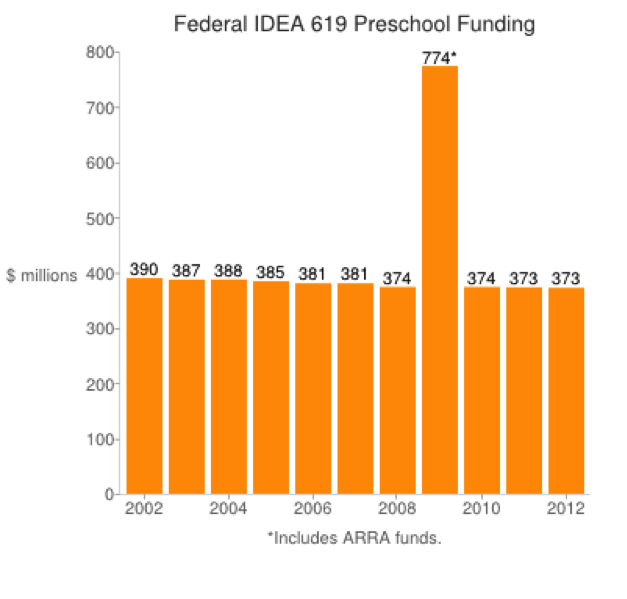
The background page examines the role of the states in publicly funded pre-K. With help from data collected by the National Institute for Early Education Research (NIEER), we break down how many states have pre-K programs, as well as how many of those statewide programs are full-day. The page also discusses the role of community-based organizations in administering pre-K.
Whether you are a pre-K expert or new to the pre-K space, these background and analysis pages serve as a valuable resource on the ins and outs of public pre-K funding. Other background pages include:
More About the Authors
Issues
Programs/Projects/Initiatives
Related

Confronting Harmful Federal Disability Policy in Health and Human Services

Federal Early Education Update: March 2026
A Bureaucratic Shakeup Threatens Future Child Care Research