
Jeremy Ney
Author of “The Opportunity Map”
The CHIPS Act poured millions into building biomanufacturing hubs in the Midwest. The reductions in inequality are finally appearing.

Jeremy Ney is a former economic policymaker at the Federal Reserve. He writes the best-selling Substack, American Inequality and teaches at Columbia Business School. This is a guest post for New America’s Future of Work & Innovation Economy initiative. All positions are those of the author.
An industrial realignment is taking shape in the economies of the Midwest. Driven by federal investments through the CHIPS and Science Act and the U.S. Economic Development Administration’s (EDA) $500M Tech Hubs Program, emerging biomanufacturing hubs are sprouting far beyond traditional elite coastal enclaves.
Crucially, the Tech Hubs programs along with other initiatives created under CHIPS, such as the National Science Foundation’s Regional Innovation Engines program, explicitly mandate that regional hubs connect high-tech growth directly to non-traditional, historically underserved talent pools. To fulfill this promise, biomanufacturing clusters are turning to local technical and community colleges. By bridging the gap between low-income, peripheral urban neighborhoods and advanced laboratories, these two-year institutions are turning industrial strategy into upward mobility.
In Wisconsin, the federally designated Wisconsin Biohealth Tech Hub illustrates how technical colleges serve as economic elevators. Spearheaded by a coalition including Madison College and Milwaukee Area Technical College, the Actualizing Biohealth Career (ABC) Pathways initiative targets displaced workers and underemployed residents from low-income urban tracts.
The ABC Pathways project is an initiative to recruit and train thousands of new workers to position Wisconsin as a regional biohealth tech hub. ABC has committed publicly to hiring one in three workers from minority communities and spearheading programs for underserved youth to explore new careers and ultimately engage in a “learn and earn” model. The local colleges partner with regional workforce boards like Employ Milwaukee and the Workforce Development Board of South Central Wisconsin to conduct direct outreach in high-poverty urban census tracts, recruiting adult learners out of low-wage shifts or long-term unemployment.
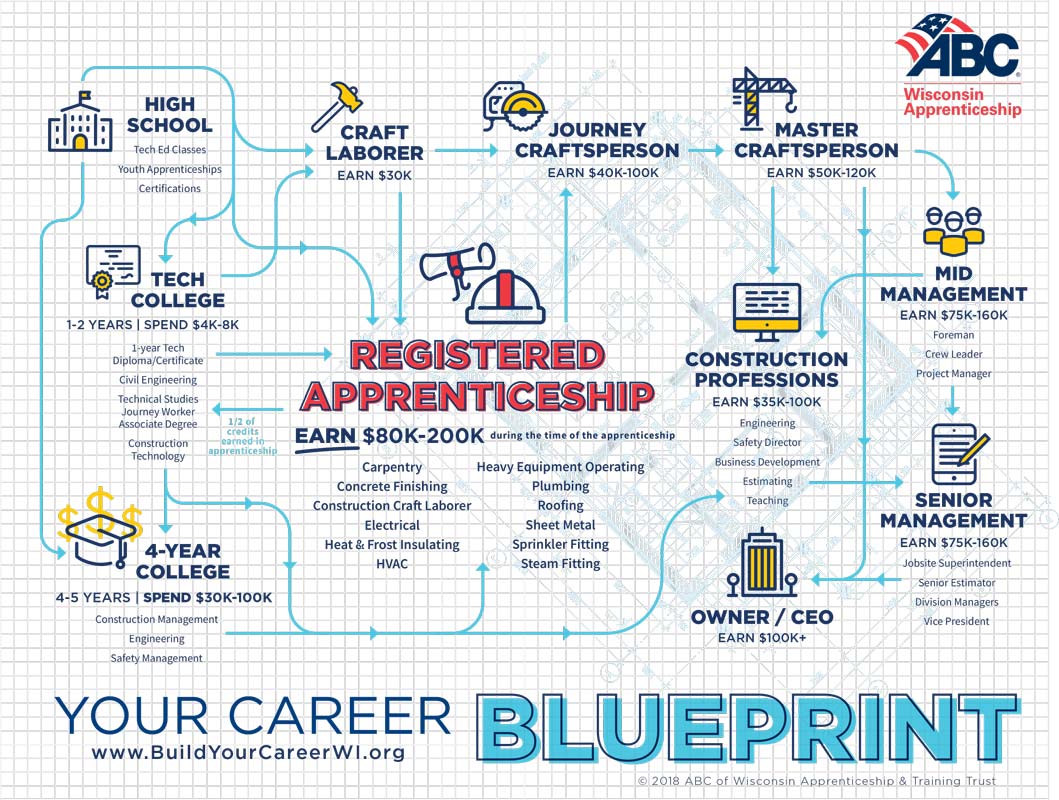
By substituting traditional four-year degree barriers with short-term, stackable credentials and paid apprenticeships, these institutions offer a direct route out of wage stagnation. Over the next decade, the consortium projects the creation of 30,000 direct biohealth jobs and $9 billion in regional GDP growth, demonstrating that equity and high-tech manufacturing can scale together. The average wage for these roles is expected to be $96,000, nearly 50% higher than the national average.
Similar regional dynamics are unfolding in neighbor states.
Indiana is leveraging institutions like Ivy Tech Community College to build a biomanufacturing pipeline. After the U.S. Chamber of Commerce found that Indiana was grappling with one of the nation’s worst workforce shortages, with only 72 available workers for every 100 open job positions in the state, Ivy Tech Community College received funds from the CHIPS Act to launch a biotech manufacturing hub.
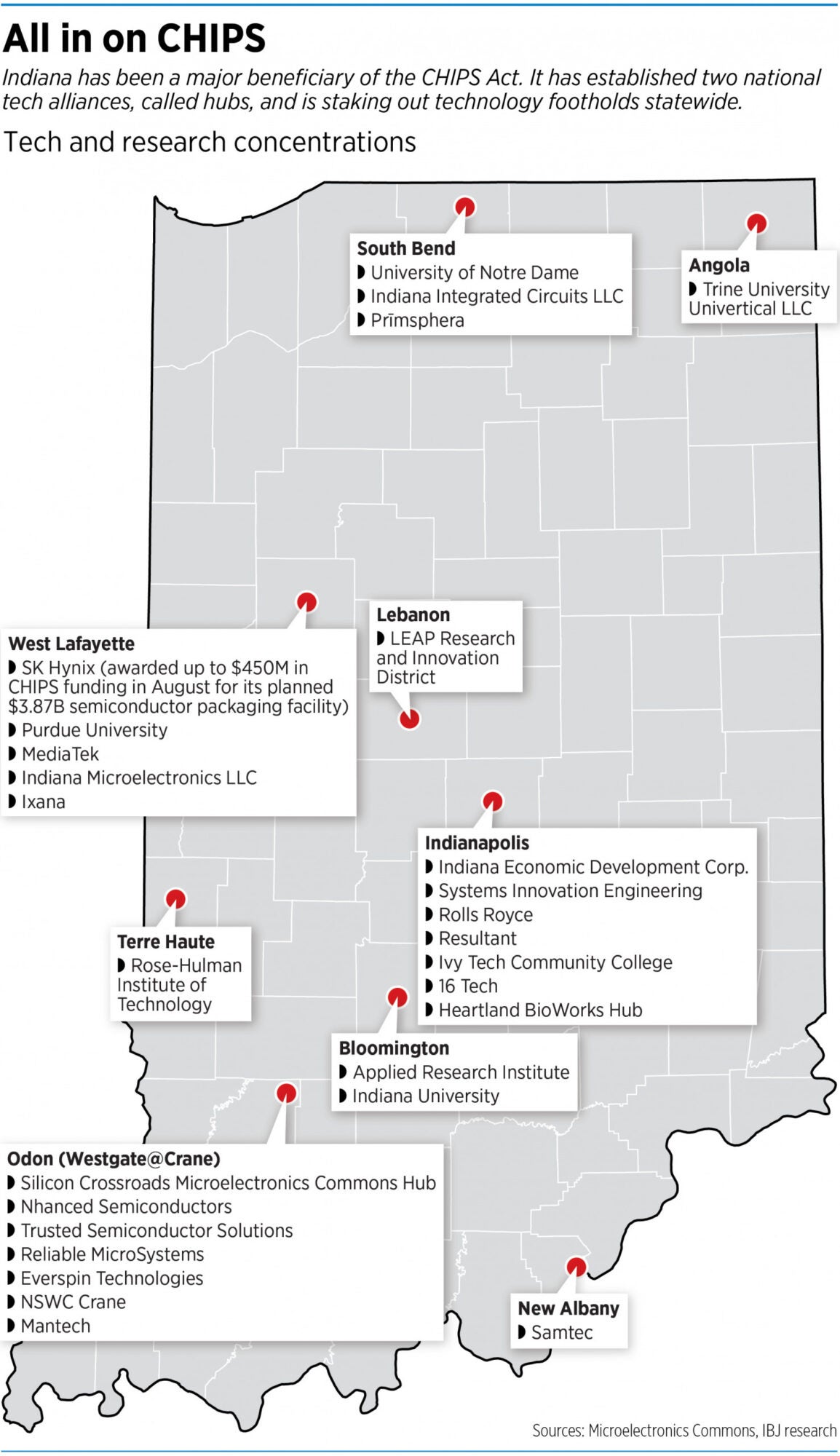
The Indiana community college’s practical lab certification programs recruit directly from historically disenfranchised neighborhoods in Indianapolis and surrounding industrial centers, ensuring local populations benefit from the state’s expanding biologics sector. The Heartland BioWorks Tech Hub is on track to upskill 1,000 technicians in its first two years of operation and its youth outreach program will offer employer mentorship to 19,000 K-12 students.
In Central Illinois, the Illinois Fermentation and Agriculture Biomanufacturing Tech Hub (iFAB) is tapping Parkland College and Richland Community College to address years of industrial decline. Between 2000 and 2016, Macon County, where Richland Community College is located, lost 28% of its manufacturing jobs as industrial plants struggled with globalization and the Great Recession. Statewide, Indiana has lost 260,000 industrial jobs over the last two decades.

But $51 million in EDA funding created thousands of new biomanufacturing jobs as these community colleges deliver hands-on precision fermentation training, transforming displaced industrial workers into specialized bio-technicians. When the private sector saw the success take hold, the iFAB consortium was able to secure another $680 million for additional workforce training and R&D, a sign of the impact that these community college partnerships can have.
This model builds on blueprints pioneered in established biotech ecosystems like North Carolina’s Research Triangle. Through initiatives like NCBioImpact, institutions such as Durham Technical Community College and Wake Technical Community College have long partnered with industry leaders to provide short-term biomanufacturing certificates. These entry-level pathways regularly place local graduates without four-year degrees into stable career tracks starting above $60,000.
Subsidized tuition, evening lab sessions, and childcare support help lower the barrier to entry for adult learners and working parents, ensuring that tech-driven regional expansion does not leave local neighborhoods behind.
For decades, federal research dollars flowed almost exclusively to elite research universities, often reinforcing economic gains for upwardly mobile Americans while leaving out local residents from the surrounding economic boom.
By tying federal industrial policy directly to two-year technical colleges, the current framework establishes a new baseline. When regional biomanufacturing clusters treat community colleges as primary talent engines, high-tech growth becomes an engine for economic equity.
Author of “The Opportunity Map”