II. Those Who Stay
Many Americans remain defiant in their choice to stay put in climate-vulnerable regions, despite the well-known dangers of future disasters, sea-level rise, drought, or extreme heat. In fact, millions of Americans continue to move to riskier states, such as Arizona, Nevada, and Florida, due to the relatively low cost and availability of housing, economic growth, and quality of life. But those who remain in these areas, either by choice or by necessity, may soon face negative impacts on their housing security, including financial loss, dropping home values, limited financing options, and increased household costs.
Insurance Gaps and Financial Loss
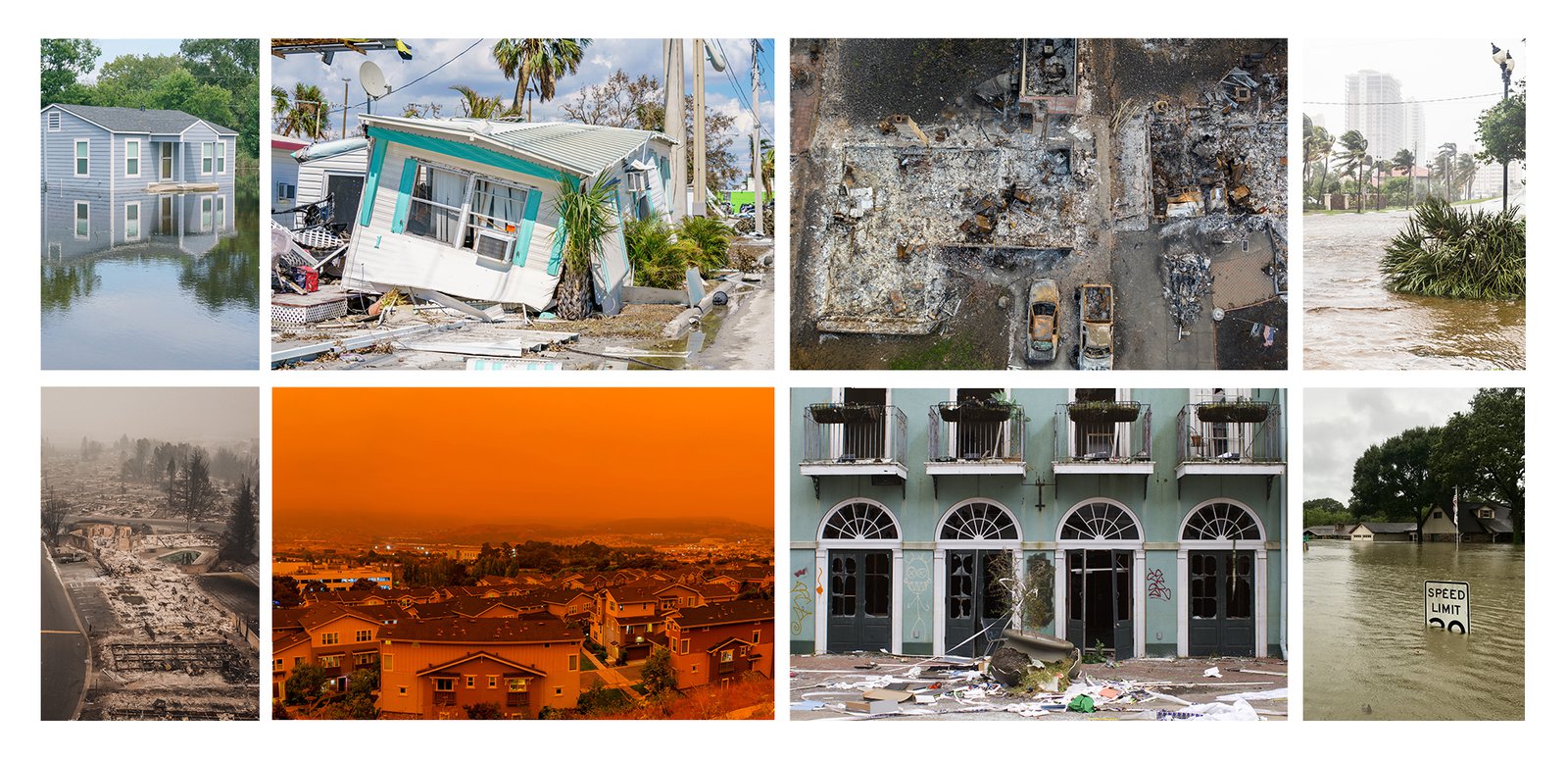
Natural disasters cause billions of dollars in damage to homes in the United States each year. According to the National Oceanic and Atmospheric Administration (NOAA), the country experienced 18 “billion dollar disasters” in 2022 alone, with Hurricane Ian the most expensive at an estimated $113 billion in total damages. Largely due to significant gaps in insurance coverage, rebuilding post-disaster can bankrupt a household.
Shutterstock
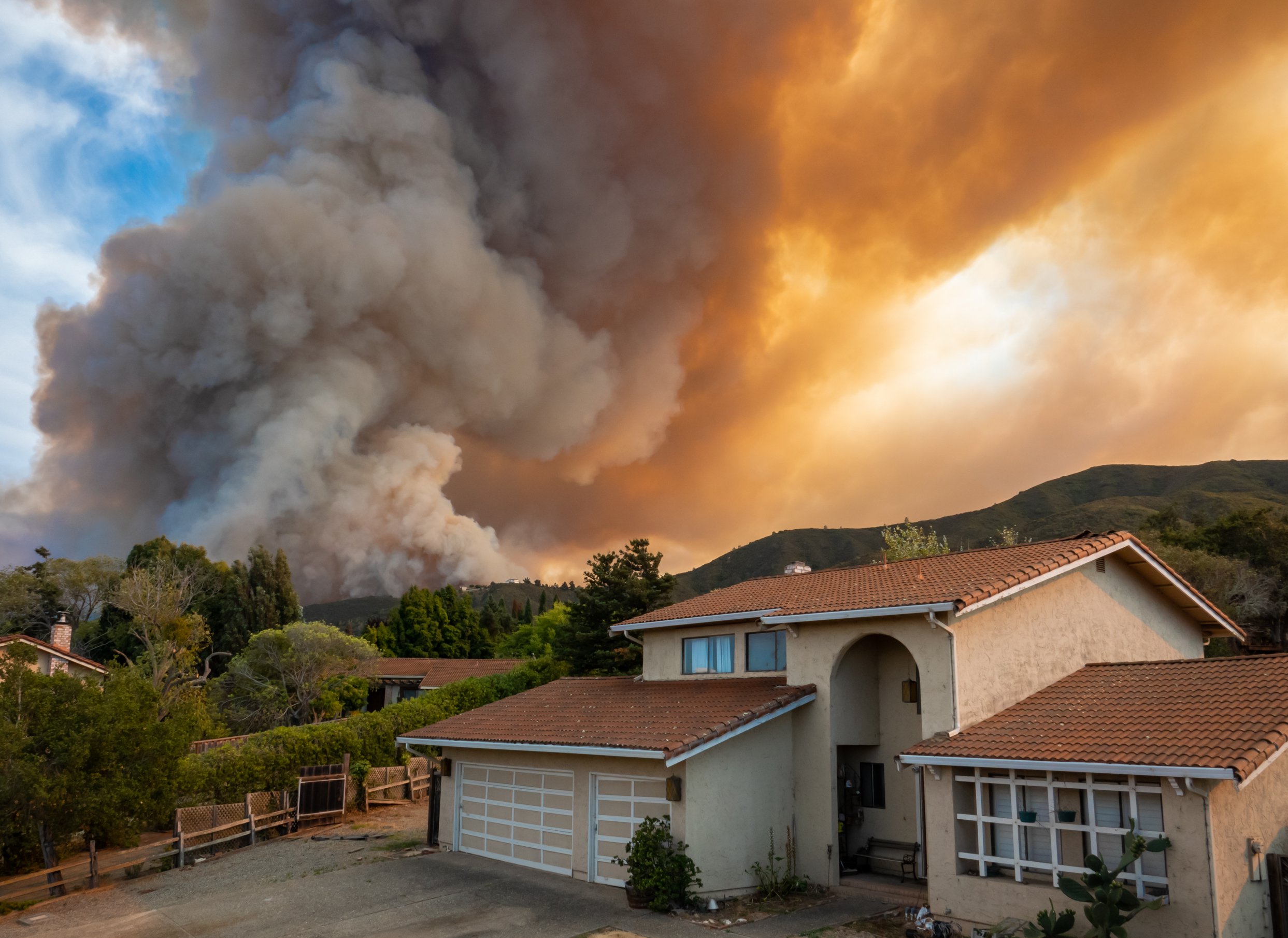
Nearly all American homeowners are covered by some sort of insurance, but research from CoreLogic suggests that 64 percent of policies fail to adequately account for disaster risks. In high-risk areas, this gap is often worse: 80 percent of homes in California’s wildfire regions are underinsured, and 90 percent of California homeowners do not even have earthquake insurance. Nationwide, over 40 percent of the $145 billion in losses due to natural disasters in 2021 was not covered by insurance. These gaps can cause financial ruin for homeowners when disaster strikes, leaving them responsible for tens of thousands of dollars in repairs. And, as many cannot rebuild, this leads to slowed recovery in the region and causes many underinsured homeowners to ultimately default on their mortgages.
Even when insurance policies cover disasters, policy owners can still experience thousands of dollars in deductibles, increased premiums, and other unexpected costs. Homeowner premiums increased an average 12.1 percent nationally between 2021 and 2022, in part due to costly climate disasters. In some high-risk regions, such as fire-prone California or the coasts, climate change is rendering homes too costly to insure, especially for lower-income households.
Some insurance companies are actually beginning to pull out of high-risk markets, or have raised rates to the point that many homeowners cannot afford adequate insurance. In 2022, for instance, private insurers dropped nearly 100,000 homeowners policies from Louisiana in an effort to stabilize their company finances and reduce the risk of insolvency as climate change threatens coastal communities.
The federal government, primarily through the National Flood Insurance Program, and some states do provide insurance policies that cover flooding and other disaster hazards. But these services do not completely close the gaps in private coverage or are themselves at risk of becoming too expensive for the average homeowner.
As noted above, many homeowners are therefore dependent on government aid to rebuild or recover financial losses post-disaster. This funding from FEMA and HUD is limited, and impacted households and communities face significant administrative barriers in applying for and receiving aid. Further, federal aid is not currently intended to cover the entire cost of home repair following a disaster. FEMA explicitly states that funding is only available to ensure that homes are “safe, sanitary, and functional.” The Small Business Administration also provides low-interest disaster loans to impacted homeowners, but even these loans can place a significant financial burden on lower-income Americans.
Limited Financing Options and Dropping Home Values
Corrected at 10:43 a.m. on April 10, 2024: This section has been changed to correct the years listed in the 2019 First Street Foundation report. The time period analyzed was 2005 to 2017, not 2015 to 2017.
Even homeowners who are not directly impacted by disasters may experience indirect financial impacts from climate change, including additional barriers to financing, drops in property values, and increased difficulties selling their home. Sean Becketti, Freddie Mac’s chief economist from 2015 to 2017, has speculated that some houses could become uninsurable and unmarketable due to climate change, causing values to sharply decline, perhaps to nothing.
On both coasts, banks are becoming increasingly skeptical of long-term returns from 30-year mortgage loans in climate vulnerable regions. Some of these lenders are now requiring larger down payments—sometimes up to 40 percent—while others are increasingly selling off these mortgages to government-backed buyers like Fannie Mae and Freddie Mac. New York Times reporter Christopher Flavelle suggests that such activities indicate a growing awareness that climate change could result in more mortgage defaults.
Sea-level rise, wildfires, and other climate impacts could also lower property values across the United States, resulting in loss of equity for homeowners and, eventually, an unsellable home. A 2019 analysis from First Street Foundation suggests that between 2005 and 2017 sea-level rise diminished the values of 25.6 million properties within all 15 East Coast states, Alabama, and Mississippi by a total of $15.8 billion. Research from 2020 found that New York houses that were not flooded during Hurricane Sandy, but were newly added to post-Sandy FEMA floodplain maps, experienced eleven percent price reductions. If property values decrease significantly, some homeowners could be unable to sell their old home for a value that allows for a comparable purchase elsewhere.
Despite these risks, many Americans continue to buy homes in locations vulnerable to natural disasters, sea-level rise, and other climate impacts. While some new homeowners may lack of the true climate risk to their house, others are enticed to at-risk regions by cheaper costs of living, economic growth, and warm weather. For many, climate change is not the deciding factor in their decision-making.
Housing Cost Increases
Perhaps counterintuitively, as property values in climate-vulnerable areas decrease, households’ costs may actually increase. The rising cost of utilities, expensive weatherization projects, increased hazard or home insurance, and a reduced housing stock could all contribute to this added financial burden.
According to a 2018 federal report, residential power expenditures are estimated to increase by 18 percent by 2040 as a result of rising temperatures. Homeowners can theoretically retrofit their homes to make them more disaster safe or energy efficient, but these options cost tens of thousands of dollars and are likely cost prohibitive for the median-income American household.
For homeowners fortunate enough to have sufficient insurance coverage, rates will likely increase significantly in the coming years. Based on global projections from the Swiss Re, the world’s largest reinsurer, homeowner insurance premiums will increase by 5.3 percent annually through 2040, in large part due to climate change and associated risks. For regions that are more disaster-prone, rates will likely jump even higher. In October 2021, for example, after FEMA updated its National Flood Insurance Program to better account for flood risk, premiums for some coastal properties rose 400 percent or more.
Beyond increased costs for homeowners, the United States will likely experience a dramatic shrinking in housing supply within high-risk climate areas. A 2018 study by the Union of Concerned Scientists found that over 300,000 U.S. homes are at risk of chronic flood inundation by 2045, rendering these properties uninhabitable. In the continental United States, Florida has the most homes at risk over the next century. About 64,000 homes, currently home to over 100,000 people, will be at risk of chronic inundation by 2045; more than one million properties, or 10 percent of the state’s current residential properties, will be at high risk by 2100. A shrinking supply in the U.S. housing market will certainly have cascading effects. In a high-risk city like Miami, relatively protected neighborhoods are already experiencing large investments in real estate and sharp increases in rent, driving out lifelong residents and forcing these households into more climate-vulnerable parts of the city.
As climate change decreases housing stock, especially affordable housing, the United States is likely to experience higher rents and mortgages, in turn leading to higher levels of housing insecurity, including an increase in evictions, foreclosures, and overcrowding.