Lisa Guernsey
Senior Director, Birth to 12th Grade Policy; Co-Founder and Director, Learning Sciences Exchange

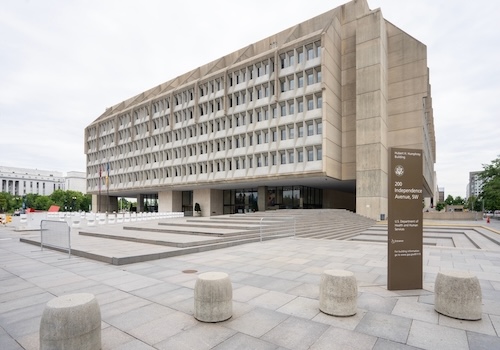
Collaboration was the word du jour at a major early childhood summit today as the U.S. Department of Education and the U.S. Department of Health and Human Services announced a new interagency board that would formally connect them.
“We have to get the bureaucracy out of the way of innovation and creativity,” said U.S. Secretary of Education Arne Duncan.
Duncan and U.S. Secretary for HHS Kathleen Sebelius announced the formation of the Early Learning Interagency Policy Board at Early Childhood 2010 in Washington, D.C., a gathering of more than 1500 people who are responsible for directing federally funded programs for young children.
The board, Duncan said, is to be populated with senior staff from both departments, but there was no word yet on who exactly would be on it. According to today’s announcement, the board’s responsibilities will include:
To improve quality, the board will consider the development of a “set of consistent and comprehensive standards,” Sebelius said. This project will build on work from several quarters, including the Office of Head Start, which is in the process of revising its performance standards.
Both Joan Lombardi, HHS’s liaison to the U.S. Department of Ed, and Jacqueline Jones, the senior advisor on early learning at the Department of Ed, were on stage during the announcement and talked up the importance of collaboration. During the past year, these two leaders have appeared together in multiple venues to stress the importance of aligning goals and working together. For many people in the early childhood community, the coordination is already a welcome advance from a history of agencies talking past each other or not knowing what the other was doing.
“This new board will keep us on the same page,” Sebelius said.
It’s encouraging to see that the two agencies are formalizing their coordination in this way. A system that builds high-quality programs for children’s earliest years that align with their schooling in the primary grades will not be possible without true coordination and information sharing.
The really hard work, of course, will be to make policy changes that enable programs like Head Start and subsidized child care (funded by HHS) and Title I early childhood programs (funded by Department of Ed) to interoperate fluidly. We’ll keep readers posted on what comes of the interagency board and the recommendations that derive from it.
Senior Director, Birth to 12th Grade Policy; Co-Founder and Director, Learning Sciences Exchange