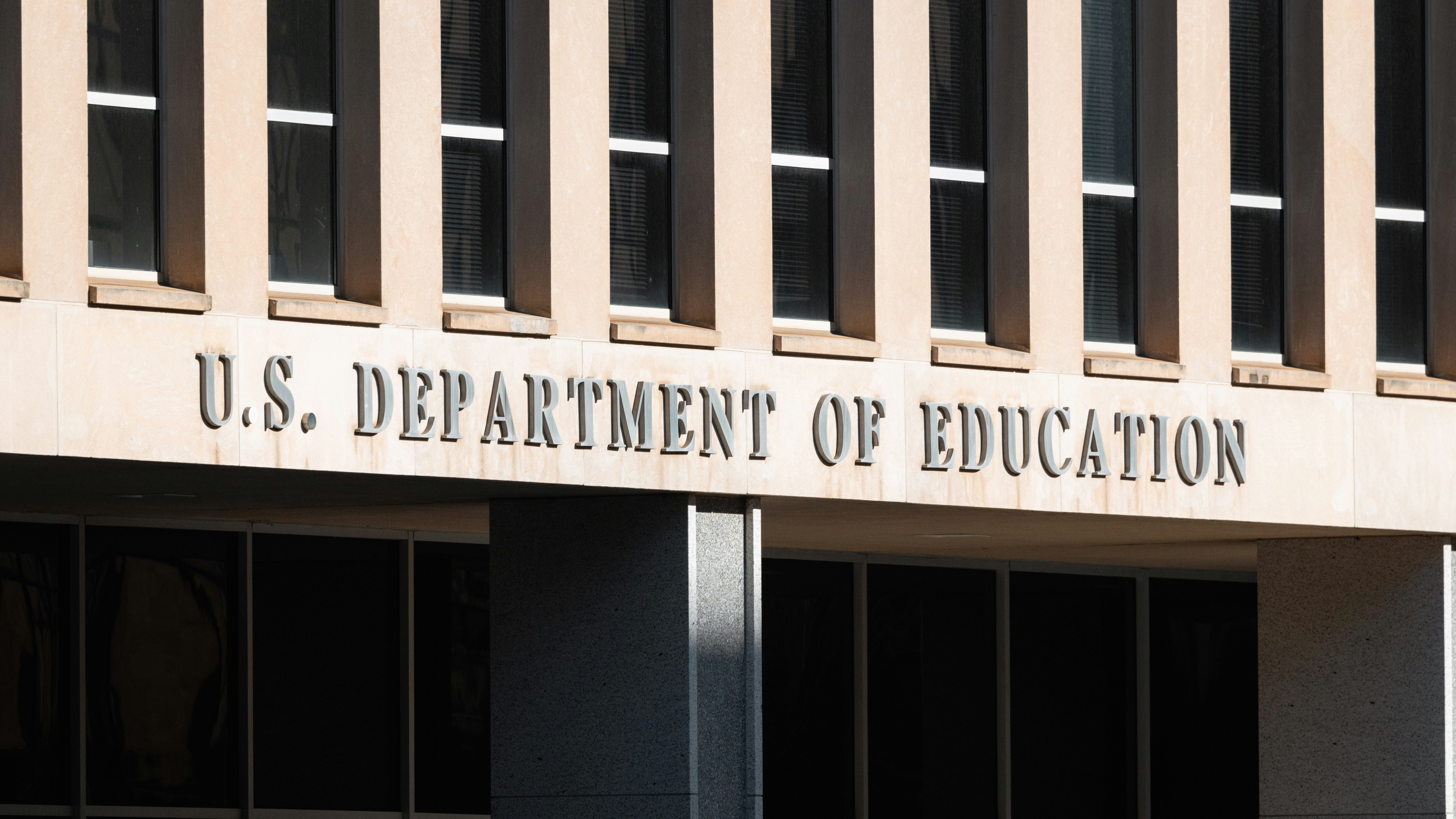
Guest Post: Ed Dept’s State Authorization Rule Will Not Cause the Sky to Fall

By Margaret Reiter
Last October, the U.S. Department of Education issued a new rule to implement the long-standing law requiring schools to have “state authorization” to offer postsecondary education if they want to participate in federal student financial aid programs. The rule has triggered hysterical calls from non-profit colleges for Congress to rescind the regulation. At the same time, the leading for-profit college lobbying group has sued the Education Department to overturn the rule. The new regulation provides some protection to taxpayers and students, but is so weak that the schools’ vociferous reaction to it seems akin to Chicken Little’s remarks. How could such a namby-pamby rule cause such a stir?
Although the state authorization requirement has long been in the law, the Education Department never explained what constituted state authorization to offer postsecondary education. Over time, the extremely profitable for-profit schools’ massive lobbying funds persuaded states to weaken or even abandon oversight entirely or to turn over oversight to private accrediting agencies. These private accrediting agencies, directly or through their affiliates, earn their revenues from the schools they accredit, much as rating agencies that rated toxic mortgage bonds triple A earned their revenues from the banks offering the bonds. The Department’s rule would, for the first time, establish a minimal standard for what constitutes state authorization: the school must either be established by name, state charter, constitution or other state action, or if not, it must be approved or licensed by the state, and the state must have a process to handle student complaints.
The arguments against this rule simply don’t add up.
The non-profits argue that “state officials may overreach.” Of course, state officials may authorize schools to operate in their states, with or without the federal rule, and may overreach with or without it as well. But for Republicans in the House Committee on Education and the Workforce who recently voted to eliminate the new rule, the contradiction with their core belief of putting more control in the hands of the states rather than the federal government is glaring. For states in which for-profit schools’ lobbying clout is paramount, elimination of the standard would mean that all the power to choose which schools are eligible to participate in the federal student aid programs would likely be concentrated in the federal government. As a result, the states would once again be marginalized.
The non-profits also argue the rule might cause states to interfere with religious institutions. The truth is the opposite. The rule expressly exempts institutions that offer only religious degrees. If a college wants to offer diplomas or degrees in medical assisting, computer technology, chemistry, or English literature, it must be authorized by the state if it wants to receive federally subsidized tuition payments. If, instead, it wants to offer degrees in religion, it can get those federal subsidies without state authorization. A similar exception from oversight for religious schools has been in place in California for more than 20 years without any apparent ill-effect or significant legal challenge.
The strident objectors also claim schools have to scurry to get approved in other states where they offer distance education to meet the July 1, 2011 deadline. Well, that is truly an odd claim. The rule just says that if a state has rules that apply to out-of-state schools offering distance education programs in the state, then the schools have to comply with that state’s rules. If those state laws are already in place, then the schools should already be in compliance. No scurrying necessary. Nothing in the rule makes schools do anymore than state laws already require. Perhaps the real fear for objectors is that the feds might be more diligent than the states in ensuring that schools really have required state approvals.
Despite the anemic argument of distance learning schools, the Department has already stated that it will not enforce the distance education aspect of the rule before July 1, 2014 against any school making good faith efforts to identify and obtain necessary state authorization before that date. The Department specifically described what constitutes good faith efforts, so the handwringing on this point should stop.
Despite arguments to the contrary, compliance by July 1 with the state authorization rule does not present a real problem for programs other than distance education either. If the state hasn’t adequately established a means to authorize a postsecondary school, the rule allows the school one or two additional years to comply. I suspect the vast majority of schools have not been too concerned about timely compliance during the seven months since the rule was promulgated. In California, for example, I am unaware of any serious legislative effort during those many months to require state authorization for schools that currently may choose to be exempted from state approval. To get an extension to comply with the Department’s new rule, schools just need to get a statement from the state explaining how the extension will be used to reach compliance. It is beyond credulity that the many school accrediting and trade associations have not drafted and provided those explanations to state authorities who are even now putting the finishing touches on those explanations.
Interestingly, in letters to the Secretary of Education and the House Education and Workforce Committee, schools did not complain about another aspect of the rule — the one aspect of this extremely weak rule, in fact, that will most likely benefit students and taxpayers. For a school to be authorized by the state, regardless of whatever exceptions and limitations the Department has put into the rest of the rule, all schools must be subject to a state process for handling student complaints. The Department explained:
[A] complainant must have a process, independent of any institution — public or private, to have his or her complaint considered by the State.
Although schools haven’t focused their objections on this requirement, I suspect that this is a big part of why schools want the rule rescinded.
If the arguments the non-profits raise have so little merit, why are they even in this fight?
The new rule is one of 14 rules the Department promulgated in a major effort to deal with the huge, growing, and much reported problem of fraud and abuse by colleges participating in student aid programs. These problems arise overwhelmingly among for-profit colleges. Nearly half of the federal student loan defaults that the government keeps track of are from students attending for-profit schools, even though they enroll only about 10% of students. Some of the largest for-profit schools receive between 80 and 90 percent of their revenues from those programs, and additional revenue from other federal funds. In effect, taxpayers bear a huge financial risk for these supposedly free-market businesses. A GAO report and Senate hearings have demonstrated the need to rein in the out-of-control for-profit school sector.
The Department could not, however, apply its new rule exclusively to the for-profit sector. Why? Because many years ago, Congress merged the laws that governed student aid for for-profit schools and the laws that applied to public and non-profit schools. So the new rules have to apply to public, non-profit, and for-profit colleges alike.
The for-profits have been very successful in spreading fear and confusion among non-profit schools about the impact that these rules will have on schools. Why have they done this? So these more reputable-seeming schools will carry the argument. That way, the scandal-besmirched for-profit sector can stay in the background, while the more reputable non-profit sector carries their water.
The misguided assertions schools have raised should not deter the Department from the minor, but nevertheless important first step it has made to enforce the law. For the future though, if non-profit schools are really concerned about the impact of rules like these — which are primarily aimed at stopping for-profit college abuses — they should use their political clout to break apart their unholy merger in the law with for profit schools. The public and Congress would undoubtedly agree that non-profits, if treated separately from for-profits, would not need to be subject to the same level of oversight. But as long as non-profit colleges are linked with for-profits, they must expect to be regulated as needed to address the sorry state of student achievement and excessive student loan debt in the for-profit sector.
Margaret Reiter served as a consumer prosecutor with the California Attorney General’s Consumer Law Section for 20 years. In that position, which she held until 2008, she investigated or prosecuted businesses engaged in many types of misrepresentations, consumer fraud, or other unlawful business practices. A number of those prosecutions resulted in permanent injunctions and multi-million dollar settlements or judgments against postsecondary proprietary colleges. In 2009 and 2010, she served as the primary negotiator for consumers in the U.S. Department of Education’s negotiated rulemaking on program integrity for the federal student assistance programs. In 2010, she testified before the Senate Health, Education, Labor and Pensions Committee about her experiences prosecuting for-profit colleges. She is currently the vice-chair of the California State Bureau for Private Postsecondary Education Advisory Committee. Her views are her own and do not necessarily reflect those of the New America Foundation.
Issues
Programs/Projects/Initiatives
Related

Accreditation on the Ground: A Q&A with Heather Perfetti