
Guest Post: Another Bold, Radical Proposal for…a Bailout

By Travis Reindl
We probably should have expected this. Since the Obama Administration declared its intentions to pump nearly $800 billion into the economy and put $12 billion on the table to help regain world leadership in college attainment by 2020, some of our most elite institutions have gone public to plead their case for federal funding. Presidents, chancellors, and board chairs have penned op-eds and signed onto full-page ads in major national newspapers, wrapping themselves in the Morrill Act and the GI Bill to argue that the federal government cannot abandon the world’s greatest universities in their hour of need.
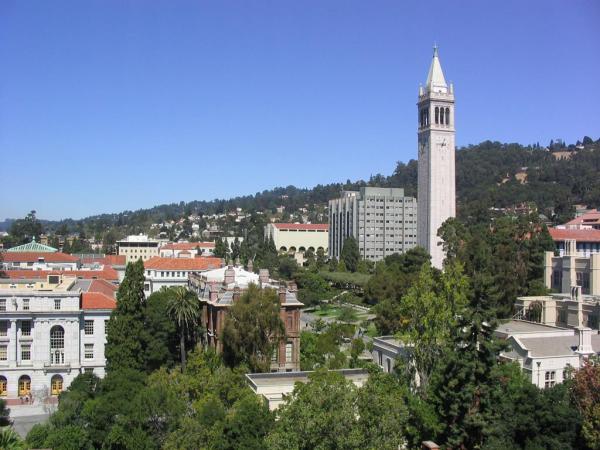 The latest entry in this anthology of angst surfaced in The Washington Post a couple of weeks ago. Under the alarming headline “Rescuing Our Public Universities,” Robert Birgeneau and Frank Yeary, the chancellor and vice chancellor of the University of California at Berkeley, proposed a “daring scheme” whereby “a limited number of our great public research and teaching universities receive basic operating support from the federal government and their respective state governments.” The institutions, selected on the basis of factors such as research achievements, graduation rates, public service, and commitment to diversity, would use the funds to eliminate out-of-state tuition and effectively create a cadre of national universities.
Berkeley would make out quite well under that bold plan, wouldn’t it? Why does this sound eerily like what we have heard from the leaders of the Big Three automakers, or the banks that were simply “too big to fail?”
But wait — there’s more. “To ensure stability, the federal government should agree to match, at a rate of 2-to-1, and the state governments, at a rate of 1-to-1, private endowment funds raised by these universities for 10 years.” Basically, some of the nation’s richest institutions would receive $3 for every $1 they raise from some of the nation’s (and world’s) wealthiest donors. Not a bad deal, if you already have a cool billion in the bank and annually raise at least $50 million.
Now, of course, it’s true that, as in previous recessions, public higher education is being slashed in state budgets, particularly in California. But it is also true that the budget cutter’s pen rarely discriminates, which means that there are institutions operating on a much slimmer margin than UC-Berkeley and serving a more diverse student population that are not asking for a federal earmark in The Washington Post and calling it a “daring scheme.”
Achieving the President’s goal means that the nation will have to do a much better job of educating students who have too often been left behind, including low-income and first-generation students, working adults, and students of color. Reaching that mark is also about more than global bragging rights, as the percentage of jobs requiring education beyond high school and the percentage of Americans believing that college is essential to success in the workforce both continue to climb. The trends are clear — failing to increase access and success rates for these groups will represent not just a moral failure, but an economic failure as well.
To that end, here’s a counterproposal to the one that Berkeley’s leaders have offered. Under this plan, which we’ll call the Morrill Act for the 21st Century (MAC21), the federal government would offer assistance to any public institution that:
- Improves its performance in enrolling and graduating students from historically underserved populations. Currently, UC-Berkeley has a 90 percent overall six-year graduation rate, but that rate drops to 82 percent for Latino students and 77 percent for African American students. Surely, Berkeley could improve on those numbers.
- Reduces average time-to-degree. According to the U.S. Department of Education, just under two-thirds (64 percent) of beginning students in 2002 completed a baccalaureate degree in four years at UC-Berkeley, but 90 percent earned a degree within six years. While there are legitimate reasons (degree requirements, changing majors, unavailable classes) why students take longer than four years to earn a baccalaureate degree, the university should be able to narrow this gap by at least 10 percentage points. And yes, it can be done without diluting quality.
- Maintains or increases the share of spending allocated to instruction, academic support, and student services The Delta Cost Project reports that in recent years, there has been a subtle but definite shift away from activities that more directly affect students and toward those that more directly affect institutions (e.g. institutional support, facilities). Universities that wish to be known as outstanding “research and teaching institutions” must demonstrate a serious commitment to teaching to receive dedicated taxpayer funding.
The leaders of some of our most illustrious public colleges and universities are right to point out that we have reached one of those defining moments where we must decide what “the people’s universities” will look like moving forward. This is more than an abstract question for thousands of students in California and around the nation who are scrambling just to get a seat in class. What is troubling about the current dialogue, though, is the absence of the student voice. Most of what we have seen and heard recently has been by institutions, about institutions, and for institutions. Despite all the marketing, how “student centered” is our enterprise?
History has shown that this nation is at its best in the face of adversity. The Morrill Act sacrificed treasure to invest in the nation as the future of the nation stood in the balance, and the GI Bill became part of our social contract as our grandparents sacrificed their comforts and their lives to ensure that our democratic ideals would survive. In this moment of adversity, it seems as though the most we have sacrificed is our pride. When we reach the point where the debate focuses on how much each higher education sector gets over what the nation and its students need, we have already lost.
Travis Reindl is the state policy and campaigns director at CommunicationWorks, a public affairs firm that specializes in educational improvement. Prior to joining the firm, he had 15 years of experience in higher education policy and advocacy. Most recently, he served as program director at Jobs for the Future, where he led a national initiative focused on increasing productivity in higher education. Before that, he headed the state policy analysis unit at the American Association of State Colleges and Universities. He has written extensively on issues of college affordability, accountability, and governance. His views are his own and do not necessarily reflect those of the New America Foundation.
Issues
Programs/Projects/Initiatives
Related

Workforce Pell Is a State Data Policy

Same Name, Different Bill