Greg Barker
ASU Future of War Fellow, 2018
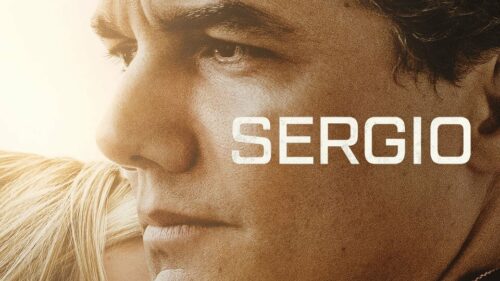
New America 2018 Fellow Greg Barker spoke about his film Sergio for “Three questions” in The Fifth Draft, the Fellows Program’s monthly newsletter. Barker is a documentary filmmaker whose work for HBO explores global conflict, human rights, and storytelling.
Your new feature film Sergio debuted at Sundance last month and will be released by Netflix in April. Can you share the origins of that project?
It began over drinks with Samantha Power at a bar near Harvard, back in 2005 or so. She was deep into her research on a book about Sergio Vieira de Mello, the storied UN diplomat. Samantha walked me through the details of Sergio’s tumultuous personal life and specifically the dramatic events of his final assignment—to Iraq, in the chaotic aftermath of the US invasion.
I was riveted, and honestly the idea for a movie just popped into my head. In Sergio’s story, I saw a film centered around life’s most proud questions: How should I love? How do I give my life meaning? Sergio was a man who cared deeply about the world, yet struggled to understand those who loved him most.
It took a while for the stars to align, which often happens with movies, but then a few years ago I found out that Wagner Moura, who just wrapped as Pablo Escobar in Narcos, was interested in playing Sergio, a fellow Brazilian. We then cast Ana de Armas, now rising star in Hollywood (and on the cover of the new Vanity Fair!), as Sergio’s partner, Carolina Larriera, and took the pitch to Netflix. Before long, I was off filming in Jordan, Thailand, and Brazil, a lesson that big projects can take forever to come to fruition, until they suddenly just happen!
For me, I look at stories where people are tested, morally, physically, emotionally, in ways they perhaps never expected to encounter.
The documentary film Sergio was released a decade ago, and documentary filmmaking has dominated your filmmaking career. How is making documentary film different from narrative film?
I was surprised to find that the two forms are not so different—storytelling is storytelling, and audiences respond to emotional authenticity, regardless of whether they are watching real people in a documentary or actors in a narrative. As a director, it’s all about creating the space for authenticity to come through in a performance, whether that “performance” is a verite scene in a documentary or a big set piece with 300 extras. In both instances, the key is all in the preparation, so that when the cameras roll the cast and crew know what they are doing, and are then free to express themselves naturally.
As for Sergio’s story, I really always saw it as a narrative. A decade ago, I was making PBS documentaries, and frankly no one one was going to give me millions of dollars to make a movie. So I told the story as a documentary first, and it’s a film I am very proud of—in fact, the documentary Sergio is now available worldwide on Netflix, as a companion to the new movie.
You have mentioned that you are drawn to stories that explore the nature of war and its moral consequences. How does documentary film—as opposed to other forms of art and journalism—offer a unique perspective to understanding this subject?
Film is simply the art form that suits me best as a storyteller, so I naturally see events as they might play out in three or more acts. Other artists have different tools and talents at their disposal, so it’s really a matter of personal choice. For me, I look at stories where people are tested, morally, physically, emotionally, in ways they perhaps never expected to encounter. And in that test of themselves, it seems to me that deeper truths about the human condition often emerge in dramatic and compelling ways.
Subscribe here to receive next month’s issue of The Fifth Draft.
ASU Future of War Fellow, 2018