
Table of Contents
- Checklist
- Introduction
- Household Economy
- Community Resilience
- A Pandemic of Racism
- Election Integrity
- Healthcare Surge Capacity
- Supply Chain Management
- Universal Access to Digital Services
- Banking and Payment Systems
- Economic Resilience
- Future of Work
- Epidemiological Readiness
- Porous Lines of Defense
- Institutions
- Policy Considerations
Policy Considerations
Against the complex and interconnected set of issues outlined in this report, key policy considerations must weigh institutional transformation, as much as they weigh civic engagement and whole-of-society mobilization, to speed up post-pandemic recovery. Recovery alone, however, would miss the broader opportunity to mend the many areas of our economy and system that the COVID-19 pandemic exposed to be either frail or broken before this crisis struck.
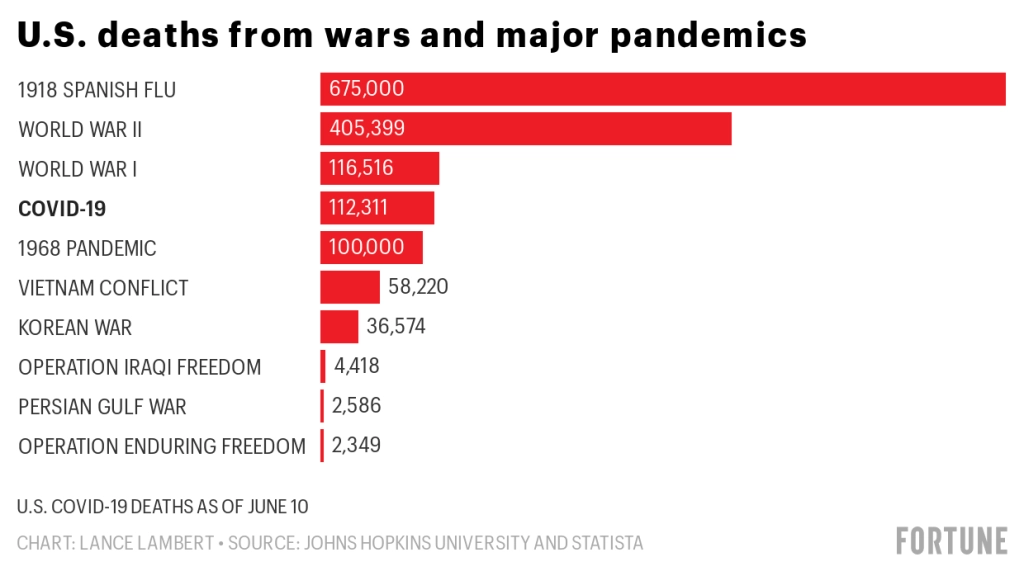
Against this backdrop, policymakers must weigh the twin obligations of enhancing post-pandemic resilience, while improving the preconditions in the United States for shared prosperity and social equity. Following the largest non-war loss of lives since the Korean War and Depression-era economic intervention, this generation of public and private sector leaders have a unique obligation and opportunity to recast a more hopeful, secure, participatory, and competitive vision of the future.
- Citizen data wallets: National, verifiable, and authenticated wallets for the provision of government and interstitial services, as well as the facilitation of citizen engagement.
- Universal internet access: High-speed, low-cost internet connectivity, not singularly through risk-prone physical infrastructure but via current generation mobile broadband connectivity. The provision of coverage on a national scale, including patching low-connectivity areas, rural communities, among others.
- Low-cost or free hardware access: The provision of essential hardware such as computers and tablets, particularly for vulnerable communities and students in Title 1 schools.
- Omnichannel voting: Universal, omnichannel voting options on a national scale.
- Resilience corps: The amplification of a civilian resilience corps, such as FEMA Corps and AmeriCorps NCCC, to prepare communities to respond to disasters on an all-hazards basis, while enhancing disaster readiness capacity.
- Gap analysis: Reviewing community-level risk, readiness, and resilience gaps in terms of response capacity on an all-hazards basis, including potential economic value at risk and funding gaps in public and private resources.
- National chief risk officer: The establishment of a cabinet-level Chief Risk Officer to set a national strategy for pre-funding a national risk-sharing pool on a risk-weighted basis to shield the public balance sheet from increasingly predictable and devastating losses.
- Economic risk-sharing: The establishment of a strategic risk-sharing fund, aggregating existing national risk-sharing programs, and funding them over the long term via public and private sector measures (e.g. all-hazard catastrophe bonds, insurance, reinsurance, and publicly-funded paid-in capital).
- Healthcare surge capacity: Expansion of healthcare surge capacity, the availability of hospital beds per capita, as well as a national reserve corps of trained medical professionals capable of responding to mass casualty events irrespective of the cause.
- Pandemic preparedness accelerator: The establishment of a DARPA-style project to spur long range preparedness for communicable diseases, biodefense, and rapid development and approvals in vaccinology, mitigation, and treatments.
- Early alert system: Development and deployment of a trusted national and global early alert network for future outbreaks with real-time threat reporting and response capabilities.
- Contact and exposure tracing: Development and deployment of national citizen-level contact tracing and privacy-preserving threat reporting capabilities and early alert frameworks for all-hazard public safety exposures.
- Emerging technologies: Development and deployment of national blockchain or Distributed Ledger Technology (DLT)-based land registries supporting disaster proofing and rapid response, for example via geo-referenced disaster declarations.
- Parametric claim triggers: Enablement of national real-time disaster relief capabilities and low-cost parametric insurance capabilities.
- Healthcare cost waivers: Medical insurance and healthcare cost waivers for testing, treatment, and public health compliance.
- Telehealth expansion: Expansion of national, at-home telemedicine, low-cost medical treatment, and pharmaceutical networks.
- Universal healthcare: Expansion of universally available, personally-portable low-cost health care options.
- Debt forgiveness: Establishment of a student loan credit bridge and forgiveness program.
- Credit scoring reset: Resetting credit scores and minimum payment, forgiveness and interest rate structures to restore consumer confidence and not penalize borrowers for defaults with an implied public backstop.
- Free basic banking: Universal free basic banking, with no minimum balance provisions.