
Table of Contents
- Checklist
- Introduction
- Household Economy
- Community Resilience
- A Pandemic of Racism
- Election Integrity
- Healthcare Surge Capacity
- Supply Chain Management
- Universal Access to Digital Services
- Banking and Payment Systems
- Economic Resilience
- Future of Work
- Epidemiological Readiness
- Porous Lines of Defense
- Institutions
- Policy Considerations
Institutions
The pandemic, more so than any other event since World War II, has illuminated the disequilibrium of addressing twenty-first century challenges with twentieth century technologies and nineteenth century institutions. Indeed, while the ranking of how countries, governments, and different institutions fared is still being formed, what is clear in looking at the most successful cases of flattening the COVID-19 curve, limiting the loss of life and broad observance of social distancing calls, is that trusted, technology-forward institutions—and consequently those countries they call home—fared better than others.
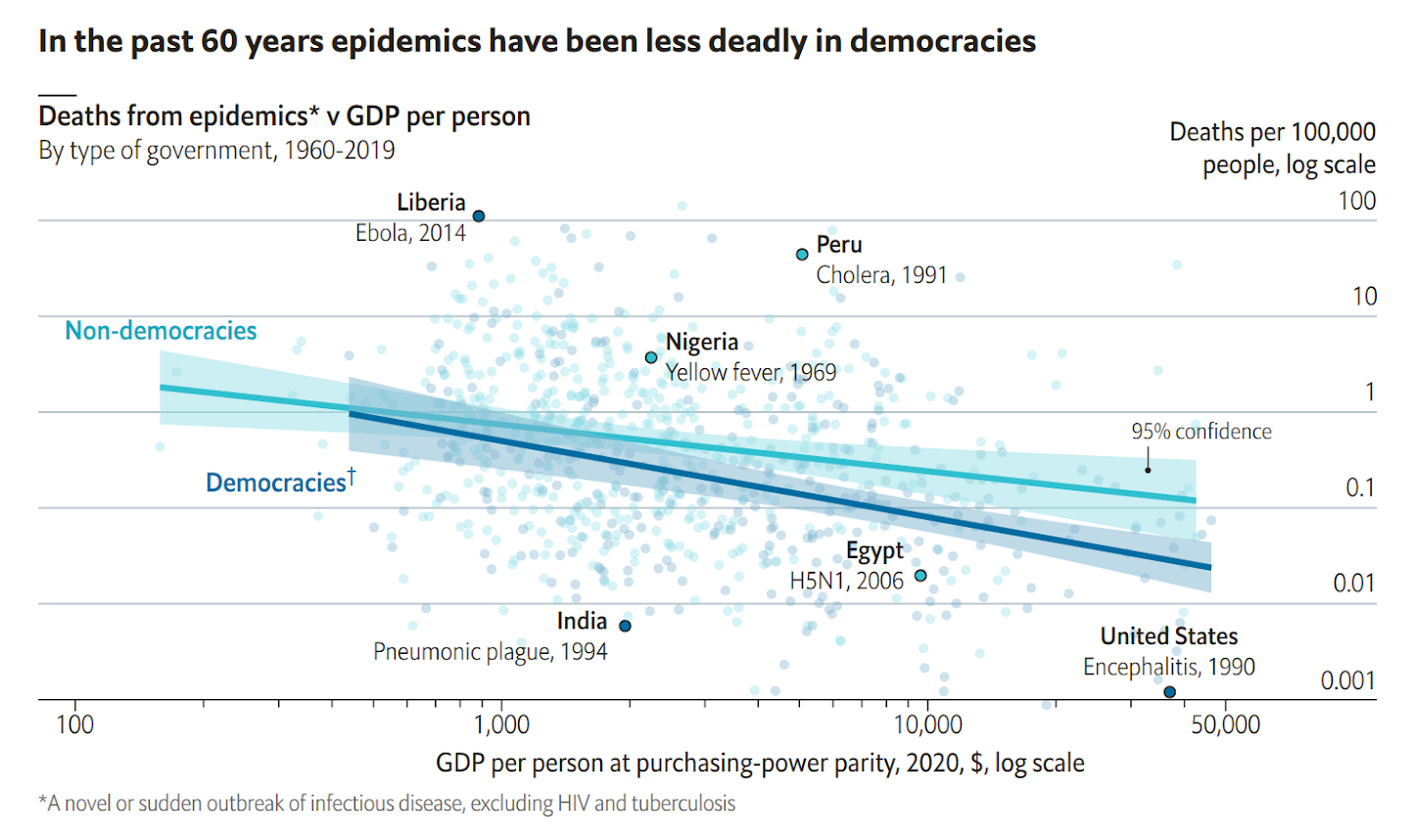
The pre-pandemic trend line on institutional trust has been on a 30-year decline—born in part from growing public disaffection and fueled in part by hyper-partisan political and economic trends. The pandemic has underscored precisely how divided and unequal the United States has become. The most powerful emblem of this discord, polarization, and anger is the confluence of record numbers of activities and mass protests signaling that Black lives matter in contravention with social distancing directives. At the same time, the crisis has also revealed the importance of public institutions and the vital role they carry in keeping our society moving forward: from public educators, who had to master distance learning overnight, often managing students ill-equipped with technology and insufficiently reliable internet connectivity, to the many essential workers who keep cities, states and governments running, often at their own peril.
Perhaps the biggest fight at the institutional level as the crisis unfolded has been between public health authorities and economic and political interests. Even the WHO has been mired by these challenges, as calls for an inquiry into its initial COVID-19 response and slow pace of labelling the outbreak a Public Health Emergency of International Concern (PHEIC) and then later a pandemic, grow louder. At issue is the lingering question of whether the WHO conspired with China on covering up the initial scope and severity of the outbreak greatly hindering international collaboration, particularly between the United States and the international health body. At its nadir, the United States withheld funds and withdrew from the WHO adding to the specter that efforts to combat future international health emergencies, let alone the present one, would remain a go-it-alone affair.
This should be greatly troubling, because if anything a global pandemic that affects people indiscriminately and has no respect for international, let alone national borders, is a reminder that in the face of global threats, all of humanity is in this together.
Restoring the wellspring of trust in institutions, especially those that easily buckled under the strain of COVID-19, will take concerted effort as governments brace under the fiscal strain of the crisis. U.S. states alone face $650 billion in revenue shortfalls as economies struggle to recover and policymakers operationalize costly countercyclical payments and benefits programs to help their citizens weather the crisis. In this turbulent fiscal environment, the public sector will need to operate with unprecedented efficiency and austerity. Historically, governments worldwide lose trillions of dollars each year to corruption and tax evasion. In principle, restoring these losses would be enough to fund all of the UN Sustainable Development Goals. Public finance systems in many countries around the world are long overdue for an upgrade.
There are a number of compelling technology use cases that can make critical improvements to government systems that deliver public services and form the bedrock of social wellbeing. Organizations like the Prosperity Collaborative, a coalition of the World Bank, EY, MIT, New America, and the Michael Dukakis Institute are exploring new ways to help governments solve urgent public finance challenges. The Collaborative is building a movement to leverage open source digital technologies to hardwire accountability, efficiency and transparency into public sector revenue collection, management and distribution. These solutions could not only help restore funding to an embattled public sector but also create fairer systems that restore public trust in institutions.
Structural changes to public finance institutions and others, such as the ability to support national-level remote voting, access to universal paid medical leave, and leveraging open systems to expand digital commons and access to technology, should not be one-off crisis responses but rather become a part of our institutional norms.
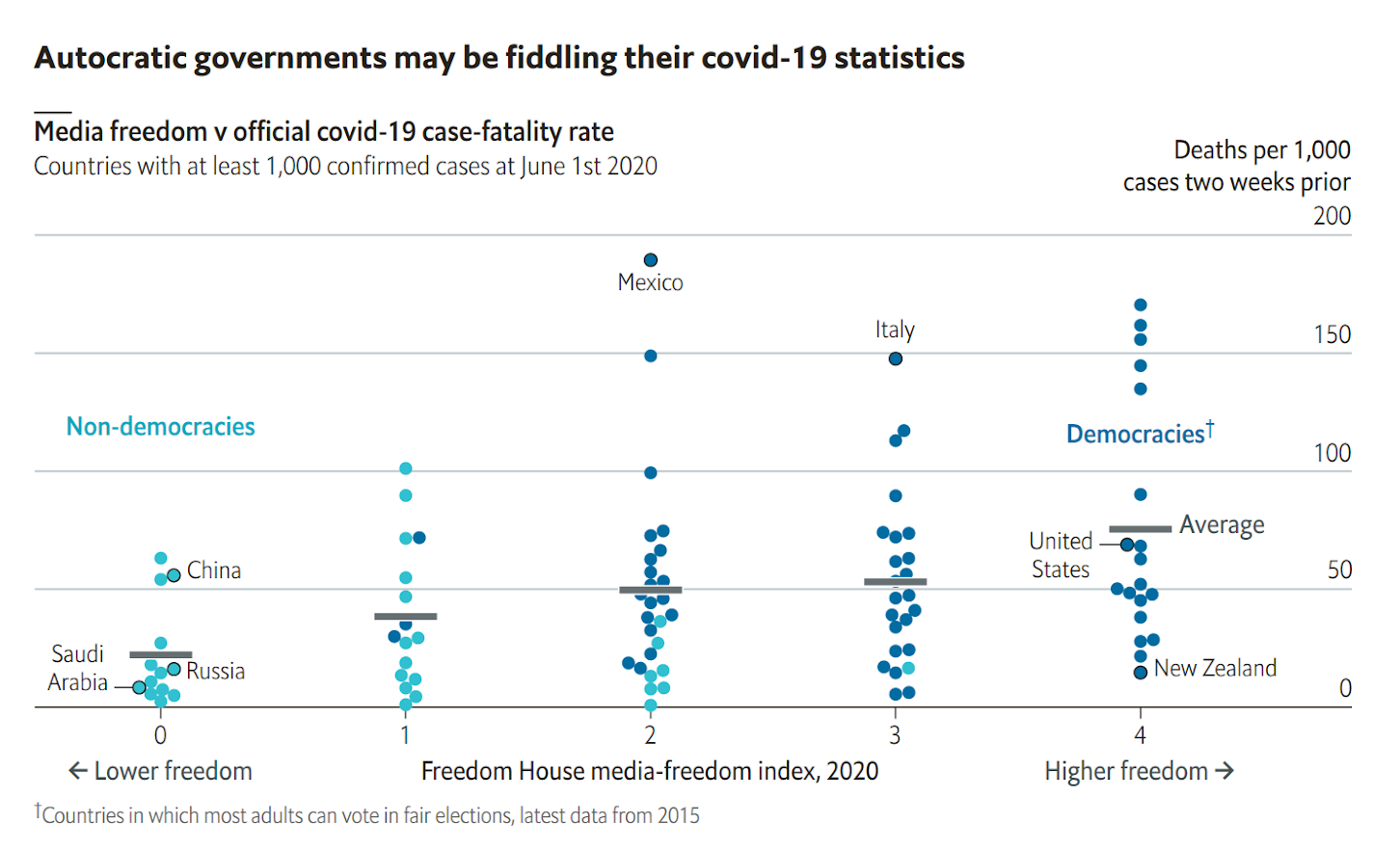
The same holds true for institutional readiness when it comes to technology enablement, public trust, and accountability. Examples of distorting or manipulating reported COVID-19 cases, as the tradeoff between flattening the curve and grinding economic losses put pressure on the truth—however, limited accurate figures have been available due to testing efficacy and shortages. Say nothing of the challenge and the fundamental tension between healthcare information privacy and the inability to scale contact tracing or technology-based solutions that could show the effects of community spread in real time and enable people to more accurately navigate a new normal with exposure information in the palm of their hands rather than entire communities and countries flying blindly.
Undoubtedly, authoritarian countries, especially those that can easily shun the human right to privacy, will solidify their power in this crisis as new technologies and contact tracing approaches reached scale. In other cases, the ineffective public response, along with the hard-to-hide truth of the pandemic’s grim toll on communities may drive change and demands for greater accountability. As with all things, there is a constant need for equilibrium when balancing public interest, privacy, security, and accountability. Institutions around the world must build safeguards and proceed cautiously as they navigate widespread deployment of technology, blurred lines between public and private information and the potential risk of data misuse and abuse.
As in great crises in the past such as the rise of global institutions in the aftermath of World War II, which gave rise to the current political and economic system, this crisis will undoubtedly shape new institutions while triggering calls for the transformation of existing ones. How this call to action is heeded, along with the need for careful balance on governance, accountability, and the deployment of technology, will help create a path for greater resilience and shared prosperity in the post-pandemic era. There will be new emerging threats to our way of life and the opportunity to create and maintain a competitive yet equitable economy. How we rise to this occasion will be the defining moment of this generation.