Global Answers for Local Problems
Table of Contents
- Executive Summary
- The Promise of Participatory Democracy
- Cities as Centers of Challenge and Opportunity
- Building Collaborative Government and Institutionalizing Civic Engagement
- Identifying Levers of Power in Municipal Government
- Sharing Levers of Power in Municipal Government
- About this Study
- On the Ground Lessons from Engaged Cities
- Recommendations: Next Steps for Practitioners and Research
- Conclusion
Abstract
As countries across the globe grapple with increasing populism and decreasing satisfaction with democracy, at the local level, cities are in an unusual position to build better relationships between residents and government. While cities face increasingly challenging public policy problems, they also have the opportunity to bring residents of all backgrounds into the local governing process and help forge local community. Crucially, supporting more inclusive civic engagement can ultimately lead to better policy by helping policymakers identify gaps in programs, or address challenges experienced by voices that often aren’t heard through traditional political participation avenues.
In this report, we analyze different case studies of finalists and semi-finalists from the Engaged Cities Award (ECA). From these examples, we suggest that applying new models of collaborative government requires addressing six challenges in civic engagement, and we provide five recommendations for practitioners and future research.
Acknowledgments
This report was made possible by funding from Cities of Service. All positions are those solely of the authors.
Many thanks to the Cities of Service team, who offered their insights and knowledge of the cities discussed here based on their research and site visits, and who acted as co-hosts and co-organizers for our workshop. In particular, we’d like to thank Myung J. Lee, Karen Dahl, Mauricio Garcia, Deb Jospin, Gail Nayowith, Amy Miller, Nikola Pavelić, Jeremy Sierra, and Millie Choy.
This report would not be possible without the valuable feedback and research help from Maresa Strano and Monica Estrada Arias, who helped collect background information on approximately 50 cities and contributed to early drafts. Thanks also to Mark Schmitt for his guidance and feedback, and to our communications team—Maria Elkin, Joanne Zalatoris, Lulin McArthur, Joe Wilkes, and Alison Yost—for their help with this report.
Most importantly, we’d like to thank the city officials who participated in our workshop in October and shared their experiences working to improve their local democracy.
Downloads
Executive Summary
Cities have a unique opportunity to redesign democracy around principles of meaningful civic participation and civic power through collaborative governance models. Defined as procedures that incorporate civic perspectives, participation, and power into all stages the traditional governing process, collaborative governance models can amplify civic engagement to both expand the participatory promise of democracy, and to provide improved public services for constituents. With their smaller scale, flexibility, hyper-local focus, and higher levels of trust from residents, municipal governments can often experiment with these forms of democracy better than other levels of government. In doing so, cities can also offer important lessons to the broader democracy reform community.
Countries across the globe are currently grappling with increasing populism and decreasing satisfaction with democracy. In contrast, cities are in an unusual position to build better relationships between residents and government. Like other levels of government, cities face increasingly challenging public policy problems, but they also have the opportunity to reimagine democracy by bringing residents of all backgrounds into the local governing process and helping forge local community. Crucially, supporting more inclusive civic engagement can ultimately lead to better policy by helping policymakers identify gaps in programs or address challenges experienced by voices that often aren’t heard through traditional political participation avenues.
Bringing residents into the governing process can be difficult, however. Doing so requires implementing equity, opening doors within bureaucracy, and being open to rethinking traditional infrastructure and processes, while also respecting the political process. Inherently, there is a tension between grand visions of an engaged citizenry and setting up processes that are realistic to the political process and honor people’s time, resources, and commitment. Pure idealism can drive unrealistic processes, goals, and engagement, as well as misunderstand the inner workings of bureaucracy and the demands placed upon public sector leaders and residents alike. Conversely, cynicism misses a powerful opportunity that can benefit all parties.
But even though it can be challenging to find the appropriate balance between respecting both bureaucratic expertise and lived experience, many cities have done so.
Therefore, studying cities that have successfully applied new, innovative, collaborative governance models of civic engagement is critical for other cities, as well as any efforts to revitalize democracy at any scale. The Engaged Cities Award, coordinated by the nonprofit Cities of Service, provides a helpful sample.
In the fall of 2019, we analyzed 50 different case studies from 46 finalists and semi-finalists from the Engaged Cities Award (ECA), all initially vetted by Cities of Service (COS), including site visits to about 20 of these finalists. In October 2019, we co-hosted a workshop alongside the 2019 CityLab conference in Washington, D.C., where we gathered approximately 20 city officials, each representing a different city, to discuss the lessons they learned from building new government structures at home. The officials present at the workshop represented most of the finalist cities, as well as cities that have long worked with COS using their citizen engagement model but were not ECA finalists.
From analyzing the individual case studies and discussing these issues at the workshop, these cities’ experiences suggest that applying new models of collaborative government requires addressing six challenges:
- Balancing long-term versus short-term engagement
- Leveraging multi-sector engagement
- Building new infrastructure
- Ensuring diversity and equity
- Including intergenerational perspectives
- Overcoming obstacles and managing expectations
Finally, we have five recommendations for practitioners and future research:
- Give people real power
- Leverage hybrid technology for accessibility and diversity
- Empower diverse leadership
- Track resources for other practitioners
- Encourage creativity
The Promise of Participatory Democracy
The foundational value of democracy—that the governed should be included in the governing process—is a radical concept.1 Through elected representatives and civic engagement, the democratic emphasis on participation recognizes that citizens have a special role to play in the political process that is crucial to successful governance. Compared to other forms of government, this radical promise inherent to democracy offers a distinct opportunity for equality, transparency, and responsive policy.
Despite this potential, however, democracy around the globe is in crisis today. Three indicators of democratic health—trust in government, voter participation, and satisfaction with democracy—are in decline all over the world. In 2017, Edelman found that only 41 percent of the global population trusted their government to do what’s right.2 In the United States, trust in the federal government is at historic lows, with only 17 percent of Americans saying they trusted Washington in April 2019, according to the Pew Research Center.3 Voter participation in presidential elections in many countries in Europe and the Americas has also fallen since the 1980s.4 Finally, of citizens in 27 countries polled by Pew, “a median of 51% are dissatisfied with how democracy is working in their country.”5
Of course, improving national democracy is a big challenge that will require implementing political reform that addresses our electoral systems,6 improves the capacity of our legislative branch,7 and limits the influence of money in politics.8 However, redesigning institutions alone won’t create the public engagement necessary for the fullest realization of democracy’s promise, nor give voice to marginalized communities, without efforts to understand and strengthen civic engagement and power.
Decades of political and social science research has shown that civic engagement can help address the kinds of abstract problems like low trust and satisfaction with government.9 In addition, giving more opportunity for democratic participation can help policymakers identify gaps in programs or address challenges experienced by residents that often aren’t heard through traditional political participation avenues. As a result, they can produce better policy to address public problems.10 Finally, a civic engagement-based approach to governance can empower residents in a more inclusive way, regardless of their legal status as citizens, ability to vote, or access to resources.11 Therefore, in this report, we use the terms “citizen,” “resident,” and “constituent” interchangeably, using them to identify people who live or work in a city, but do not necessarily hold legal citizenship status.
Seeing these three benefits relies on first thinking about civic engagement in more creative and inclusive ways, and then creating institutions, roles, and procedures within government that support its application to policymaking.
First, thinking creatively about civic engagement means recognizing that it means more than blockwalking and ballot boxes; it can also involve power-building, organizing, and forms of participatory democracy that bring people into governance structures. And it can do so in ways that are more innovative and inclusive than traditional models by meeting people where they are—instead of expecting all participants to have the same access to resources like time, transportation, childcare, higher education, or deep familiarity with governing systems.
Second, these creative approaches and constituent outreach strategies can only be successful once implemented systematically and procedurally through institutions. Traditionally, constituent input on policymaking comes from the individual’s own initiative to vote, call a representative, attend a town hall, or other similarly reactive measures. Often, these opportunities also come at the end of the policymaking process when representatives are proposing a specific, already-designed policy—a stage when input is harder to actually act upon.
In contrast, a collaborative governance approach involves policymaking that supports civic engagement and participatory democracy in all stages of the governing process through intentional government structures and outreach. This approach to reimagining democracy involves ambitious values and goals, from improving relationships with residents to improving policy. An effective place to start experimenting with these big ideas, however, is at a smaller scale, within municipal government.
Exactly how municipal governments can do this involves an explanation of the unique opportunities and challenges cities present; collaborative government and institutionalized civic engagement models; levers of power in municipal government; and best practices for sharing these levers. Building upon this foundation, we will outline 11 promising models of collaborative government and civic engagement from cities around the world, highlighting how they have addressed six common challenges.
Citations
- K. Sabeel Rahman and Hollie Russon Gilman, Civic Power: Rebuilding American Democracy in an Era of Crisis (Cambridge, U.K.: Cambridge University Press, 2019).
- Edelman, 2017 Edelman Trust Barometer: Global Results (Daniel J. Edelman, Inc., 2017).
- Pew Research Center, Public Trust in Government: 1958-2019 (Washington, D.C.: Pew Research Center, 2019).
- International Institute for Democracy and Electoral Assistance, World – Voter Turnout by Country (Stockhold, Sweden: International Institute for Democracy and Electoral Assistance).
- Richard Wike, Laura Silver, and Alexandra Castillo, Many Across the Globe Are Dissatisfied With How Democracy Is Working (Washington, D.C.: Pew Research Center, 2019).
- Lee Drutman, “This voting reform solves 2 of America’s biggest political problems,” Vox, July 26, 2017.
- Lee Drutman, “How to fix Congress — according to Congress,” Vox, March 18, 2019.
- Mark Schmitt, “The billionaire express lane,” Vox, January 29, 2019.
- Hollie Russon Gilman and K. Sabeel Rahman, Building Civic Capacity in an Era of Democratic Crisis (Washington, D.C.: New America, 2017).
- Russon Gilman and Rahman, 2017.
- Chayenne Polimédio, Elena Souris, and Hollie Russon Gilman, Where Residents, Politics, and Government Meet: Philadelphia’s Experiments with Civic Engagement (Washington, D.C.: New America, 2018).
Cities as Centers of Challenge and Opportunity
Worldwide, more people are moving to cities. According to the UN, 68 percent of the world’s population will be living in cities by 2050. This projection includes megacities, such as Tokyo, Delhi, Beijing, Mumbai, and Dhaka, as well as smaller cities. Currently, metro hubs in the United States like Columbus, Missouri; Des Moines, Iowa; Grand Rapids, Michigan; Madison, Wisconsin; and Minneapolis-St. Paul, Minnesota have growing populations and economies.1 At a time of increased global transportation and migration, cities are also becoming home to more diverse communities.
Increasingly, these growing, diverse urban spaces are where people hold jobs, raise children, find work, rent housing, seek medical care, and build community. They’re also where residents face daunting, everyday challenges like environmental and sustainability problems, health and safety concerns, neighborhood revitalization, and economic security. In an era of increasing inequality, rising costs of living, and stagnant wages,2 many face “winner-take-all urbanism,” as Professor of American Urban Studies Richard Florida calls it.3 As Alan Berube, senior fellow and deputy director of the Brookings Metropolitan Policy Program, describes, “At least in the short run, city and metropolitan income trends do not suggest the existence of a rising tide lifting all boats, but rather separate ebbs and flows for households at different extremes of the distribution.”4
The concrete urban problems that residents experience cannot be fully addressed without federal and state policy. However, municipal governments must provide a first-line response, as well. And, in many ways, municipalities are even better positioned to produce useful policies to address these modern challenges, and to do so in a participatory way that leverages civic engagement to solve public problems with residents instead of for them.
For two reasons, cities have a unique opportunity to reimagine policymaking and traditional democratic participation to create more effective policy, improve the relationship between residents and democracy, and build civic and democratic power.
First, even in this era of democratic crisis, citizens have a more positive view of their local government when compared to federal or state institutions. In October of 2018, Gallup reported that 72 percent of U.S. adults say they have a "great deal" or a "fair amount" of trust in their local government5—a dramatic contrast to the 17 percent of Americans who trust Washington.6
Second, compared to state and federal institutions, cities’ smaller scale makes them more flexible to adjust funding, policies, and government offices according to local needs. Therefore, new ideas for governing processes from a mayor or local philanthropy can be adopted sooner and with fewer bureaucratic procedures. When implementing a collaborative government approach, this capability is especially important. After all, reimagining democracy by building civic power and leveraging civic engagement requires radical changes to every step of the policymaking process.7
In addition, municipal governments offer a closer proximity between constituents, representatives, and bureaucrats. Myung Lee, executive director of Cities of Service, noted that “the direct interaction between elected officials, city staff, and the residents provide opportunities to engage, partner and rely on the strengths of one another to address challenges, and build a stronger city and democracy."
Ultimately, according to urbanist Jane Jacobs, cities can create spaces for genuine public and civic engagement because they “have the capability of providing something for everybody, only because, and only when, they are created by everybody.”8 And around the world, cities are becoming more empowered to use these unique positions to address today’s biggest public challenges by implementing collaborative government and bold, new approaches to democracy. Cities, then, are increasingly becoming important laboratories of democratic experimentation.
Citations
- United Nations, 68% of the world population projected to live in urban areas by 2050, says UN (New York City, NY: United Nations, 2018).; Aaron M. Renn, "Midwestern Breakout?," City Journal, December 17, 2018.; Aaron M. Renn, "Manufacturing a Comeback," City Journal, Spring 2018.
- Drew Desilver, “For most U.S. workers, real wages have barely budged in decades,” Pew Research Center, August 7, 2018.
- Oliver Wainwright, “‘Everything is gentrification now’: but Richard Florida isn’t sorry,” interview with Richard Florida, The Guardian, October 26, 2017.
- Alan Berube, City and metropolitan income inequality data reveal ups and downs through 2016, (Washington, D.C.: Brookings, 2018).
- Justin McCarthy, “Americans Still More Trusting of Local Than State Government,” Gallup, October 8, 2018.
- Pew Research Center, Public Trust in Government, 2019.
- Rahman and Russon Gilman, 2019.
- Jane Jacobs, The Death and Life of Great American Cities (New York: Vintage, 1992).
Building Collaborative Government and Institutionalizing Civic Engagement
In contrast to traditional models of policymaking, collaborative governance offers an improved version of democracy that recognizes residents have lived experiences with local needs, concerns, and public policies—and that these experiences should combine with bureaucracy’s technical expertise to create better, more effective governing.1 When implemented, residents and public officials participate in real dialogue and engage in joint problem-solving beyond the all-too-typical versions of civic engagement that are, in reality, just one-time, citizen-as-consumer2 transactions. As a result, Brandeis University sociology professor Carmen Sirianni writes that the outcome of collaborative governance is policy design that can “‘empower, enlighten, and engage citizens in the process of self-government.’”3
Successful collaborative governance and civic engagement must begin with support from city leadership, and grow to create a new governing culture around civic engagement that includes buy-in from bureaucrats and front-line staff at all related agencies.
From this foundation, implementing collaborative governance models procedurally includes six ingredients, according to Matt Leighinger and Tina Nabatchi: links to decision makers, participant diversity, feedback, sustained community involvement, shared priorities and clear recommendations, and informed engagement.4 Such engagement can develop through strategies like social media aggregation, surveys and polls, focus groups, crowdsourcing and crowdfunding, online networks, mapping and writing platforms, collaborative planning processes, and public deliberation.
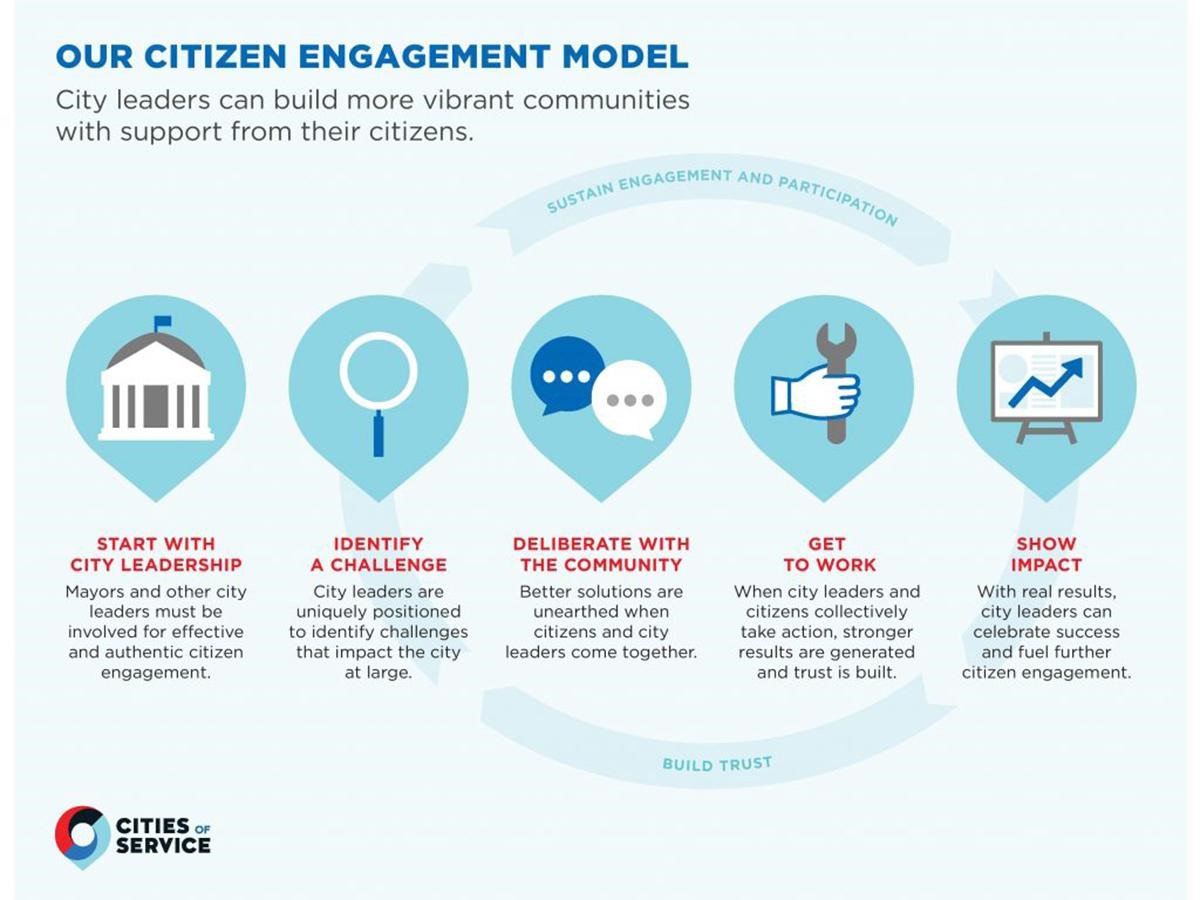
Then, in its implementation, collaborative governance must contain an ongoing process of identifying a challenge, deliberating public problems, sustaining participation, building trust, taking action, and showing impact. According to Cities of Service and previous New America research, another crucial requirement is that both residents and city staff have input in all steps of the process, from the identification of the problem to the strategy, implementation, and reflection phases. As a result, collaborative governance and the civic engagement process are not linear.
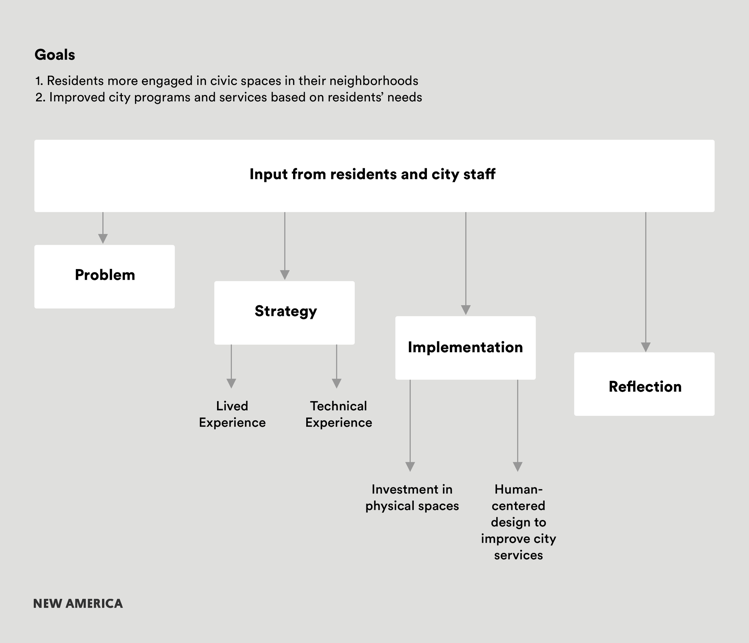
By including residents in every step of the policymaking process, collaborative governance models can help share the level of decision-making authority to include residents and traditionally excluded voices.
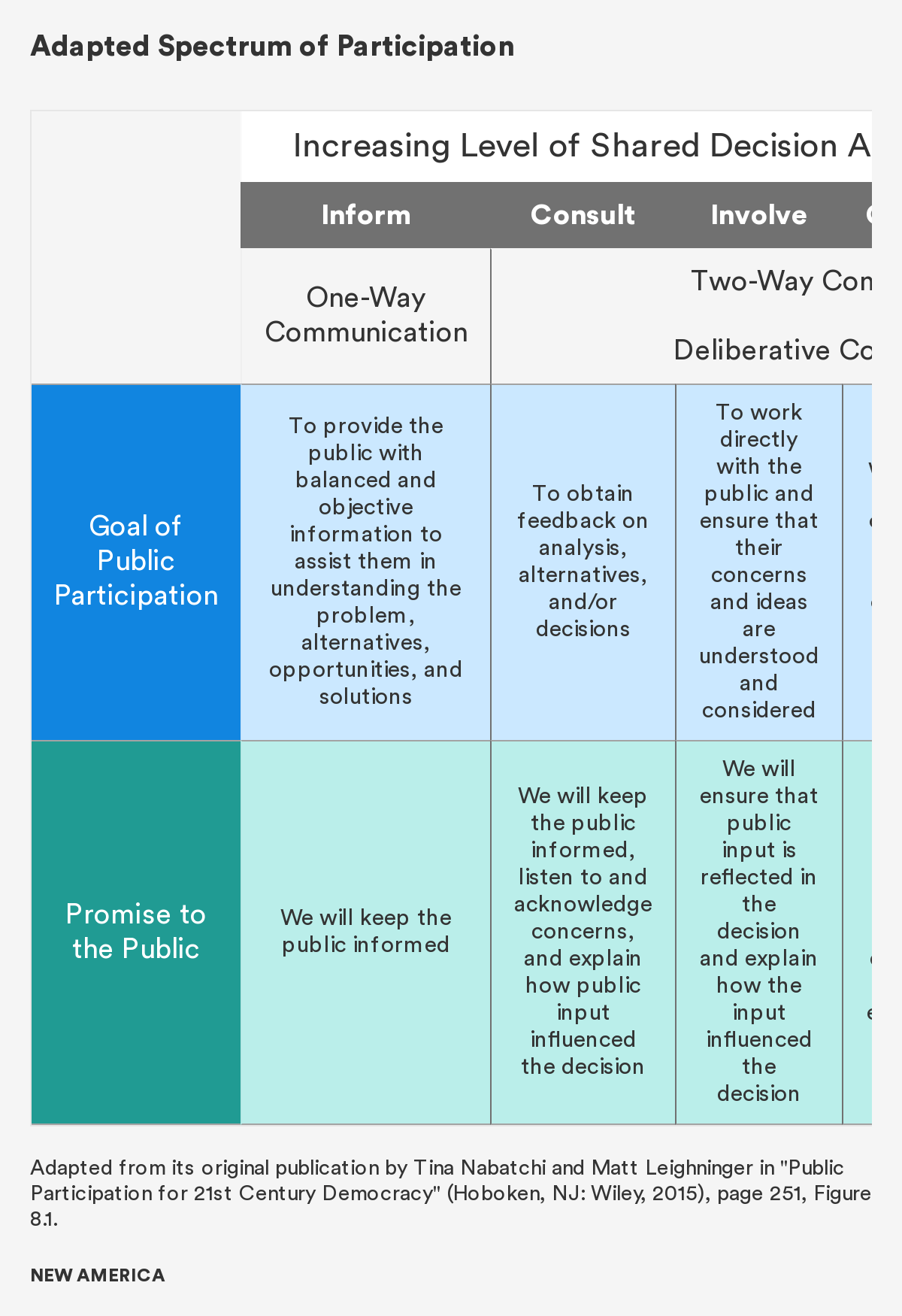
As Tina Nabatchi and Matt Leighninger show, public participation is most empowering when it involves two-way, deliberative communication, which can happen along a spectrum. Not all collaborative governance opportunities must take place at the empowerment stage of placing final decision-making power in the hands of the public—nor should they all be. However, Nabatchi and Leighninger’s chart showcases the range of collaborative governance possible.
Therefore, collaborative government models can be implemented at various scales, as small as one agency’s program. However, where collaborative government has proven most effective, transformative, and durable, it has depended on the creation of new governing institutions and roles.
Recently, mayoral offices across the globe have expanded to include new, experimental roles, from chief storytellers to chief innovation, technology, and data officers. Municipal governments are also developing new kinds of departments, with units like the Civic Engagement Commission in New York City and the Civic Imagination Office in Bologna, Italy. Similarly, governments in Detroit and Lansing, Michigan prioritized civic engagement by establishing a Department of Neighborhoods and Citizen Engagement, which holds civic convenings and trainings, and “connects civic organizations to resources.”5
Ultimately, these roles and structures aim to institutionalize a shared access to power between the residents and city leadership, structurally changing local government to include engagement by design. In addition, these structures actively bring residents, city staff, and officials out of their traditionally confined roles and empower them to think creatively and participate however they are able.
Beyond improving public-service delivery, collaborative government and civic engagement can also benefit city staff and residents in more personal ways. For city staff, it brings them closer and builds better relationships with the communities they’re serving. For residents, researcher Mark E. Warren has noted that increased civic engagement can result in attentiveness to the common good and concern for justice; tolerance of the views of others; trustworthiness; willingness to participate, deliberate, and listen; respect for the rule of law; and respect for the rights of others, to name but a few.6 Similarly, urban-level engagement builds social capital—the social relationships built within a community—for participants as residents work together to co- create, share, and develop public goods, deepening community ties.7
Citations
- Polimédio, Souris, Russon Gilman, 2018.
- Hollie Russon Gilman, “Government as Government, not Business,” Stanford Social Innovation Review, October 5, 2017.
- Carmen Sirianni, Investing in Democracy: Engaging Citizens in Collaborative Governance, (Washington, D.C., Brookings Institution Press, 2009).
- Tina Nabatchi and Matt Leighninger, Public Participation for the 21st Century (Hoboken, NJ: Jossey-Bass, 2015),
- “Department of Neighborhoods and Citizen Engagement,” City of Lansing online.
- Mark E. Warren, Democracy and Association, (Princeton, N.J.: Princeton University Press, 2001), 73.; Archon Fung, “Associations and Democracy: Between Theories, Hopes, and Realities.” Annual Review of Sociology 29 (August 2003): 515–39.
- Robert, D. Putnam, Bowling Alone (New York City, NY: Simon & Schuster, 2000).; Desire Mpanje, Pat Gibbons, and Ronan McDermott. “Social capital in vulnerable urban settings: an analytical framework,” Journal of International Humanitarian Action 3, no. 4 (April 2018).
Identifying Levers of Power in Municipal Government
Applying this kind of democratic innovation inside city hall requires not just thinking creatively about how or why a given locality is engaging its residents. It also necessitates a nuanced assessment of what takes place politically and procedurally within governance institutions themselves: Where are the levers of power—the points of real policy- and decision-making power?1 Who has access to them? And, based on this assessment, how can institutions and processes change to open access to these levers?
Traditionally, the most visible levers of municipal power are built into the mayor’s office and city council. Though the exact division between these offices varies by city, this power dynamic is often referred to as the strong mayor/weak city council versus weak mayor/strong city council dichotomy—as a reference to political power, not personal effectiveness. For example, strong mayors may hold veto power over the council, oversee daily operations, and appoint and remove department heads, while weak mayors defer to a council that has both legislative and executive authority.2
While mayoral leadership can be crucial to local change, concrete levers of power also exist within city agencies, among the bureaucrats who actually implement policies and programs. As front-line staff, these public officials hold the power to make these policy ideas real, and their buy-in is imperative for creating a new governing culture based around civic engagement. Thus, no matter where a creative idea emerges, in order for it to become embedded for lasting change, it must be carried throughout the agencies and government bureaucracy.
Within the traditional democratic model, citizens also are given their own levers of power. However, these are typically based around elections or organizing. In both cases, people’s civic power has more to do with asking others to use their levers of governing power in their favor—rather than being able to pull meaningful levers to impact policy themselves.
These forms of engagement are often built around election cycles that build temporary democratic infrastructure. But this “one-off” pattern of engagement alone may not translate into the kind of organizing infrastructure that can support a protest against a local ordinance the year after an election, for example. Furthermore, election-based civic engagement, while it does include a very important lever of power, can be highly exclusionary and privilege residents with more resources: In addition to leaving out noncitizens, children, or former felons, even citizens who are eligible to vote often cannot participate because of issues around ballot accessibility and strict voter ID laws. And, as we know, many citizens aren’t motivated to vote at all.
Citations
- Nadia Urbinati, “Unpolitical Democracy,” Political Theory 38, no. 1 (2010): 65–92, 67; andK. Sabeel Rahman, Democracy Against Domination (New York: Oxford University Press,2017), 14, 113.
- “Mayoral Powers,” National League of Cities online.
Sharing Levers of Power in Municipal Government
Once a collaborative government or civic engagement-informed infrastructure is in place, the work of redesigning and sharing levers of power must be based on two-way relationships: Government officials and staff executing these policies must understand the obstacles to participation; trust residents and recognize their expertise in meaningful ways; and make sure engagement is inclusive. In turn, residents have to trust their local government and acknowledge the limitations of local government.
First, in collaborating with residents, cities must keep in mind the challenges of participating for their constituents. According to Brazilian politician and philosopher Roberto Unger, new structures of government must also strike the correct balance between political empowerment and structural pressure. In his words, "If the regime imposes too high a tax upon individual energy and attention … the lack of psychological realism will result in a political perversion. The majority of the people will be alternatively bored and repelled by the meeting mania and by the self promoting activists who thrive on it. [As a result], they will withdraw all the more into their own lives [and] their withdrawal will enable those who govern to act with fewer constraints.” 1
Additionally, engagement must be based on meaningful and substantive opportunities to apply civic power. Therefore, city leadership cannot be superficial but should also ensure that people’s engagement will lead to tangible outcomes. As sociologist Xavier de Suouza Briggs notes, “Citizens are motivated to participate in public affairs not out of an abstract desire to strengthen democracy but out of the rational belief that their investment in time, reputation, commitment, and other precious resources should measurably change social conditions.”2 Of course, this does not always mean that every person’s desires or interests will directly lead to policy.
Third, sharing the levers of power also requires expanding access not just outside the walls of City Hall, but doing so thoughtfully and equitably for all local residents. Improving civic engagement cannot just mean that those who already are engaged participate more. Rather, it requires that cities also empower communities of color and traditionally marginalized and under-resourced groups.
For residents, people who do not spend their lives working inside local bureaucracy, it’s important to understand the constraints of the public sector. Although the government-as-business model is appealing to many voters and politicians alike,3 it misunderstands governing as a bureaucracy-free source of power and leadership. Budgets, term limits, and the interaction of different city departments are tangible constraints that governments face and which reinforce the adage that “the wheels of government turn slowly.” Resident input can translate to policy change over time, but it is unrealistic to expect that translation to be direct, or to happen overnight.
When cities and residents can effectively share these levers of power, however, everyone benefits. Incorporating hyper-local knowledge and expertise can make policies more effective, efficient, inclusive, and useful, and even avoid public problems before they develop. After all, “there is a sacred truth in organizing: no one knows a community better than the community itself.”
Citations
- Roberto Unger, Democracy Realized: The Progressive Alternative (New York, NY: Verso Books, 2018).
- Xavier de Souza Briggs, Democracy as Problem Solving: Civic Capacity in Communities acrossthe Globe (Cambridge, MA: MIT Press, 2008), 37.
- Gilman, SSIR, 2017
About this Study
Our Sample
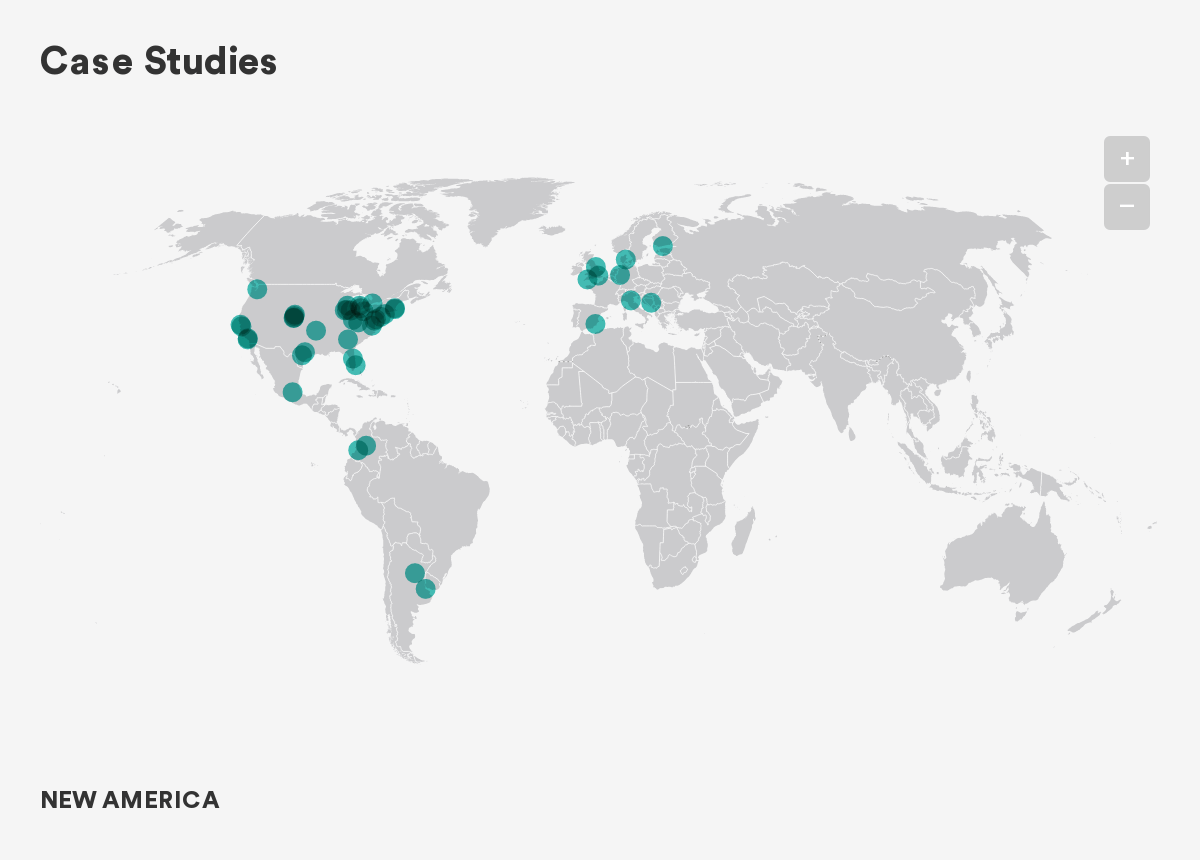
Applying collaborative governance and building genuine civic engagement in forms tailored to unique locations’ histories, budgets, and challenges is difficult for all cities. To understand how some cities are meeting this challenge, we examined 46 cities in the United States, Europe, and Central and South America that implemented 50 different local collaborative governance and civic engagement programs. Data for this sample came from the finalists and semi-finalist application materials for the Cities of Service Engaged Cities Award, a program that provides an international lens on collaborative governance trends and models. Our aim with the sample is to include a wide range of geographic and issue-areas, which we’ve represented below through data visualization.
Cities of Service (CoS) is a nonprofit and nonpartisan organization that aims to help city leadership work alongside residents. Founded in 2009 by Michael Bloomberg, originally within the City of New York, CoS is now an independent organization of more than 280 coalition cities that represents over 84 million people across the Americas and Europe.1 Their mission is to “help coalition cities tap into the knowledge, creativity, and service of their citizens to help identify and solve critical public problems.” 2 Their founding partner was Bloomberg Philanthropies and their current program partners include the Rockefeller Foundation, AARP, the Prudential Foundation, and the Corporation for National Service/Americorps VISTA. Throughout their history, support for CoS has also come from American Express, Comcast NBCUniversal, ConAgra Foods Foundation, ICAP North America, JPMorgan Chase & Co., Sodexo, Urban Land Institute, Walmart Foundation, and WeWork.3 To support municipal civic engagement experimentation, CoS provides cities with resources like human capital, expert technical assistance, and funding opportunities, and helps connect city leadership with a range of partners, including corporate partners, national nonprofits, constituents, and a peer network of other cities.
The aim of the Engaged Cities Award is to “elevate city-led strategies that most successfully engage citizens to help create and implement solutions to pressing local problems,” including tactics like civic tech, data analytics, participatory design, and impact volunteering. The three winning cities each year receive a minimum of $50,000, media coverage through CoS, and resources, including videos and blueprints to promote their work and help other cities implement similar programs. Winners are also invited to participate in annual convenings with others from the Cities of Service Network, where they can learn and share best practices.4
CoS funded this report and provided important fact checking and background information on the cities discussed here based on their research and site visits. All information included in this report was done so at our discretion and all views are our own, not those of the CoS staff. For more information on New America’s funding practices, please refer to our gift guidelines.5
Our research pulls data from the first two years of the award, analyzing the quality of the engagement; the internal bureaucratic structure of municipal offices; and the ability to ensure innovation, diversity, and inclusive engagement based on documentation and data they provided through the Cities of Service application process. To analyze the programs’ individual structures, we adapted the typology that Cities of Service used to evaluate and compare finalists, considering the cities’ problems, solutions, stakeholders, and approaches to diversity.
First, we considered the problems that each city was experiencing and identified 1) the types of problem and 2) the problems’ impacts. The problems could be generally grouped into six categories: health and safety, neighborhood revitalization, environment and sustainability, education and youth, and economic security issues, as well as process improvement for service delivery. Within these types of problems, we considered their impact: whether they limited or challenged the effectiveness of cities’ public service delivery, whether they directly affect the daily lives of citizens, or both.
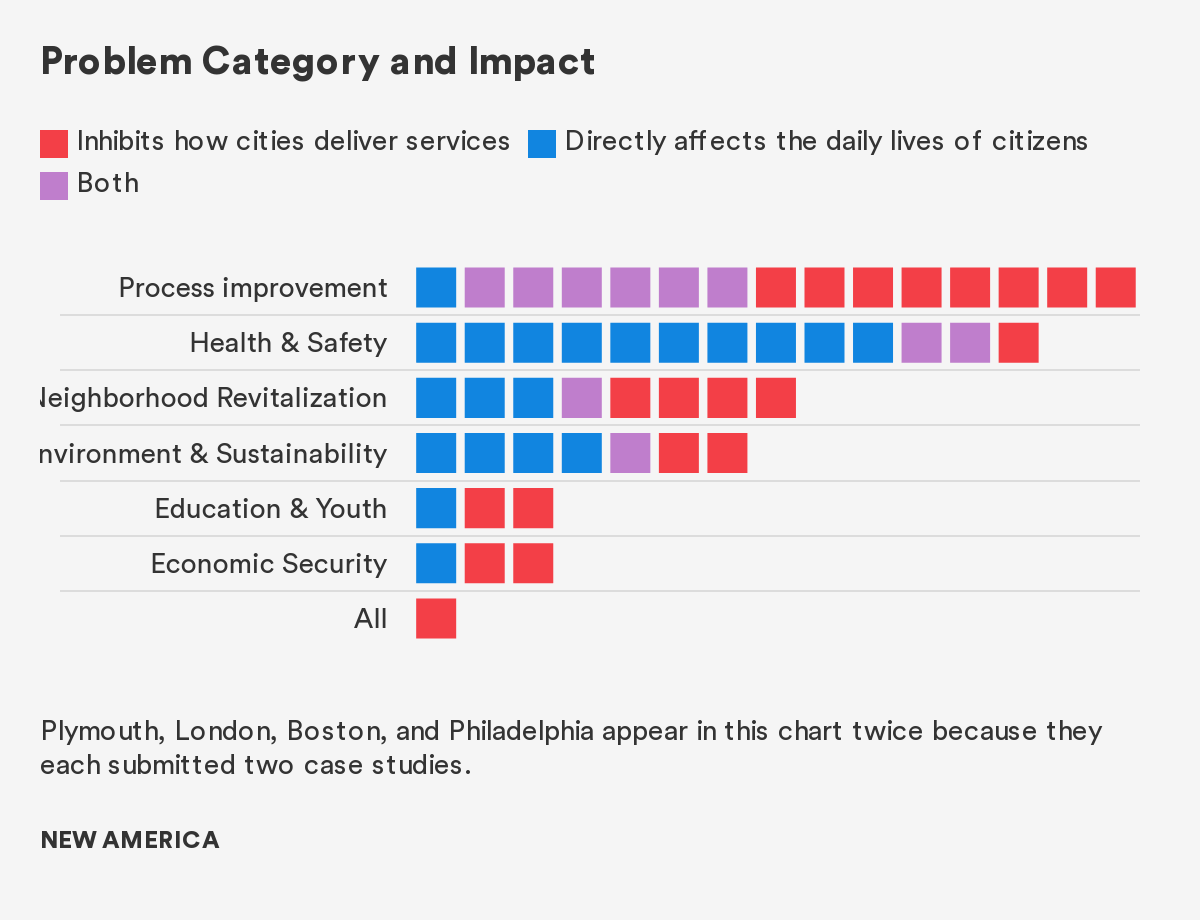
As this chart demonstrates, the cities in our sample work to address a wide variety of concerns that impact both service delivery and citizens’ daily lives. The sample is too small to suggest that collaborative governance models are best suited to some issues over others, but does show the range of problems that cities can collaborate with residents to address.
From here, we also tracked the types of solutions and tools that cities were using to solve these problems. Most resulting collaborative governance programs could fit into five categories: Participatory design, crowd-sourcing, impact volunteering, citizen-sourced data, or capacity building. Many cities used a combination of these tools in one program.
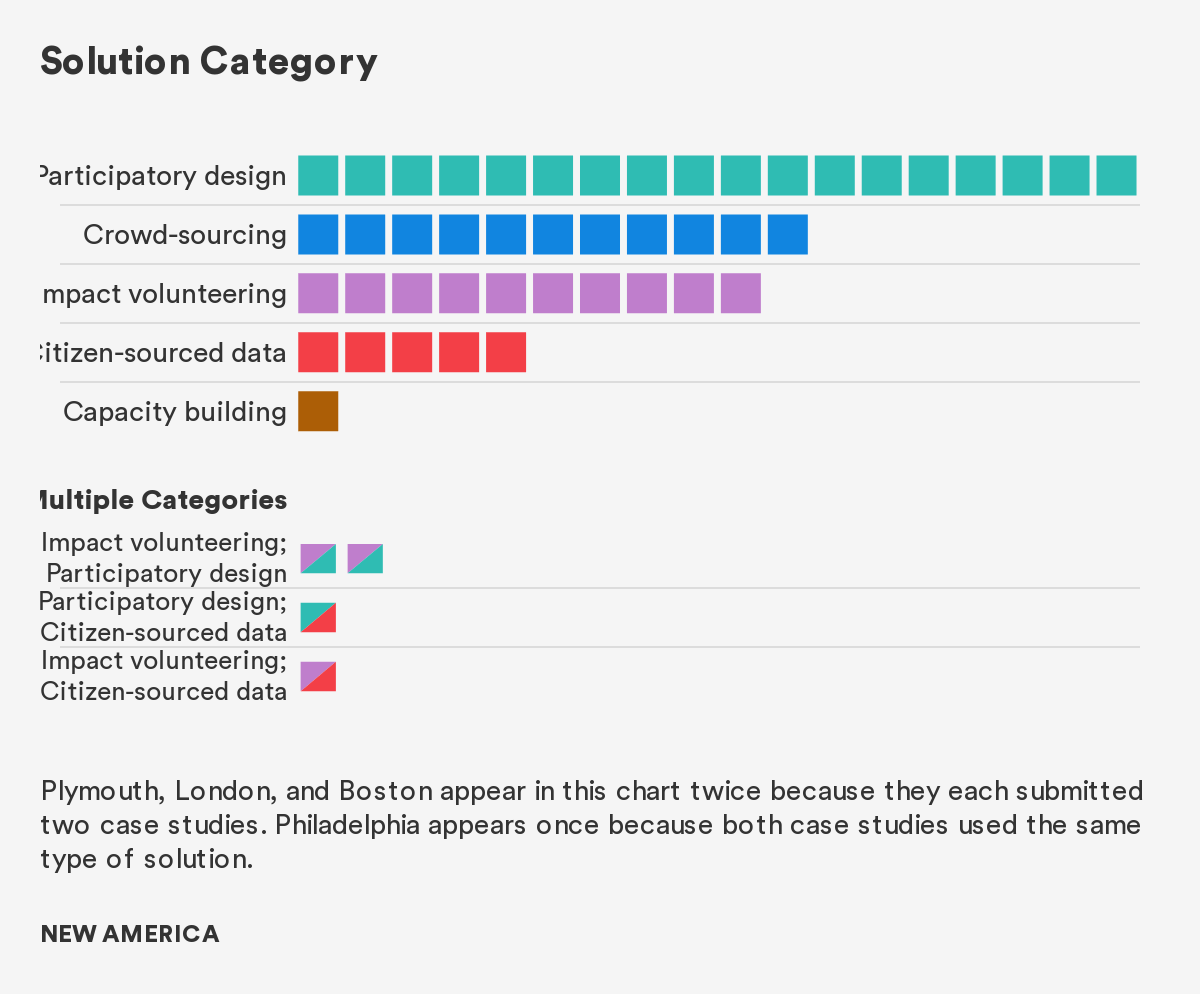
While these case studies suggest that participatory design was the most popular tool—compared to capacity building or citizen-sourced data, for example—this sample does not suggest that any of these solutions are more effective than others.
Our Methodology
To analyze this data, we broke examples down into the categories above to understand how cities were approaching these local problems, and spoke with CoS staff about their observations during site visits. Finally, we co-hosted a workshop with CoS alongside the 2019 CityLab conference in Washington D.C., bringing together municipal leaders from almost 20 cities, including some represented in our sample from the Engaged Cities award. These public servants held a range of offices, some within the mayor’s office and others in various city departments. Their roles included the chief of performance strategy and innovation, sustainability manager, leader of community initiatives in the Office of Peace and Civic Culture, the director of planning and development, director of the Department of Neighborhoods, chief service officer, chief innovation officer, and coordinator of the Civic Imagination Office. The workshop focused on building relationships between these local innovators, drawing lessons learned from their experiences, and identifying their individual needs and priorities in doing that work.
Citations
- “About,” Cities of Service online.
- “About,” Cities of Service online.
- “Supporters,” Cities of Service online.
- “Cities of Service Engaged Cities Award,” Engaged Cities Award online.
- “Gift Guidelines,” New America online.
On the Ground Lessons from Engaged Cities
The resulting findings come from our analysis of the workshop takeaways and the individual case studies. We hope they will provide valuable insight into the concrete ideas and applicable tools that these innovative cities are using, and that this report can help inform local work by civil society and organizations, academia, city staff, grassroots movements, and philanthropy and the private sector seeking to deepen civic engagement.
With the international scope of our sample, this research can think more creatively about the challenges and opportunities that cities face in building more innovative civic engagement. While the governing structures and contexts are different, these case studies still offer useful comparisons and contrasts, and can spark new ideas for communities on any continent. For example, while trust in government in Finland is much higher than the United States,1 both countries can still learn from how the other works to build collaborative governing with their constituents. After all, if cities are the new laboratories of democracy, it will be increasingly important to share lab notes.
Based on this research, we identified six challenges that every city should consider when applying new models of collaborative government:
- Balance long-term versus short-term engagement
- Leverage multi-sector engagement
- Build new infrastructure
- Ensure diversity and equity
- Include intergenerational perspectives
- Overcome obstacles and manage expectations
No one civic engagement project, no matter how perfectly designed or well-funded, can realistically expect to address all six of these challenges. However, keeping them in mind can help better inform new strategies throughout the design and implementation process. Informed by these findings, we also have included five recommendations for cities implementing collaborative governance models and areas for future research.
Long-term Engagement and Short-Term Opportunities
Politics, at all levels, can be a long, slow, and frustrating process. Even within city government, feedback as simple as updating the speed limit on a neighborhood street can take years to implement. Obstacles like the political dynamics between the city executives and city council, layers of local bureaucracy, limited budgets, changes in administration, or preemption conflicts between local and state government2 can all slow down small changes that seem easy to implement.3
This reality of the political process can be at odds with the passion and energy that usually motivates residents to become engaged in the first place. People understand that political change is not delivered instantly. But even when grassroots motivation survives the frustrating timeline of politics, the duration and procedural complexity can mean that those who typically stay involved are residents privileged with time, financial resources, schedule flexibility, relationships within government, and higher education.
Therefore, encouraging inclusive, longer-term engagement also requires building tangible wins into the process that show progress. To use Sherry Arnstein’s classic 1969 “ladder of citizen participation” theory,4 these tools often fall in the categories of informing the public; consulting citizens through tools like surveys or neighborhood meetings; or granting individual, carefully-selected citizens limited-power advisory roles on committees. Tactics can include announcing resolutions, hosting listening sessions, or other concrete ways to respond to community complaints. These practices offer valuable recognition and progress to residents, and are especially helpful for collecting residents’ localized knowledge and expertise that can later inform important governing decisions.
However, as Arnstein notes, short-term opportunities based on informing, consultation, and placation practices like those above can also be considered tokenism or bureaucratic dismissal when not developed any further. Therefore, efforts to include tangible wins and short-term outcomes cannot remain the end goal of engagement.
As Arnstein argues with her ladder theory, true civic power comes with models that build partnership between citizens and bureaucrats with decision-making responsibilities, or delegating citizens to a majority on committees. Though these models, of course, take more time to implement.
Finding the correct balance, then, between short-term wins and long-term engagement is vital for developing an infrastructure of inclusive participation and civic power. Within the Cities of Service sample, there are innovative examples of how to achieve this balance.

Case Study: Murcia, Spain
In 2015, the southern Spanish town of Murcia was in a difficult situation: Citizens were experiencing a low quality of life because of the town's blight, physical deterioration, and a lack of playgrounds and green spaces. As a result, Murcia was also missing a shared identity among neighbors, and, over time, the decreased liveability meant a notable increase in families and middle-class citizens moving away to the suburbs. Murcia citizens recognized these problems, but they did not have ways to partner with the city to problem-solve, and the city staff felt demotivated to engage citizens.
In response, Mayor José Ballesta introduced the Urban DNA project,5 a participatory design-based civic engagement approach to rebuilding the relationship and channels of collaboration between the city and the residents that Murcia’s challenges most directly impacted. Urban DNA included eight “agorae” forums, urban labs, urban games, and online engagement tools for submitting proposals with interactive maps, among other efforts. Urban mapping was another important tool, especially as a means of directly engaging with different demographics. To create these maps, the Urban DNA program built teams of families, elderly citizens, disabled citizens, students, and parents with children who all identified different neighborhood problems and needs. The City then held two weeks of interventions, including painting walls; modifying streets and buildings for better accessibility; adding lighting, drinking fountains, and green spaces; and revitalizing elderly centers and women’s centers. In total, 35,000 ideas and proposals turned into 3,600 interventions, 300 citizen-organized cultural events, and 2,500 surveys collected on satisfaction and impact, which showed that residents felt more engaged, heard, and empowered. Beyond these specific tools, part of the program’s success is due to the years that Murcia City Hall had already spent developing citizen participation initiatives—through stakeholder and facility mapping, territorial diagnosis and vulnerability assessments, and indicators for monitoring and evaluation—before starting the citizen participation phase.6 Since its first iteration, the Urban DNA methodology has already been replicated 13 times within the city.
With this approach, Murcia applied a theory officials call “urban acupuncture,” where hundreds of small, targeted interventions combine to make a major impact. Just because the projects were small, however, doesn’t mean that citizen participation had to be superficial. According to Mercedes Hernandez Martinez, the head of the European Programmes Department in the city, “Citizens did not help [simply] identify, define, and refine the problem, they [addressed the problem] themselves.” Even with the “proposal of solutions, the municipality merely assisted and reallocated resources, interacting with residents and establish[ing] lasting, fruitful relationship with a common goal.”7 Therefore, Urban DNA allowed Murcia to address a long-term, existential issue like quality of life through small, accessible projects that let citizens engage over concrete, meaningful wins. The Urban DNA program continues today in three main neighborhoods, acting as a uniting framework for continued, small-scale engagement.

Case Study: Flint, Mich.
After the auto industry left Flint, the city’s economy disintegrated. The population decreased by 50 percent since the 1960s,8 and one-third of all properties became vacant. Arson, vandalism, and sanitation problems then increased. As a result, the city faced estimated demolition costs of $71.88 million. Yet Flint lacked the budget and support staff necessary to tackle its monumental blight challenges. Although the City of Flint had previously adopted initial frameworks for blight elimination—conducting neighborhood inventories where resident groups gathered blight data—they were short on funding. And as properties around the city continued to deteriorate, so did trust in local government. So in 2017, the City tried something new: Working with the Genesee County Landbank, the municipal government launched the Flint Property Portal, an app and website that allowed residents, city staff, and organizations to look up and contribute user-generated information about properties.
The portal accomplished two goals based on short-term civic engagement. First, it helped the city collect previously missing data on the status of all 56,000 properties across Flint.9 Second, the portal helped open new channels of communication between residents and the City of Flint, with over 120,000 messages sent through the portal. The City was then able to leverage these short-term benefits into longer-term engagement and positive change for Flint. For example, the reliable geographic data from the portal allowed Flint to implement more strategic blight elimination, as well as to receive funding from outside agencies. The City, in partnership with the Genesee County Landbank, received more than $60 million of blight elimination grants from the U.S. Treasury Hardest Hit Fund.
Thanks to the portal, Flint is now making better, resident-informed decisions, and has created a volunteer infrastructure for future engagement. Residents have continued to use the portal to keep data up-to-date and to help develop community volunteer projects. They’ve since helped maintain and care for 690 vacant lots. Ultimately, residents also noted a morale boost for themselves and their neighbors, and reported a sense of pride in helping take care of their communities.
As these two cities show, using a framework of a long-term goal can help unite small, short-term projects to make meaningful and visible change, even if it is just incremental. Particularly in Murcia, breaking down a larger goal with the “urban acupuncture” theory carries the dual advantage of making change more feasible and effective for city hall and making those opportunities more accessible for residents. An entirely government-led plan to address those challenges—one that most likely would feel abstract and disconnected from everyday residents—would not only have taken extreme staff capacity, but it would have also led to frustration and disengagement with residents, who wouldn’t necessarily have seen their feedback leading to any clear outcomes.
While not all residents may have the time, expertise, or resources to participate in a multi-year deliberative process, both the Murcia and Flint models show two very different approaches for meaningful, come-as-you’re-able engagement. For Murcia, residents could participate in all forums, urban mapping, online tools, or interventions as they could. In Flint, residents could submit data on blight as they saw it, without having to commit too much time or additional transportation. Residents in either city who had more capacity could engage in later cleanup events, but more resource-limited residents could also participate to the degree they were able within an accessible scale.
Finally, for residents in both cities, submitting the blight data or participating in events and interventions created an instantly tangible and gratifying win. Yet, these early wins were made more meaningful because the city government followed up on the proposed plan towards long-term change.
Multisector Engagement, Inside and Outside Government
In addition to residents, city staff, and elected officials, structural change and supported movements for civic engagement cannot happen without participation and buy-in from third parties. Taking a holistic and multi-sector approach that includes other community entities, from local businesses to philanthropy to civic organizations, can help provide a collaborative government effort with additional capacity and expertise that citizens or city staff may not otherwise be able to contribute.
These partnerships can take place externally or internally to municipal governments.
First, external partnerships can be helpful because legally and practically, municipal governments cannot provide all the expertise, funding, or strategic support necessary for ambitious engagement models.10 In these cases, as Xavier de Souza Briggs explains, “civic intermediaries compensate in specific ways for a lack of civic capacity because of what government, business, or civil society organizations are not able, or not trusted, to do, and also—along a more temporal dimension—for process breakdowns, such as impasse, polarization, and avoidance, that thwart collective problem solving.”11 Similarly, businesses and philanthropies are uniquely positioned to provide game-changing financial support to help get projects off the ground or to help institutionalize new models.12 Additionally, organizing groups can reach out to and motivate residents who otherwise may not participate.
Second, internal partnerships that incorporate individuals with multisector backgrounds and skillsets can also make monumental improvements to city government processes. Through structured projects like fellowships 13or crowdsourcing models, or by simply opening up the hiring process to nontraditional backgrounds, innovation teams can take an interdisciplinary approach to a range of procedural collaborative government steps, including “data, design, research, and project management.” By combining different skills and expertise, municipal governments can better solve “some of the highest-level and most complicated city priorities, such as lowering the homicide rate, devising a climate action plan, or addressing persistence poverty.” As a formal model, these innovation teams have spread throughout the country, and could be found in 66 cities as of 2016.14

Case Study: San Francisco, Calif.
Like many cities internationally, San Francisco faces challenging issues like homelessness, lack of affordable housing, and climate change—problems that disproportionately affect marginalized communities. And like many other major cities in California, San Francisco also hosts a high concentration of tech companies and startups, and a resulting culture of innovation and technology.
The City of San Francisco saw the innovation and skill housed in these companies as an untapped resource. They had previously tried one-off civic engagement opportunities like hackathons, but the output didn’t meet the city’s needs and volunteers were left feeling frustrated. However, the City of San Francisco had neither the capacity nor the infrastructure to support a more formal network of outside volunteers. Similarly, many companies who wished to provide pro-bono services did not know how to engage with the City—a special challenge because the rise in tech companies in San Francisco has been a major contributor to gentrification, homelessness, and unaffordable housing. In response, the Office of Civic Innovation established the Civic Bridge program in 2015 as a way to constructively and concretely bring together the private sector’s skills with local government’s expertise to address these local problems.
Through the Civic Bridge program, corporate volunteer teams contribute 20 percent of their time for 16 weeks to help solve public problems by reimagining and updating the logistics of public service delivery, such as improving the application process for affordable housing, or coordinating a referral system across legal aid organizations to provide legal counsel for all tenants facing eviction. By applying corporate strategies like design-thinking to the public sector, corporate volunteers can apply skills uncommon in the public sector. Combining these skills with city staff’s policy expertise, the program aims to find practical solutions to some of the city’s most pressing social problems.15
The key to the program’s success is its infrastructure within city government. Before moving forward with a project, Civic Bridge first invests substantial staff time and resources to appropriately scope out a project. This process alone can take roughly eight to 16 weeks, meaning that the program allots as much time to the internal scoping process as they do to having corporate volunteers work directly on the problem.
Civic Bridge also applies a strict standard in choosing and designing the project.
To identify a potential project topic, the program looks for a clear challenge or problem to solve, potential for impact on the lives of residents, and alignment with the City’s and mayor’s policy priorities.
Then, when designing the project, the Office of Innovation considers leadership, scale, and resources: First, a successful project requires clear procedural owners, and leadership from within the relevant city department. During the implementation stage, pro-bono volunteers work closely with city staff—from the Office of Innovation, as well as from the related department —who supervise the volunteers and closely manage the project. Having this buy-in ensures that volunteers have the necessary support to carry out the project, as well as to help address any obstacles that come up during the program. Second, the potential project must have a feasible and appropriate scale. Third, the related department must also have the resources necessary to actually implement the volunteers’ ideas.16
By simultaneously engaging stakeholders’ expertise, harnessing the private sector’s unique skill sets, and reinforcing the infrastructure of well-defined city initiatives, the Civic Bridge project tapped into a powerful multi-sector collaboration. In San Francisco, volunteers have clocked more than 24,000 volunteer hours, and the process has engaged 450 city staff from 25 city departments in about 49 projects, which received an estimated $3.9 million in pro-bono work.

Case Study: London, U.K.
As London has grown, the population increase has put new pressure on the city’s environment, infrastructure, housing, and jobs. Gentrification has become a particularly pressing problem, with minority communities affected most negatively, and many residents feeling like their communities are changing without their having a meaningful say in the process.
Recognizing this problem—and that strategic regeneration projects can take years have an impact—the Greater London Authority sought out an inclusive approach to managing London’s growth. The authority established Crowdfund London to create meaningful community engagement around planning decisions, pulling from different sectors to fully harness Londoners’ creativity.17 With a local startup, Spacehive, the City established a crowdfunding site for citizens to propose and contribute to community improvement projects. As projects move forward, the City assists in designing, planning, and building relationships, and offers financial support of up to £50,000 per project. Since establishing Crowdfund London, the City has contributed a total of £2.1 million to 118 successful campaigns, and raised £4.8 million in funding.18
Previously, the City of London tried to incorporate citizen consultation on development proposals, but those efforts failed to make lasting impacts within communities. The success of Crowdfund London, in comparison to previous citizen consultation initiatives, can be attributed in part to the multisector collaboration inherent in the project design.
First, the project required multiple levels of government support. Crowdfund London originated in the Mayor’s office and with the Regeneration Team, which focuses on “encouraging and shaping growth in London’s town centres, economic centres and high streets.”19 From this position, the project received a fund of £4 million through the London Economic Action Partnership (LEAP), a local enterprise partnership that connects the business community with the London Mayoralty.20 Second, through the City’s private-sector collaboration with Spacehive, the company provided the necessary technological skills and a support network—comprised of partner councils, companies, foundations, and teams of experts—to help citizens execute their ideas. Finally, the City collaborates with the citizens themselves, who contributed the community voices, ideas, funding, and buy-in necessary for civic engagement success.
Ultimately, this model allows the City to extend their resources by constructively collaborating with civic society groups, local residents and trade associations, business improvement districts, social enterprises, and local charities. In doing so, London can not only effectively address issues of growth and neighborhood change, but also do so with the many stakeholders affected.
In both of these examples, collaboration with stakeholders beyond the traditional government-resident relationship brings in new perspectives, skills, resources, funding, and legitimacy that can help ambitious civic engagement projects achieve their goals more efficiently and more inclusively. Doing so means that city governments must also clearly and publicly communicate their limitations. Admitting those limitations may be difficult, but it can help identify opportunities for collaboration that experts or other stakeholders outside of government may not have otherwise seen.
While institutionalizing these kinds of teams as formal staff is ideal, it may not always be possible given hiring policies or budget limitations. For private-sector experts, it can also be difficult to recruit them away from high-paying corporate jobs, or roles with more flexibility than exist in a municipal system. A hybrid system like San Francisco’s can help find a compromise structure, one that doesn’t require private-sector experts to leave their jobs and don’t necessitate new hires.
One important downside to this model, though, can be the short tenure or high turnover of volunteers. If projects are designed without this transfer in mind, technology that is straightforward for someone with corporate skills may become less manageable once their fellowship is over, or when the system has an unexpected bug in the code. It’s also important that new experts are brought in within a structured framework that continues to build upon existing projects in a sustainable way, rather than have each cohort begin an entirely new project. In San Francisco, the Office of Innovation’s early stages of project scoping are imperative to making sure that projects can actually get accomplished within a 16 week timeline.
However, just because a program is time-limited doesn’t mean that the partnership ends at the same time. San Francisco found that volunteers stayed engaged with their government team even after their 16 week fellowship ended, partially because participating gave them a better understanding of the city government process and they were encouraged by seeing how their contributions were affecting real change.
High turnover doesn’t just apply to the volunteers, though; city staff also experience high rates of turnover. Local bureaucracy is difficult work, and projects like Civic Bridge require high degrees of investment from city officials. For these programs to succeed, staff have to welcome working with outside volunteers, as well as being willing to collaborate precisely with other city agencies. It also requires a willingness on behalf of city employees to learn new skills, such as design thinking.
In the case of Crowdfund London, one benefit to its model is its institutionalization within the municipal government and community with an outside, organized private-sector partner institution, rather than individual volunteers. However, as part of the mayor’s office, the project is also more prone to instability during administration changes. Continuing the program or not will be entirely at the next mayor’s discretion when they come into office. Of course, administration changes can also be positive: While Crowdfund London began under the previous mayor, current mayor Sadiq Khan has grown the program and increased its budget. But ultimately, administration changes at the local level can influence a program’s viability. Additionally, because the Greater London Authority is comprised of many different cities, buy-in from local authorities is crucial for genuine, sustained engagement to continue.
Creating New Infrastructure
To be successful, civic engagement at all levels has to transcend the one-off method of “thin” engagement—a common pitfall with traditional one-off volunteer or voter outreach, for example.21 And doing so requires ensuring that those processes have a corresponding infrastructure of procedural support. Meaningful engagement, especially the form that includes traditionally excluded voices, can only happen when the process has an infrastructure of support from beginning to end.22 This may mean opening new city offices, assigning full-time staff to the project, or increasing project funding.
Building the appropriate infrastructure to realize a new model of governing helps the project function smoothly. It also demonstrates to residents that the project is a priority for the city, one that’s a good use of time and energy and, therefore, worth engaging with. If constituents suspect that a new civic engagement endeavor is more superficial than structural, it will diminish their interest in participating, their trust in government, and morale.

Case Study: Bologna, Italy
In 2011, residents of Bologna decided they wanted to repaint a community bench. However, the Bologna bureaucracy prohibited residents from operating in public spaces, so citizens had to get approval from five different offices for one small beautification project. These layers of distance between residents and government were indicative of larger problems in the democratic partnership: Bologna also saw a serious decrease in voter participation at the regional level. In the 2014 elections, only 37.71 percent of voters went to the polls in comparison to 68 percent during previous elections. While this pattern reflected an overall European trend of increased apathy towards civic engagement and decreased trust in institutions, it was especially noteworthy in a city with Bologna’s history of wartime resistance and political engagement. As the bench example shows, however, the problem was not that citizens were apathetic. Instead, the city’s bureaucracy was stifling their desires to participate.
The City of Bologna, in response, created an entire new civic engagement infrastructure that would open up the government process and lower the barriers to participation, though these infrastructure changes didn’t happen all at once. The efforts began in 2010 with the Incredibol! program, a competition for startups in creative and cultural industries. But after residents became frustrated with the city bureaucracy in 2011, the City took time to try and find new solutions that would encourage civic participation, not discourage it. In 2014, a new regulation passed creating “public collaboration regulation pacts” focused on taking care of urban common areas, as well as a website to host them. In 2015, the government redivided the city into districts with their own councils and presidents. Two years later, through a partnership with the University of Bologna, the City established a six-person Office of Civic Imagination, which supports one “lab” per district to build connections between government and citizens. In 2017, that same year, the City implemented participatory budgeting, a program also supported by the Office of Civic Imagination. This partnership between the City and University of Bologna originated as the Urban Center, founded in 2005, but in 2018, it became the Urban Innovation Foundation.
In creating this new infrastructure, Bologna also kept in mind traditionally excluded populations, like refugees and underage youth, something especially important in a town with a large student and migrant population, and in a country where residents must live in Italy for 10 years before they qualify for the right to vote. For example, voting in Bologna’s participatory budgeting process is open to anyone over 16 years old who lives, works, or goes to school in Bologna, enabling much more participation than traditional municipal elections.
The city’s efforts have also required serious funding: Winners of the Incredibol! competition can receive up to €10,000 ($11,300 USD) each. Bologna committed approximately €150,000 ($170,000) for the collaboration pact budget. And the City sets aside a million euros ($1.13 million) for participatory budgeting projects.
Undoubtedly, Bologna's project was a massive undertaking, and it was also very successful: It saw an increase in voter turnout, 508 collaboration pacts, 15,000 square meters of city walls cleaned and 110 city benches renovated, the establishment of new businesses and community projects, and 27 submitted participatory budgeting proposals. Overall, by 2018, of the 388,000 people in Bologna,23 14,400 people voted in participatory budgeting projects and 1,700 citizens participated in district labs meetings. In 2017, one woman attending the opening of a retrospective exhibition said, “I am a simple citizen and I wish to thank you because you involved me. You understood that citizens want both bread and roses, that they want to be involved, so I thank you.”
Case Study: Santiago de Cali, Colombia
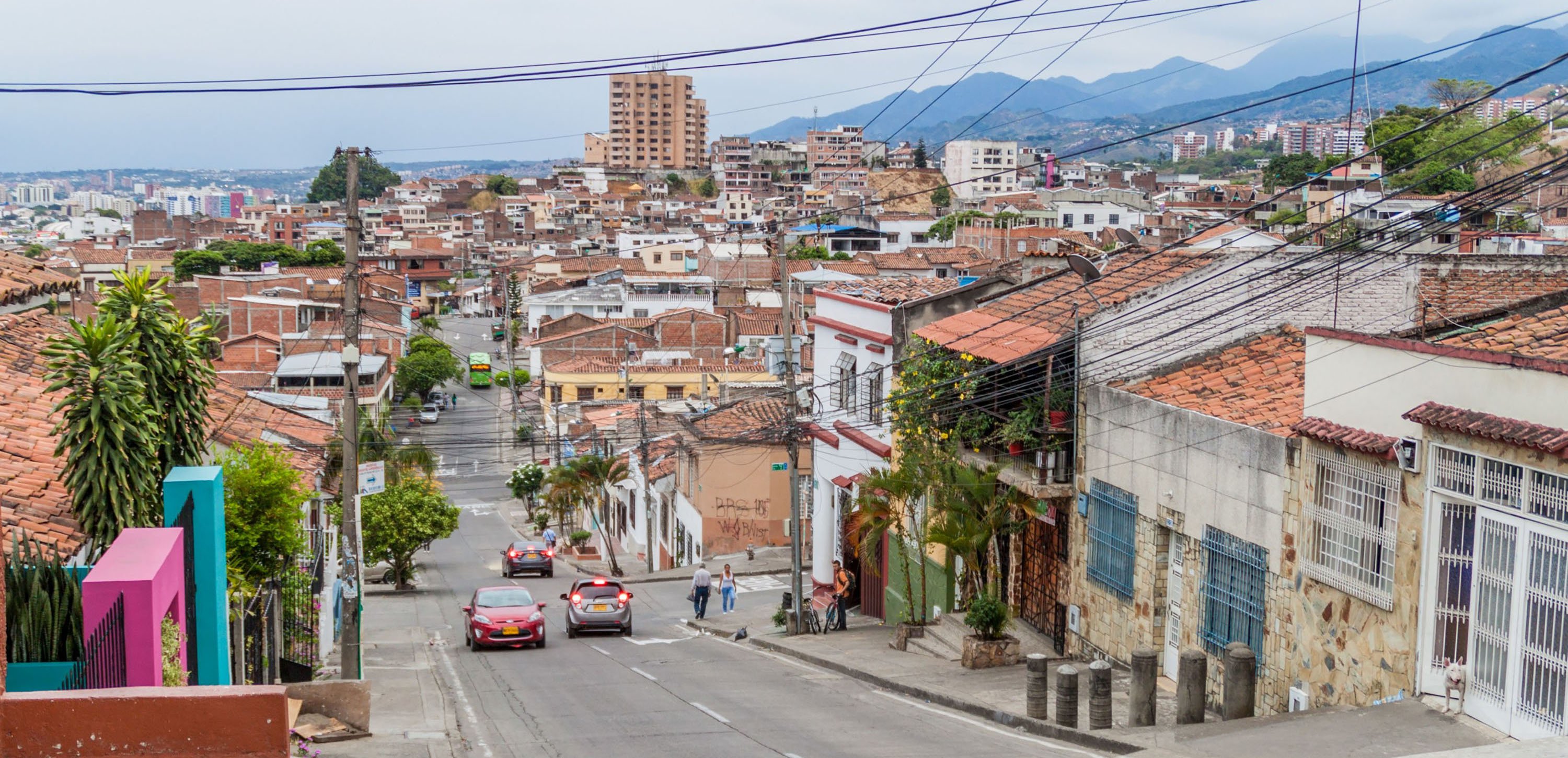
After the civil war in Colombia ended, Santiago de Cali still experienced high rates of violence and low levels of trust in communities and with local city staff. The city had one of the highest homicide rates in the world—over 60 per 100,000 people—and neighborhoods still saw small-scale drug trafficking and violent disputes. Often, neighbors did not talk to each other and were afraid of crossing “invisible borders” within the city that existed as legacies of narco-trafficking. These problems were a matter of life or death, but the government had a difficult time intervening.
In response, the City of Cali decided to create a new civic engagement-based infrastructure to rebuild positive relationships within the community, between the community and government, and with public institutions, NGOs, and the private sector. The La Secretaría de Paz y Cultura Ciudadana (Office of Peace and Civic Culture) created community round tables, “Mesas de Cultura Ciudadana para la Paz” (Tables of Civic Culture and Peace), made up of local residents.
With support from the City, these residents then created neighborhood programs within their own communities, addressing problems of “coexistence, public spaces, and democratic participation.”24 The program did not catch on overnight. But within two years, 450 residents across 15 local councils participated in the mesas, representing different religious, cultural, ethnic, social, and artistic groups. Due to the mesas’ work, Cali had implemented over 200 community initiatives by 2018, focusing on short-term projects like cleaning parks, as well as longer-term goals like rebuilding community trust. In one example, 513 volunteers revitalized public spaces near two schools, helping erase the invisible borders of rival gangs in the neighborhood, and cleaning up areas that were previously hubs for drug activity. Moreover, the city saw a dramatic difference in their community: The homicide rate dropped to the lowest level in ten years, and there were 30 percent fewer fights during the city’s annual cultural event.
Creating this new infrastructure took substantial resources from the City. Cali provided physical resources; human resources, including psychologists and social workers; financial resources of a $500 USD stipend per council per year; technical support; and logistical resources, like citizen trainings through the mayor’s office.25 But ultimately, this project completely redesigned the city’s community infrastructure, and offered new opportunities for democratic participation that can be adapted to suit participants’ level of interest, time, and resources.
As these case studies show, building the appropriate infrastructure for innovative civic engagement takes significant and intentionally-allocated resources, including staff time, budget allocations, and physical and logistical capacity. However, massive projects of this scale may not require as much money as an observer might expect. For an annual total of $38,000 in 2018, Cali has created dramatic and meaningful change in cities that desperately needed it through funding the councils.26 Similarly, though the collaboration compacts make up only one part of Bologna’s restructuring efforts, they could also be replicated in cities with limited budgets, as they only required $170,000 per year as of 2018.27
Another key to making projects of this scale feasible is that both cities developed infrastructure in the community and with multisector partners, not just within their own governments. As discussed earlier in this report, this kind of collaboration is key to long-lasting, stable projects, helping build project infrastructure on a more stable foundation of support.
With the proper resources and partnerships, both case studies speak to the power of investing in real institutional and infrastructural change. Though they represent doing so on the largest scale possible, more limited cities could still implement individual portions of the Bologna and Cali models and see a benefit.
Ensuring Diversity and Equity
When cities introduce new civic engagement opportunities, it’s important that they’re thoughtful about who they’re trying to engage, and careful not to simply recreate structures of inequalities and oppression. In other words, if those who already participate frequently or have wealth and privilege are the only ones participating, it should be a big red flag. Engagement needs to take a broad approach to include multiple types of diversity, including individuals’ background, gender, socioeconomic status, geographic diversity, education, disability status, education level, and previous levels of participation.
Achieving this degree of intersectional diversity in civic innovations requires thinking carefully about all aspects of an engagement model.28 From recruitment to meeting times and locations, to childcare and outreach methods, every choice can inherently build in exclusivity and inaccessibility. For example, residents with caregiving responsibilities or shift work may not be able to attend evening town halls. Low-income residents may not be able to afford the cost of gas to drive across the city for an event. Vulnerable and marginalized groups may feel uncomfortable attending a deliberation session held within the police headquarters. And historically disenfranchised residents may not find out about civic engagement opportunities advertised through traditional channels.
This is especially true with respect to innovations leveraging new tools, technologies, and approaches. As Miguel Gamiño, then chief technology officer for the City of New York, noted at the launch of the Innovation Lab in Brownsville, Brooklyn, “Rapid technological advances hold the potential to transform our cities, driving quality of life improvements for millions of New Yorkers. Our challenge—and responsibility—is to ensure these technologies reach and benefit all New Yorkers, not merely a select few.”29 Even in 2020, not all citizens have equal access to or familiarity with many types of technology, including a consistent internet connection, a smartphone, a computer, or a printer. In the United States, three out 10 homes still don’t have broadband access,30 and as of 2018, over 15 million Americans “in rural and tribal areas still lack access to high-speed broadband.”31 Therefore, if participation or communication about these opportunities rely too closely upon these methods, the population participating will be inherently less inclusive.
When properly channeled, the power of civic engagement is that it opens up communication between residents and their governments. But improperly implemented, the wrong kind of civic engagement model can unfortunately block this communication for residents who may need it the most, and with long-term consequences.

Case Study: Austin, Texas
Based on census data, the City of Austin knew that their population was becoming more diverse, with 51.3 percent of the population belonging to a wide range of minority groups. However, the demographics of who participated in local civic engagement efforts was not. Participation in previous surveys, community conversations, town halls, and city council meetings were largely white or Caucasian. According to Chief Service Officer Sly Majid, this problem meant their decision-making processes did not reflect a full picture of Austin communities’ experiences or needs, and that neglecting these populations could have long-term consequences, like food instability or unemployment, as a product of insufficient public services. Ultimately, certain communities were making decisions on behalf of the entire city, and that problem was set to continue as Austin continued to become even more diverse.
The problem city staff identified was that Austin's city government was largely inaccessible to minority groups and did not adequately consider the city’s diversity. Their solution was to create the Conversation Corps, a targeted outreach program that focused on “minority groups, seniors, people with disabilities, people with limited English proficiency, people under financially challenging situations, renters, education, and levels of acculturation.” The Conversation Corps started by recruiting diverse community members to receive facilitation training and guides from Leadership Austin, the Conversation Corp vendor. The half-day training aimed to be as short as possible to decrease the time and transportation resources required to attend, and were initially provided in Spanish and English, though the City is working to include more languages. After training, facilitators held community conversations based on discussion topics identified by public partners, assisted by a facilitator’s guide to help plan discussions. After each conversation, the facilitator summarized the conversation, which is then published online.
In addition to Leadership Austin, the program’s other partners include the Austin Independent Schools District and the Capital Transportation Authority. Together, these partners all contributed $15,000 per year and were responsible for promotions and supporting outreach.
Since 2015, the Conversation Corps has had almost 700 attendees, who participated in over 200 conversations, covering topics like mobility, water, transit, and parking. Beyond English and Spanish, the conversations have also included citizens speaking Tagalog, Farsi, Chinese, and German. Gender representation of participants is almost 50-50, and ages range between 15 and 65+, though the majority of participants are over 65. Attendees’ income also ranged from $10,000 to over $105,000. The conversations were held at around 50 different locations, and the program aimed to hold meetings in comfortable, familiar spaces. Word of mouth promotion was also an important part of recruiting participants who do not typically participate in civic engagement programs.
The feedback collected from these efforts has impacted municipal policy on a range of issues, such as parking rates and transit options, agency budgets, recycling and composting services, use of public parks, and affordability. As a result, the Conversation Corps has become an important part of policymaking infrastructure, one that elected officials and other city staff reach out to. Based on surveys, the City has also found that participants feel more connected to the policymaking process, even when their preferences do not directly translate into policy outcomes.
But despite these measures of success, participation rates by residents of color are still low. In this sense, the City’s outreach efforts are still an ongoing process. The program experimented with holding conversations in different locations, through different venues, and in different times of day, but still see low attendance from communities of color. The City views this challenge as a historical one: The City has previously not prioritized engaging with residents of color, and that history of disconnect will take time, new models, new grassroots partners, and applied feedback to undo.

Case Study: Philadelphia, Pa.
With over 400,000 people living below the poverty line,32 Philadelphia has an incredibly high poverty rate, one of the highest in the country. As a result, the Office of Homelessness Services (OHS) has expanded public services like adding more housing units and providing more daytime services, but the director has also prioritized improved internal systems transformation to be “housing-first, person-centered, trauma-informed, and data-driven.” To shift the services process, the OHS teamed up with the Office of Open Data and Digital Transformation (ODDT) and the Philadelphia Participatory Design Lab, a program within the mayor’s office that uses behavioral economics and human-centered service design to improve public services.33 Together, the Design Lab and OHS teams worked with city staff, designers, and trauma experts to update the OHS’s three-part homeless prevention and shelter services. In doing so, the teams also included a thorough participation program to include the perspectives of Philadelphia residents who access OHS services, those who refuse services, and staff.
By definition, traditional civic engagement methods like town halls or online surveys often cannot help improve policymaking to better suit residents experiencing homelessness. To collect residents’ perspectives, the team spent two months in the field with residents experiencing homelessness, conducting “1:1 interviews, observing the activities of access points, and shadowing staff.”34 In total, the project involved engaging with 121 different participants and staff, which they used to inform 19 co-design sessions with staff to brainstorm ideas. With those ideas, the team then held design sessions with participants and staff, after which the OHS and Design Lab teams continued to collaborate on the project for several months. Ultimately, the teams implemented their findings through 2019. Thoughtfully conducting this project required a variety of partners, beyond the OHS, ODDT, the mayor’s office, and the Design Lab. It also required the Department of Public Property, the Department of Behavioral Health and Intellectual Disabilities, as well as the Public Policy Lab in New York City, to include expertise on the issues experienced by these particular residents.
Ultimately, the policy changes aimed to improve the experience of both the residents and the staff. Some were surprisingly simple: For example, residents told OHS and Design Lab staff that they often had spent the last of their money on food before entering the shelter—only to have the shelter require that they dispose of all food before they could be admitted. Many residents found that made an already difficult experience even more dehumanizing.
As these case studies show, key to diversification in civic engagement is recognizing that old civic engagement methods won’t necessarily work. After decades of structural exclusion and inaccessible engagement models, traditional civic engagement models run the risk of exacerbating existing power inequalities, especially in the United States. Both Austin and Philadelphia had to consciously reflect on why their current model didn’t work and redesign their participation processes to overcome the structural obstacles keeping out diverse participation.
In the case of Austin, it’s clear that this process is a constant and on-going one of reflection and analysis. While the City wanted to include groups traditionally excluded from participation, they did so with a very traditional model of accessing government: meetings. By definition, meetings require extra time and transportation resources, even if the meetings are conducted in an accessible and welcoming manner, instead of using a strategy based on meeting citizens where they are. The City has recognized that despite their efforts at diversifying participation, their meetings are still largely majority-attended. Their difficulty, however, reflects another important finding: diversifying participation is not something that will have quick effects. As they noted, it takes time to overcome a history of discrimination and exclusion.
Within a specialized demographic, like people experiencing homelessness, diversification efforts need to be particularly personalized. With vulnerable communities; it will be especially important to ensure their safety during participation. As in this case, that can typically mean meeting citizens where they are, not waiting for them to participate. In Philadelphia, this required spending time shadowing residents and staff at the point of service delivery. Similarly, in the San Francisco-based case study discussed above, redesigning the affordable housing portal also included shadowing and interviewing residents already going through that process to get their input. Human-centered design and design-thinking tactics like those used in these case studies are often more associated with startups and corporate ideation, not civic engagement. However, it’s important to recognize that these techniques still require time, patience, and, potentially, discomfort from the residents, and that participating is, in fact, a form of public service.
Improving diversity in civic engagement and collaborative governance efforts can be difficult and, occasionally, uncomfortable work. Ensuring that that public policy reflects the actual needs of constituents served, though, requires it, and case studies like those in Philadelphia and Austin can provide helpful starting points.
Intergenerational Challenges and Opportunities
During our workshop, city representatives noted that in beyond traditional measures of diversity like ethnic background, socioeconomic status, and language barriers, intergenerational challenges were another opportunity and obstacle for innovative civic engagement practices.
First, designing engagement models with a generational lens can add another angle to participatory diversity: For example, while older citizens are the most likely to participate, as new civic engagement models become increasingly based around digital platforms, well-meaning outreach methods can further alienate and overlook an often-already isolated population.35
Second, specifically targeting uniquely generational problems to improve policy challenges can also be an effective way of addressing social and democratic health for long-term benefits. Two examples include the Danish Ministry of Taxation, Employment and Economic Affairs’s project to improve youth financial literacy,36 and Seoul’s Generational Sharing Household Service, which pairs older citizens with spare rooms with younger residents looking for housing, who then help the seniors with light chores.37
Case Study: York, U.K.
Loneliness and social isolation had become a widespread, public health problem in York, U.K., especially for older citizens. In 2017, 37 percent of respondents said they felt socially isolated, and 62 percent wanted more contact with family and friends. Citizens experiencing loneliness were twice as likely to die early—rates similar to the risks of smoking and obesity. Because loneliness has also been connected with heart disease, depression, strokes, and cognitive decline, citizens were also accessing public health services more often. In response, City leadership decided to use the community and strategic impact volunteering to provide proactive solutions.
To do so, the City had local citizens act as community researchers to identify causes and solutions for loneliness through outreach, street campaigns, and by talking to over 1,000 citizens and 100 other stakeholders. The volunteers were trained in participatory learning and action methods, and were directly empowered to conduct this research and design and implement their solutions, thanks to project management training and seed funding. One solution proposed and implemented by citizens is opening a GoodGym York branch, a program that pairs younger runners with isolated older citizens who act as “coaches.” To exercise, the younger residents go on weekly runs to visit their coaches, who help motivate the athletes to stick to their exercise plans.38 The project has been an intergenerational success, and brought together many citizens from across the city.
With support from the Joseph Rowntree Foundation, the three-year “Neighbourhood Approaches to Loneliness” research program focused on two neighborhoods, with residents in those neighborhoods reporting feeling less lonely and more confident, and experiencing improved well-being. Through another community-led project, Local Area Coordination, which assigns citizens as local points of contact in their communities, connected 700 vulnerable people experiencing mental health needs or disabilities to have a connection back to their community in 18 months.
York’s work highlights the potential to address difficult public policy issues through intergenerational connection, community, and policy forged through hyperlocality. With an intergenerational perspective, York could not only identify specific public service needs, but also uncover unique skills that particular demographics of volunteers can contribute to their community. The resulting program found a variety of civic engagement opportunities for residents of different ages and resources, as well as public policy solutions that wove together the challenges facing younger and older residents.
As with other case studies discussed in this report, it’s important to note that York did so by fundamentally changing the structures of governance and designing citizen participation that went beyond one-off, thin engagement. Residents could volunteer to help fill a capacity gap within the government by collecting research and contributing their lived experiences also helped inform better public policy.
Overcoming Obstacles and Managing Expectations
Obstacles—from limitations on time to resources to procedural logistics—are abundant in local politics. These can act as deterrents to any stakeholder inside and outside government with a new and innovative collaborative governance idea. Governments are understandably averse to risk-taking for many reasons: budget cuts, the responsibility of spending taxpayer dollars, and the stakes of public policy failure. Even when citizens may support an experiment originally, that optimism may not survive the slow-downs, complications, and challenges that are guaranteed to follow in local politics. Similarly, residents who are initially excited to participate in government may find the process too frustrating. After all, implementing any new policy or change can take many years and multiple frustrating detours.
Therefore, while it’s easy to romanticize or over-promise the value of civic engagement efforts, it’s imperative to manage the expectations of residents, city staff, elected officials, and partner organizations throughout this process. Focusing on realistic expectations instead can help ensure that the relationships between stakeholders established through collaborative governance are built on trust. And open communication can help encourage everyone to persevere through moments of challenge.

Case Study: Mexico City, Mexico
When Mexico City drafted a new constitution, Mayor Miguel Ángel Mancera decided to do so democratically. This was a huge project for a city of approximately 8.8 million residents, and for a country with historic low trust in democracy and government. Cocreating the new constitution, then, became an important part of improving the political environment and political agenda in Mexico City. The Federal Congress had only stipulated that the mayor had the exclusive right to draft the Constitution. He decided to do so in a transparent manner: by crowdsourcing the drafting process to regular Mexico City residents.
To make the project feasible, the mayor instructed the local Laboratório para la Ciudad (LabCDMX) to build a website platform to accept citizen proposals, which they did in partnership with Change.org to ensure that the website was accessible to residents with a range of familiarity with constitutional law and politics. To spread the word, outreach included high school volunteers and kiosks placed in public spaces, gamification, and through billboards. Once they accessed the portal, residents could submit their feedback through surveys or by creating online petitions. A drafting committee, made up of 30 “outstanding” citizens, representing academics, activists, artists, constitutional experts, and olympians, would then review the petitions. Called the Working Group, these citizens would bring suggestions to the mayor, who would not veto anything proposed by the petition and Working Group process. Petitions that reached 5,000 signatures were analyzed; 10,000 signatures meant the citizen could present the proposal to three members of the Working Group; and 50,000 signatures allowed the petition author to present to the mayor. The draft was eventually submitted to the constitutional assembly for approval, including 60 elected members and 40 members appointed by the mayor, president, and congress. This final part of the process was less transparent and included less resident input.
After 341 proposals with 400,000 followers, representing 90 percent of the neighborhoods in the city, the resulting document was the “most advanced constitution in Latin America.” The most progressive elements—like marriage equality, rights of indigenous and aboriginal people, pro-choice policies, and marijuana consumption—were supported by resident petitions and the working group members. Ultimately, the majority of the constitution was drafted by the working group, with about a dozen articles proposed directly by residents included in the final constitution. The resident survey responses, which focused on residents’ hopes and fears for Mexico City, also helped guide the working group through the process.
With the Constitución CDMX project, Mexico City created a truly remarkable civic engagement opportunity, both in scale and impact.39 However, Bernardo Rivera Muñozcano, the former LabCDMX Open City Strategy Coordinator, noted that one key element to the entire project was to make sure they did not create false expectations among the citizens. Throughout the entire process, the City made sure to clarify what the potential scope and possibilities were for the new constitution and resident petitions. This caution was especially important because of Mexico City’s difficult political history around the time of the constitution drafting process. First, citizens already felt a disconnect between their expectations and what political institutions delivered. Second, the original constitution was created without any transparency in a highly undemocratic process, which meant that citizens had low expectations and hopes for their city. Managing resident expectations helped the City overcome these earlier mistakes and allowed residents to come together through a more democratic and participatory drafting process.

Case Study: Fort Collins, Colo.
Fort Collins, Colorado created the Budgeting for Outcomes (BFO) project in 2005 because they wanted the city budget to become a source of community and collaboration, rather than a cause of mutual frustration. While the City’s revenues stayed the same, costs of providing public services were increasing. At the same time, residents’ beliefs about the appropriate “price” of government services—or the rate of taxation—remained fixed. In response, the City set high goals: decrease public spending, continue providing high-quality services, and educate the public on the budgeting process for better mutual understanding.
To do so, the City intertwined public engagement and effective budgeting to build a more sustainable community. As a participatory budgeting process, the BFO was built around a two-tier system of engagement. First, the BFO built teams of community member volunteers by reaching out to residents who were already deeply familiar with municipal engagement: boards and commission members, alumni of the City’s nine-week public civic education class, and other volunteers. The program then conducted a targeted public engagement strategy, focusing subgroups around eight subgroups, from the business community to youth to low-income households to Spanish-speaking residents, through presentations, events, a mobile budget booth, and online resources. Through the BFO process, Fort Collins both adapted public service priorities to reflect community needs, but also was able to decrease the price of local government from 6.5 cents to 5.6 cents of every dollar earned.40 Ultimately, they saw a 6 percent overall increase in satisfaction rating with the quality of services provided by the local government.
Throughout this process, it was important for Fort Collins to manage expectations from both ends of the participatory process: Residents had to manage their expectations for what public services the City could deliver on their limited budget, and local officials had to make sure they were meeting resident needs effectively, both in the cost of public services and the exact services they prioritized. For example, during the BFO process, some traditionally disenfranchised groups felt that input wouldn’t actually be incorporated, or that findings wouldn’t be accurately reported. Being able to translate these concerns into direct wins—increasing public transportation availability to 365 days a year41 and increasing human services spending—helped overcome this obstacle in trust and create more positive expectations. As a result of the BFO, the Fort Collins community has a new, constructive expectation of engagement around difficult decisions inherent to the budget, and the City has seen continued appetite for engagement from residents and organizations alike.
If the Mexico City case illustrates a case of civic engagement innovation to the extreme, Fort Collins’s approach shows how this can happen at a more standard scale of participation over an extended period of time. Both cases, however, have much in common.
First, they illustrate how good civic engagement models often include hands-on civic education that helps residents better understand the functional process of government. As a result, residents will be better prepared to follow municipal policymaking in the future and identify effective levers of power in the future. Long term, incorporating civic education also helps manage residents’ future expectations for their government because they have had a closer look at the politics, bureaucracy, timelines, and procedures behind local decisions.
Second, these case studies also point to the importance of not overpromising. While residents at the beginning of an engagement process may have limited knowledge of government, they still can sense when engagement efforts are disingenuous, unrealistic, or misleading. As these cases show, there are still ways to keep both residents and city staff motivated through obstacles and provide meaningful opportunities for power, while not damaging the trust between government and residents by over-promising.
Citations
- OECD, Government at a Glance, 2017 (Paris, France: Organization for Economic Co-operation and Development, 2017). 215
- Lydia Bean and Maresa Strano, Punching Down: How States are Suppressing Local Democracy (Washington, D.C.: New America, 2019).
- Polimédio, Souris, Russon Gilman, 2018.
- Sherry R. Arnstein’s “A Ladder of Citizen Participation,” Journal of the American Planning Association, 35, 4 (July 1969): 216-224.
- “ARCHIVED – Murcia Town Hall installs vertical garden for Urban DNA project,” Murcia Today, April 20, 2017.
- Rebeca Pérez López, “Urban DNA and the birth of Urban Acupuncture Therapy: Story from Murcia, Spain." URBACT blog, November 17, 2017.
- Murica, Engaged Cities Award application
- “Flint, Michigan,” Engaged Cities Award online.
- “Flint, Michigan,” Engaged Cities Award online.
- Polimédio, Souris, Russon Gilman, 2018.
- de Souza Briggs, 2008, 302.
- Chayenne Polimédio, “What It Takes: From Philadelphia, Lessons About Philanthropy and Civic Engagement,” Inside Philanthropy, November 15, 2018.
- Kim Hart, “City halls struggle with staffing crisis,” Axios, November 20, 2019.
- Stephen Goldsmith and Neil Kleiman, A New City O/S: The Power of Open, Collaborative, and Distributed Governance (Washington, D.C.: Brookings Institution Press, 2017), 31.
- “San Francisco,” Engaged Cities Award online.
- Cities of Service, Civic Bridge Blueprint (New York City, New York: Cities of Service).
- Athlyn Cathcart-Keays, “Why Crowdfunding Is Being Taken So Seriously in London,” CityLab, June 20, 2016.
- “London, United Kingdom,” Engaged Cities Award online.
- “About the team,” Regeneration, Mayor of London online.
- “London Economic Action Partnership,” London Councils online.
- Nabatchi and Leighninger, 2015.
- Polimédio, Souris, Russon Gilman, 2018.
- Cities of Service, Co-Creating Urban Commons: Bologna, Italy, (New York City, New York: Cities of Service.
- Santiago de Cali, Engaged Cities Award application
- Cities of Service, Mesas de Cultura Ciudadana: Santiago de Cali, Colombia, (New York City, New York: Cities of Service.
- Cities of Service, Mesas de Cultura Ciudadana.
- Cities of Service, Co-Creating Urban Commons.
- Nabatchi and Leighninger, 2015, 258.
- “Mayor de Blasio Brings NYC’s First Neighborhood Innovation Lab for Smart City Technologies to Brownsville,” City of New York, March 20, 2017.
- Chris Morris,”3 in 10 U.S. Homes Don’t Have Broadband: Study,” Fortune, July 25, 2019.
- Open Technology Institute, “A Mid-Band Spectrum Compromise for Rural Broadband: Wins All Around,” New America, April 9, 2018.
- Larry Eichel, The State of Philadelphians Living in Poverty, 2019, (Philadelphia, PA: Pew Charitable Trusts, 2019).
- Polimédio, Souris, Russon Gilman, 2018.
- City of Philadelphia, Engaged Cities Award application
- As of 2019, approximately one in three senior Americans lives alone, resulting in 43 percent resulting feeling lonely on a regular basis.
- Ruth Puttick, Peter Baeck, and Philip Colligan, I-Teams: The teams and funds making innovation happen in governments around the world (New York City, NY and London, UK: Bloomberg Philanthropies and Nesta, 2014).
- Puttick, Baeck, and Colligan, 2014.
- “Run Regularly to See an Isolated Older Person,” Good Gym York online.
- “Mexico City, Mexico,” Engaged Cities Award online.
- “Fort Collins,” Engaged Cities Award online.
- “Fort Collins: Strategy in Action,” Engaged Cities Award online.
Recommendations: Next Steps for Practitioners and Research
Giving People Power
A consistent lesson from these case studies is that giving residents real power in policymaking can have real benefits. But when designed poorly, civic engagement models often serve as window dressing for a policymaking process that doesn’t actually incorporate civic feedback.
When considering the dynamics of political power, it’s important that civic engagement models don’t appear as if a city government is just including citizens to cover a capacity, budget, or labor gap. Over time, when civic engagement only appears to consist of residents donating time, labor, or money, without their concerns or opinions being included in policymaking, it can feel exploitative to the cynical constituent, and understandably so.
Fundamentally, civic engagement works best when it feels like a fair partnership between residents and public servants where all parties have some meaningful power. While this can be accomplished through highly dedicated programs like participatory budgeting, giving residents power can happen in smaller, more manageable forms, too, as in York or Murcia.
Hybrid Technology For Accessibility and Diversity
Across each of these case studies, technology played a large role, if not in the execution of the civic engagement program, at least in the promotions and outreach efforts. When they implemented technology most successfully, however, these case studies blended in-person and online components, as in Flint and London.
This approach has two main benefits: First, a hybrid model adds an important in-person dimension to engagement where people can be seen, heard, and visible to their neighbors—increasingly important in an ever-tech-focused world. By doing so, they can better build social capital and interpersonal relationships.
Second, a hybrid approach helps to alleviate some of the well-documented challenges of overly relying on civic tech tools alone as a remedy for more equitable engagement. A survey by MySociety, a prominent NGO, describes civic tech in richer and more developed countries as having a “clear bias in users towards the group that has often been referred to as ‘male, pale, and stale.’”1Done poorly, an overreliance on data analysis or civic tech without engagement can end up reinforcing the inherent biases built into new technology like algorithmic decision-making, or facial recognition software.2
Even when using this hybrid approach, however, any government process implementing technology must consider how they will impact traditionally marginalized communities. Next, a low-technology counterbalance will be imperative. For example, the blockwalking models like those incorporated by the Philadelphia Parks Alliance, a local nonprofit focusing on improving public spaces, and the New York City Public Engagement Unit, a branch of the mayor’s office focused on public outreach, emphasizes meeting residents where they are by sending canvassers to knock on doors and tell residents about public meetings or public services available.
By opening up the outreach process, it’s more likely that residents from more diverse demographics know about civic engagement opportunities and have more access to the innovative participation programs that governments have so thoughtfully crafted. Ultimately, “as technology keeps evolving, so, too, should the way we approach democracy.”
Building Diverse Leadership
A recent Boston Consulting Group study suggests that increasing diversity of leadership teams leads to more and better innovation and improved financial performance.3 Non-homogeneous teams also challenge norms, are more innovative, and can focus more on the facts.4 As these case studies demonstrate, all of these benefits are fundamental to successful civic engagement efforts. But more concretely, including diverse leaders in positions of power inside and outside government improves institutions’ ability to understand the concerns of more diverse communities, and thus to create better policy.
In particular, diversifying who serves in local government requires redressing unpaid internships, biased language in job applications, outreach efforts, and reconsidering what kinds of educational and professional backgrounds are prioritized and valued during the hiring process. Another structural approach for encouraging diverse staffing is to implement long-term engagement opportunities such as San Francisco’s Civic Bridge, or learning from other models such as the Presidential Innovation Fellows, Harvard Business School Leadership Fellows, and the AmeriCorps VISTA program.5 In particular, Cities of Service has a program that embeds AmeriCorps VISTA members into city halls, most often for one year. The program has seen about half of its participants join city government or a partner organization afterwards.6
Encourage Creativity
As the hub for delivering local public services, city halls also offer a unique opportunity for community residents to build stronger relationships with their policymakers based on personal interactions. At a time of dwindling public trust in policy, cities around the world represent the best shot at rebuilding the severed ties between community members and their government. Therefore, thinking creatively about how to leverage this opportunity can help local government become more personal, fun, and effective in addressing twenty-first century challenges.
Several of the examples in this report have already begun planting seeds of a more collaborative future that thinks creatively about the traditional roles of people and their government. But even beyond the reimagined examples discussed here, other cities are incorporating creativity on a smaller scale. In Aarhus, Denmark, for example, the city reimagined phone booths as locations for residents to submit feedback to the local government, merging effectiveness and whimsy.7
Ultimately, encouraging this human-based creativity and connection in local government can also help localities have the democratic infrastructure necessary for future challenges—like labor automation and climate change—by tapping into people’s local expertise and energy.
Areas of Future Research
Ultimately, this report offers a starting point for research into the exciting new ideas cities are implementing, but more study is necessary. In particular, it would be helpful to have more research on how the hyper-local variation across budgets, politics, and departments influence the ability to engage residents in decision making, as well as a study on the impact of local-level politics and bureaucracy. Another important area of future research will be to study how cities with especially limited budgets can still apply the ideas discussed in this report, or which small programs offer the most impact with the smallest amount of resources.
Citations
- Rebecca Rumbul, Who Benefits From Civic Technology (London, UK: MySociety, 2015), 23.
- Hollie Russon Gilman and Elena Souris, "New Technology Reveals the Persistent Flaws in U.S. Democracy," New America Weekly, June 27, 2019.
- Rocío Lorenzo, Nicole Voigt, Miki Tsusaka, Matt Krentz, and Katie Abouzahr, How Diverse Leadership Teams Boost Innovation, (Boston Consulting Group, 2018).
- David Rock and Heidi Grant, “Why Diverse Teams Are Smarter,” Harvard Business Review, November 4, 2016.
- Presidential Innovation Fellows website; “Leadership Fellows Program,” Harvard Business School online; “AmeriCorps VISTA,” National Service online.
- “AmeriCorps VISTA Members: Where Are They Now?,” Cities of Service online.
- “Digital Neighborhood,” SmartAarhus online.
Conclusion
With economic instability and inequality, the climate crisis, and concerns over technology and the future of the workforce, there are many reasons for cynicism about twenty-first century public policy and governance.
But cynicism overlooks the energy, creativity, effectiveness, and opportunity for engaging residents in their communities. Undoubtedly, the local level is emerging as an important focal point for democratic governance and experimentation. As cities across the world continue to grapple with these increasingly existential policy challenges, the most effective methods will be based in reimagining civic engagement models. In doing so, by engaging the experts of their own communities, cities across the globe are also offering chances for more equitable democracy and building longer-term civic skills.
The examples in this report give concrete examples of how to do so, with both realistic, small-scale policy opportunities and more ambitious proposals to directly give more control of public resources and spaces to community members. Taken together, they can offer a combination of inspiration and realistic proposals that public leaders can implement in their own communities—whatever the local need and limitations.
In doing this work, we have often heard that the leaders on the front lines of cities need more support and connections to peers in other cities. Therefore, we also hope that this report can serve as both a source of potential professional connections for others seeking to execute this work, in addition to offering concrete blueprints for reimagining civic engagement.
Ultimately, perhaps the most important recommendation this research offers is the necessity of collaboration, from the local level to the global level. After all, meeting future challenges and delivering our not-yet-realized promise of democracy demands nothing less.
More About the Authors

Elena Souris

Hollie Russon Gilman
Senior Fellow, Political Reform Program