Four Data Trends in Gender, Diversity, and Security That You Should Know About
When, and why, is peace sustainable? What makes some civic movements more likely to succeed? What fuels new terrorist movements? What shapes who succeeds in politics, and who is targeted with threats or violence?
Strong social science is uncovering more and more insights on the role of gender and gender relations in shaping the key security trends of our time. March is Women's History Month and 2020 is the 20th anniversary of UN Security Council Resolution 1325 on Women, Peace and Security. Not just this month or this year, but every day, security practitioners and analysts have a burgeoning field of findings to incorporate into their analyses and policy recommendations.
The body of data documenting how gender shapes policy outcomes—in structures, viewpoints, and planning, as well as in participants and leaders—is growing by leaps and bounds. Dramatic new studies in the past year documented: the scope and rise of political violence against women, encompassing but going well beyond the traditional focus on sexual violence in conflict; the particular threats faced by female candidates and officials; the resilience of anti-woman attitudes worldwide; and the stagnation or decline of efforts to focus on gender and other forms of diversity in the security field, from the UN Security Council to the bureaucracies of the United States.
Here are four data trends from the past year that have enhanced our understanding of gender and security both within the United States and around the world.
1. Political Violence Targeting Women is On the Rise
Violence specifically targeting women, because of social roles they play or attempt to play, is as old as society itself. Several studies released in 2019 suggest that all forms of political violence against women are growing at an alarming rate. In the United States, for example, experts are tracking what appears to be a rise in misogyny-based terrorism and the growth of “incel” ideology as a potent motivator for violence. As this trend collides with record numbers of women running for office in the United States, it is also noteworthy that women politicians seem more likely to be violently targeted than their male peers.
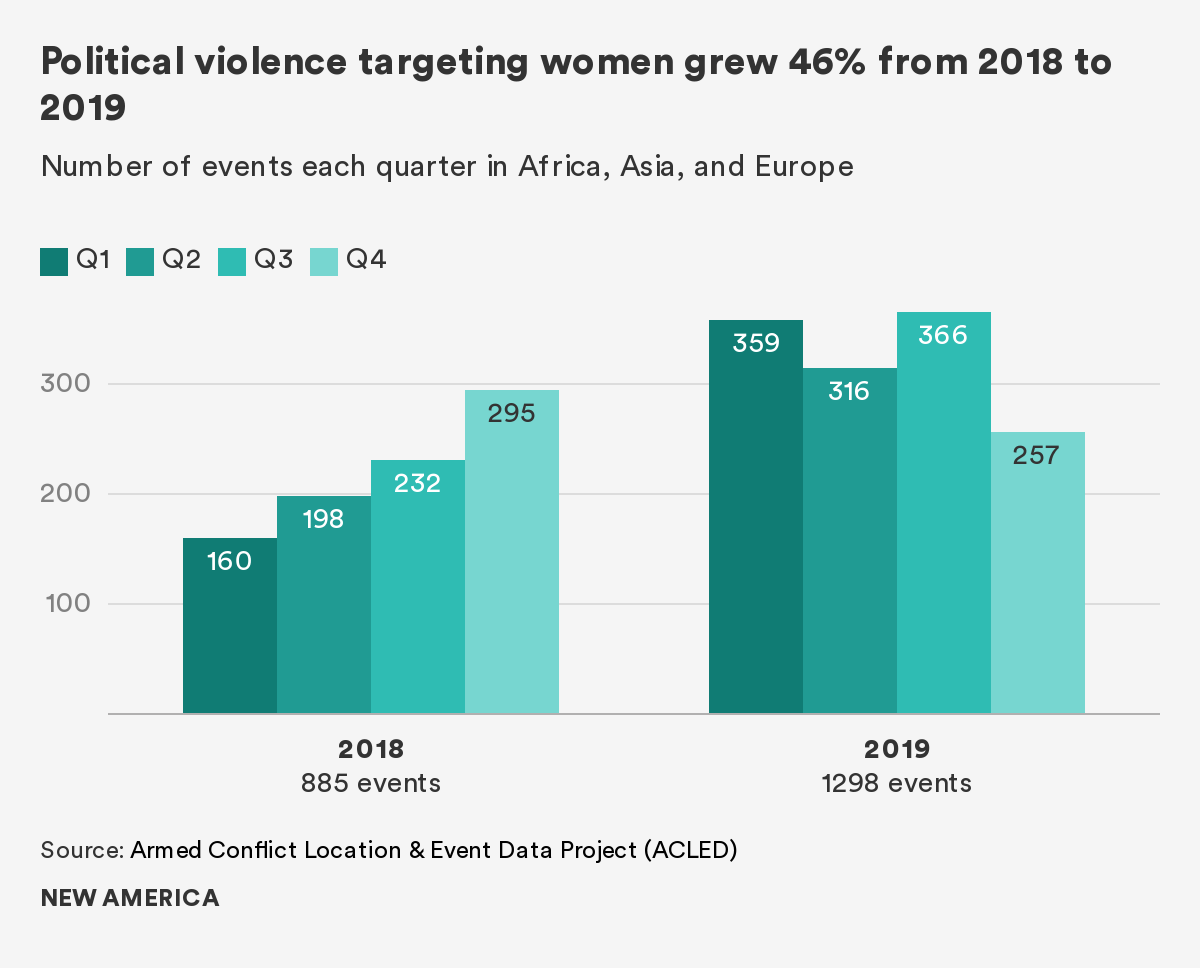
Political violence that targets women rose sharply worldwide in 2019, according to new data from the Armed Conflict Location & Event Data Project (ACLED).1 The data, which provides a cross-national measurement of politically-motivated attacks against women, shows that there were twice as many violent events targeting women across the globe in the first quarter of 2019 compared to the same period in 2018. Politically-motivated violence against women takes a variety of forms across geographic, political, and social contexts: while sexual violence makes up about one-third of the recorded violent events in ACLED’s data, non-sexual attacks, which include attempted assassinations of women political figures and repression by state forces, accounted for 47 percent of violent events targeting women.
The data also shows that demonstrations made up mostly by women or featuring women’s groups faced “disproportionate levels of excessive force.”2
Women politicians also face threats and assault around the world. A recent study by Amnesty International found that in India, “women who express their opinions online are targeted with abuse not just for their opinion, but also for… [their] gender, religion, caste, marital status and many more.” It found that 13.8 percent of tweets directed at women politicians in the study between March and May of 2019, around a general election in India, were “problematic” or “abusive.” Additionally, Muslim women were on the receiving end of more than 50 percent more abusive content that women of other religious backgrounds.3 This finding is paralleled in research on social media around the world, where women draw more abusive responses than men, and women of color more than white women.4 And surveys in Cote d’Ivoire, Honduras, Tanzania, and Tunisia in 2017 found that 55 percent of women officials had been subjected to violence while carrying out political functions.5
Data also shows that women politicians around the world are more likely to receive threats and to be the victims of violence than their male colleagues.6 In 2018, more women ran for office in the United States than ever before.7 Yet, women who hold elected office appear to be facing abuse and harassment at unprecedented levels.8 A survey of mayors of U.S. cities found that women mayors were more than twice as likely to experience psychological abuse, and more than three times as likely to experience physical violence, compared to their male colleagues, with social media acting as the key transmitter of abuse.9 A survey of women parliamentarians from 39 countries in 2016 confirms that 82 percent had experienced psychological violence, while over 25 percent had been subjected to acts of physical violence.10
While we have comparatively little data available to track global trends in violence against LGBTQIA+ and non-binary people, FBI 11 and other data suggest that in the United States, hate crimes against LGBTQIA+ people have risen over the past three years.12 Overall, these reported numbers are likely to be much lower than the actual numbers since many victims of hate crimes do not report them.13 GLSEN's 2017 National School Climate Survey found that 60 percent of LGBTQ students felt unsafe in school because of their sexual orientation, while 45 percent felt unsafe due to their gender expression,{{14} up in both cases from their 2013 survey.14 And in 2019, the Trevor Project reported in its inaugural National Survey on LGBTQ Youth Mental Health that 39 percent of LGBTQ youth survey respondents, including 54 percent of transgender and non-binary respondents, had seriously considered attempting suicide over the previous 12 months.15
Misogyny-inspired terrorist violence may be on the rise too, whether specifically through the incel (“involuntary celibates”) movement, or more broadly. Incel ideology is a violent political ideology linked to the latest wave of misogyny and white supremacy.16 The ideology is based on “the notion that feminism has ruined society. …These (mostly) young men are frustrated at a world they see as denying them power and sexual control over women’s bodies.”
Scholars and practitioners of counterterrorism are increasingly recognizing the incel ideology as a potent motivator for terrorist violence. In the United States, the Southern Poverty Law Center added “male supremacy” to the list of types of extremist groups it tracks in 2018.17
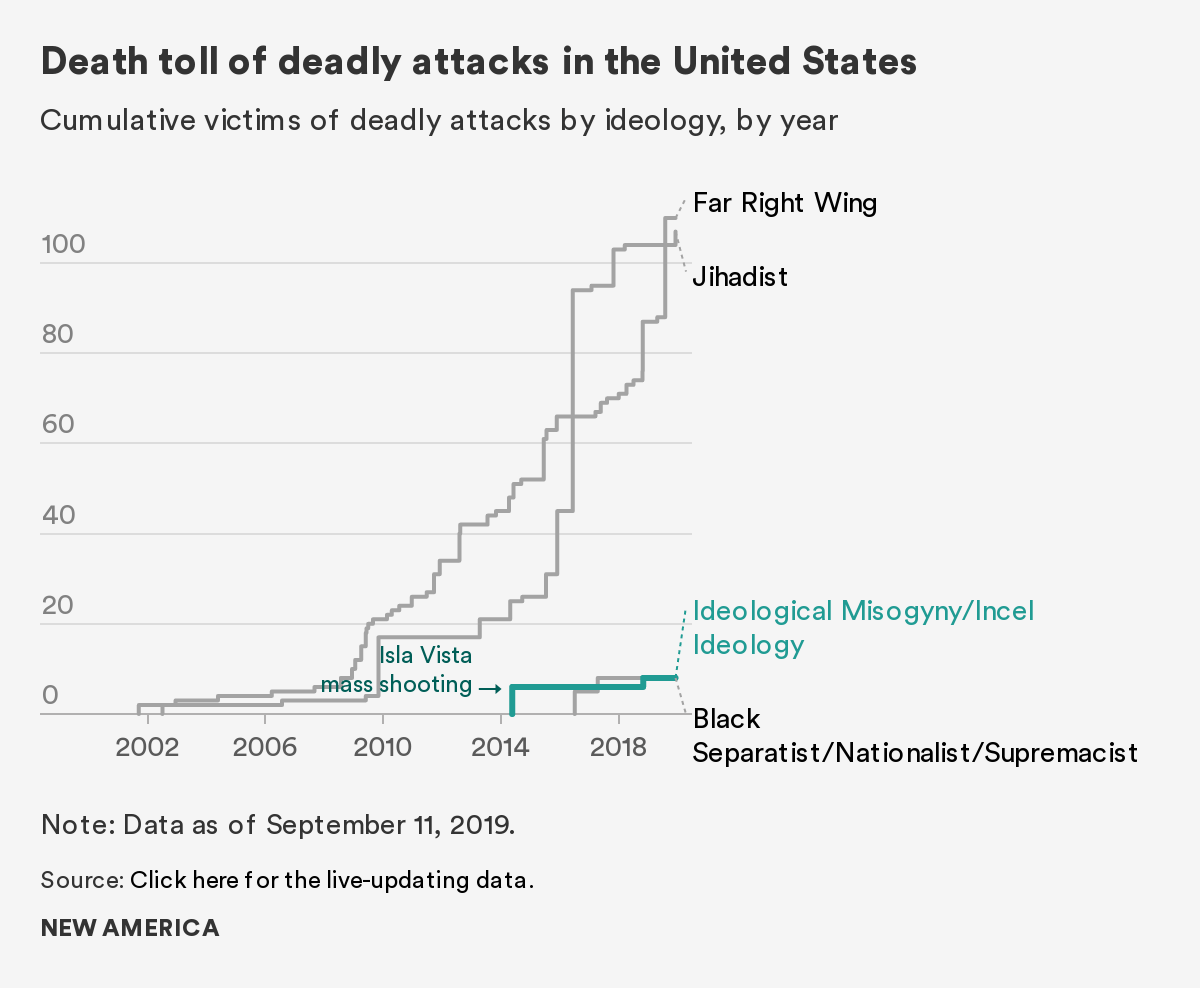
Our colleagues at New America’s International Security program track the number of victims killed in terrorist attacks in the United States each year since 9/11. Beginning with the 2014 Isla Vista mass shooting, 8 people in the United States have been killed in attacks motivated by incel ideology.18
2. Anti-Woman Attitudes Remain Globally Pervasive
Gender equality and the status of women are critical to understanding trends in political instability and violence worldwide. More than is often appreciated, arrows of causality flow in multiple directions. Girls, women, and gender-non-conforming people experience a wide variety of negative effects in conflict settings. According to Equal Measures 2030, “Girls and women face heightened risks including gender-based violence and trafficking, unintended pregnancy, maternal morbidity and mortality, unsafe abortions, and child, early, and forced marriage. They may be excluded from decision‑making processes or prevented from accessing essential services due to harmful social norms.”19
But it also seems to be the case that, as Valerie Hudson and others have argued, societies in which women experience higher levels of violence are more likely to be aggressors on the international stage, and authoritarian and unstable at home; in contrast, societies where women are more physically secure are more likely to be at peace.20
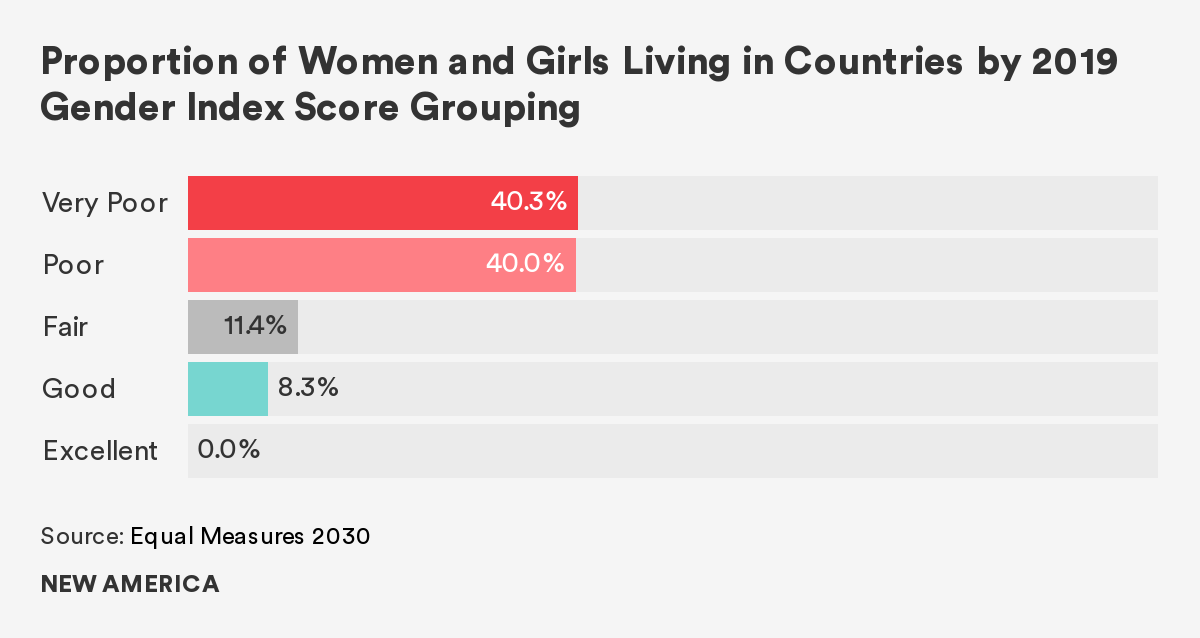
Several studies in the past year set troubling baselines for how much inequity and discrimination women and girls continue to face around the world, 25 years after the Beijing Conference declared that women’s rights are human rights. Equal Measures 2030 reports that in 2019, nearly 40 percent of the world’s women and girls—that’s 1.4 billion people—live in countries that received a failing grade on gender equality.21 The Sustainable Development Goals (SDGs) Gender Index is a comprehensive, cross-national measurement of gender equality that is aligned with the SDGs, the 17 goals chosen by the UN aimed “to achieve a better and more sustainable future for all.”22 While some countries have achieved important milestones in terms of gender equality, no country received an “excellent” score in 2019.
The United Nations Development Programme’s (UNDP) gender norm social index, released for the first time in March 2020, found that 90 percent of people around the world are biased against women, and that about 50 percent believe that men make better political leaders.23
In the United States, such views continue to shape the face of our public leadership, across partisan lines. A survey of Americans who said they would be voting in the 2020 Democratic primary or participating in a caucus found that one-third subscribed to sexist views and that those attitudes made voters less likely to vote for women candidates.24 Other studies found that sexist attitudes,25 and gendered nationalism, the notion that American society has grown “too soft and feminine,” influenced voting in the 2016 election.26
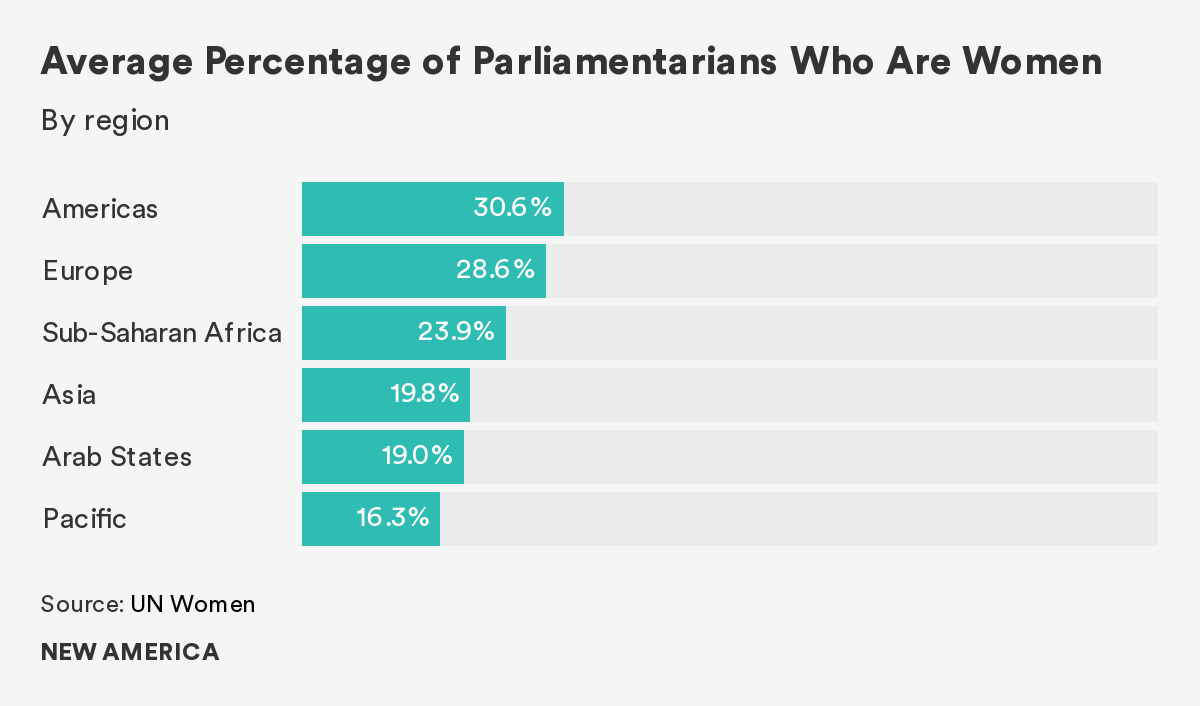
This data also helps explain why we are still so far from achieving gender parity among political leaders, in the United States and around the world. Indeed, according to the United Nations Entity for Gender Equality and the Empowerment of Women (UN Women), just 24.3 percent of all national parliamentarians were women, and 12 currently serving heads of government were women as of February 2019.27 The Council on Foreign Relations’ newly-released Women’s Power Index, which tracks and visualizes the gender gap in political representation, shows that just 19 out of 193 countries in the world have a woman head of state or government. Only 4 out of 193 countries have at least 50 percent women in their national legislature.28
3. Diversity and Gender in the Security Community: Spotty and Trending Backward, Both in the United States and Globally
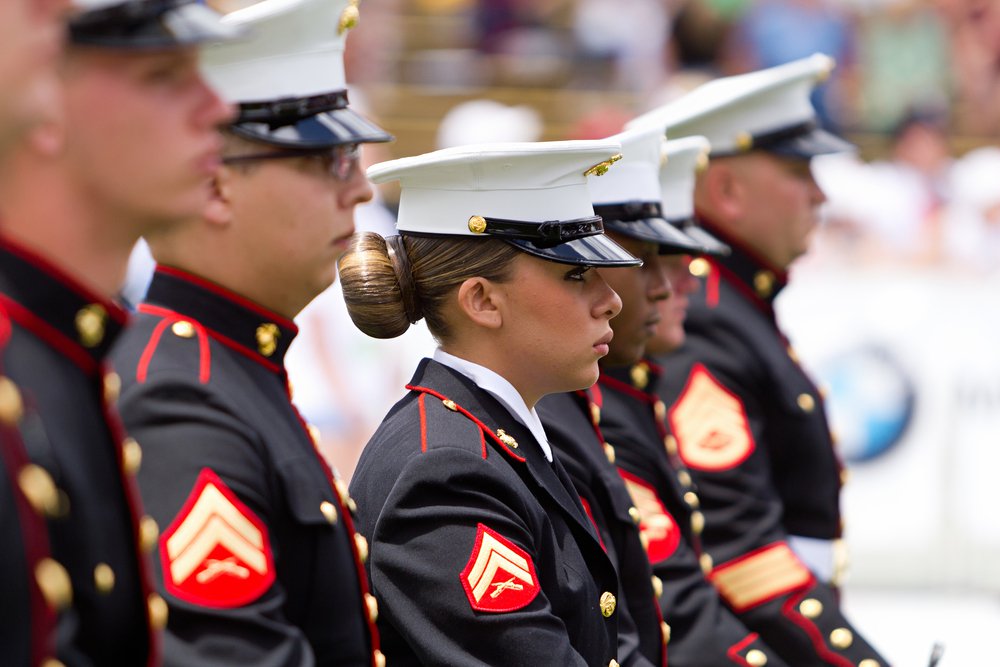
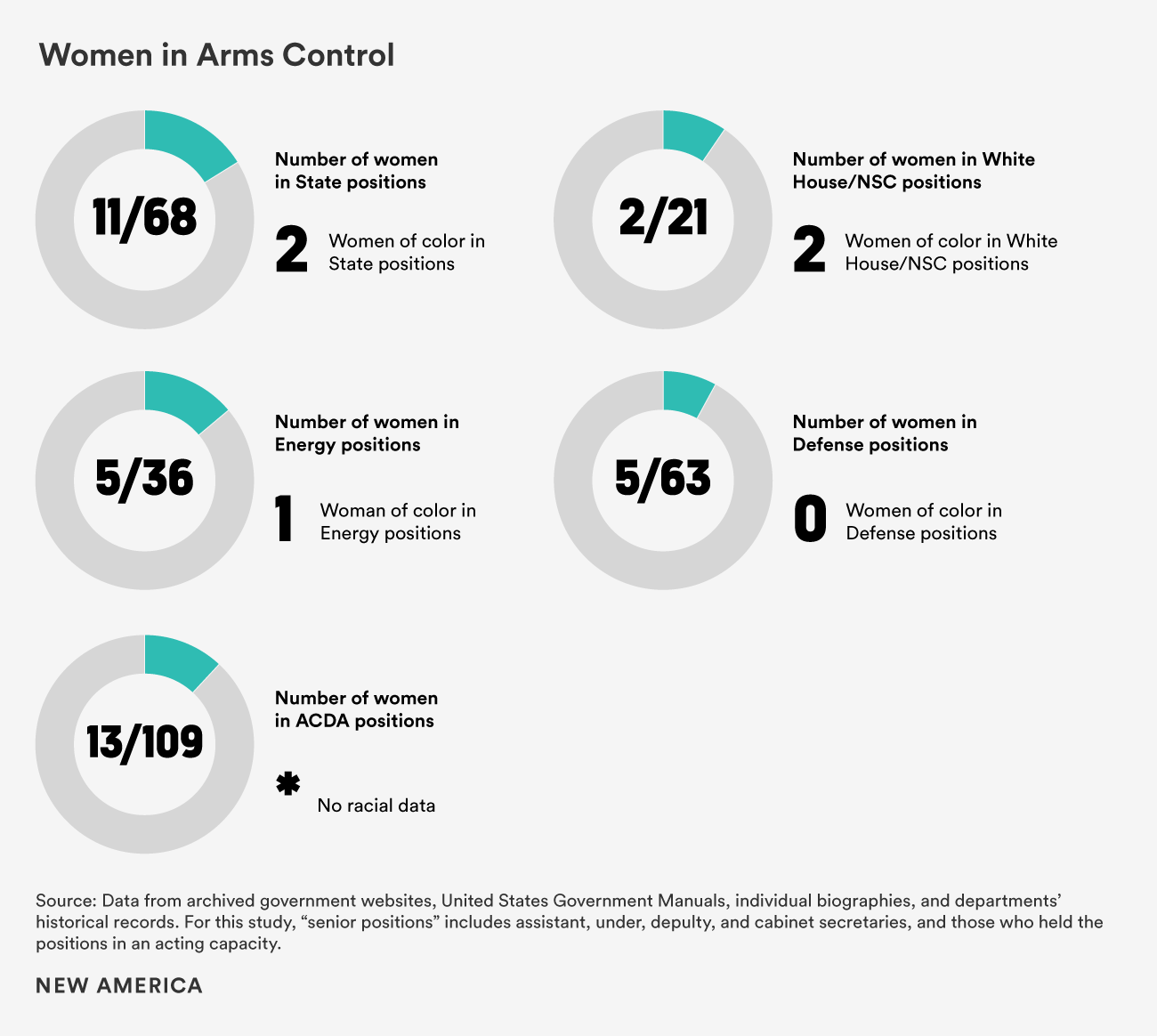
Our March 2019 report, The ‘Consensual Straitjacket’: Four Decades of Women in Nuclear Security, found that since the 1970s, just 11 out of 68 senior nuclear-related positions at the State Department, and 5 out of 63 in similar roles at the Department of Defense (DoD), were held by women. Just two of those women at the State Department were women of color—and none of the DoD roles were held by women of color. In the military, where combat roles did not open up for women until 2014, women make up just 16 percent of enlisted personnel and 18 percent of the officer corps.29 Internationally, the proportions of women deployed in uniformed UN peacekeeping roles increased from 1 percent in 1993 to about 5 percent in 2019, but this falls short of UN goals.30
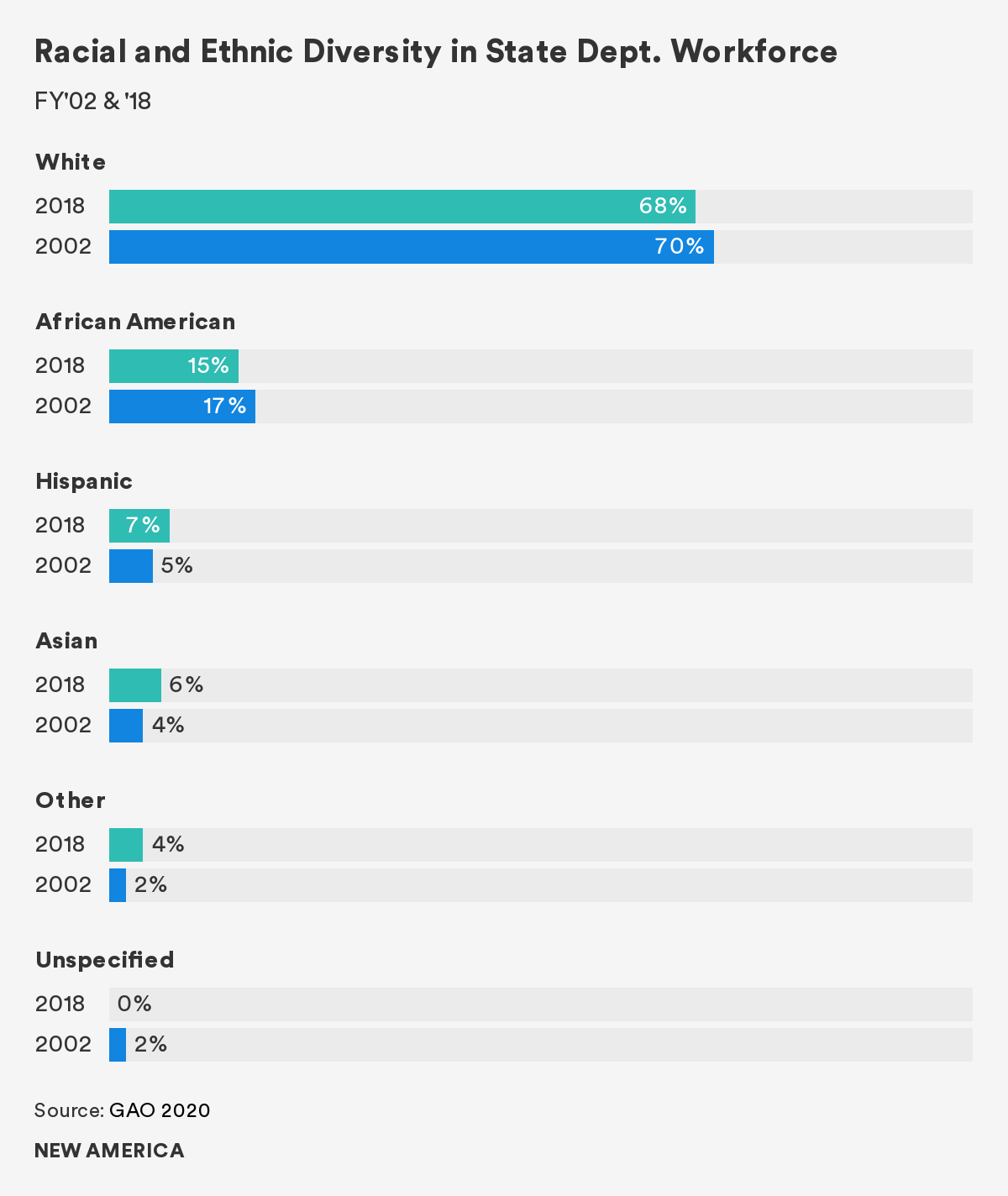
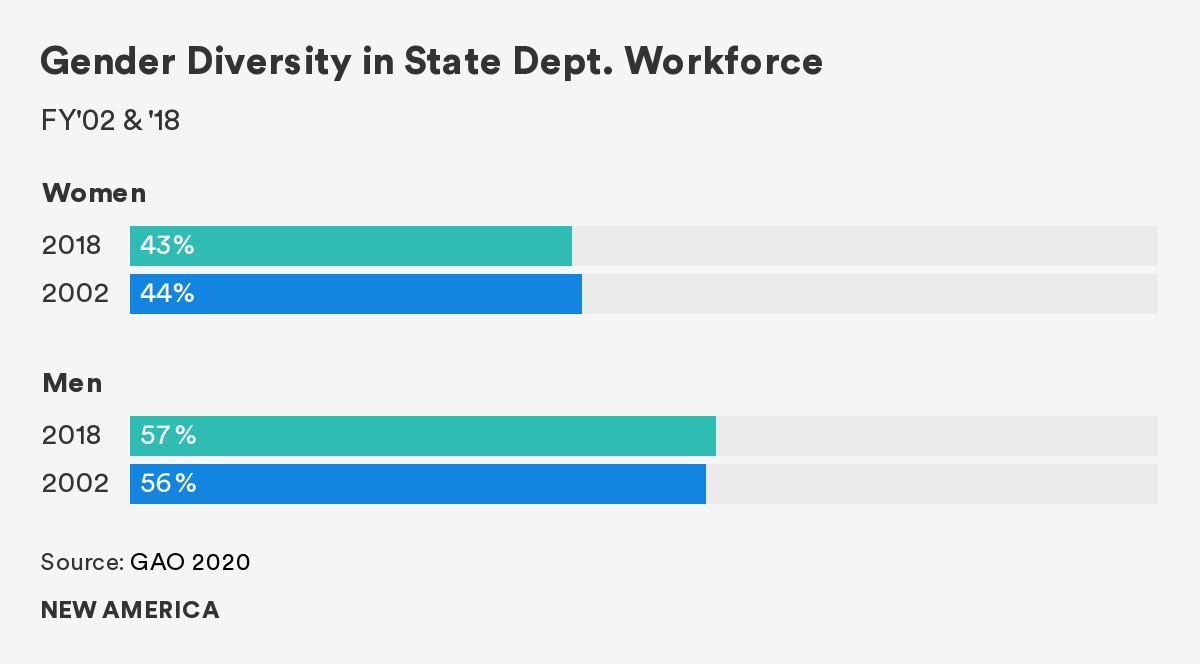
A recent Government Accountability Office (GAO) study found that the proportion of racial/ethnic minorities at the State Department only increased from 28 percent in FY2002 to 32 percent in FY2018, and that racial/ethnic minorities are less likely to be promoted within the State Department than whites. There has also been little progress on gender diversity among State Department personnel over the past decade plus. While 44 percent of State Department employees were women in FY02, that same proportion was 43 percent in FY18.31
At some constituent agencies of the Department of Homeland Security (DHS), the GAO found that women are dramatically underrepresented in law enforcement and over-represented in attrition, while management ranks are disproportionately white.32
A report by our colleagues at New America’s Cybersecurity Initiative notes that “women make up less than one-quarter of the cybersecurity workforce.”33 Among D.C. think tanks, on average only 27 percent of experts on staff are women.34
Very little data is available on transgender and gender-non-conforming people and other members of the LGBTQIA+ community, but the trends that are visible are disturbing. Until very recently, those identities were grounds for denial of employment and security clearances, and recent reporting suggests that both formal and informal discrimination are re-surging.35 The Trump administration’s reversal of a policy allowing open military service for transgender people affects an estimated 14,700 in the active and reserve forces.36 Language promising not to discriminate on the basis of sexual orientation or gender identity has been stripped from agency websites and mission statements—including TRICARE, the military health provider.37 In late 2018, the Trump State Department began to deny visas to same-sex partners of foreign diplomats and UN officials, a policy that will almost certainly dampen the confidence of LGBTQIA+ diplomats.38
Additional research can help to assess the presence of these and other marginalized communities in the national security space and identify steps that organizations can take to remove barriers to hiring and promotion and support a more diverse workforce.
The lack of diversity in the national security field is disturbing not only for reasons of equity, but also because numerous studies show that diversity among personnel leads to better, more innovative policy outcomes, from international loan repayment rates to the endurance of peace deals.39 Research has documented the contributions of women peacekeepers, including increasing access to community members, improving intelligence gathering, and addressing the unique needs of women ex-combatants.40
Twenty years after the passage of Security Council Resolution 1325, the Women, Peace and Security Agenda, which seeks to increase women's participation and consideration in all aspects of security, progress has been substantial but uneven. In June 2019, the White House released the "United States Strategy on Women, Peace and Security" in response to the WPS Act passed by Congress on a bipartisan basis in 2017.41 March 2020 also saw the launch of a Congressional WPS caucus.42
The NGO Working Group on Women Peace and Security (WPS) published a comprehensive assessment of how the UN Security Council deals with gender and peace issues, concluding that “the Security Council has shown a marked improvement in its attention to WPS in crisis situations.”43
More broadly, however, the authors noted the shattering of what had been consensus among Security Council members in support of the WPS agenda. They also found that “progress on women’s rights has wavered both outside and within the UN. Despite a strong normative framework, repeated commitments by the UN system and Member States, and the wealth of evidence on the importance of ensuring gender equality and women’s participation in peace and security efforts, implementation of the agenda continues to be uneven and selective, and normative progress a challenge.” Several specific insights follow:
“Attention by the Security Council to women’s participation and inclusion in peace and security processes has steadily increased over the last several years; however, the discussion remains largely superficial and lacking in detail regarding the roles women have in various processes, barriers to increased participation, which women participated, or the influence women have on the processes they are participating in.”
“The Security Council continues to improve the overall way in which it discusses and addresses SGBV [sex- and gender-based violence] in outcome documents, and the amount of information on SGBV included in reports of the Secretary-General continues to grow. This overall attention to such an important issue is necessary, however, the focus on SGBV often obscures other important women’s rights concerns. In fact, in 2018, 90 percent of the references to women’s rights in reports of peace operations were focused on SGBV specifically…”
Within the UN more broadly, the International Center for Research on Women found that the Secretary-General has made progress in advancing gender parity in UN leadership and tackling discrimination and violence in the UN, but that UN must put more resources behind financing for gender equality.44
4. Women Play Key Roles in Protest Movements
The rise of large-scale public protest—and its effects on regimes in Africa, the Middle East and Asia—is one of the central contemporary developments in international affairs, as yet under-analyzed and insufficiently understood. Research is pointing to the role of women as key both to the overall size of these contemporary movements and, at least in some cases, as predictive of their success.
Gender and women’s rights have been important organizing motifs in some of the unprecedentedly large protests of recent years. The Women’s March in January 2017 was likely the largest single-day protest in U.S. history, drawing an estimated 3.3 to 5.2 million people onto the streets.45 Girls and women played prominent leadership roles in the 2018 March for Our Lives protest, one of the largest youth protests since the Vietnam War.46 Tens of thousands turned out around the world to protest violence against women in November 2019;47 in March 2020, to mark International Women’s Day, 80,000 protestors effectively shut down Mexico City, while security forces fired tear gas at protestors in Chile and Turkey.48
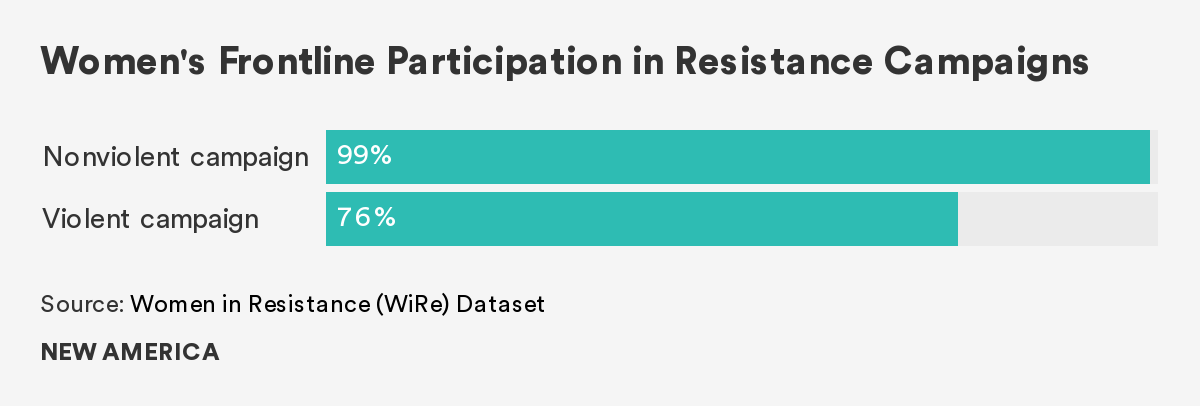
Women appear to be playing an increasingly important role in protests—especially in successful protest campaigns. Erica Chenoweth’s Women in Resistance (WiRe) dataset, released in September 2019, catalogues women’s participation in resistance movements with maximalist aims—i.e., to topple an oppressive regime or achieve self-determination—between 1945 and 2014.49 While women’s frontline participation across resistance campaigns is quite common, women are more likely to be involved in nonviolent campaigns. Campaigns with higher levels of women’s participation, and those with more gender-inclusive ideologies, are more likely to remain non-violent, elicit the defection of state security forces, and succeed in their aims. In this light, ACLED's findings about violence against women protestors are particularly worrisome.
According to Chenoweth, these findings show that “any analysis that excludes a discussion of women’s power with regard to the strategy, dynamics, and outcomes of mass movements is likely incomplete.” They also suggest that further feminist analysis is needed to understand nonviolent civil resistance movements.
Conclusion
Security priorities are shifting rapidly worldwide—for regimes focused on an array of internal, transnational, and great power threats, and for citizens responding to challenges to their safety, communities, and ways of life. Research through gender and other diversity lenses is developing rapidly to provide critical insights into those developments. The security community, in the United States and globally, faces a challenge in keeping up and growing its own understanding of the connections among gender, diversity, and security. This explosion of provocative content should fuel future research and practice in fully understanding women’s roles in national security—from the UN’s Women, Peace, and Security agenda, to diversity in personnel hiring practices—and promoting greater diversity across this space.
Abstract
Dramatic new studies in the past year documented the scope and rise of political violence against women, encompassing but going well beyond the traditional focus on sexual violence in conflict; the particular threats faced by female candidates and officials; the resilience of anti-woman attitudes worldwide; and the stagnation or decline of efforts to focus on gender and other forms of diversity in the security field, from the UN Security Council to the bureaucracies of the United States. This paper spotlights 4 data trends from the past year that have enhanced our understanding of gender and security, both within the United States and globally.
Acknowledgments
The authors would like to thank Jamille Bigio, Rebecca Turkington, and Luke Schleusener for their insights and expertise, and our colleagues Joe Wilkes, Naomi Morduch Toubman, Joanne Zalatoris, LuLin McArthur, and Alison Yost for their help editing, reviewing, and promoting this paper. This report was supported by the Compton and Ploughshares Foundations.
Downloads
Citations
- Roudabeh Kishi, Melissa Pavlik, and Hilary Matfess, ‘Terribly and Terrifyingly Normal’ Political Violence Targeting Women, ACLED, May 2019 source
- Kishi, Pavlik, and Matfess, p. 7 source
- Amnesty International, Troll Patrol India: Exposing Online Abuse Faced by Women Politicians in India, 2020 source
- Amnesty International, #ToxicTwitter: Violence and Abuse Against Women Online, 2018 source; Pew Research Center, Online Harassment 2017 source
- National Democratic Institute, No Party to Violence: Analyzing Violence Against Women in Political Parties, 2018 source
- Mona Lena Krook and Juliana Restrep Sanin, “The Cost of Doing Politics? Analyzing Violence and Harassment Against Female Politicians,” Perspectives on Politics (2019): 1-16.
- Politico, “Record-breaking number of women run for office,” March 8, 2018 source
- Jamille Bigio and Rachel Vogelstein, “Women Under Attack: The Backlash Against Female Politicians,” Foreign Affairs January/February 2020 source
- Sue Thomas et al., 2019. "Not for the Faint of Heart: Assessing Physical Violence and Psychological Abuse against US Mayors." State and Local Government Review, 51(1), pp.57-67.
- Inter-Parliamentary Union, Sexism, Harassment and Violence Against Women Parliamentarians, October 2016 source
- 2018 FBI Hate Crime Statistics source
- Human Rights Campaign, “Violence Against the Transgender Community in 2019," 2020 source
- Pro Publica, “Victims in Thousands of Potential Hate Crimes Never Notify Police,” June 29, 2017 source
- GLSEN, The 2013 National School Climate Survey: The Experiences of Lesbian, Gay, Bisexual, Transgender, and Queer Youth in Our Nation’s Schools, 2014 source
- The Trevor Project National Survey on LGBTQ Youth Mental Health, 2019 source
- Bruce Hoffman and Jacob Ware, “Incels: America’s New Domestic Terrorism Threat,” Lawfare, January 12, 2020 source
- Shannon Zimmerman, Luisa Ryan and David Duriesmith, Recognizing the Violent Extremist Ideology of ‘Incels,’ Women in International Security, September 2018 source
- Peter Bergen, Albert Ford, Alyssa Sims, and David Sterman, Terrorism in America After 9/11, New America source
- Equal Measures 2030, Harnessing the Power of Data for Gender Equality: Introducing the 2019 EM2030 SDG Gender Index, 2019, p. 16 source
- Rose McDermott, 2020. "The Role of Gender in Political Violence." Current Opinion in Behavioral Sciences, 34, pp.1-5; Valerie M. Hudson, Donna Lee Bowen, and Perpetua Lynne Nielsen, 2020, The First Political Order: How Sex Shapes Governance and National Security Worldwide. Columbia University Press.
- Equal Measures 2030 source
- United Nations, “About the Sustainable Development Goals” source
- United Nations Development Programme, Tackling Social Norms: A Game Changer for Gender Inequalities source
- Sam Luks and Brian Schaffner, “New Polling Shows How Much Sexism is Hurting the Democratic Women Running for President,” Washington Post, July 11, 2019 source
- Brian F. Schaffner, Matthew MacWilliams, and Tatishe Nteta, 2018. "Explaining White Polarization in the 2016 Vote for President: The Sobering Role of Racism and Sexism." Political Science Quarterly, pp. 9-34.
- Melissa Deckman and Erin Cassese, 2019. "Gendered Nationalism and the 2016 US Presidential Election: How Party, Class, and Beliefs About Masculinity Shaped Voting Behavior." Politics & Gender, pp.1-24.
- UN Women, “Facts and Figures: Leadership and Political Participation” source
- Council on Foreign Relations, “Women’s Power Index” source
- Heather Hurlburt, Elizabeth Weingarten, and Elena Souris, National Security: What We Talk About When We Talk About Gender, New America, December 11, 2018 source
- United Nations Peacekeeping, “Women in Peacekeeping” source
- GAO, State Department: Additional Steps Are Needed to Identify Potential Barriers to Diversity, January 27, 2020 source
- Testimony of Yvonne D. Jones, Director, Strategic Issues, GAO, before the Subcommittee on Oversight, Management and Accountability, House Homeland Security Committee, February 27, 2020 source; Reported by Joe Davidson, “How a Lack of Diversity at Federal Agencies Can Have Serious Consequences,” Washington Post, March 2, 2020 source
- Laura Bate and Elizabeth Weingarten, New Ways to Bring Women Into and Up Through Cybersecurity Careers, New America, March 2019 source
- Chantal de Jonge Oudraat and Soraya Kamali-Nafar, The WIIS Gender Scorecard: Washington, DC Think Tanks – 2018, Women In International Security, September 2018 source
- New York Times, “Gay U.S. Couple Sues State Dept. for Denying Their Baby Citizenship,” July 23, 2019 source
- Aaron Belkin and Diane H. Mazur, Department of Defense Issues First-Ever Official Count of Active Duty Transgender Service Members, Palm Center, February 13, 2018 source
- NBC News, “Trump Trend: LGBTQ Mentions Quietly Axed from Discrimination Guidelines,” December 31, 2019 source
- Foreign Policy, “Trump Administration to Deny Visas to Same-SexPartners of Diplomats, U.N. Officials,” October 1, 2018, source
- E.g., see Agnes Gereben Schaefer et al., Assessing the Implications of Allowing Transgender Personnel to Serve Openly, RAND Corporation, 2016 source
- Jamille Bigio and Rachel Vogelstein, “Increasing Female Participation in Peacekeeping Operations,” Council on Foreign Relations, September 26, 2018 source
- "United States Strategy on Women, Peace, and Security," June 2019 source
- Office of Congresswoman Lois Frankel, “Waltz, Frankel Form Bipartisan Caucus Promoting Women’s Inclusion in Global Security Efforts” source
- NGO Working Group on Women Peace and Security, Mapping Women, Peace and Security in the UN Security Council: 2018 source
- Teresa Casale, Lyric Thompson, Sarah Gammage, and Lila O’Brien-Milne, Progress Under Threat: A Report Card on the Secretary-General’s Second Year, International Center for Research on Women 2019 source
- Erica Chenoweth and Jeremy Pressman, “This Is What We Learned By Counting the Women’s Marches,” Washington Post, February 7, 2017 source; Jeremy Pressman and Erica Chenoweth, “Crowd Estimates, 1.21.2017,” source (accessed March 13, 2020)
- Vox, “It’s Official: March for Our Lives Was One of the Biggest Youth Protests Since the Vietnam War,” March 26, 2018 source
- Al Jazeera, “’Gender Alert’: Global Protests Denounce Violence Against Women,” November 26, 2019 source
- The Washington Post, “Tens of Thousands of Mexican Women Protest ‘Femicide,’ Gender-Based Violence,” March 8, 2020 source
- Erica Chenoweth, Women’s Participation and the Fate of Nonviolent Campaigns: A Report on the Women in Resistence (WIRE) Data Set, One Earth Future Foundation, October 2019 source
More About the Authors

Alexandra Stark
Fellow, Future Security
Heather Hurlburt
Director, New Models of Policy Change