Ken Sofer
Summer Fellow, Resource Security Program
The UN warns of widespread food shortages in the war-torn country, raising further risks of regional destabilization.
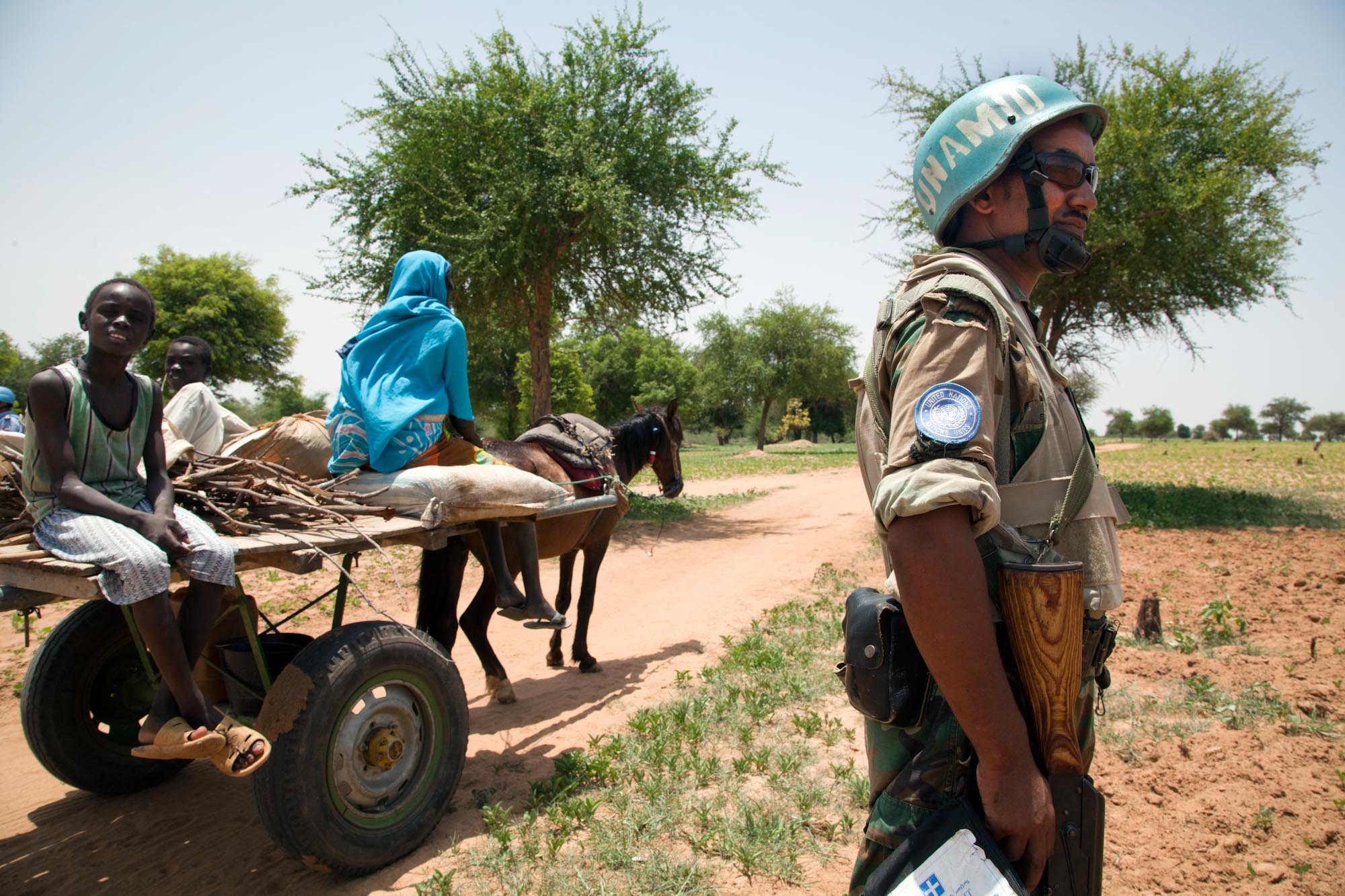
This week, three UN agencies reported up to 4.8 million people in South Sudan – more than 40% of the country – may face severe food shortages this summer. According to the UN agencies – the Food & Agriculture Organization, UNICEF, and the World Food Program – the food shortages are in part driven by an unusually long lean period, the last few months before the new harvest when food stocks are depleted, but the toll of the ongoing conflict is making a bad situation much worse. The deterioration of the food situation has been felt most acutely in the northern states of Northern Bahr el Ghazal, Unity, and Upper Nile, which are approaching famine-level status.
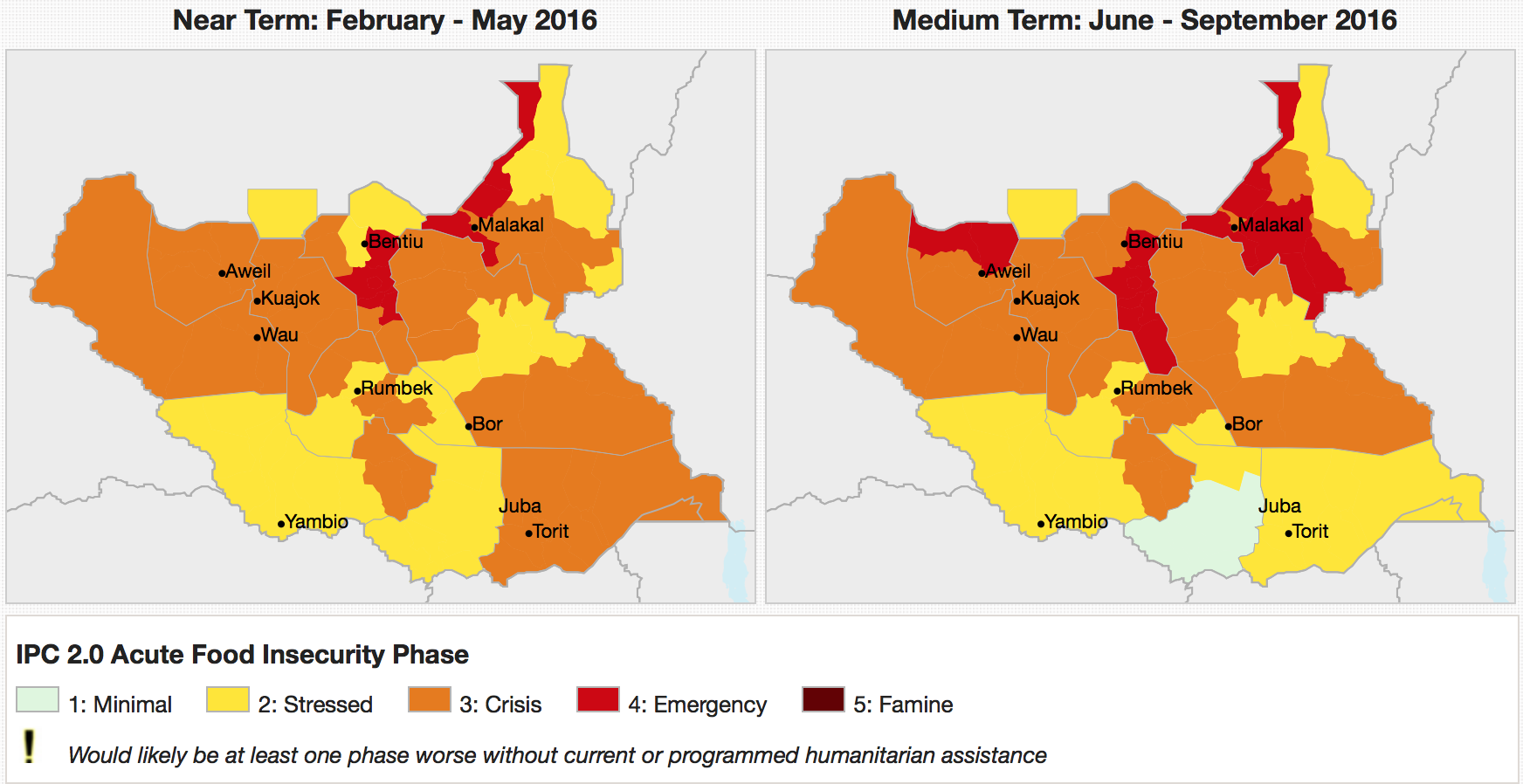
South Sudan, which celebrates its fifth year of independence next weekend, has been mired in civil war since its founding in 2011. Even before independence, the country faced major food security challenges, but the conflict has further impeded access to food in four key ways:
The country’s economy has also been hurt by the decline in the price and production of oil – a key source of income for the country. Production declined by 35% from 2013 to 2014 as the conflict escalated, which was then followed by a more than 50% decline in the price of oil the following year. When combined, the two factors have led to a nearly 70% reduction in oil income for the already cash-strapped country.
This loss of oil rents has reduced the government’s inability to fund itself, resulting in an annual inflation rate of 295% according to the country’s statistics office, leading some investors to question whether this is the beginning of runaway hyperinflation. South Sudan is far from the type of hyperinflation that devastated Zimbabwe in the late-2000s, but the shadows of Zimbabwe’s food security challenges during that period can already be seen in South Sudan. Inflation has pushed up the price of food – particularly staples like sorghum, maize, and janjaro – five to six times higher than recent averages according to the World Food Program. Such high prices, combined with the loss of household income as a result of the conflict has made it increasingly difficult for most South Sudanese to afford to purchase food.
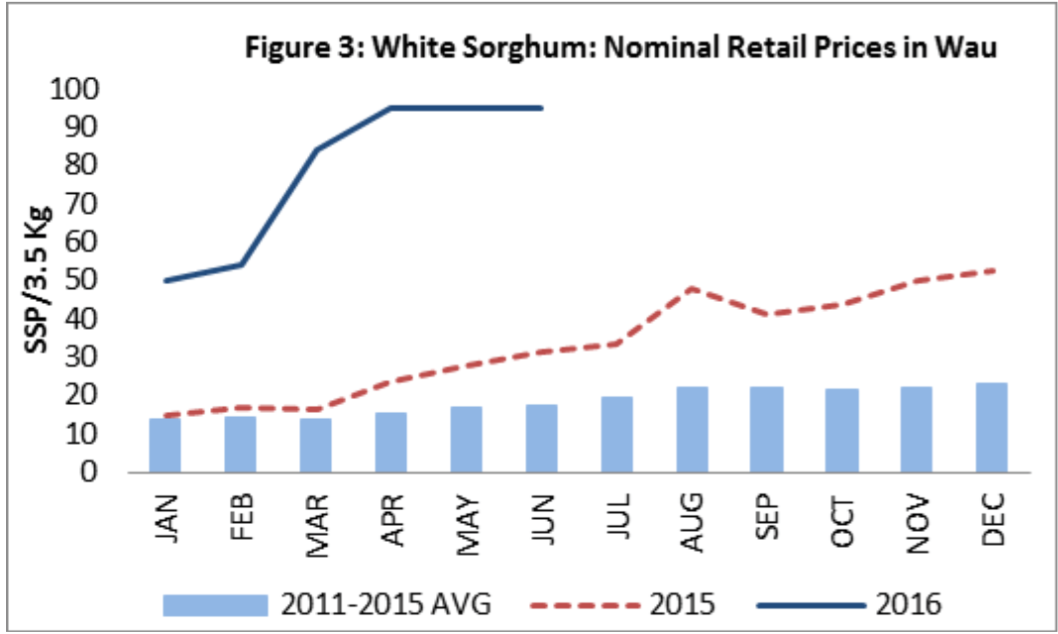
The combination of existing food insecurity, the ongoing conflict, and high inflation turned into the current food crisis this summer due to a poor growing season last summer that was plagued by late onset rainfall and a series of dry spells that reduced agricultural production. Food insecurity usually rises during the lean period of May-July before new crops can be harvested, but with less food to last the year and less ability to purchase food from abroad, the lean period set in earlier and more intensely than usual this year.
As the conflict and food shortage situation gets worse, more and more South Sudanese are fleeing into the country’s neighbors. The UN said an estimated 150,000 South Sudanese refugees have crossed into Sudan, Kenya, the Democratic Republic of Congo, and Uganda in the past few months alone. None of South Sudan’s neighbors are well-prepared, economically or politically, to absorb a large influx of new refugees in search of food, income, and safety, but few alternative options currently exist and the conflict in South Sudan shows no sign of stopping anytime soon.
Hopefully, the UN’s relief agencies can help provide enough food aid to stave off the worst effects of the food shortage in South Sudan until new crops can be reaped in the fall, but these agencies are already cash-strapped, stretched thin by the requirements of the Syrian refugee crisis. The UN’s World Food Program, which will need to play a critical role in South Sudan, had to cut food rations twice last year due to their budget shortfall.
The food crisis won’t be fully solved until the country’s civil war ends and its oil and food production can get back to full capacity, supported by a functioning government and economy. But in a fragile state like South Sudan, the difference between a difficult, but manageable food problem and a full blown crisis can be small things like the longer than expected lean period we’re seeing this year. For the 4.8 million South Sudanese facing a severe lack of food, the next few months will even more dangerous than the past few years.
Summer Fellow, Resource Security Program