A Focus on What Children Are Learning

Laura Bornfreund / New America
The early childhood team recognized the value in making sure all children learned via a singular, research-based curriculum that was supported by coaching and PD for teachers. This would help provide all children with high-quality experiences, ensuring that similar instructional practices were taking place across all elementary schools in BPS, regardless of the socioeconomic or racial makeup of the classrooms.1 Sachs made this a priority because he knew an effective, evidence-based curriculum could encourage warm and supportive interactions between students and teachers and help students build background knowledge and language skills better than a hodgepodge of different curricula that rely on rote memorization and do not expose children to rich content.2
Curriculum
After years of using the Opening the World of Learning (OWL) curriculum for literacy and Building Blocks for math in K1, BPS staff revised it and integrated Building Blocks to create the Focus on K1 curriculum. DEC next turned its attention beyond K1, towards K2, and eventually the early elementary grades. DEC knew it needed to address the fact that the district’s successful K1 program was largely disconnected from the instruction delivered in later grades. Aligned, evidence-based P–3 curricula did not currently exist, so rather than piecing together various curricula, the early childhood team began writing a new program designed to build on the gains students made in K1 and ensure instructional alignment as students entered K2. Focus on K2 was piloted in over half of the district’s 80 elementary schools in the 2014–2015 school year and is currently being used in 80 percent of the district’s elementary schools.3 Focus on First was piloted in 30 classrooms in the 2016–2017 school year, expanded to about 40 more classrooms the next school year, and will reach another 60 classrooms during the 2018–2019 school year. Focus on Second was piloted in the 2017–2018 school year and is now in 120 classrooms across the district.4
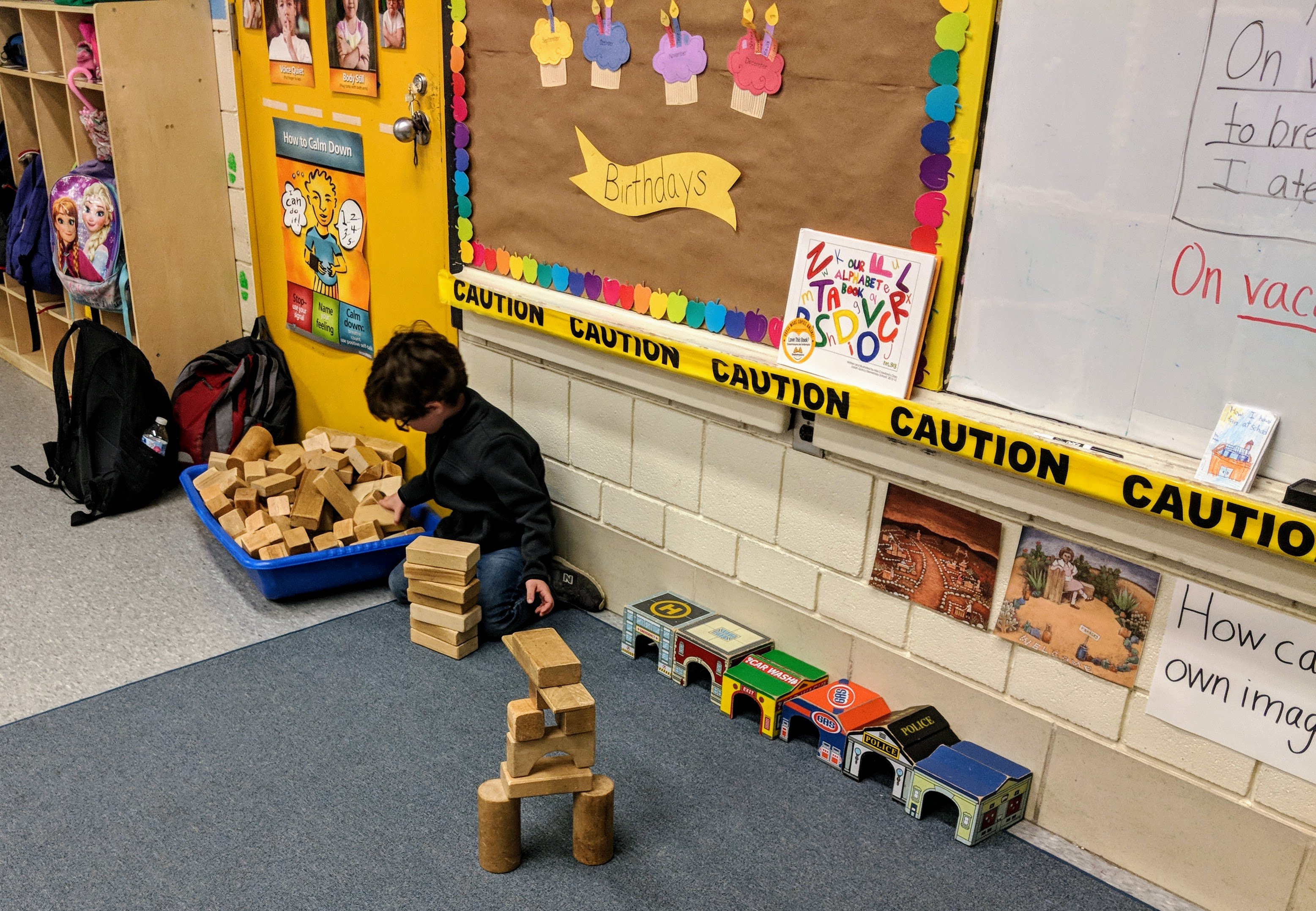
Focus on K2, Focus on First, and Focus on Second each intentionally mirror many of the practices found in a K1 classroom, such as the use of center time, where children play or work together on an activity; teacher-led small group instruction; read-aloud books; and independent literacy stations.5 Lessons are theme-based, allowing for deep content instruction, as well as project-based, encouraging collaboration with peers.6 Most importantly, the curriculum is aligned across K1 through second grade so that the skills taught at the beginning of each school year naturally build upon the skills learned by students at the end of the previous year.
Since 31 percent of all BPS students are considered English learners (and an even higher percentage of young BPS students are English learners), it was important that the curriculum include strategies for supporting this growing population of students. For that reason, strategies such as including visual supports, using multicultural and multilingual read-aloud books, making explicit vocabulary instruction part of play, and using concrete materials to facilitate dialogue are all built into the Focus curriculum as well as the professional development teachers receive throughout the year. The commitment to serving English learners was illustrated in 2017 when the early childhood team collaborated with the BPS Office of English Learners to open a Haitian Creole-English dual immersion program with 25 K1 students.7
Since 31 percent of all BPS students are considered English learners, it was important that the curriculum include strategies for supporting this growing population of students.
One advantage of DEC staff writing the curriculum rather than purchasing curricula is that it can be revised as frequently as deemed necessary. “After a year or two of a curriculum, we go back and revise it based on teacher feedback and our coaches’ logs. We use the data to say, ‘How do we change PD and what revisions to curriculum need to happen?’” said Brian Gold, school readiness manager for the early childhood team. Writing the curriculum in-house also allows staff to make it specific to Boston, focusing on the particular cultures found throughout the city. As part of its commitment to data, DEC staff developed a curriculum fidelity tool with the help of outside researchers from MDRC, the University of Michigan, and the Harvard Graduate School of Education. This tool, used by instructional coaches, “looks at all the different components of the curriculum,” Gold said. The fidelity data offer a snapshot of how individual teachers and schools are doing when it comes to curriculum implementation and give the team a better idea of where more coaching and professional development might be needed.
An essential component of the Focus curriculum from K1 through second grade is storytelling and story acting. Based on the work of Vivian Gussin Paley, storytelling and story acting are focused on two connected activities: dictation and dramatization.8 Students are encouraged to dictate fiction or nonfiction stories as their teacher transcribes the words. After the story has been put down on paper, a small group of students, including the author, acts it out in front of the whole class as the teacher reads it aloud. Once it has been acted out, students can share what they liked about the story or give suggestions to the author about how it can be improved.9
“We use the data to say, ‘How do we change PD and what revisions to curriculum need to happen?’”
Another important element that runs through the Focus curriculum is the “Thinking and Feedback Protocol,” a routine that is practiced in a whole group format at the end of each center time block. One or two students present something they created during center time to the entire class and the class provides feedback and asks questions. The protocol includes four steps: 1) observing and sharing what you notice about the classmate’s creation, 2) listening to the classmate talk about his or her creation, 3) asking questions about the creation, and 4) providing suggestions about how the student can improve on his or her creation.10 The activity encourages active listening among students and sends a message that the play children are involved in is important and worthy of discussion.
The Focus curriculum is available to view and download on the BPS early childhood website for no charge. “We intentionally made all of our curriculum open and available on our website,” Gold said. According to Sachs, the decision to make the curriculum open source was to “help the field” so other urban districts wanting to use a similar curriculum would not have to start from scratch. Individual units can be downloaded and customized, along with weekly plans, pacing calendars, grading rubrics, family engagement activities, specific questions for read-alouds, and instructions for setting up STEM and literacy centers. DEC hopes to generate revenue by providing training for other districts that choose to use the Focus curriculum in their classrooms.11
Accreditation
The early childhood staff knew that ensuring equitable high-quality instruction for children in all BPS elementary schools would require more than just curricular changes. After a 2006 evaluation found that the positive results of K1 were not evident in K2 classrooms across the city, DEC decided to pursue accreditation from the National Association for the Education of Young Children (NAEYC) for its K1 and K2 classrooms.12 Staff saw this as a way to create a culture of early learning and build early childhood-friendly elementary schools. Currently, over 60 percent of BPS elementary schools have achieved accreditation or are in the process of working towards accreditation.13 BPS wants to obtain NAEYC accreditation for all K1 and K2 classrooms by 2020.14
Achieving NAEYC accreditation in BPS is a labor-intensive process overseen by Karen Silver, an experienced NAEYC accreditation specialist. There are 10 standards schools must meet to earn accreditation, focused on: relationships, curriculum, teaching, assessment of child progress, health, teachers, families, community relationships, physical environment, and leadership and management. In all, there are 41 criteria that schools must demonstrate they have met in order to become accredited. The BPS early childhood team has budgeted $75,000 per school undergoing the accreditation process, which amounts to about $6,000 per classroom per year. This cost includes a DEC coach to shepherd schools through the process. The Barr Foundation gave $2 million to help fund it.15
The BPS early childhood staff sees positive results as a result of the accreditation process. A 2010 needs assessment discovered a strong association between schools that had earned or were seeking accreditation and the quality of the schools’ early childhood classrooms.16 Then-Harvard researcher Christina Weiland (now at the University of Michigan) found that BPS K1 classrooms seeking accreditation scored higher on all subscales of an assessment known as the Early Childhood Environment Rating Scale (ECERS-R) compared to BPS classrooms not yet undergoing the accreditation process. Weiland also found that the process was associated with greater gains in children’s learning: the students in classrooms that were accredited or seeking accreditation made better gains in student vocabulary scores, even when controlling for a host of other factors. Sachs and Weiland speculated that the reason for these positive results was the professional development and coaching DEC provided to schools undergoing accreditation.17
Marie Enochty, program manager for BPS, said that without the NAEYC accreditation process it would be much more difficult to improve overall school quality. She said that teachers and principals were more willing to buy into the process because it is nationally recognized and grounded in research on what is required to improve the quality of early childhood programs. Another benefit of the accreditation process is that it opens a path for collaborating with principals, many of whom do not have an extensive background in early education. Early childhood coaches working with schools in the accreditation process have monthly meetings with principals to discuss progress teachers are making and offer guidance on how the principal can support developmentally appropriate practices in the K1 and K2 classes.18 Accreditation allowed DEC to work beyond just K1 and begin work on improving K2, an important step for laying the foundation for later expansion into first and second grades. The accreditation process has also been an important vehicle to get BPS staff into special education classrooms that often needed the most supports in terms of materials, coaching, and facility improvement.
Challenges
Teachers have multiple curricula and programs to implement at one time and not enough guidance on how to integrate them in their day; this is an issue that came up repeatedly in conversations with BPS educators. Schools that adopt the Focus curriculum may also have other programs in place, and rather than embrace Focus as a replacement, teachers were frustrated that it gets layered on top. One K2 teacher summed it up this way: “What’s tough is that it requires a lot of time. A lot of things are required that have nothing to do with Focus. We have Literacy Collaborative [a literacy program], and Second Step [a social-emotional curriculum], Fundations [a phonics program], all in addition to Focus.” DEC coaches are aware of this issue and work with principals to simplify and streamline what is required of classroom teachers, but curricula choices are ultimately a principal’s decision. When principals opt to keep other programs and curricula in place as well, coaches provide guidance to teachers on approaches to juggle all they are expected to implement.
Accreditation also presents challenges. According to the early childhood team, some of the accreditation process is focused on health and safety and educators say it can become more of a checklist than a reflective process. For example, how important a role has the accreditation process played in driving improvements in instructional practices versus making sure staff members are following the prescribed handwashing protocol? BPS, like many districts, is always working with limited funds. One staff member questioned whether it was wise to continue to direct funds towards accreditation rather than on improvements to curricula and instructional resources: “Should we buy new mats for the doors of classrooms because NAEYC says we need to or should we spend that money on new read-aloud books?” Members of the BPS early childhood team say they want to better understand how accreditation connects to child outcomes. Having this information would be helpful in making future investment decisions.
“The ultimate question… is whether the reforms that accreditation bring about truly last once the process has ended."
Another issue is that there is no accreditation process for first and second grade, so those grades are missing a key tool to improve quality. This concern could soon be addressed, however, since NAEYC is piloting an accreditation process for children ages eight and younger19 and other accreditation processes exist for elementary school-aged students that could be explored.
The initial accreditation may be most important for improving environments and instructional practice. With limited resources, some staff question whether maintaining accreditation makes sense. The ultimate question, according to one member of the BPS early childhood team, is whether the reforms that accreditation bring about truly last once the process has ended.
Citations
- Abby Morales (program director, DEC), interview with authors, April 24, 2018.
- Anne Katz, “Fostering Equity Through Educator and Family Empowerment,” EdCentral (blog), New America, July 18, 2018, source
- Bardige, Baker, and Mardell, Children at the Center, 108.
- Bardige, Baker, and Mardell, Children at the Center, 177.
- “FAQ Focus on First & Second 2017,” Google Docs, source
- Meghan McCormick, Joann Hsueh, Christina Weiland, and Michael Bangser, The Challenge of Sustaining Preschool Impacts: Introducing ExCEL P–3, a Study from the Expanding Children's Early Learning Network (Washington, DC: MDRC, July 2017), source
- Bardige, Baker, and Mardell, Children at the Center, 121, 168.
- For more on Vivian Gussin Paley’s work, see her The Boy Who Would Be A Helicopter: The Uses of Storytelling in the Classroom (Cambridge, MA: Harvard University Press, 1991).
- Bardige, Baker, and Mardell, Children at the Center, 106.
- The P–3 Learning Hub, (blog), “The Power of a Good Kindergarten Curriculum,’ October 14, 2016, source
- To learn more about the emerging importance of open educational resources (OER) in public schools, check out New America’s recent report, “Making Connections: PreK-12 OER in Practice,” source
- Educational Alignment for Young Children: Profiles of Local Innovation (Washington, DC: National League of Cities: Institute for Youth, Education and Families, 2012), source
- Boston Public Schools, Department of Early Childhood (website), “NAEYC Accreditation,”source
- Educational Alignment for Young Children: Profiles of Local Innovation (Washington, DC: National League of Cities: Institute for Youth, Education and Families, 2012),12, source
- Bardige, Baker, and Mardell, Children at the Center, 59, 127.
- Bardige, Baker, and Mardell, Children at the Center, 58.
- Jason Sachs and Christina Weiland “Boston's Rapid Expansion of Public School-Based Preschool: Promoting Quality, Lessons Learned,” Young Children 65, no. 5 (September 2010): 74–77, source
- Marie Enochty, interview with authors, July 19, 2018.
- National Association for the Education of Young Children, “School-Age Accreditation Option,” source