
Table of Contents
- Introduction
- #1 Students Hold High Hopes That a Short-Term Credential Will Allow Them to Enter a New Field
- #2 Half of Working Adults with a Short-Term Certificate Earn Poverty-Level Wages
- #3 Most Adults Believe Their Short-Term Certificates Are Useful for Getting a Job—Even if the Job Is Unrelated to Their Credential
- #4 Many Adults with a Short-Term Certificate Are Not Employed
- #5 Students Think Hands-On Training is Useful, But Few Adults with Short-Term Certificates Receive This Training
- Discussion and Conclusion
#4 Many Adults with a Short-Term Certificate Are Not Employed
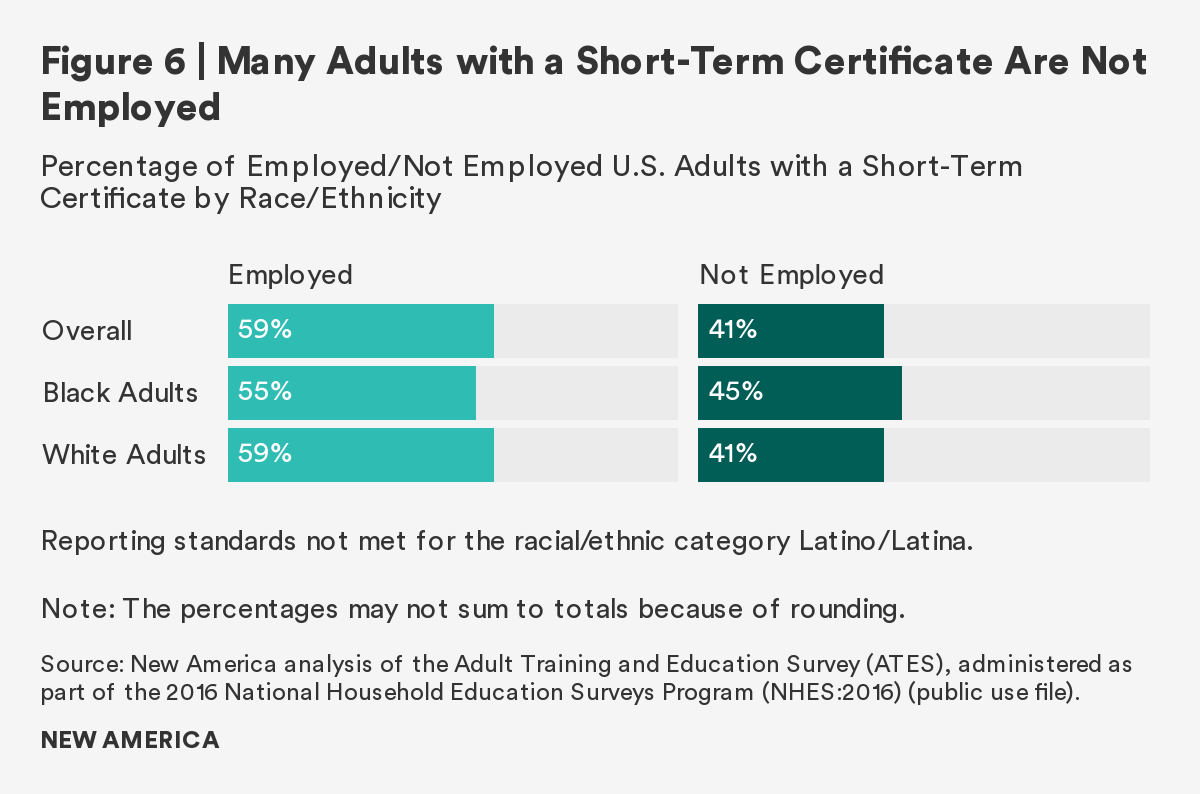
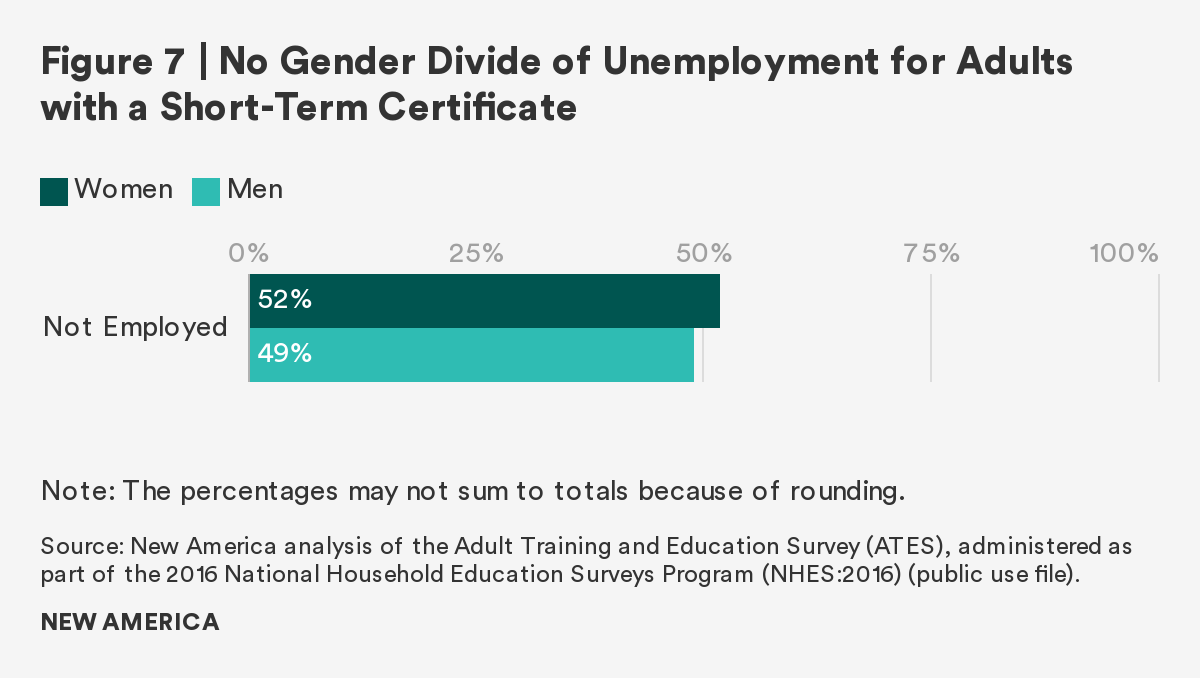
For adults with only a short-term certificate, as Figure 6 shows, roughly 40 percent say they are not employed. Of those who are not employed, there is neither a race/ethnicity nor a gender divide.1 The percentage of Black adults with a short-term certificate who are not employed is comparable to the percentage of unemployed white adults with a similar credential. Figure 7 shows that, similarly, the percentage of unemployed women and unemployed men is not significantly different. Regardless of race/ethnicity and gender, two in five adults with only a short-term certificate are not employed.
Citations
- New America analysis of ATES.